
American Mahjong Advanced Strategy: Decision Frameworks for Competitive Play
Last updated: Nov 20, 2026
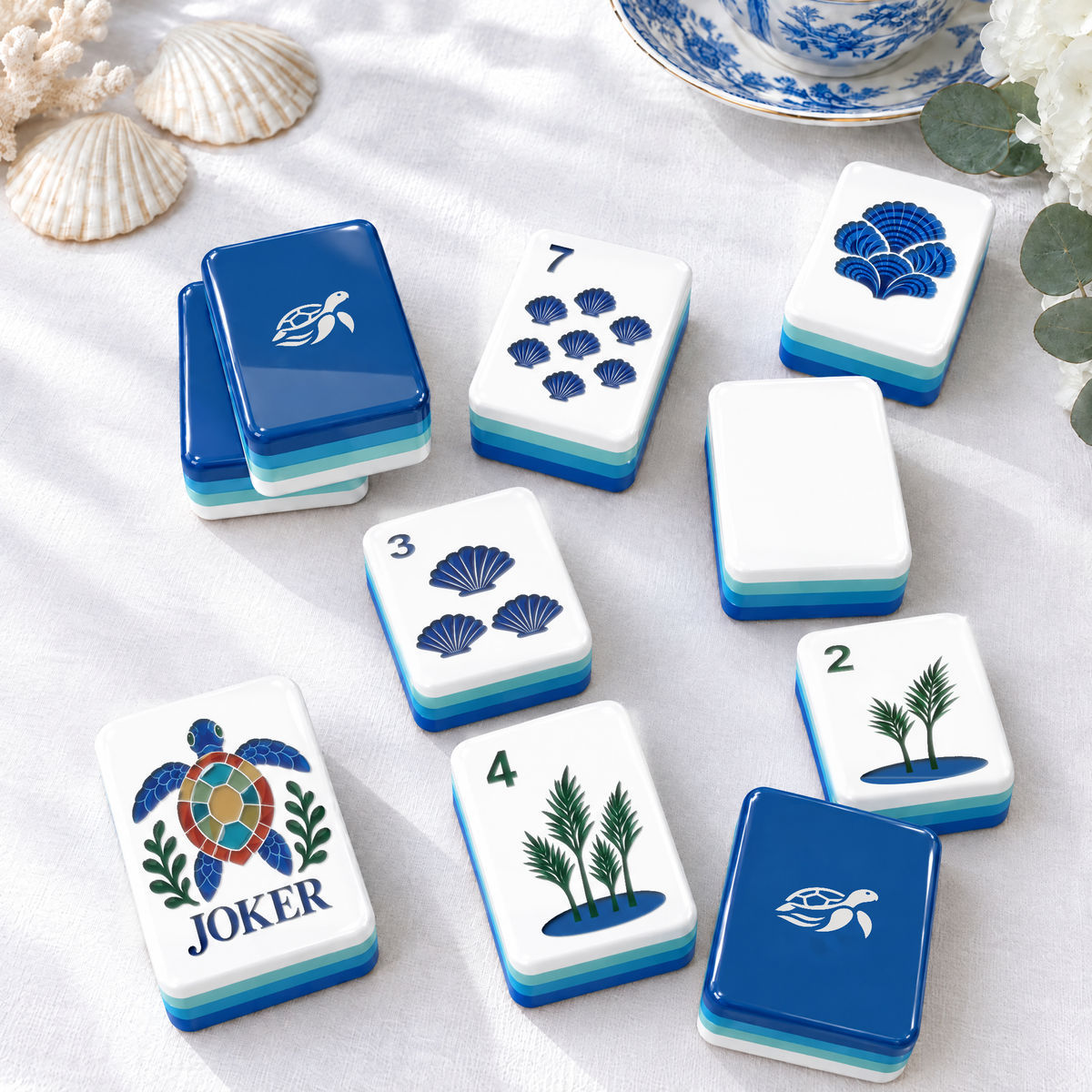
Advanced American mahjong strategy rests on three pillars: hand selection depth (knowing when a "safe" hand is actually risky), tile tracking (remembering what your opponents have exposed to predict dead tiles), and exposure management (controlling what you reveal to minimize information leakage). Unlike Chinese or Riichi variants with sequences and hidden tables, American mahjong requires constant card reading—knowing the current year's National Mah Jongg League card deeply enough to spot which hands are live, how many paths exist to win, and which tiles your opponents are forcing. Success depends less on luck than on filtering 100+ possible hands into the 2–3 realistic options given your draw and the Charleston, then adapting as opponents expose pungs and kongs. A serious player tracks discards mentally, calculates "dead" tiles (those no opponent can need), and times their exposure—revealing melds early signals strength but telegraphs your direction; holding back forces others to guess your intent.
How do you choose between multiple live hands in your first draw?
The moment you pick up your tiles after the Charleston, you typically hold 14, and the card offers dozens of matching hands. Experienced players don't pick one and lock in; they identify 3–5 candidate hands, then rank them by redundancy (how many paths to win) and flexibility (how many tiles complete them). A hand needing a specific 3 Bam to win is fragile; one that can complete via a 3 Bam, a 4 Bam, or a Red Dragon is robust. Write down (or memo on your phone after your turn) the actual number of tiles that move you closer: if two hands are equally close to completion, pick the one where more tiles exist in the wall uncalled. Discard the tile that appears in none of your active hands first—dead weight kills more players than bad luck. Many advanced players keep a small notebook during practice games to log which hands they held and why they chose them; pattern recognition matters more than any single decision.
What information does a single exposed meld reveal, and how should you interpret it?
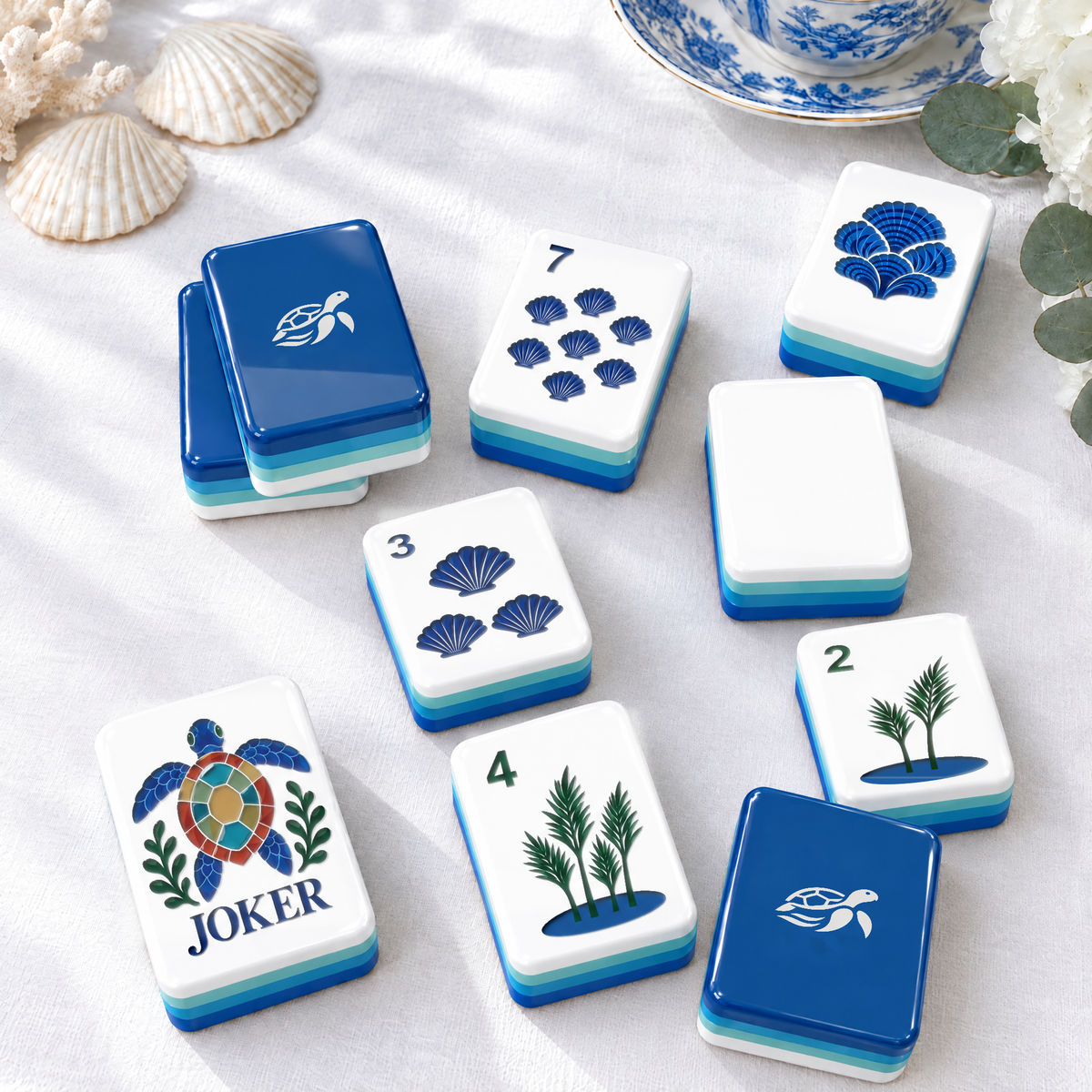
When your left opponent exposes a pung of 2 Dots immediately after a discard, they've told you four facts: (1) they were holding three 2 Dots before your turn; (2) the tile they just discarded was not a 2 Dot, so they likely already had the fourth one or need something else more urgently; (3) their hand includes at least one hand section with multiple identical tiles; (4) if they exposed this pung on turn two or three, they were already working toward this specific hand before the Charleston ended. Cross-reference this against the card: which hands use a pung of 2 Dots? How many are still feasible given the tiles you've seen discarded? If 15 hands on the card use a pung of 2 Dots but 12 of them also require the 2 Crak and you've already seen someone discard the 2 Crak, your opponent's options narrowed dramatically. Skilled table-talkers rarely give away this depth—they expose late, they expose ambiguous melds (a pung that fits multiple hand types), and they discard in patterns that don't telegraph their abandonment of a suit. Conversely, reading these tells lets you calculate which tiles are genuinely "dead" (no opponent will ever call them) versus merely hidden.
How many jokers should you hold before declaring, and when should you use them?
This is where casual and advanced play diverge sharply. A beginner holds jokers until the final meld, gambling that they'll draw a matching tile instead. An advanced player uses jokers early in building exposures, never in a pair, and always keeps 1–2 in reserve for emergency pivots. Here's the framework: if you're building a pung, use a joker for the third tile; if you're building a kong (four identical), use a joker only for the fourth—the first three should be real tiles whenever possible. Why? Because jokers are seen when exposed; opponents tracking your discards will know you used a joker, narrowing which hands are live for you. If you expose a 5 Bam, 5 Bam, Joker as a pung, competitors know you lack a fourth 5 Bam and can deduce which hands you're building. Reserve jokers for moments when your hand has only one realistic path forward—use them to accelerate that path, not to explore dead ends. This sounds abstract, so test it: in your next game, note how many jokers you expose per turn versus how many the strongest player at your table exposes. The difference is often dramatic.
What's the strategic difference between discarding first and building exposures late?
Speed tempts many players. You get your hand, you see a live option on the card, you start exposing immediately. But timing is a weapon. A player who exposes nothing until turn eight and then declares has forced three opponents to read a completely unknown hand; a player who exposed two pungs and a kong by turn four has shrunk the pool of possible hands dramatically. Advanced strategy: build exposures only when they serve two purposes—they move you toward your declared hand and they confuse opponents by obscuring which hand you're actually building. For example, suppose you hold a hand needing a pung of 1 Bams and a pung of 1 Craks. Expose the 1 Bams pung first, and wait two turns before exposing the 1 Craks. Opponents now believe you might have any hand featuring 1 Bams; many won't have memorized which card hands use both 1 Bams and 1 Craks in the same section. Conversely, if you're trailing badly (three opponents close to winning), exposure speed accelerates the game, which helps you reset faster. This decision depends on the hand complexity—a hand with five or six sections (very specific) can absorb more exposure without losing information than a hand with three sections (common on many hands) that exposes everything immediately.
How do you rebuild your strategy mid-game when other players declare unexpectedly?
Someone wins on turn ten; you're back to 13 tiles, and your previous hand is now irrelevant because they called tiles you were counting on. Rapid re-evaluation determines whether you stay in the game mentally or surrender. Step one: scan the card for hands that still appear feasible given the tiles that were just drawn and exposed. Step two: identify the suit that feels coldest—the suit where you've seen the most discards, or the most high-point tiles have been exposed. Step three: build a hand using the cold suit as a "dump zone"—a place to park unwanted tiles without signaling defeat. Advanced players never discard randomly; even in the reset phase, discarding from cold suits buys information (opponents won't call your discard if they need that suit, so silence is data). Within one full turn rotation, you should have pinpointed a new target hand. If none exists—if the remaining hands all require tiles you've seen called already—begin a controlled discard sequence to stay alive until the next hand, preserving jokers for the game after.
Quick Reference: When to Hold, When to Expose, When to Discard
Scenario | Action | Why It Works |
You have 2/3 tiles of a required pung; joker completes it | Expose the pung immediately | Forces opponents to assume you need the matching suit; confuses hand prediction |
Your hand needs only 3 tiles to win; two live paths exist | Hold exposures; discard cold-suit tiles | Staying hidden keeps winning odds high; fewer opponents will prepare counters |
You're trailing; two opponents close to winning | Expose ambiguous melds (pungs that fit many hands) | Speeds the game and creates noise; helps you reset and refocus |
Someone declared; your hand is now redundant | Discard from the coldest suit first | Signals controlled reset; establishes that you're not desperate |
An opponent exposed a pung you also needed | Pivot immediately; don't force the original hand | Sunk-cost fallacy kills more hands than bad tiles do |
🀄 Shop best-selling mahjong sets →
How does hand redundancy change your risk calculus?
Hand redundancy—the number of different tiles that move you one step closer to winning—is the true currency of advanced play. A hand needing exactly a 5 Dot and no substitute has zero redundancy; a hand where any Dot 4–6 or any Dragon completes it has high redundancy. Skilled players quantify this: count every tile that could appear in your next draw and push your hand forward. If 12+ tiles work for you but your opponent's hand likely needs only 3–4, you have a strategic edge even if they're only one meld away. This shifts the risk calculus: a high-redundancy hand with three melds exposed beats a lower-redundancy hand with one meld exposed, because your draw odds are better. Many players unconsciously play by this rule; learning to calculate it consciously (even rough estimates: "low," "medium," "high" redundancy) accelerates your decision-making.
Should you ever intentionally avoid winning to trap an opponent's jokers?
Rarely, but yes. If you can win this hand but doing so leaves an opponent with a high-redundancy hand and four jokers in play, you've won 30 points and reset the board in their favor. Advanced play sometimes means passing a winning draw—not calling a discard, not declaring—to let a weaker hand rotate to the discard player next round. This only works when you're ahead on score and the overall game structure favors waiting. Conversely, if you're trailing or in a format where final hand wins everything (tournament play), always take the win. The psychology here is subtle: opponents who suspect you're capable of passing will recalibrate their play, sometimes leading to mistakes. Use this sparingly—the moment opponents realize it's a tactic, its power evaporates.
🎁 See our most-loved mahjong sets & accessories →
What tools help you track the game state without looking unprepared?
Memory is the first tool, and it's the one that separates advanced play from mechanical play. But when memory alone feels shaky—or in a faster game—subtle aids help. A rack with pushers lets you arrange your tiles by suit and number instantly, which speeds the mental categorization needed to spot live hands in your draw. Some players use a small memo pad between hands to log which hands they saw, which tiles appeared, and which opponents seemed interested in which suits—not during play (that's distracting and often against house rules), but in the five minutes after a hand ends. The National Mah Jongg League card itself is your reference; learn to flip to a section during your turn without hesitation. The better you know the card's layout (all Like Numbers in the first section, all Pungs section further back, etc.), the faster you can verify a hand and manage your mental load. This sounds granular, but it's the difference between spotting a three-way tie for first place versus missing it entirely.
What specific errors do advanced players make, and how do you avoid them?
Overconfidence in hand memory. You remember that someone discarded a 2 Crak on turn three; they actually discarded a 2 Dot. Mental tile confusion costs entire hands. Fix: When an opponent discards, say the tile name aloud (or sotto voce) as you file it away.
Exposing too much information too fast. You expose a pung, a kong, and two separate melds on turns two through five, leaving opponents only two or three possible hands to defend against. Fix: Stagger exposures; wait a turn between ambiguous melds if your hand is common on the card.
Discarding by pattern. You always discard Honor tiles first, then work left-to-right through your hand. Smart opponents clock this within three hands and predict your discard. Fix: Randomize your discard order without signaling deliberation (that's also suspicious).
Ignoring the jokers in play. Four jokers are in the wall; tracking where they've been used tells you if an opponent can afford to call a risky tile. Fix: After every exposure, count the jokers aloud in your head: "One exposed, one discarded, two in wall."
Playing the same hand type repeatedly. You love Like Numbers hands; after your second one in four games, opponents know what section to defend against. Fix: Rotate hand types; force yourself to pursue a Consecutive Run or Quint hand periodically, even if it feels slower.
✨ Find your Mahstead set — free US shipping →
What to check before you level up your strategy
Card mastery: Can you flip to any hand section without thinking? If not, memorize the card layout—it's your foundation.
Tile recognition speed: Can you identify a tile from across the table in under one second? If you hesitate, your game slows and your reads suffer.
Hand notation: Do you have a personal shorthand (5B = 5 Bam, RD = Red Dragon) that lets you log hands mentally or on paper? If not, create one.
Emotional discipline: Do you call risky tiles when angry or frustrated, abandoning your framework? If yes, take a break after losing hands.
Play frequency: Advanced strategy only calcifies with repetition. Weekly games (or more) are the minimum; monthly games won't build the intuition you need.
To anchor these frameworks in practice, learn how to read the card deeply, study American mahjong scoring to understand which hands are worth the risk, and review the Charleston ritual to see how initial tile distribution creates your first strategic constraints. Then run a practice game or three using only the frameworks above—don't try all five at once, or you'll overload your decision-making. Start with hand selection (picking your top 3 candidates early), then layer in tile tracking on your second session, then exposure timing on the third. Each one compounds the others.
FAQ
Can you use advanced strategy in casual home games, or is it only for tournaments?
Both. Casual games benefit enormously—you'll win more, help others improve, and the pace quickens. Tournaments reward it more obviously, but any weekly table will feel your impact within three months of consistent play.
How do jokers factor into strategy if they're visible when exposed?
Jokers are information leaks. Every exposed joker tells opponents which tile you lack. Advanced play minimizes joker exposure until late in the hand, reserving them for moments when one clear path remains. Never use a joker in a pair; always use real tiles for the first and second melds of any type.
What's the difference between advanced American mahjong strategy and mastering the card?
Card mastery is knowing which hands exist. Advanced strategy is knowing when and how to pursue them under pressure, when to abandon them, and how to read opponents' hand choices from their exposures. Card mastery is the foundation; strategy is the structure you build on top.
If I'm new to American mahjong, should I learn strategy right away or master basics first?
Master basics first. Learn how to play American mahjong thoroughly, including Charleston and exposure rules. Play 10–15 hands without strategy frameworks. Then layer in these frameworks one at a time. Trying to execute advanced strategy before you automate the rules wastes mental energy.
How do you practice strategy alone or with fewer than four players?
Solo practice: study the card, practice hand identification (pull tiles and name the hand sections they fit), and memo-play (imagine discards and rebuild hands mentally). With two or three players: learn three-player or two-player rules, adjust exposure timing (fewer opponents mean less noise to hide behind), and focus on hand redundancy even more. Strategy scales down but remains critical.


View More
View More
View More
