The Mahjong Charleston Explained: Passing Rules for American Mahjong
Last updated: Oct 06, 2026
Last updated: October 2026
The Charleston is the part of American Mahjong that confuses new players most, and it is also what makes the American game different from every other style. Before anyone draws a tile, players pass unwanted tiles around the table in a set order. This guide explains the Charleston step by step: the pass order, the optional second Charleston, the courtesy pass, blind passes, and how to decide what to pass.
Quick answer
The Charleston is a series of three-tile passes made after the deal and before play begins. The first Charleston is required: pass three tiles right, across, then left. A second Charleston is optional and goes the other way: left, across, then right. Players across from each other may then make a courtesy pass of up to three tiles. Jokers can never be passed.
An easy way to remember it: right, over, left for the first Charleston, then left, over, right for the second.
Why the Charleston exists
In American Mahjong you must build an exact hand from the card, so a random deal often leaves you with tiles that do not fit any hand. The Charleston gives every player a chance to trade those tiles away and pick up tiles that might help. It also gives you time to study the card and choose the hands you will aim for.
The first Charleston (required)
Pass right. Choose three tiles you do not want and pass them face down to the player on your right. Pick up the three tiles passed to you only after you have passed your own.
Pass across. Pass three tiles to the player sitting opposite you.
Pass left. Pass three tiles to the player on your left. This is the first pass where a blind pass is allowed (see below).
Every player passes three tiles every time, including East, who holds 14 tiles during the Charleston.
The second Charleston (optional)
When the first Charleston is finished, the table decides whether to play a second one. It only happens if every player agrees: any one player can stop it. If it goes ahead, the order reverses:
Pass left.
Pass across.
Pass right. A blind pass is allowed on this last pass.
Stop the second Charleston if your hand is already coming together and you would rather not give up any more tiles.
The courtesy pass
After the Charleston, the two players sitting across from each other may swap up to three tiles. Each pair agrees on the number; if one player wants to pass three and the other only one, they pass the lower number. Either player can decline, so a courtesy pass of zero is fine.
Blind passes
On the last pass of each Charleston (the first left and the second right), you may "blind pass" if you do not want to give up any of your own tiles. Instead of choosing three tiles from your hand, you pass on one, two or all three of the tiles you just received, without looking at them, and make up the rest from your own hand. The tiles simply move on around the table.
All the passes at a glance
Pass | Direction | Required? | Blind pass allowed? |
First Charleston, pass 1 | Right | Yes | No |
First Charleston, pass 2 | Across | Yes | No |
First Charleston, pass 3 | Left | Yes | Yes |
Second Charleston, pass 1 | Left | Optional | No |
Second Charleston, pass 2 | Across | Optional | No |
Second Charleston, pass 3 | Right | Optional | Yes |
Courtesy pass | Across | Optional, 0 to 3 tiles | No |
The rules to remember
Jokers can never be passed, not in the Charleston and not in the courtesy pass.
Always pass before you pick up the tiles passed to you.
Every pass is three tiles, except the courtesy pass (zero to three).
The first Charleston is required; the second Charleston and courtesy pass are optional.
Blind passes are only allowed on the last pass of each Charleston.
What to pass: tips for beginners
Keep Jokers and pairs. Jokers are the most valuable tiles you can hold, and pairs are the start of pungs and kongs.
Look for two or three possible hands on the card before the first pass, then pass tiles that fit none of them.
Pass single Winds and Dragons if no hand you are considering uses them.
Count your Flowers. Many hands use Flowers, so do not throw them away automatically. Pass them only if your likely hands do not need them.
Watch what comes back. Tiles passed to you hint at what other players are not collecting.
Stop the second Charleston when your hand is close; keep passing when it is not.
New to the whole game? Read our step-by-step guide on how to play American Mahjong, and see what's in an American Mahjong set for a guide to every tile.
Set up for your next game
A clear, easy-to-read set makes the Charleston faster, especially while you are still learning the tiles. Our two most popular sets:
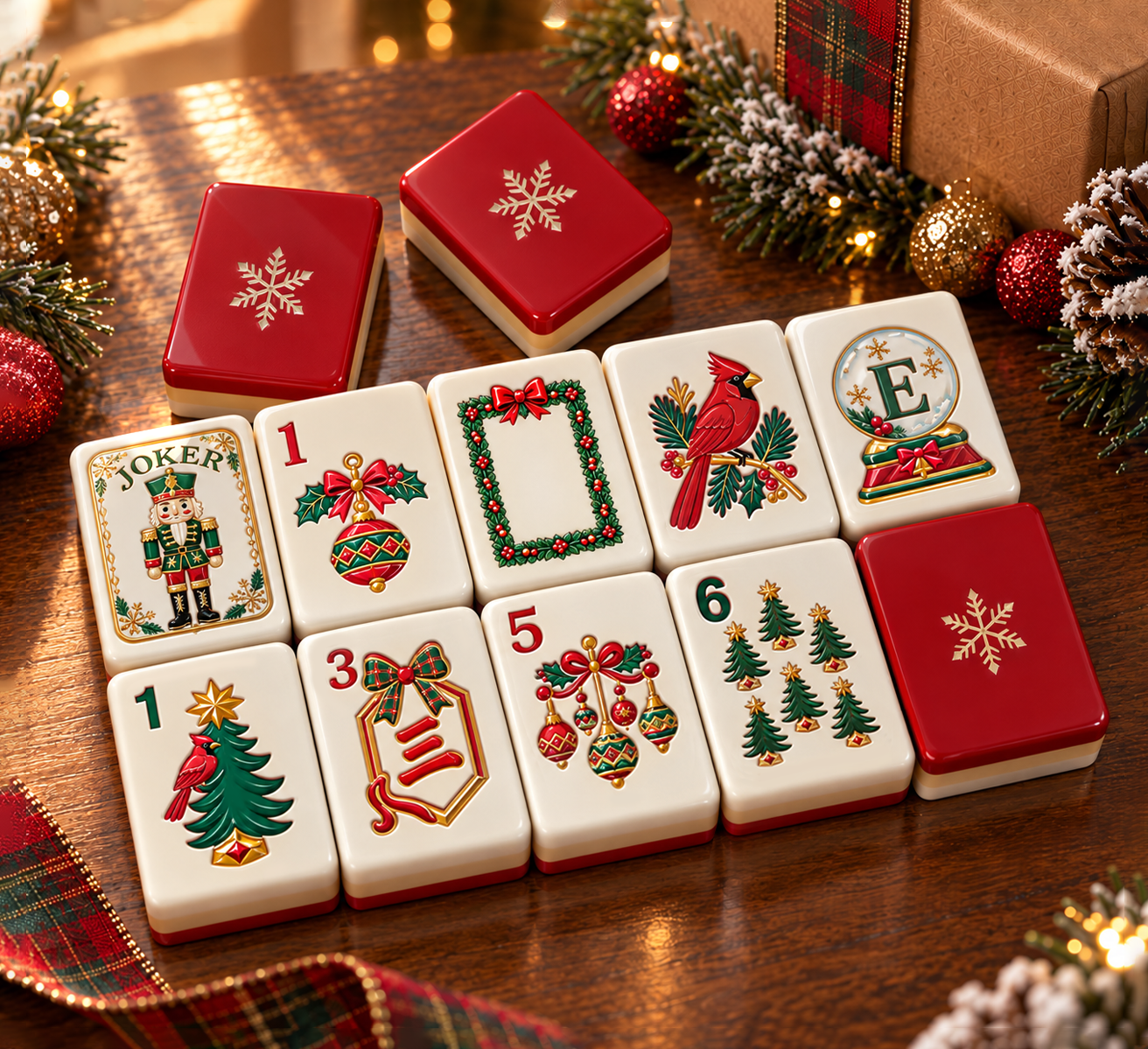 | Holiday Red Christmas Mahjong Set $289.99 |
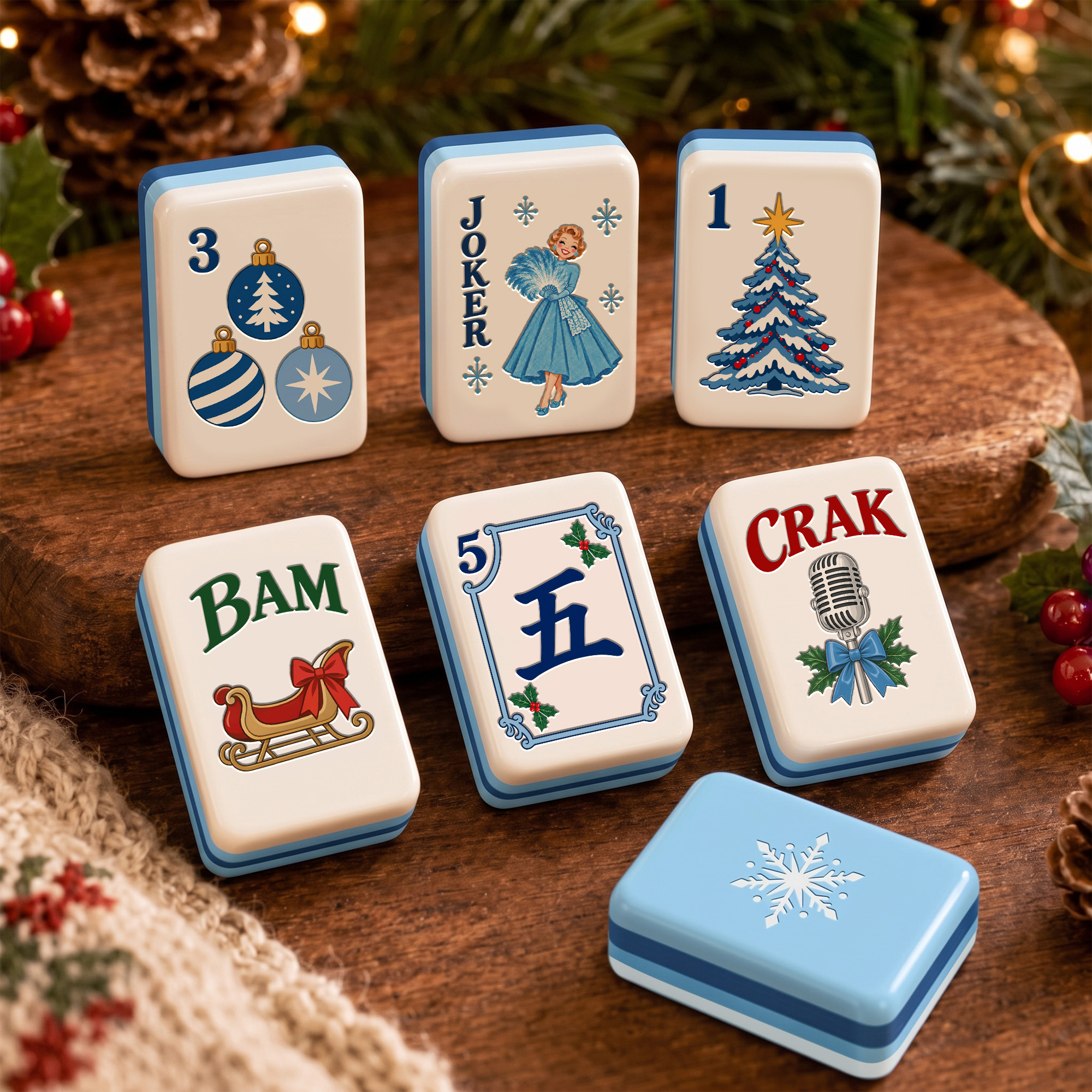 | White Christmas Sisters Mahjong Set $289.99 |
Racks with pushers keep your passed and received tiles organized on your side of the table:
 | Iridescent Mahjong Racks with Pushers, Set of 4 $139.99 |
FAQ
What is the Charleston in mahjong?
A series of tile passes made before play begins in American Mahjong. Players pass three tiles right, across and left, then may play an optional second round and a courtesy pass.
Is the Charleston required?
The first Charleston is required. The second Charleston is optional and any player can stop it. The courtesy pass is optional too.
Can you pass Jokers in the Charleston?
No. Jokers can never be passed.
What is a blind pass?
On the last pass of each Charleston, you can pass on tiles you just received without looking at them, instead of giving up tiles from your own hand.
Does Chinese Mahjong have a Charleston?
No. The Charleston is part of American Mahjong only.
Shipping: we ship to all US addresses. Shop American Mahjong sets, racks or mats.


View More
View More
View More
Copyright © 2026 Mahstead. All Rights Reserved | (361) 264-4881
