
Mahjong Etiquette and House Rules for a Friendly Table
Last updated: Nov 18, 2026
Mahjong Rules Guide › Level 4 — Strategy & variations · Guide 25 of 25
Mahjong etiquette is the unwritten contract between four people who agree to spend hours together under pressure, money often on the line, and egos very much involved. A clear, warm table culture—backed by agreed house rules—turns a tense game into a gathering people look forward to. This guide covers the customs that make your table a place people want to return to, and the house rules that prevent disputes before they start.
Why Etiquette Matters at the Table
Etiquette is not snobbery. It is respect made visible. When you:
Protect the integrity of discards and melds so no one can claim confusion later
Keep the game moving so no one drowns in downtime
Stay present and engaged so the host feels the effort is worthwhile
Accept losses without sourness so the next game feels fresh
…you signal that the game and the people at your table matter. Etiquette also prevents the most common source of conflict: ambiguity. A tile once discarded should be visibly, obviously in the discard pile. A pung should sit in a clear line. A hand should announce its Mahjong loudly so no one later claims they didn't hear. These habits cost nothing and eliminate 90% of argument.
Core Table Etiquette: The Unwritten Rules We All Follow
Tile Handling and Disclosure
Never touch another player's hand. If you need to check a tile count or confirm a meld, ask permission and let the player show you. Hands are private until they are exposed or claimed as Mahjong.
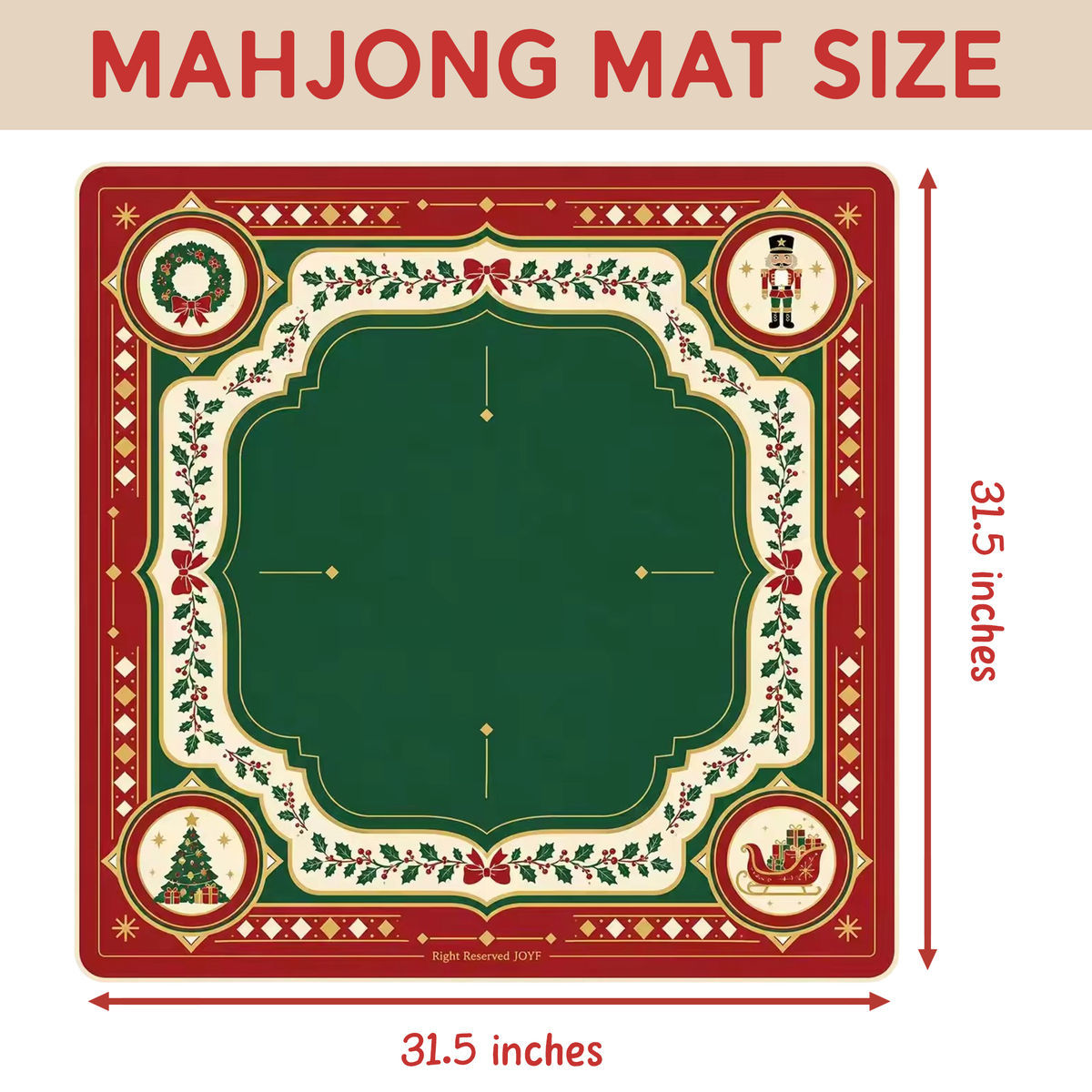
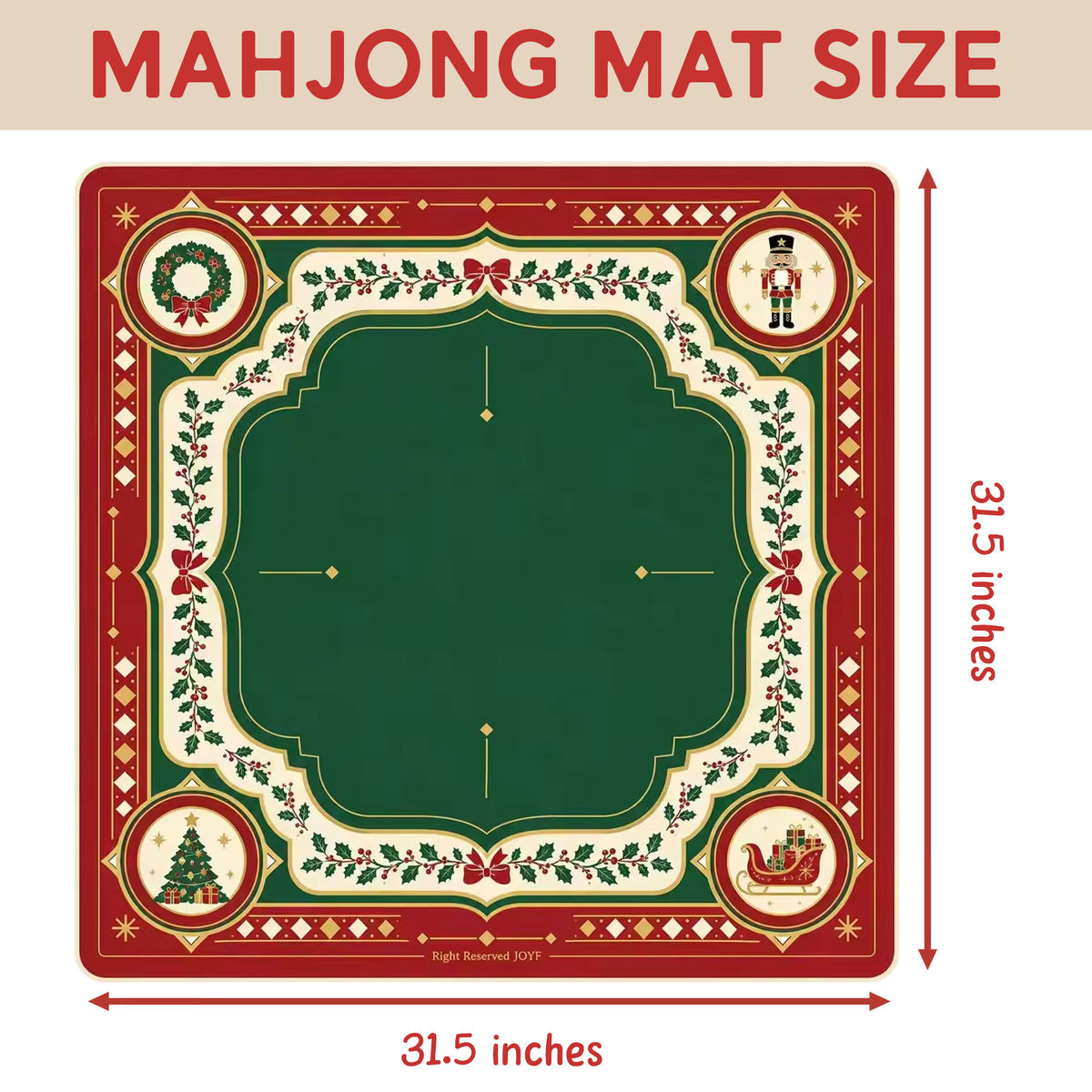
Discard clearly and audibly. When you throw a tile, announce it (e.g., "Three Craks") and place it in the center of the table, upright, in the discard line in order. Never toss it lazily into a heap. A clear discard line is the heartbeat of the game. If your group uses mahjong mats with printed discard zones, place tiles in that zone so the sequence is visible to all four players.
Jokers and redemption. If you hold the real tile for an exposed joker on another player's side of the table, you may claim that joker on your turn by announcing it (e.g., "I take the joker for the Soap Dragon") and replacing it with your real tile. Do this quickly and respectfully. Never mock a player for using a joker, and never hesitate to redeem one if it blocks your own win.
Dead walls, kongs, and draws. Always place kongs in the correct order. If you draw from the dead wall, make sure it is visible that you drew from the dead wall, not from the living wall. If there is any doubt, pause and let the table confirm.
Speed and Attention
Play at a reasonable pace. Mahjong requires thought, but not eternal silence. A good rule of thumb: decide your discard within 10–15 seconds. If you are truly torn between two tiles, announce that you are thinking and then decide. Endless hesitation wears on the other three players and makes the game feel like work instead of fun.
Stay at the table. If you need to leave mid-game (bathroom, phone, kitchen), say so briefly and step away quietly. Don't take a 5-minute phone call at the table. A one-minute absence is part of the game; a longer one is disruptive.
Engage with the game. You don't need to cheer or cry out, but watch what people discard. Notice who is fishing and who is one tile away from Mahjong. This is both respectful to the players and the best way to learn. If you are clearly not paying attention, you signal that you don't care about the game or the people in it.
Announcing Mahjong and Verification
Announce loudly and clearly. When you Mahjong, say it three times: "Mahjong! Mahjong! Mahjong!" or the house standard. Do not mumble or let anyone doubt you claimed it. The moment you announce, the hand stops—no one draws another tile, no one discards.
Verify before payment. Before chips or money change hands, spread your hand on the table (or on a designated area of the mat) and point to your groups. Any player may ask to see your card and confirm your hand is legal. Disagreement? Pause. Have all four players check the card. If the hand is invalid, you pay a loss and play resumes. This step protects everyone and is standard practice, not an insult.
House Rules That Prevent Conflict
The National Mah Jongg League publishes official rules, but at a home table, you have the freedom to set customs that suit your group. Discuss these before the first hand is dealt, ideally before the first Charleston.
Charleston and Passing
First Charleston: mandatory or optional? Decide whether all players must participate in the first Charleston (standard), or whether anyone can decline it. If someone declines, what happens? Does the group still complete the pass, or does everyone stop? A clear rule prevents confusion.
Second Charleston: who can stop it? Standard rule: any player can stop the second Charleston at any point by not passing. Some groups allow only the East player to stop it. Some require unanimous agreement to do a second Charleston at all. Decide and state it aloud at the start of play.
Courtesy pass in or out? After the second Charleston, a courtesy pass across (0–3 tiles) is optional. Some groups always do it; others skip it to speed up the game. Choose and announce.
Discards and Calling
Can you call a discard for a single or pair? No. This is a law of scoring and payouts and consistent across all American mahjong tables: you may call a discard only if it completes a pung, kong, quint, sextet, or Mahjong. Never for a single or a pair. State this rule explicitly at your table so new players understand.
Can you change your discard after you announce it? Once you say the tile aloud and place it in the line, it is final. You cannot take it back. This rule is universal and worth emphasizing to anyone new to the table.
Joker redemption window. Some groups allow you to redeem a joker on any of your turns, even if it was exposed five hands ago. Others say you must redeem it immediately (on your very next turn) or lose the right. Decide this upfront. Most friendly tables allow immediate redemption whenever you hold the real tile.
Money and Scoring
Before the game, agree on scoring and payouts so there is no surprise at settlement time. Decide:
Chips or cash? Chips are easier to track and less tempting to pocket mid-game. If you use cash, use a bank or a designated scorekeeper to track who owes what.
Buy-in amount. Everyone should know the stakes before they sit down. A low buy-in (or play for fun only) is fine and often the friendliest choice.
Payment order. Does the winner take from each player equally, or does the second-place finisher pay less? Is there a consolation payout for last place? The card determines the hand score; your house rule determines how that score flows.
Does losers' hand pay extra? Some groups require the player whose discard was claimed for Mahjong to pay a penalty on top of the standard payout. Decide this and state it.
Never loan chips mid-game. If a player runs out of chips, they are out of that hand. They may buy more chips between hands if the table agrees, but not mid-hand. This keeps the game clear and prevents awkward disputes.
Draws and Dead Walls
What triggers a draw (no Mahjong)? Standard rule: if the living wall is exhausted and no one has Mahjong'd, the hand is a draw and no one pays. Some groups require all players to still pay a small amount (half the normal hand fee) to the host if they draw. Clarify this.
How many passes does a dead wall draw count as? In most home games, a dead wall draw does not count as a pass toward the goal of reaching a set number of hands (e.g., 16 hands to finish an evening). Some groups count it as a full hand. Decide.
Three- and Two-Player Variants
If your group ever plays with three or two players, establish the house rules for that variant before you try it. Tile counts, position rules, and payment structures differ from the standard four-player game. Write them down or reference them verbally to avoid confusion.
Gear for this step
Practising mahjong etiquette and house rules for a friendly table? It's easier with the right setup — see our mahjong mats.
Managing Conflict and Ambiguity at the Table
Pause, never escalate. If someone claims a discard was not announced clearly, or if a hand verification reveals an illegal meld, stop the game. Don't argue. Have all four players look at the card and the hand. If the majority agrees, the ruling stands. If there is genuine disagreement, that hand is usually voided and play resumes.
The rule book is the tiebreaker. If your group has a disagreement that house rules don't cover, check the official rules (published by the National Mah Jongg League). If you still disagree, that's a sign you need to discuss it between games and add it to your house rules list.
Never dispute payment after the next hand begins. Settlement should happen immediately after Mahjong is verified. If a player claims they overpaid after the hand is packed and the next hand is dealt, it is too late. This rule prevents endless retroactive complaints.
The Spirit of Your Table
The goal of etiquette and house rules is not to create a rigid, joyless game. It is to create a space where four people can relax, compete fairly, and trust each other. Humor, teasing, and friendly banter are part of a healthy table. Anger, dismissiveness, and rule-lawyering are not. If a player consistently violates etiquette or makes others uncomfortable, it is fair to ask them to step back from future games.
A great mahjong table is one where new players are welcomed warmly, rules are explained without condescension, mistakes are treated as learning moments, and winners don't gloat and losers don't sulk. That culture doesn't happen by accident—it is built by players who care about the game and each other.
Common Mistakes
Assuming everyone knows your house rules. Even small deviations from standard play (e.g., "we always do a courtesy pass" or "losers pay extra") must be stated aloud before the first Charleston. Don't assume new players know your customs.
Letting ambiguity slide. If a discard is mumbled or a hand verification is rushed, you invite dispute. Pause, clarify, and confirm. It takes 30 seconds and prevents an hour of argument later.
Mixing money and friendship carelessly. If stakes are involved, be crystal clear about amounts, payment order, and who keeps the bank. A scorecard prevents grudges.
Shaming new players for mistakes. Everyone is new once. A gentle correction ("We usually call that aloud") teaches far better than mockery.
Discussing strategy mid-hand or in front of a player deciding their discard. Keep chatter light and never hint at what tile someone should throw. That's cheating and it ruins the game.
Next Steps
You have now moved through all 25 guides in this series—from the tile names and basic rules all the way to how American mahjong differs from other variants and the social fabric that holds a table together. The final step is yours: host your first game (or return to your regular table with fresh confidence). Use these guides as a reference whenever a rule question arises, and remember that every player at your table has felt nervous, confused, or defeated at some point. The warmth with which you greet that experience—in yourself and in others—is what transforms mahjong from a game into a practice in patience, strategy, and friendship. Welcome to the table.
FAQ
What should I do if two players both claim to have Mahjong'd on the same discard?
The player whose turn it is gets the discard. If a player out of turn calls Mahjong on another player's discard, the player whose turn it is has priority. If you reach this conflict, the best rule is: the player closest to East position in turn order wins the discard.
Is it rude to ask to see another player's hand if they have been exposed?
No. A group of three or more tiles is on display and everyone at the table has a right to see it clearly. You may lean in, ask "Can I see that pung?" and the player should lay it out plainly. This is not accusatory—it is part of the game.
How should I handle a player who takes very long to discard every turn?
Address it between games, not mid-hand. Say something like, "I notice you take a long time on some turns—we're trying to keep the game moving. Would you be comfortable setting a faster pace?" If the behavior continues, slow play may be a reason to invite someone else next week.
What if someone wins a hand I believe is illegal?
Pause before they collect chips. Spread the hand on the table and ask, "Can you show me how this works?" with genuine curiosity, not accusation. If the hand violates the card, the player pays a loss. If you are unsure, check the card together. Assume good intent first.
Can a player back out of a game mid-way through?
Leaving mid-session is disruptive and often unfair (the remaining players cannot complete their planned number of hands). Before you start, agree on a minimum time commitment (e.g., "We play until 10 p.m." or "16 hands"). If someone must leave early due to emergency, they typically pay out their current chip count and may return for future games.
Should I correct a new player during their turn?
Not unless they are about to make an illegal move (e.g., call a discard for a pair when they don't have Mahjong). If they make a legal but unwise choice, let the hand play out and gently mention the card or strategy after. Teaching happens best after the pressure is off.
More in Level 4 — Strategy & variations
Ready to play at your own table?
Engraved 160-tile American mahjong sets, mats and racks — free shipping across the US.


View More
View More
View More
