How to Play Mahjong with 2 or 3 Players (Siamese and 3-Player Rules)
Last updated: Oct 08, 2026

Last updated: October 2026
Mahjong is built for four, but plenty of game nights end up with three people at the table, or just two. The good news: you do not have to cancel. American mahjong has a standard way to play with three players, and a two-player version called Siamese Mahjong that many players love on its own. This guide covers the setup, the deal, what changes with the Charleston and how each game ends.
Quick answer
3 players: build all four walls as usual, deal only to the three seats (13 tiles each, 14 to East) and play normally. The official rules skip the Charleston when fewer than four play, though many groups use a house-rule Charleston.
2 players: play Siamese Mahjong. Each player uses two racks and builds two hands at once, starting with 27 tiles. There is no Charleston, and you win by completing two Mahjongs.
At a glance: 4, 3 and 2 players
4 players | 3 players | 2 players (Siamese) | |
Racks | 4 | 3 | 4 (two per player) |
Walls | Four walls | Four walls, no hand for the empty seat | Walls, or a face-down pool for casual play |
Tiles dealt | 13 each, 14 to East | 13 each, 14 to East | 27 each, East draws a 28th |
Charleston | Yes | Not in the official rules (many groups add one) | No |
Hands per player | 1 | 1 | 2, one on each rack |
Game ends | First Mahjong | First Mahjong | Two Mahjongs, or the tiles run out |
How to play mahjong with 3 players
Setup and the deal
Build four walls exactly as you would for four players, even though one seat is empty. All the tiles stay in play: no hand is dealt to the empty seat, and its wall is drawn from in turn like any other. East breaks the wall and the three players take tiles four at a time until each holds 12. The finish of the deal has been described a few ways over the years; one common method is for East to take two more tiles and the other two players one each, so East starts with 14 and everyone else with 13. Pick one method and keep it for the whole session.
The Charleston with 3 players
The official American rules skip the Charleston when there are fewer than four players: after the deal, East simply discards and play begins. Many groups find that too abrupt and agree on a house rule instead, such as passing right and left and leaving out the across pass. Either way is fine, as long as everyone agrees before the first hand. If you are new to the passes, read the Charleston explained first.
Playing and scoring
Everything else works like the four-player game: draw, discard, call discards for exposures and declare Mahjong with a hand from the current card. The winner collects from the other two players instead of three. For the basics of a turn, see how to play American mahjong, and for payouts, American mahjong scoring.
Tips for 3-player games
Expect rougher starting hands if you skip the Charleston, so keep two or three target hands open longer.
Watch two opponents, not three. It is easier to read what each player is collecting from their discards and exposures.
Games can run longer because more tiles stay in the wall, so there is more time to change direction.
How to play Siamese Mahjong (2 players)
Siamese Mahjong is the two-player version of American mahjong. Instead of one hand each, both players build two hands at the same time, one on each of their two racks. It moves quickly and rewards planning, because you control far more of the tiles than in a four-player game.
What you need
A full American set, the current card and four racks: two for each player. A standard set of four racks is exactly what a Siamese game needs, and racks with pushers make it easier to keep two hands tidy. More in mahjong racks with pushers.
Setup: walls or a pool
For casual play, many players skip the walls: shuffle the tiles face down into a pool on one side of the table and keep discards on the other side, mixing the pool now and then. Tournaments and stricter groups build walls on the racks instead. Both work for a game at home.
The deal
Each player takes 27 tiles. There is no Charleston. East then draws a 28th tile and makes the first discard. From that point, each player either draws a tile or calls the other player's discard, then discards.
Building two hands
Arrange your tiles across both racks into two hands from the card, ideally two hands that do not compete for the same tiles. You can move concealed tiles between racks freely, but once you expose a group, it stays with the hand on that rack. Jokers work as usual, and you may exchange a Joker from your own exposures or your opponent's, until that hand has been declared Mahjong. For Joker basics, see mahjong Jokers explained.
Winning a Siamese game
Each rack is its own 14-tile hand. When one rack makes a hand from the card, you declare Mahjong and expose it, then keep playing to complete a second Mahjong on your other rack. The game ends when a player has two Mahjongs or when the tiles run out. Scoring varies by group; a common method pays the first Mahjong at card value and doubles the second.
Tips for Siamese Mahjong
Choose two hands that use different tiles, for example one Winds and Dragons hand and one built on a single suit.
Be careful with early Mahjong calls. Once a hand is declared, its Jokers are frozen, so some players wait if they can still use those Jokers.
Count your tiles often. 27 between turns and 28 after drawing; a wrong count can kill a hand.
Practice reading the card for two hands at once. Our guide to how to read a mahjong card helps.
What you need to play with 2 or 3 players
A full American set with Jokers and Flowers. See how to choose an American mahjong set.
Four racks, needed for Siamese play and handy for building four walls with three players.
The current card for each player.
A mat or table cover to keep tiles quiet, even on a small table. See mahjong table covers.
Siamese Mahjong needs all four racks, so a matching set makes the table easy to set up:
 | Crystal Clear Mahjong Racks, Set of 4 $139.99 |
Browse every style in our mahjong racks. And if you are building a set from scratch, our best seller has 160 engraved acrylic tiles:
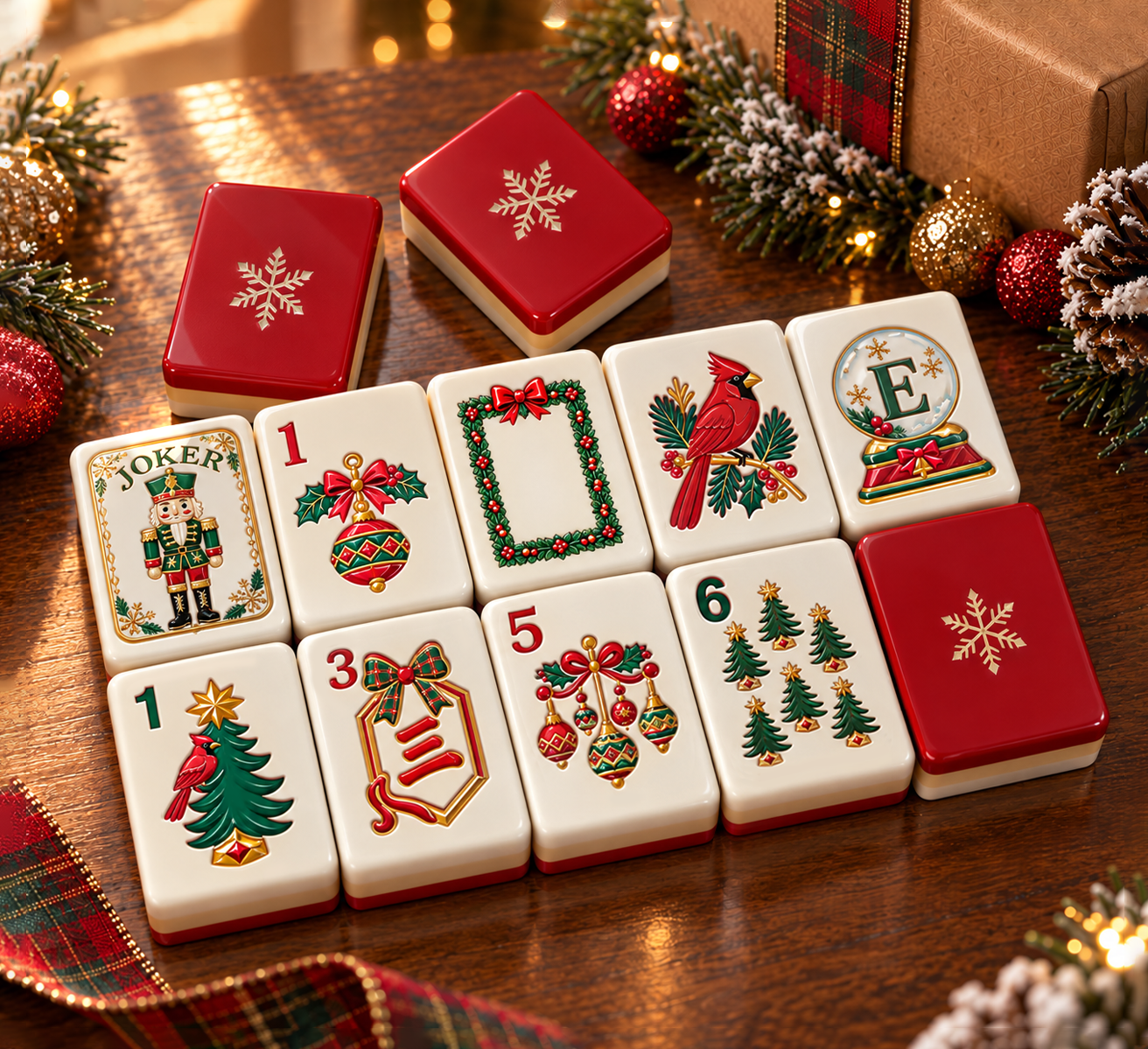 | Holiday Red Christmas Mahjong Set $289.99 |
See every design in our American mahjong sets.
FAQ
Can you play mahjong with 3 players?
Yes. Build four walls, deal to the three seated players and play normally. The official American rules skip the Charleston with three players, but many groups use a house-rule Charleston.
Can you play American mahjong with 2 players?
Yes, with Siamese Mahjong. Each player uses two racks, takes 27 tiles and builds two hands at once. The first player to complete two Mahjongs wins.
Is there a Charleston in Siamese Mahjong?
No. Each player controls so many tiles that the Charleston is left out.
How many racks do you need for Siamese Mahjong?
Four, two for each player, so a standard set of four racks is enough.
How many tiles does each player get with 3 players?
Thirteen each, with fourteen for East, the same as in a four-player game.


View More
View More
View More
Copyright © 2026 Mahstead. All Rights Reserved | (361) 264-4881
