
American vs Chinese vs Riichi Mahjong: The Real Differences
Last updated: Nov 18, 2026
Mahjong Rules Guide › Level 4 — Strategy & variations · Guide 24 of 25
If you've watched others play mahjong online or traveled abroad, you've likely noticed the game looks familiar but plays like a completely different beast. American mahjong is not a variant of Chinese mahjong or Japanese riichi mahjong—it is a separate game with its own group structure, tile mechanics, and rules. We'll walk through the key differences so you understand what makes our game distinctive and why you cannot simply apply Chinese or riichi rules to an American set.
The Biggest Difference: Card-Based Hands vs. Memory-Based Hands
The most fundamental distinction is how hands are defined:
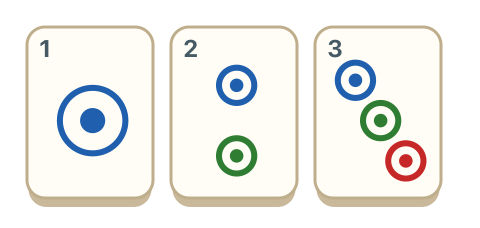
American mahjong: Every legal hand is printed on the seasonal card published by the National Mah Jongg League (NMJL). Players study the card before the game, then build hands exactly as shown. A hand like "1 Dot / 2–2–2 Dots / 3–3–3 Dots / 4–4–4 Dots / 5–5 Dots" only wins if that exact pattern appears on your card. You cannot win a hand that is not listed.
Chinese mahjong: No card exists. Players memorize standard hand patterns (or rely on regional variations). A winning hand is determined by a rule set, not a list. The same hand type can win in every game, year after year.
Riichi (Japanese) mahjong: Like Chinese, it uses rule-based standards, not a card. Winning hands follow a point-scoring system based on pattern type and "melds" (open groups).
This difference means you cannot move between an American game and a Chinese or riichi game with the same strategy or knowledge. On an American table, the card is law; off the table, standard hands do not apply.
Groups: American Has No Chows
The structure of valid groups is where American mahjong diverges most sharply:
American mahjong: Groups must contain identical tiles only: a pair (2 tiles), pung (3 identical), kong (4 identical), quint (5 identical), or sextet (6 identical). There are no chows, runs, or sequences. A "1–2–3 sequence" is not a group in American mahjong. If your card shows "1 Bam, 2 Bam, 3 Bam" as separate items, those must come from three separate pungs or as singles—never as one chow.
Chinese mahjong: Groups are pairs and melds. A meld is either a pung (three identical) or a chow (three consecutive tiles of the same suit, e.g., 1–2–3 Dots). A winning hand is typically one pair plus four melds (some regional rules vary).
Riichi mahjong: Like Chinese, chows are legal melds. A player can form a "sequence" of consecutive numbers and use it as a group. Triplets and sequences both count as melds toward a winning hand.
This is why an engraved American mahjong set with 152 tiles is shuffled among identical-tile groups, never consecutive-number groups.

Flowers, Jokers, and Tile Mechanics
American mahjong treats flowers as ordinary playing tiles. You keep all eight flower tiles in the game, and you may use them in groups the card calls for (e.g., a pair of Flowers, or a pung of Flowers FFFF). No replacement tile is drawn when you receive a flower—all 152 tiles stay in play. Flowers may be part of groups just like any other tile.
In contrast:
Chinese and riichi mahjong: Flowers (and sometimes seasons) are bonus tiles. When you draw a flower, you immediately set it aside, score bonus points, and draw a replacement tile from the wall. Flowers do not become part of groups; they are not used to build melds.
Jokers: American mahjong includes Jokers (usually eight) that can stand in for any tile in a group of three or more. Chinese and riichi mahjong typically have no Jokers at all, or use them differently (if at all).
This means the tile count and hand-building process are fundamentally different between American play and the other two games.
Discards and Calling Tiles
When a tile is discarded, the rules for who can claim it differ:
American mahjong: You may only call a discard to complete an exposed pung, kong, quint, or sextet—or to win the hand (Mahjong). You cannot call a tile for a single or a pair unless it completes your Mahjong. This defensive strategy of reading exposures and safe discards is central to American play.
Chinese and riichi mahjong: You can call a discard to complete any meld, including for a pair or the final group of a winning hand. The rules are more permissive about when a discard can be claimed.
The Charleston and Initial Draw
The Charleston—the mandatory three-way tile exchange before play begins—is unique to American mahjong:
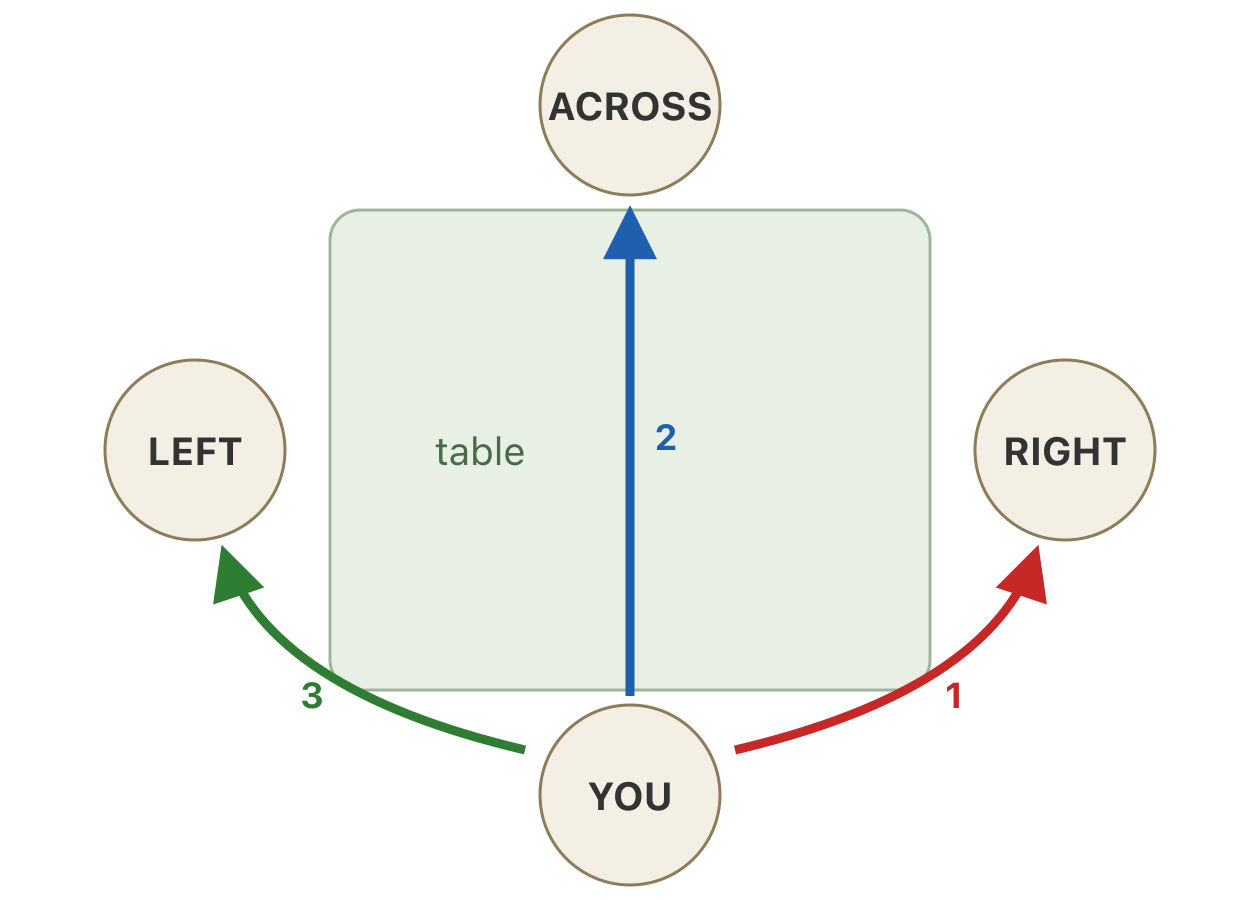
American mahjong: East draws 14 tiles; the other three players draw 13 each. Then: pass 3 tiles right, 3 across, 3 left (the last pass may be blind). An optional second Charleston (left, across, right) may follow. Then an optional courtesy pass of 0–3 tiles. Choosing a hand after the Charleston requires real-time analysis of your holdings and the card.
Chinese and riichi mahjong: No Charleston exists. Players draw tiles from the wall in a standard draw order (usually East draws 14, others 13). The game begins immediately after the wall is built.
The Charleston is a strategic layer that does not exist in other mahjong games.
Gear for this step
Practising american vs chinese vs riichi mahjong? It's easier with the right setup — see our engraved American mahjong sets.
Scoring
American mahjong scoring is card-based: each hand on the card carries a fixed point value. If you win on a discard, the discarder pays double and the other two pay single. If you self-draw, all three pay double. Jokerless hands are commonly doubled.
Chinese and riichi mahjong use point systems based on meld type, hand complexity, and other factors. A "limit hand" in riichi mahjong may score the same regardless of how simple or difficult the hand was to form. American scoring is always tied to the card.
Playing Across Game Formats: Three and Two Player
American mahjong accommodates three and two player games by adjusting tile counts and draw sequences. Chinese and riichi mahjong are almost always four-player games; three and two player variants are rare or non-standard.
House Rules and Etiquette
American mahjong tables vary widely in house rules and etiquette. Some tables enforce strict NMJL rules; others allow optional Charlestones, bonus melds, or regional scoring adjustments. Chinese and riichi mahjong also have regional variations, but the baseline game structure is more consistent.
Common Mistakes When Switching Between Games
Assuming chows are legal: If you've played Chinese or riichi mahjong, your instinct is to form runs (1–2–3, 2–3–4, etc.). In American mahjong, these are not groups. You must build identical-tile groups only.
Treating flowers as bonuses: Many new American players expect to set flowers aside and draw replacement tiles. In our game, flowers stay in your hand and become part of groups just like Dots or Craks.
Ignoring the card: In Chinese and riichi games, you know the hand rules by memory. In American mahjong, the card is absolute law. A hand that looks perfect may not be on the card—and therefore cannot win.
Forgetting East's 14 tiles: In all three games, East has an extra tile, but the significance differs. In American mahjong, East discards first, which is a strategic advantage in managing the hand early.
Calling tiles incorrectly: In American mahjong, calling a discard for a single or pair (unless it is Mahjong) is illegal. In Chinese and riichi, this is allowed. Always verify house rules before playing.
Why These Differences Matter
American mahjong was designed as a distinct game in the early 20th century. It borrowed the tile structure and basic spirit of Chinese mahjong but created new rules around card-based hands, eliminating chows, and standardizing scoring. The result is a game that rewards memory of the card, strategic hand selection, and defensive play—quite different from the memory and meld-building focus of Chinese or riichi play.
If you've played both American and Chinese/riichi mahjong, you've played two separate games. Neither is "better"—they are simply different. When you sit at an American table, the card rules all. When you travel to a Chinese game or join an online riichi room, expect to learn new group structures, new scoring, and new strategy.
FAQ
Can I play American mahjong hands without the card?
No. American mahjong is strictly card-based. Every hand must appear on the current NMJL card. If a hand is not printed on the card, you cannot win it. This is unlike Chinese or riichi mahjong, where hand types are rule-based and unchanging.
Is a 1–2–3 sequence ever legal in American mahjong?
Never as a single group. If your card calls for those three tiles, they must come from three separate pungs or be listed as singles. American mahjong has no chows or runs.
Do flowers work the same way in American mahjong as in Chinese mahjong?
No. In American mahjong, flowers are ordinary tiles that stay in your hand and form groups (e.g., a pair or pung of Flowers). In Chinese and riichi mahjong, flowers are bonus tiles set aside immediately upon draw, with a replacement tile drawn from the wall.
Can I use the same strategy for American, Chinese, and riichi mahjong?
No. Each game has different group structures, scoring systems, and strategic priorities. American mahjong emphasizes card study and hand selection; Chinese and riichi mahjong emphasize meld-building and defensive discards. Learning one game does not transfer directly to another.
What is the Charleston, and do other mahjong games use it?
The Charleston is a mandatory three-way tile exchange unique to American mahjong (pass 3 right, 3 across, 3 left, with an optional second pass). Chinese and riichi mahjong do not use a Charleston; play begins immediately after the wall is drawn.
Is East's extra tile (14 tiles vs. 13) the same across all mahjong games?
Yes—East draws one extra tile in all four-player mahjong games. However, in American mahjong, East also discards first, which has strategic importance. In some other games, the extra tile is used differently.
More in Level 4 — Strategy & variations
Ready to play at your own table?
Engraved 160-tile American mahjong sets, mats and racks — free shipping across the US.


View More
View More
View More
