
The White Dragon (Soap) and Why It Doubles as Zero
Last updated: Nov 18, 2026
Mahjong Rules Guide › Level 1 — Meet the tiles · Guide 5 of 25
The White Dragon, affectionately called Soap by American mahjong players, is one of the four honor tiles we need to recognize instantly. What makes it unique among the Dragons is that it fills two roles at once: it works as a pure honor tile in most hands, and it stands in as zero in specific year-style patterns. Once you see how and why, reading hands from the card becomes much simpler.
What Is Soap (the White Dragon)?
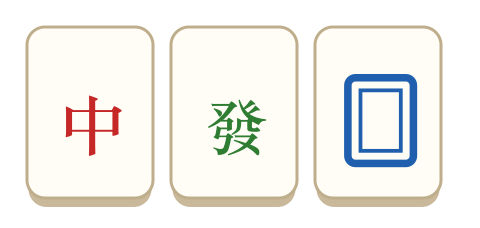
The White Dragon is one of three Dragons in American mahjong, along with the Red Dragon and the Green Dragon. On a tile, it appears as a blank square—completely empty or outlined. In our weekly games, we call it Soap because of its clean, blank look. The set includes 4 copies of the White Dragon, just like every other tile.
There are 12 Dragon tiles total in a 152-tile set: 4 Red, 4 Green, and 4 White (Soap). All three are honor tiles, meaning they do not belong to the Dots, Bams, or Craks suits. But the White Dragon has one trick that sets it apart.
Soap as an Honor Tile: The Standard Role
In most hands, the White Dragon functions exactly like the Red Dragon or the Green Dragon. You can build a pung (3 identical tiles) or kong (4 identical tiles) from Soaps alone. You match them, hold them, and play them like any other honor.
For example, a hand might include a kong of Soaps (all 4 White Dragons), sitting openly on the table. The remaining tiles in the hand come from other groups. This is straightforward: Soap is just another Dragon.
Soap as Zero: The Hidden Role
Here is where the magic happens. In year-style hands on the card, the White Dragon represents zero. This is used to denote the year or a number that includes zero as a digit.
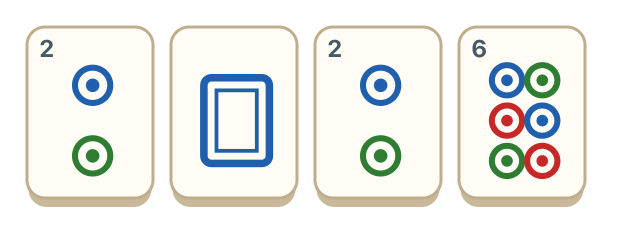
For example, if you are playing a hand that uses the year 2025, the pattern might include tiles for "2," "0," "2," and "5." The zero is shown on the card as the blank square—the White Dragon. When you build that hand, you substitute a real White Dragon tile in place of the zero digit.
Why This Matters When Reading the Card
The National Mah Jongg League publishes a card every spring with all the legal hands. When you look at a hand pattern that includes singles (one tile at a time), you may see a blank space or a specific symbol. That blank or symbol represents the White Dragon. The year hands are among the most popular patterns in American mahjong, and they show up on every card.
A single tile is almost always shown as a small square or rectangle on the card. When that square is blank or outlined, it means "Soap here." When you go to build that hand at the table, you pick up a White Dragon and place it as that single.
Suit Connection: Why Soap Connects to Dots
There is a deeper link. The three Dragons each connect to one of the three suits:
Red Dragon connects to Craks
Green Dragon connects to Bams
White Dragon (Soap) connects to Dots
Because Soap aligns with Dots, and Dots are numbered 1–9, it makes sense that Soap can represent 0—the missing tenth position. This symbolic link is part of the game's elegance: every tile has a reason for its design and placement.
Gear for this step
Practising the white dragon (soap) and why it doubles as zero? It's easier with the right setup — see our engraved American mahjong sets.
How to Spot Soap on Your Hand When Building
When you sit down to set up an American mahjong game, you will receive your tiles from the wall. If you are building a year hand from the card, look at the card pattern for any single tiles that show a blank square. Those blanks are Soaps.
Draw your hand from the wall or the discard pile. When you need a Soap, pick one from your rack. Because Soap is a real tile (not a Joker or Flower), it counts as one of your 14 tiles and must stay in your hand until you are ready to expose your groups or declare Mahjong.
Step-by-Step: Building a Year Hand with Soap
Look at the card and find a year-style hand that appeals to you.
Read the pattern left to right. When you see a blank square, know that is a Soap (White Dragon).
Count how many Soaps you need for that hand.
As you draw tiles from the wall or discard pile, collect the Soaps along with the other tiles in the pattern.
Once you have all the tiles, arrange them into groups on your rack or expose them when you declare Mahjong.
Soap in Pungs, Kongs, and Mixed Groups
The White Dragon can also appear in a hand as part of a full group—three or four Soaps in a row, with no other tiles. This is no different from a pung or kong of Red Dragons or Green Dragons. A pung of Soaps is simply three White Dragon tiles together, counting as one group.
Soap cannot be mixed with Reds or Greens; groups must contain identical tiles only. A group of three tiles must all be the same to be legal.
Common Mistakes
Mistake 1: Confusing Soap with a Joker. The White Dragon is a real, fixed tile. Unlike a Joker, you cannot substitute a Soap for any other tile, and you cannot "redeem" it. A Soap is always a Soap. Jokers have their own rules, and a single Soap cannot do what a Joker does.
Mistake 2: Forgetting that Soap is a tile, not just a symbol. Some newer players treat the blank square on the card as "no tile here." In fact, that blank means you must place a real White Dragon tile in that spot when you build the hand. Soap takes up a physical space in your hand.
Mistake 3: Using Soap in a pair or single out of context. While a Soap can be a single tile in a year hand, it follows all the rules of the suit connection to Dots. You cannot use a Soap just anywhere; it belongs in patterns where the card shows it.
Mistake 4: Mixing up which Dragon is which. It helps to remember: Red goes with Craks, Green goes with Bams, and White (Soap) goes with Dots. Visual association locks it in.
Soap at the Table: What Happens When It Counts
In play, a White Dragon discarded by another player is just another discard. If no one calls it, it goes to the discard pile. If you need a Soap to complete an exposed group (a pung, kong, quint, or sextet), you can call the discard—just as you would for any other tile. You cannot call a discard Soap if you only need it for a pair or single, except as the final tile to complete Mahjong.
This rule applies to all tiles, not just Soap. The same rule prevents you from picking up a Red Dragon discard if you only need one Red Dragon to keep in your hand.
Next Step
Now that you understand the White Dragon and its dual role, you are ready to learn about the other honor tiles and how they fit into complete hands. Next in this series, we will explore how all the honor tiles—Winds, Dragons, Flowers, and Jokers—work together. Then we will move into reading full hands from the card. Each piece builds on the last, and soon the card will read like a familiar language.
FAQ
Is Soap the only tile that means two different things?
In terms of function, yes. Soap is the only tile with a dual role: honor Dragon in standard hands, and zero digit in year patterns. Other tiles have one fixed identity.
Can I use a Joker instead of a Soap in a year hand?
No. Jokers can only substitute for tiles in groups of 3 or more. Year hands use many singles, and Jokers cannot be used there. You must use a real White Dragon (Soap) for the zero position.
Why is it called "Soap"?
Because the White Dragon tile is blank and appears empty or plain—like a bar of soap. The nickname helps players remember it at a glance during play.
Does the White Dragon always mean zero in every hand?
No. In hands that are not year-based, a Soap is simply an honor tile like Red or Green. Only when the card shows a Soap as a single digit does it represent zero.
What if I cannot find a White Dragon in my set?
A standard 152-tile set includes 4 White Dragons, the same as any other tile. If you are missing one, check your set or contact Mahstead for support.
Can a Soap be part of a quint or sextet?
Yes, if the hand on the card calls for it. You would use five or six White Dragon tiles in a row, all identical. This is rare but legal.
More in Level 1 — Meet the tiles
American Mahjong Tiles Explained: Every Tile in the 152-Tile Set
The Three Suits: Bams, Craks and Dots (and How to Tell Them Apart)
Ready to play at your own table?
Engraved 160-tile American mahjong sets, mats and racks — free shipping across the US.


View More
View More
View More
