
9 Dot Mahjong Tile: Meaning, Role & How to Use It
Last updated: Nov 20, 2026
The 9 Dot is the highest numbered tile in the Dot suit—one of three core suits in American mahjong alongside Bams and Craks. Every standard 160-tile American mahjong set contains exactly four copies of the 9 Dot, which players must use as identical tiles in pungs (three-tile groups), kongs (four-tile groups), or as part of pairs. The Dot suit is traditionally associated with the White dragon, also called "Soap," making the 9 Dot valuable for hands requiring high-numbered Dots or sequences within the Dot family. Unlike Chinese mahjong, American mahjong contains no chows (sequences like 7-8-9)—only identical-tile melds—so the 9 Dot's role is strictly as a pung, kong, or unpaired tile. Learning its position in what's in an American mahjong set helps players grasp hand structure from day one.
The 9 Dot tile ranks as the highest member of the Dot suit in American mahjong. Every player who picks up a set receives four 9 Dots—one per player—as part of the standard 160-tile deck. Understanding this tile's role, value, and combinations transforms how you read hands and plan your discards.
What does the 9 Dot represent in American mahjong?
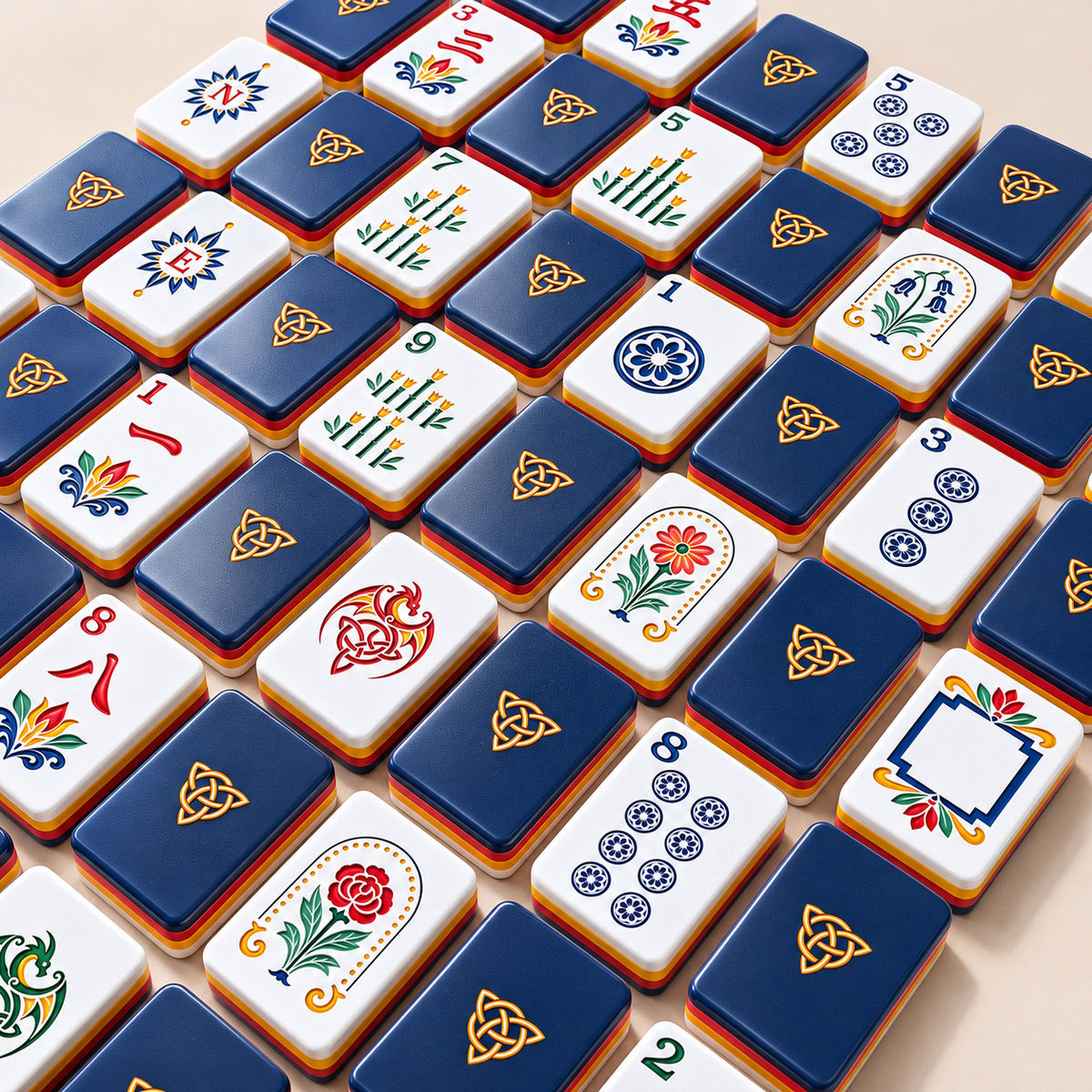
The 9 Dot is the highest-numbered tile in the Dot suit, represented visually by nine solid dots arranged in a grid or circular pattern on an acrylic or bone tile. In American mahjong, all Dot tiles (1 through 9) belong to one of three core suits; the 9 Dot specifically completes the Dot range and often pairs with hands requiring maximum numbers. Unlike some Asian variants where numerals hold zodiac or symbolic meaning, American mahjong treats numerals purely by rank and game rules. The Dot suit pairs thematically with the White dragon (Soap), though they are separate tiles entirely.
How do I use the 9 Dot in a winning hand?
The 9 Dot can only be used in three contexts: (1) as part of a pung (three identical 9 Dots), (2) as part of a kong (four identical 9 Dots), or (3) unpaired as a discard or held tile. Because American mahjong forbids chows (sequences), you cannot combine a 9 Dot with an 8 Dot and 7 Dot—that rule applies only to Chinese, Hong Kong, or Riichi variants. To use the 9 Dot defensively, read the current year's National Mah Jongg League card to see which hand patterns include the 9 Dot; common patterns pair it with other high-numbered Dots or Winds. When a player calls Mahjong, all their tiles must match exactly one hand listed on the card for that year.
🀄 Shop best-selling mahjong sets →
Does the 9 Dot have a higher value than other Dots?
In pure tile rank, the 9 Dot is the "highest" Dot because it bears the highest numeral. However, American mahjong does not assign scoring bonuses based on tile rank alone—value comes from hand complexity and rarity on the current year's card. A hand containing three 9 Dots and a White dragon may score no more than a simple hand with 1 Dots and a common pattern, depending on what the card lists. Scoring instead flows from factors like the number of exposed melds, whether you drew the winning tile yourself, and which player holds the winning tile. To understand scoring fully, reference the American mahjong scoring guide.
Can I swap or substitute the 9 Dot with a joker?
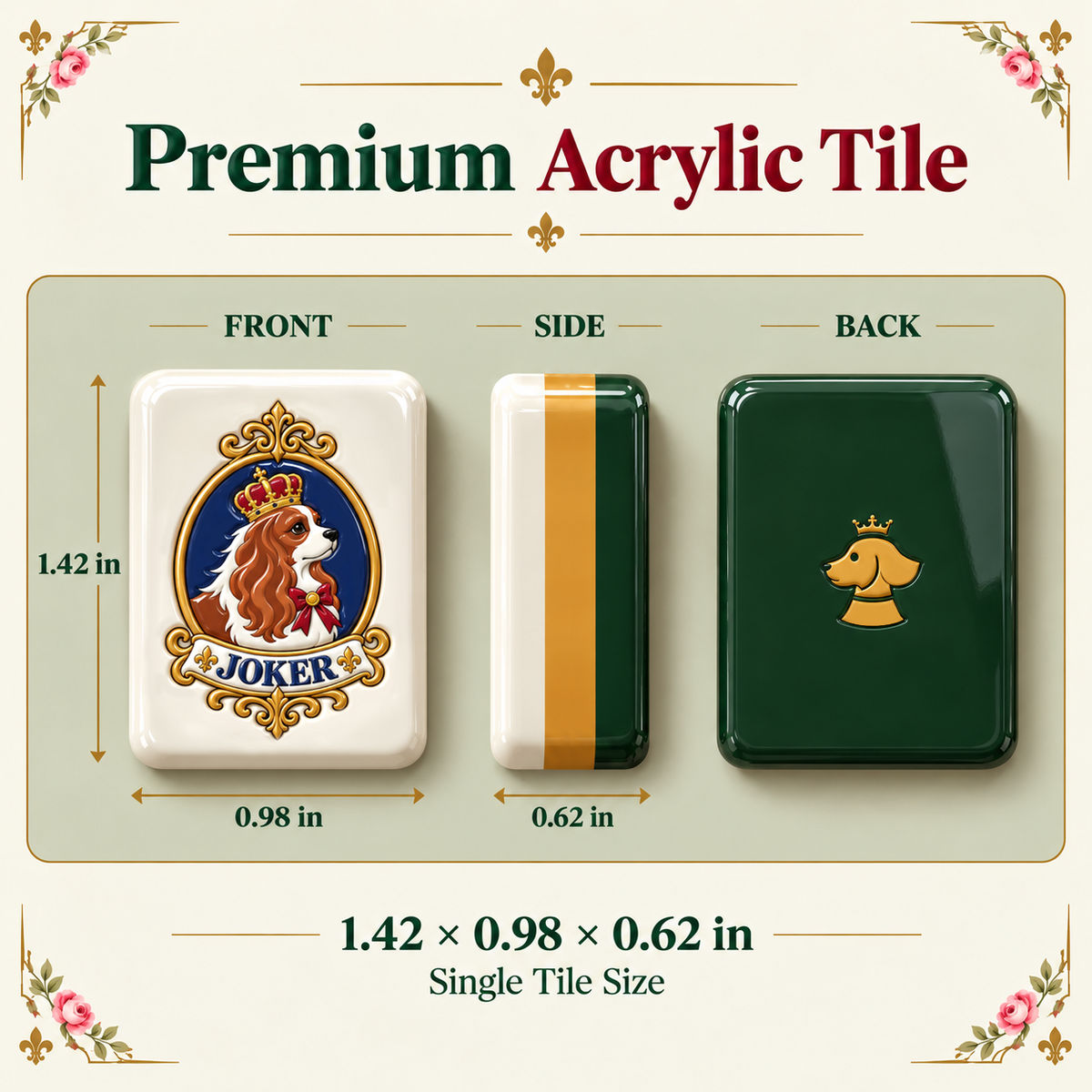
Yes, in American mahjong a joker can always substitute for any tile in a meld—except in a pair or as a single tile. If your hand calls for three 9 Dots and you hold only two 9 Dots, you may use one joker as a third 9 Dot. However, you cannot use a joker as both a 9 Dot and a pair; jokers are never played alone or doubled. This flexibility makes jokers powerful wild cards; many hands hinge on having enough jokers in hand to complete rare tile combinations. Learn more about how jokers work in American mahjong.
What hands commonly feature the 9 Dot?
Hands on the current year's card often feature the 9 Dot in "Like Numbers" patterns (e.g., three Dots of the same number plus Winds or Dragons), "Consecutive Pairs" (identical pairs of different Dot numbers), or mixed suit combinations. The card arranges hands into sections by type; scan the Dot columns to see which rows include a 9 Dot in your assigned hand. Since no two years' cards are identical, the frequency and prominence of the 9 Dot shift annually—a 9 Dot might appear in multiple hands one year and only one hand the next. Before each season, all four players should review the new card together to spot patterns and build shared table knowledge.
Scenario | How to Use the 9 Dot | Key Rule |
You have 9D, 9D, 9D | Expose as a pung (three-tile meld) | All three must be identical 9 Dots |
You have 9D, 9D, 9D, 9D | Expose as a kong (four-tile meld) | Can play all four; counts as one meld |
You have 9D, 9D + one joker | Expose as a pung | Joker substitutes for the third 9 Dot |
You have 9D but hand needs 8D | Cannot substitute the 9D | No sequences in American mahjong |
You hold 9D unpaired | Discard if hand doesn't call for it | High-numbered Dots are often safe discards early |
🎁 See our most-loved mahjong sets & accessories →
Why do some players fear or prize the 9 Dot?
Experienced players watch the 9 Dot carefully because it is a high, less-frequently discarded tile—if three 9 Dots have already been played and someone suddenly goes out, the fourth 9 Dot must be in their hand or used as a joker substitute. This makes the tile psychologically "hot": discarding it late in a round signals you don't need it, yet holding it signals you might be close to winning. New players often discard high-numbered Dots early without reading the card, not realizing their opponents might need them. The best defense is to read how to read a mahjong card before each game and track which tiles have been exposed or discarded.
What should I check before you buy a mahjong set with clear 9 Dots?
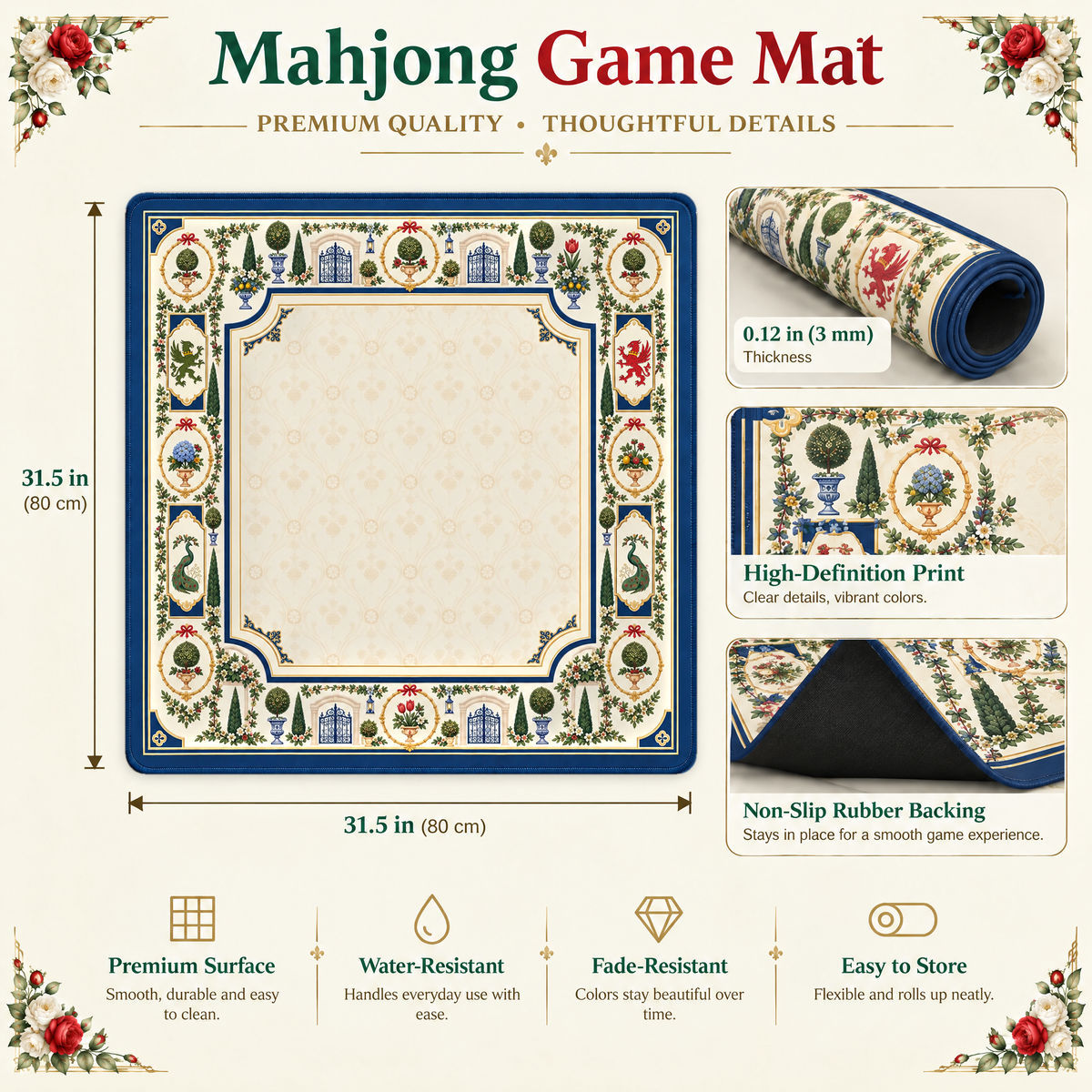
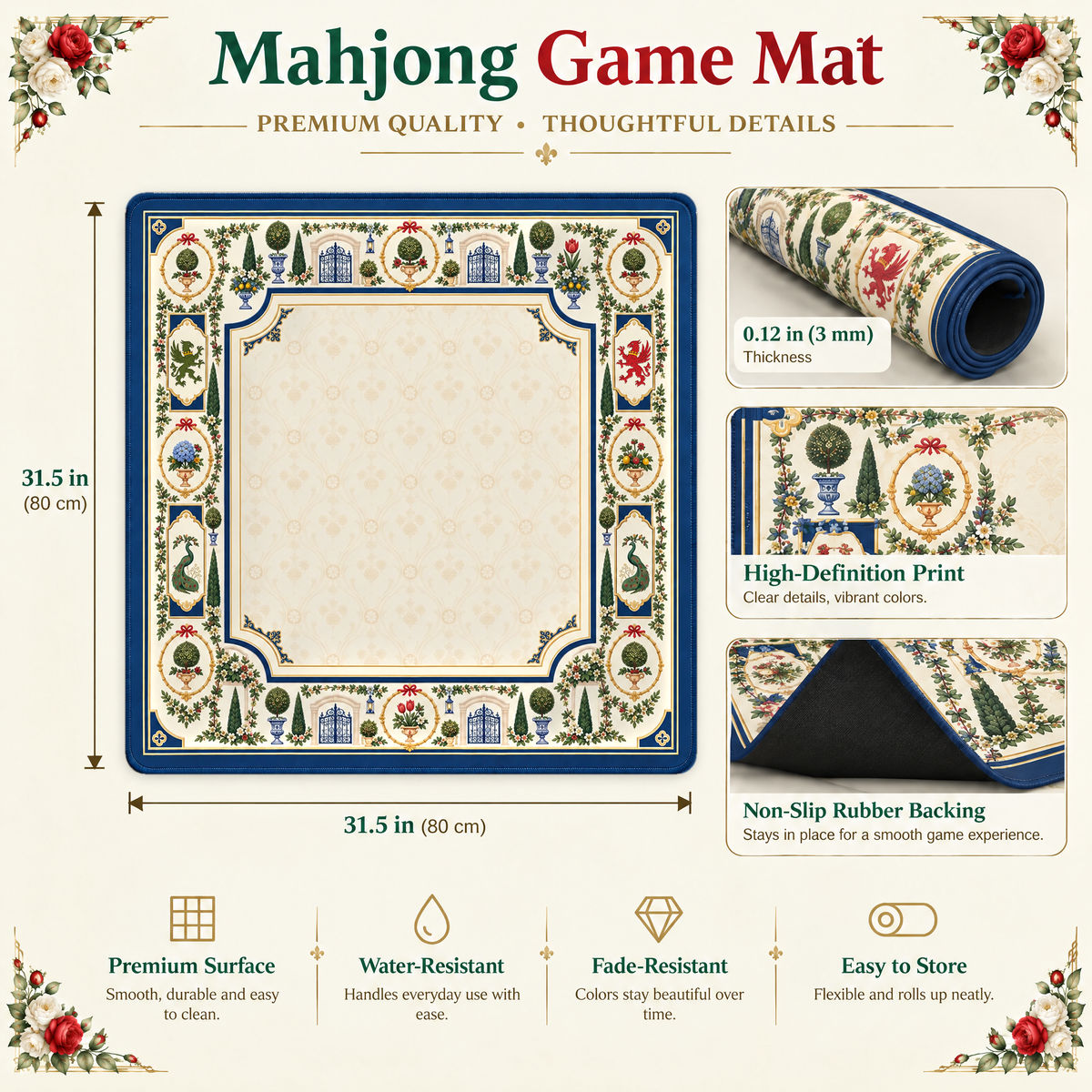
When selecting a 160-tile American mahjong set, examine how the Dot tiles are marked—ensure the 9 Dot is clearly distinguishable from the 8 Dot and 6 Dot, especially if you favor acrylic tiles in bright colors or minimal designs. Sets with engraved, embossed, or oversized numerals reduce errors during fast play. Place the set on a quality mahjong mat to improve tile visibility and handling. If you host weekly games, consider a set with contrasting tile colors so all players read the 9 Dot instantly, even under variable lighting.
✨ Find your Mahstead set — free US shipping →
What to Check Before You Buy
Tile clarity: Can you read "9" or see nine dots instantly at arm's length?
Tile weight: Heavy acrylic tiles slide smoothly on a mat; lighter tiles chatter and scatter.
Set completeness: Verify your set includes four 9 Dots; count all 152 playing tiles before your first game.
Storage: Ensure your mahjong bag or case keeps tiles organized and prevents loss.
Mat surface: A padded mat prevents tiles from sliding out of reach when the 9 Dot is discarded forcefully.
FAQ
Can the 9 Dot be a pair in American mahjong?
Yes—any two identical 9 Dots form a valid pair. Pairs are mandatory in winning hands; you must hold one pair and melds totaling fourteen tiles. Jokers cannot be used as a pair, so you must have two actual 9 Dot tiles if that pair is your winning pair.
Why does my set have four 9 Dots but I only see three in play?
Every standard 160-tile American set contains exactly four 9 Dots (one per player). If you count only three, one 9 Dot may be in a discard pile, held in an opponent's hand, or mixed into your tile wall. Count all tiles after each game; missing tiles suggest a tile was dropped or left in the bag.
Is the 9 Dot safer to discard than the 1 Dot?
Not necessarily. Discard safety depends on what the current year's card shows and what tiles have already been played. If the card features many hands with 9 Dots, holding the 9 Dot longer is riskier. Conversely, if the 9 Dot appears in only one hand pattern, discarding it early is generally safe—but confirm by reading the card with your group first.
What's the difference between the 9 Dot and the 9 Bam?
The 9 Dot belongs to the Dot suit (associated with the White dragon), while the 9 Bam belongs to the Bam suit (associated with the Green dragon). Each suit has its own 1–9 range; you cannot mix a 9 Dot with Bams or Craks in a single meld. American mahjong treats all suits equally in terms of rank.
How do I teach a beginner to recognize the 9 Dot quickly?
Show them the full Dot range (1, 2, 3, 4, 5, 6, 7, 8, 9) laid out in order. Point out the 9 Dot's distinctive full grid of nine dots, then ask them to find all four 9 Dots in the set and place them in your hand's discard area. Repetition over 2–3 games builds automatic recognition, especially if your tiles are clearly marked.
Does the 9 Dot rank differently in other mahjong variants?
Yes. In Chinese mahjong, the 9 Dot is used in sequences (chows) like 7-8-9, which American mahjong forbids. In Hong Kong and Riichi mahjong, scoring and hand structure differ significantly. American mahjong is played only with the current year's National Mah Jongg League card; no sequences, no chows, and all hands come from that card alone.


View More
View More
View More
