
New Year's Eve Mahjong Party Ideas: 5 Ways to Host
Last updated: Nov 23, 2026
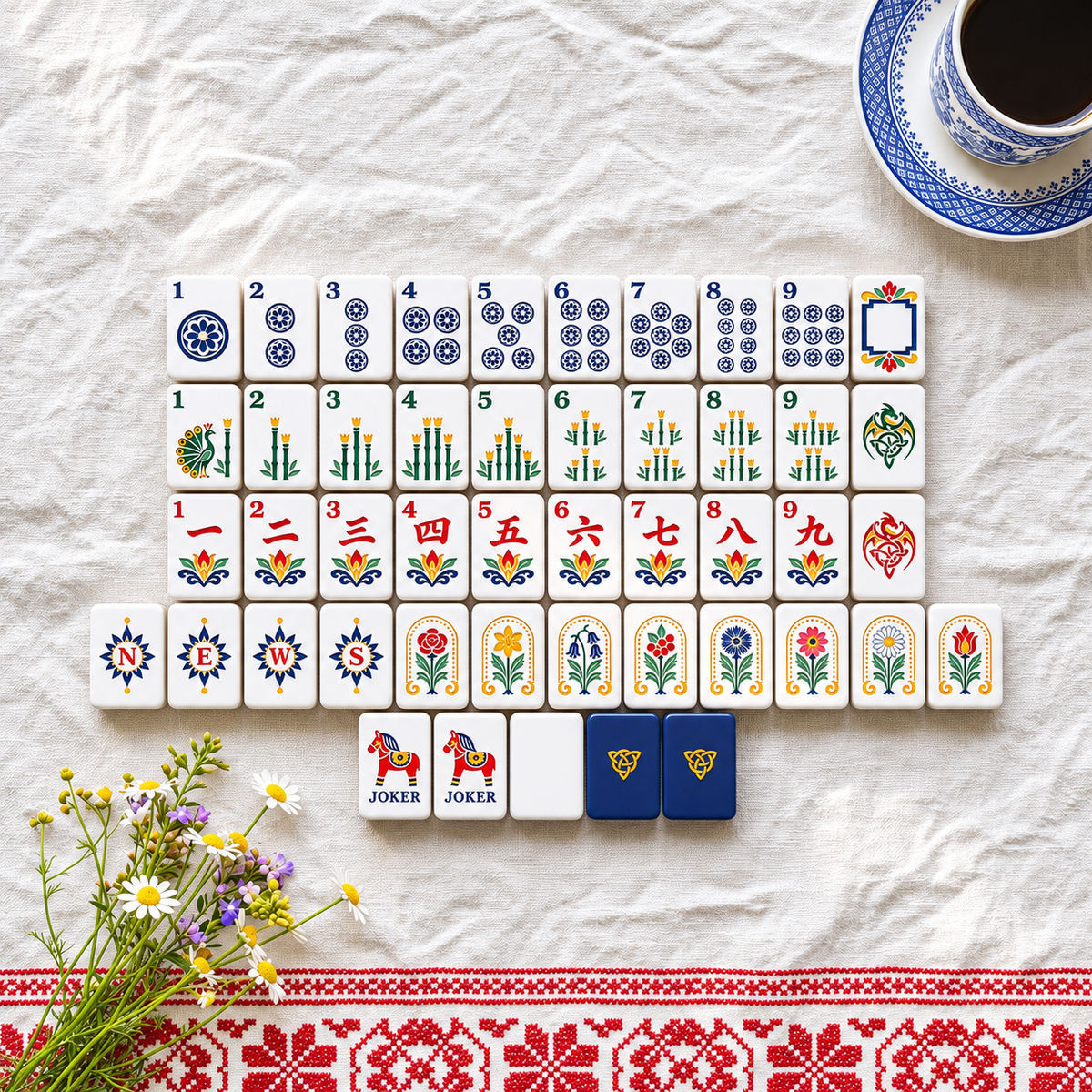
A New Year's Eve mahjong party works best with four players, one engraved set you're proud to display, and a mat or rack system that keeps tiles organized during the Charleston and play. Choose a theme—lucky colors, engraved tiles with year-end jokes, or matching pushers—and set a house rule (like a "lucky last hand" that pays double) to mark the occasion. Plan 3–4 hours; supply snacks, scorecards, and a way to track winners across rounds. Mahstead's engraved American mahjong sets and best-selling collections let you pick a set that doubles as a conversation piece when guests arrive. Avoid last-minute rule changes and players who haven't held tiles before—brief newcomers on how to play American mahjong a day or two ahead.
How do I choose tiles that say "New Year's Eve" without being corny?
Pick engraved sets with humor or meaning tied to 2025 reflections—custom engravings let you add a year, a winning phrase, or a pun your group will recognize. Skip generic "Happy New Year" art; instead, choose acrylic tiles in jewel tones (deep greens, sapphire, rose gold) that feel celebratory under warm light. Display the set on the table before guests sit: the tiles themselves become part of the welcome. A matte-finish acrylic set photographs better than glossy and won't glare under dining-room fixtures.

What room setup keeps the game flowing for four hours?
Seat four players around a sturdy table (at least 36 inches square) with a mahjong mat that defines zones for each hand and the discard pile. Position a scorepad and pen at one seat; place snacks and drinks on a side table, not within arm's reach of tiles. Use a rack system with pushers so players hold and organize their own tiles—this speeds play and cuts down on accidental tile touches. Light the space evenly (overhead plus a side lamp reduces glare on acrylic). Keep a spare set nearby if anyone wants to learn between rounds; use a mahjong bag to store tiles when you switch or pause.
Which house rules make NYE feel special but don't slow the game down?
One popular rule: "doubling the payout on the first hand and the last hand of the night" rewards both the opener and the final round. Another: "bonus points if your winning hand includes the current year" (e.g., Winds + Cracks matching 2026 patterns on the card). Avoid adding bonus points for every flower or dragon—it clutters scoring. Agree on all rules 15 minutes before the first shuffle; write them on a whiteboard so no one forgets. Keep them consistent across all four rounds so players can strategy-build. Most importantly, don't change rules mid-game based on one player's complaint.
What's the timeline for a 4-player NYE mahjong night?
6:30 pm – Guests arrive; tiles on display, mat down, racks set up. 6:45 pm – Quick refresher: how the Charleston works, where jokers go, reading the current-year card. 7:00 pm – Round 1 begins (15–20 min play + 5 min scoring). 7:30 pm – Round 2 (same timing). 8:00 pm – Break: snacks, scoreboard review. 8:15 pm – Round 3. 8:45 pm – Round 4 (the "lucky last hand"). 9:00 pm – Final scores, photos with the winning set, countdown prep.
This paces the game so no one burns out, and you're free to celebrate midnight together.
Prep Element | Who It's For | Why It Works | What to Avoid |
Groups celebrating together | Personalized keepsake, conversation opener | Generic blank sets; hard-to-read engravings | |
Serious players, hosted games | Defines zones, protects tiles, looks intentional | Playing on bare table; crumb mess | |
Four players rotating dealer | Speeds hand-building, keeps order clear | Holding 14 loose tiles; misdeals | |
House rules (written) | Mixed-skill groups | Removes argument, marks the occasion | Verbal-only rules; mid-game changes |
Scorecards + pen | Any group playing 3+ rounds | Tracks winners, builds narrative arc | Remembering scores verbally |
🀄 Shop best-selling mahjong sets →
How do I handle new players without derailing the party?
Teach newcomers the Charleston and how jokers work in a practice hand 20 minutes before game time. Show them how to read the card so they can spot winning patterns themselves. Pair a new player with a returning player as East and West on the first round (sitting across, they can't coach each other mid-hand but can answer questions between rounds). Don't assume: ask if they've played American mahjong before, not just "mahjong." Assign them a rack with pushers so they focus on strategy, not tile management. Celebrate their first win loudly—it keeps energy high and makes them want to play again.

Why does the mat and rack setup matter on NYE specifically?
On a holiday when people are relaxed and drinking, tiles move faster and hands get messy. A good mat defines discard piles so no one accidentally claims the wrong tile. Racks with pushers keep hands from collapsing when someone reaches for a drink or gestures during conversation. The physical structure also slows impulse plays—a player has to consciously pull a tile from the rack, so fewer "I didn't mean to discard that" moments. On NYE, when the mood is celebratory, this prevents frustration derailing the fun. Plus, an organized setup photographs well for memories.
🎁 See our most-loved mahjong sets & accessories →
What snacks and drinks work best during play?
Avoid anything sticky, greasy, or crumbly: no pizza, popcorn, or chocolate. Serve cheese, crackers, nuts, or veggies with toothpicks so players can pick with one hand. Offer water, sparkling cider, or wine in glasses with wide bases (less likely to tip if bumped). Keep drinks at least 12 inches from the tile zone. Offer snacks before the first hand and during breaks—it breaks momentum to graze mid-round and keeps the table clean. Pro tip: mints after a snack round remove residue from fingers before handling tiles again.
What's the best way to keep score and celebrate the winner?
Appoint one person as scorekeeper for all four rounds (rotate this job each NYE to share the work). Use a printed scorecard (find templates online or make a simple table in a text doc). Record the winner and point total for every hand. After Round 4, tally the overall winner. Mark the occasion: take a photo of the winner with the set, call them "2026 NYE Champion," or award a small prize (a specialty mahjong-themed item, a future hosting pass, or just bragging rights). Posting photos after the party builds anticipation for next year's game and shows your group takes the tradition seriously.
What to check before you buy:
Set size: Confirm the 160-tile acrylic set includes all three suits, winds, dragons, flowers, and jokers you need for American play—Mahstead sets have everything.
Mat dimensions: Measure your table; choose a mat that leaves 2–3 inches of space around the edges for drinks and scorecards.
Rack count: If hosting four players, you need four racks (sometimes sold as a set, sometimes individually)—check the listing.
Tile clarity: Acrylic tiles should let numbers and suit symbols show clearly under your dining-room light; request a photo if buying online.
Engraving depth: If you order custom engravings, ask how they'll look from arm's length while seated—readable, not too deep to wear off.
✨ Find your Mahstead set — free US shipping →

FAQ
Can I use a 160-tile set for New Year's Eve if three players want to join late?
Yes. 2 and 3 player American mahjong uses the same tiles and card, just with different wall sizes and discard rules. Set up the table for four; if someone can't stay, adapt the seating and continue. The 160-tile set works for any player count.
Should I engrave the tiles or the bag?
Engrave the tiles if the set will stay with your hosting group and become a keepsake; engrave the bag if you want the set portable and identifiable when stored. Engraved tiles are more memorable and initiate conversations when guests see them.
Do I need a special "NYE" scorecard or can I use any paper?
Any paper works. Print a simple four-column table (Round | Hand Winner | Points | Running Total) and you're set. Writing by hand is faster than apps for most groups, and scorecards can be kept as a souvenir.
What if someone disputes a winning hand?
Before the first shuffle, confirm that all players will check the current-year National Mah Jongg League card together if a hand is challenged. Agree to stop the clock, review the pattern, and accept the card's ruling. This removes emotion from disputes.
How do I store an engraved set after NYE so it stays beautiful?
Use a mahjong bag or case that fits snugly; avoid crushing the tiles. Store in a cool, dry place out of direct sunlight so acrylic colors don't fade. Keep the mat and racks with the set so next NYE you're ready to go.


View More
View More
View More
