
What Does the 2 Crak Tile Mean in American Mahjong?
Last updated: Nov 23, 2026
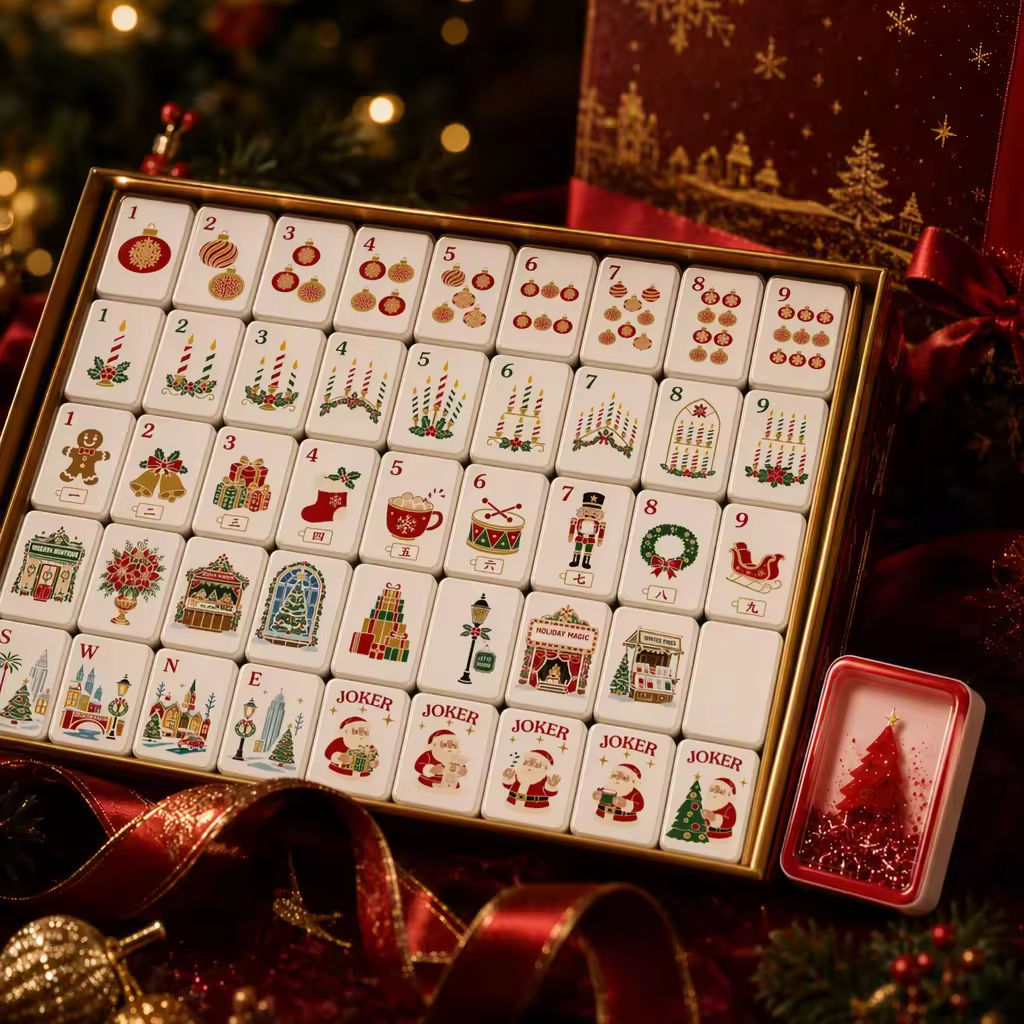
The 2 Crak is a single numbered tile showing the number 2 in the Crak suit (marked by a bamboo or line symbol). American mahjong sets contain four identical 2 Crak tiles—one for each player's potential hand. The 2 Crak cannot stand alone as a pair in American mahjong; it must combine into a pung (three identical tiles), kong (four identical), or as part of a larger pattern like a sextet (six identical tiles or a mix with jokers). It appears in the current year's National Mah Jongg League card in dozens of winning hands, often grouped with other numbered Craks. You'll find it in what's in an American mahjong set guides and referenced on the annual card when you're learning how to read the mahjong card. Like all numbered tiles, the 2 Crak has no inherent point value—its value depends entirely on the hand pattern you're trying to complete this year. 🀄 Shop best-selling mahjong sets →
What does "Crak" mean, and how is it different from Bam and Dot?
The Crak suit (also spelled "crack") represents bamboo shoots or stalks in traditional Chinese mahjong symbolism. In American mahjong, we use it as one of three number suits—Bam (circles), Crak (bamboo), and Dot (ideally dots or lines). Each suit contains tiles numbered 1 through 9, with four copies of each number. The 2 Crak looks distinct from a 2 Bam or 2 Dot because of its suit symbol. When you're scanning your rack or calling out a discard, knowing which suit you're holding is critical: a player might ask for "any Crak" during the Charleston, but they won't need a 2 Bam even if you have both. The suit distinction also determines which dragon pairs with it—the 2 Crak pairs with the Green Dragon, which is a useful fact when you're memorizing how to play American mahjong strategy.

Why can't the 2 Crak be a pair by itself?
American mahjong rule sets prohibit any single numbered tile from forming a pair alone. A valid pair in American mahjong must be one of these: four identical wind tiles (N, E, W, S), three dragon types (Red, Green, White), two identical flower tiles, or two identical honor tiles in a few rare patterns. Numbered tiles like the 2 Crak never act as pairs—they must appear as part of a pung (three 2 Craks), kong (four 2 Craks), or larger grouping. This rule separates American mahjong sharply from Chinese variants, where numbered pairs are common. If you're building a hand from the National Mah Jongg League card and you see "2 Crak" written alone, it's either part of a longer tile list or the card is describing a different tile type. Understanding this rule prevents costly mistakes at the table and keeps your strategy aligned with American-only play patterns.
🎁 See our most-loved mahjong sets & accessories →
Where does the 2 Crak appear most often on the annual card?
The 2 Crak appears in a broad range of hands across the National Mah Jongg League card each year—in one-suit patterns (all 2s or similar), in mixed-suit combinations, and in patterns that use Craks predominantly. You'll spot it frequently in "like number" sections, where three or more identical numbers are grouped from different suits (e.g., three 2s from Bam, Crak, and Dot together). It also shows up in hands where Craks fill a specific positional requirement, such as "first four numbers of each suit" or "mixed suit with honors." The card changes yearly (issued every spring), so the 2 Crak's exact frequency shifts season to season. Rather than memorizing where it lands, successful players learn to scan the card systematically and recognize the 2 Crak instantly when it appears. This skill develops fastest during actual play with a printed or digital card at hand and a best-selling mahjong set in front of you.

How do jokers interact with the 2 Crak?
Jokers in American mahjong act as wild tiles and can substitute for any tile, including the 2 Crak, but only in specific contexts. A joker can replace a 2 Crak inside a pung, kong, quint (five identical), or sextet (six identical)—making, for example, "2 Crak, 2 Crak, joker" valid as a three-tile pung. However, jokers cannot be used as a single tile or as a pair by themselves. If a hand calls for exactly two 2 Craks as a pair, no joker can fill that role. American mahjong sets include eight jokers per game, and they're typically the game's most flexible tile. Understanding how jokers work in depth helps you plan your hand and recognize when an opponent is close to winning. Jokers can't appear in honor-only patterns (winds, dragons, flowers) or in single-tile calls, so a hand that needs a pure 2 Crak pair cannot rely on a joker—that hand pattern simply doesn't exist in American mahjong.
What's the best way to learn which hands use the 2 Crak this year?
Start by printing or downloading the current National Mah Jongg League card and doing a systematic card scan: look at each hand type (like number, like suit, dragons, etc.) and mark every appearance of the 2 Crak with a highlighter or digital annotation. Spend 15–20 minutes a week reviewing marked hands during off-table practice. Play weekly games with the card in front of you and ask your table to call out hands that include the 2 Crak so you spot patterns faster. Watch for the 2 Crak in common family groups: one-suit hands often cluster 2s together, mixed-suit hands use the 2 Crak alongside 3 Crak and 4 Crak, and honor-heavy hands might have exactly one 2 Crak surrounded by winds or dragons. Over a season of play, you'll internalize which patterns rely on the 2 Crak most, which makes your draws and discards sharper. For a deeper dive into card strategy, read how to read the mahjong card, which walks through systematic scanning and memory techniques used by experienced players.
Quick Reference: Numbered Tiles at a Glance
Tile Type | Suit Symbol | Role in American Mahjong | Can Form a Pair? | Typical Grouping |
2 Crak | Bamboo (Crak) | Core numbered tile | No | Pung, kong, sextet, or mixed patterns |
2 Bam | Circle (Bam) | Core numbered tile | No | Pung, kong, sextet, or mixed patterns |
2 Dot | Dot or line (Dot) | Core numbered tile | No | Pung, kong, sextet, or mixed patterns |
Dragon (Red, Green, White) | Special honor | Pair or pung | Yes (pair only) | Pair + pung, or triple pung |
Wind (N/E/W/S) | Special honor | Pair or pung | Yes (pair only) | Pair + pung, or wind-heavy hands |
Common Mistakes to Avoid
Confusing the 2 Crak with a pair. New players sometimes assume the 2 Crak can pair with another 2 Crak as their final two tiles. In American mahjong, this is false—a hand must call upon the annual card, and no card hand lists a pair of numbered tiles. Always check the card first.
Forgetting that the 2 Crak pairs with Green Dragon. While the 2 Crak itself cannot be a pair, it's associated with the Green Dragon in suit hierarchy and in certain hand patterns. This doesn't mean they form a pair, but knowing the connection helps you organize your thinking.
Assuming jokers can rescue a 2 Crak pair. If a hand pattern on the card requires a true pair and you've drawn only one 2 Crak, a joker won't fix it—the hand pattern simply isn't valid without the second 2 Crak tile. Jokers are flexible, but they can't override the card's rules.
Playing with incomplete or outdated sets. A true American mahjong set contains exactly 152 playing tiles (36 per suit + 16 winds + 12 dragons + 8 flowers + 8 jokers) per what's in an American mahjong set. If your set is short a 2 Crak or has mismatched tiles, you can't build valid hands. Mahstead's engraved American mahjong sets include all required tiles in accurate counts.
What to Check Before You Buy a Mahjong Set
Tile count: Ensure the set contains exactly 152 playing tiles (four copies of each numbered tile 1–9, four each wind, etc.). Best-selling mahjong sets list full breakdowns.
Suit clarity: Verify that Bam, Crak, and Dot symbols are visually distinct and easy to read under table light. Engraved or color-printed sets work best for this.
Joker and spare tiles: Check whether the set includes extra jokers or blanks beyond the 152 core tiles (useful for replacements if a tile breaks).
Material durability: Acrylic sets last longer than paper-faced wood; if you're hosting weekly games, acrylic holds up best.
Card included: Buy or confirm you have the current year's National Mah Jongg League card—the 2 Crak hand patterns change every spring.
✨ Find your Mahstead set — free US shipping →

FAQ
Is the 2 Crak worth any special points?
No. The 2 Crak has no inherent point value. Points depend entirely on the hand pattern you're completing this year per the National Mah Jongg League card. Every numbered tile—whether 1 through 9—scores based on the hand, not the individual tile.
Can I use a 2 Bam instead of a 2 Crak in a hand?
No. In American mahjong, suits are separate and interchangeable only in "like number" hands that explicitly call for mixed suits. A 2 Bam and 2 Crak are different tiles and cannot substitute for each other unless the card pattern says so.
What does the bamboo symbol on the 2 Crak represent?
The bamboo symbol (Crak suit marker) comes from traditional Chinese symbolism—bamboo represents strength and flexibility. In American mahjong, it's purely a suit identifier; the 2 Crak is one of three "2" numbered tiles (2 Bam, 2 Crak, 2 Dot), each from a different suit.
How many 2 Crak tiles are in a standard American mahjong set?
There are four identical 2 Crak tiles in every 152-tile American mahjong set. This ensures each of the four players can hold one if needed, or a hand pattern can use multiple 2 Craks (as a pung, kong, or larger grouping).
Why is learning the 2 Crak important for beginners?
The 2 Crak is a foundational numbered tile; understanding how it works—no pair, always a grouping of three or more—teaches the core rule that separates American mahjong from Chinese variants. Mastering numbered tiles like the 2 Crak builds your card-reading speed and hand recognition.
Do different mahjong regions (Chinese, Hong Kong, Riichi) treat the 2 Crak differently?
Yes. Chinese, Hong Kong, and Riichi mahjong allow numbered pairs and sequences (chows) that American mahjong forbids. The 2 Crak can pair and form chows in those variants but never in American play. If you're learning American mahjong, focus only on American rules to avoid confusion.


View More
View More
View More
