
1 Crak Mahjong Tile: Meaning, Role & How to Spot It
Last updated: Nov 23, 2026
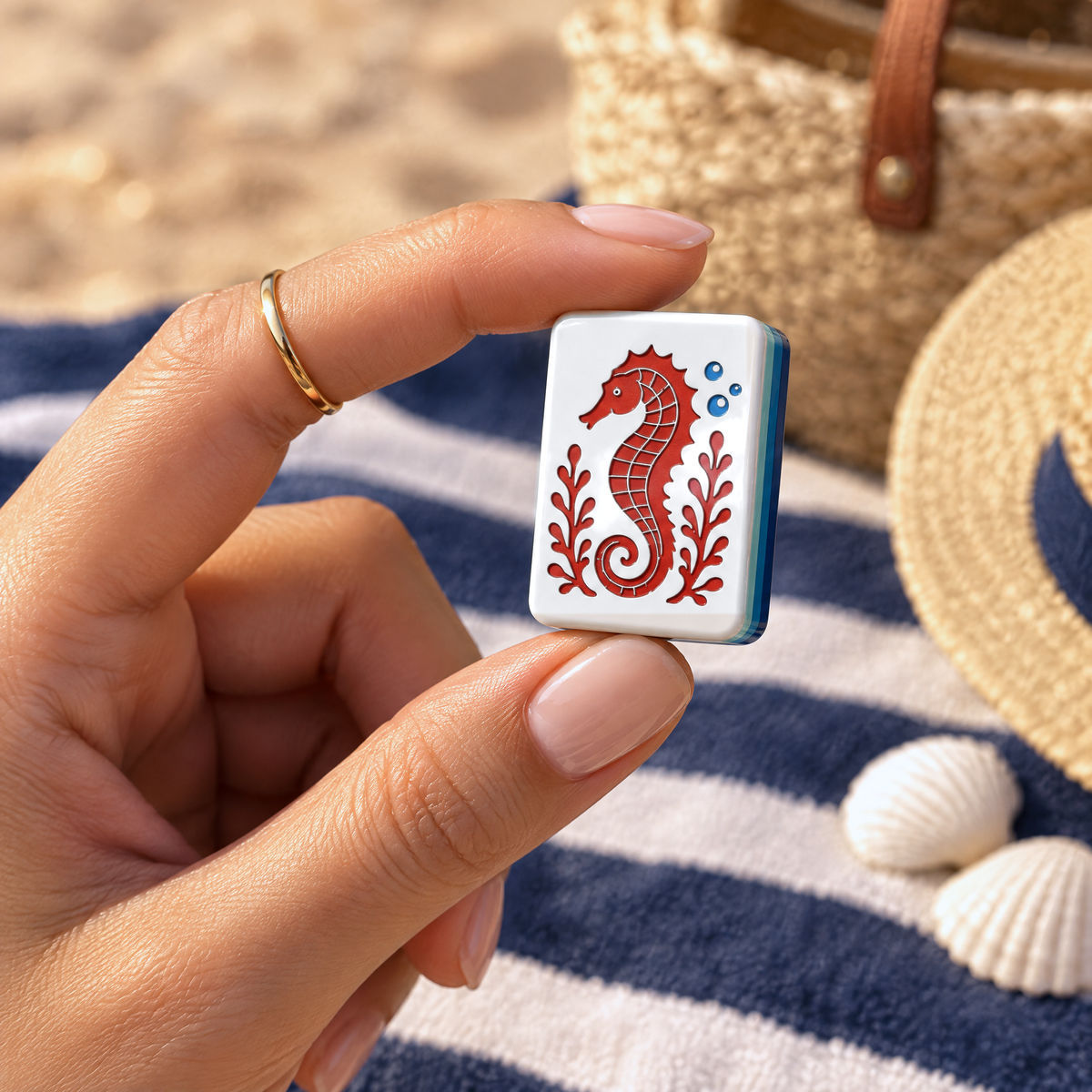
The 1 Crak is a numbered tile from the Crak (or character) suit in American mahjong, one of three numbered suits alongside Bams and Dots. In a standard 152-tile set, there are exactly four copies of the 1 Crak; every American game uses all four. The 1 Crak displays a Chinese character (not a bird like the 1 Bam) and ranks lowest in the Crak sequence. It appears in many hand patterns on the National Mah Jongg League card, especially in sequences called "1–2–3" or "1–4–7" spreads. You'll need all four to complete a pung (three identical tiles), kong (four identical), or to blend with other numbered tiles in study patterns. The 1 Crak has no special honor status—it scores exactly like any other numbered tile, dictated by the pattern you form.
The 1 Crak is one of 36 numbered tiles in the Crak (or character) suit in American mahjong, one of three numbered suits alongside Bams and Dots. In a standard 152-tile set, there are exactly four copies of the 1 Crak; every American game uses all four. The 1 Crak displays a Chinese character (not a bird like the 1 Bam) and ranks lowest in the Crak sequence. It appears in many hand patterns on the National Mah Jongg League card, especially in sequences called "1–2–3" or "1–4–7" spreads. You'll need all four to complete a pung (three identical tiles), kong (four identical), or to blend with other numbered tiles in study patterns. The 1 Crak has no special honor status—it scores exactly like any other numbered tile, dictated by the pattern you form.
What does the 1 Crak look like on the tile?
The 1 Crak displays a single Chinese character in the center of the tile. Unlike the 1 Bam—which shows a bird silhouette—the 1 Crak shows only the numeral one rendered as a Chinese ideograph. On acrylic tiles, this character is printed or engraved clearly so you can distinguish it instantly from higher-numbered Craks and from Bams or Dots. The tile's color is red or pink on most sets. When you're sorting your hand mid-game or scanning for patterns, the unique glyph helps you locate all four 1 Craks in your rack without confusion.
🀄 Shop best-selling mahjong sets →

How many 1 Craks do you need in a hand?
American mahjong requires no more than four 1 Craks total—because there are exactly four in the deck. A single hand formation (called a "meld" or "pung") uses three identical tiles; a kong uses all four. You can hold only one pung or one kong of 1 Craks per hand. If your target pattern calls for a pung of 1 Craks plus another meld using, say, 1 Dots or 1 Bams, you'd need three 1 Craks and three 1 Dots (or Bams), drawing from different suits. Never assume you can use more than four 1 Craks in play—the deck contains no duplicates beyond those four.
Where does the 1 Crak appear on the card?
The 1 Crak appears in dozens of hand patterns on the current year's National Mah Jongg League card, usually in sections labeled "1–2–3," "Like Numbers," or "Consecutive" runs. Patterns mixing 1 Craks with 1 Bams and 1 Dots are common for "Like Numbers" wins. Low-run patterns (1–2–3–4 spreads, for example) lean heavily on the 1 Crak as the starting tile. Without access to the card, beginners often miss how frequently the 1 Crak qualifies for winning hands. Study the current year's card before your first game—it's the only legal reference for hand validity in American mahjong.
What's the scoring value of a 1 Crak?
The 1 Crak has no intrinsic point value on its own. Its score depends entirely on the pattern you form with it. A pung of 1 Craks scores points based on the hand pattern name on the card—not the tile itself. A hand containing a pung of 1 Craks plus three other melds might be worth 2 points, 5 points, or 10 points depending on the specific hand listed on the card. Understanding American mahjong scoring means learning that point values attach to complete hand patterns, not individual tiles.
🎁 See our most-loved mahjong sets & accessories →
Why is the 1 Crak sometimes called "One Character"?
The 1 Crak is one of nine numbered tiles in the Crak suit (1–9), and Crak literally means "character" in transliteration from Chinese. Players often say "One Character" to distinguish it verbally from "One Bam" or "One Dot" during play. This nickname speeds up communication at the table—instead of saying "1 Crak," many players call it "One Character" or simply "One Char." When you're learning, listen for both names; they're interchangeable.
Quick Tile Lookup: The Three Number Suits
Tile Name | Suit | Symbol | Number Copies in Deck | Role |
1 Crak | Character | Chinese character | 4 | Numbered suit; appears in low-run & like-number hands |
1 Bam | Bamboo | Bird silhouette | 4 | Numbered suit; distinct from 1 Crak visually |
1 Dot | Circle | Single dot | 4 | Numbered suit; used in like-number patterns |
Wind (N/E/W/S) | Honor | Cardinal direction | 4 each | No numerals; separate from numbered suits |
Dragon (R/G/W) | Honor | Ideograph | 4 each | No numerals; White serves as zero |
All four copies of each numbered tile must be present in every 152-tile American mahjong set.

How to confirm your set has all four 1 Craks
Before your first game, count every suit separately. Lay out all Craks (9 tiles × 4 copies = 36 total), then verify you have four 1 Craks. Repeat for Bams and Dots. Check that no 1 Crak is cracked, faded, or misshapen—a defective tile ruins fair play. If you're buying a new mahjong set, inspect the tiles under good light when they arrive. Acrylic sets ship fully intact when packed carefully; a broken tile in transit is rare but possible.
What to check before you buy
Tile count: Verify the seller lists a 160-tile set (152 playing tiles plus 8 spares for replacements).
Character clarity: On 1 Craks, the Chinese character should be crisp and centered, not smudged or off-color.
All four present: Don't assume—count the 1 Craks yourself.
Suit separation: Make sure Craks, Bams, and Dots are visually distinct (typically red/pink, bamboo motif, and white/cream).
Material: Acrylic tiles resist fading and are easier to clean than bamboo; they also travel well in a padded mahjong bag.
Common mistakes beginners make with the 1 Crak
Confusing 1 Crak with 1 Bam: The bird on the 1 Bam makes it instantly recognizable; the 1 Crak shows only a Chinese character. Spend two minutes sorting your tiles before the game starts to train your eye.
Trying to use 1 Craks in sequences: American mahjong has no chows or runs that expose the tiles you're collecting. You cannot play a "1–2–3" sequence by laying tiles on the table. Sequences exist only in closed (concealed) hands or within patterns listed on the card.
Forgetting the 1 Crak in low-run hands: Many hands start with 1–2–3 or 1–4–7 runs. If you're hunting a specific pattern, make sure you're actually holding a 1 Crak before committing your other melds.
Why Mahstead sets emphasize tile legibility
We design acrylic American mahjong sets with large, deeply engraved characters so the 1 Crak (and every other tile) is unmistakable from across the table. Poor visibility leads to misreads and slow play. A set you can see clearly speeds up the game and reduces disputes.
✨ Find your Mahstead set — free US shipping →
Bringing it all together: 1 Crak in play
When you draw a 1 Crak mid-game, check the current year's card immediately. Look for any hand that includes a pung or kong of 1 Craks. If you hold 1 Craks plus other numbered tiles, scan for "Like Numbers" patterns (e.g., 1 Crak + 1 Bam + 1 Dot + additional melds). The 1 Crak is no rarer or more valuable than any other numbered tile—it's simply essential. Your 152-tile set must have all four, and you must learn to spot it instantly.

FAQ
Can I use the 1 Crak as a wild tile or joker?
No. Jokers are separate tiles; the 1 Crak is always a specific numbered tile. Jokers can substitute for other tiles in exposed melds, but they never replace or double as a 1 Crak.
What if my set is missing one 1 Crak?
The set is incomplete and unplayable for official American mahjong. Contact the seller or purchase spare tiles. Every hand requires all 152 tiles present—removing even one breaks the math of fair play.
Does the 1 Crak count toward "winds" or "honors"?
No. The 1 Crak is a numbered suit tile (Character suit). Winds and honors are separate tile categories: Winds (North, East, South, West) and Dragons (Red, Green, White). They never mix numerically.
Why is 1 Crak different from higher-numbered Craks like 5 Crak or 9 Crak?
It's not inherently different in role—all numbered tiles function the same way. The 1 Crak simply appears in low-run patterns on the card more frequently than, say, an 8 Crak.
If I'm new to American mahjong, should I memorize where the 1 Crak appears on the card?
No. Keep the current year's card at the table and reference it constantly. Over weeks of play, you'll recognize patterns by sight, but relying on the card is always correct and expected.


View More
View More
View More
