
Changsha Mahjong Etiquette: Rules & Respect for Chinese Play
Last updated: Nov 23, 2026
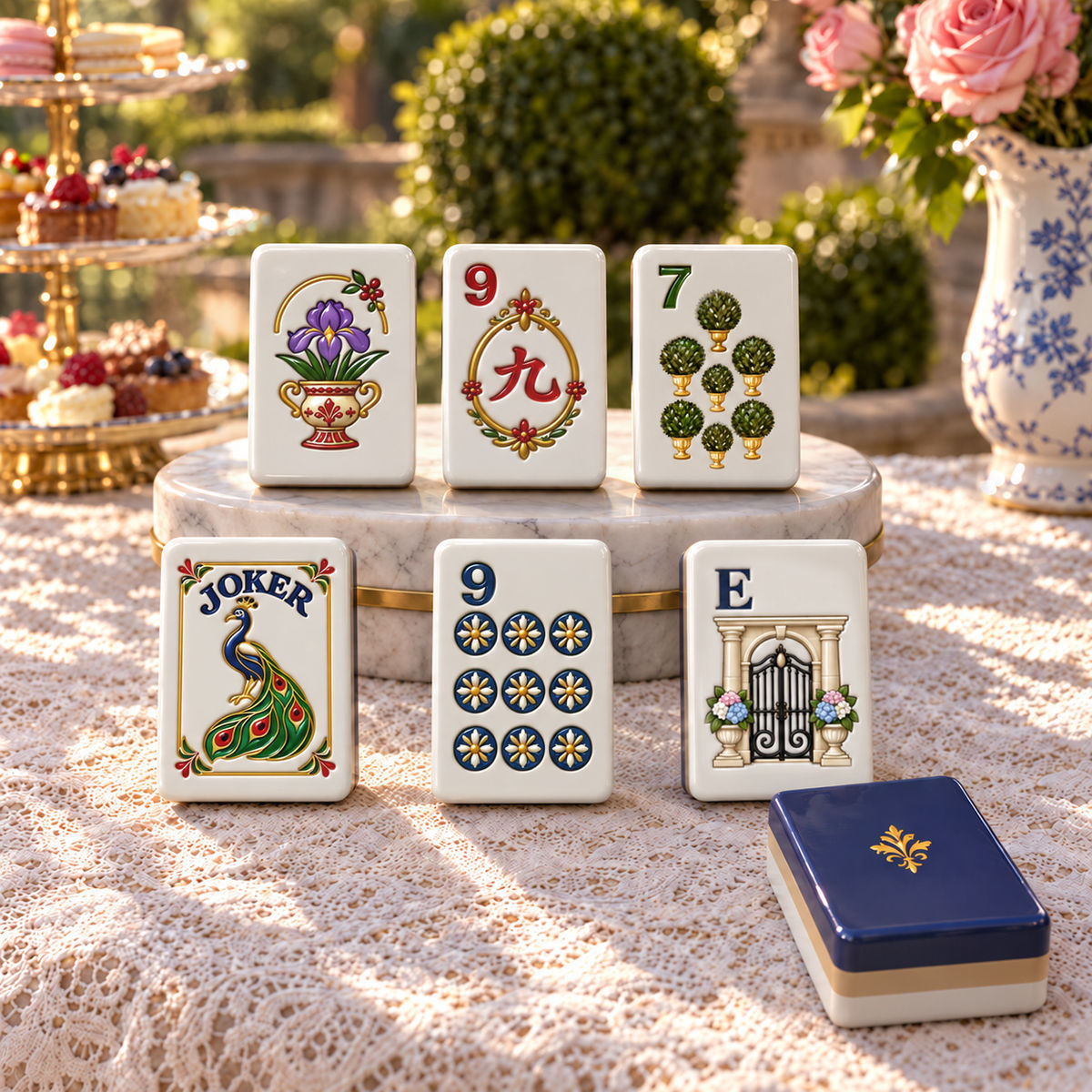
Changsha mahjong etiquette centers on tile respect, precise calling, and controlled hand movement. Unlike American mahjong's open Charleston and exposed sets, Changsha (a closed, faster variant) requires silent discards, specific verbal calls, and touching tiles only during your turn. Key rules: touch no tile until your draw; announce melds with single syllables (吃, pung, kong); discard to center with deliberate placement; never rush or overlap calls; keep hands hidden and organized; observe discard order to read opponents' strategy. Violations signal inexperience and break table trust. The etiquette takes 2–3 games to internalize but prevents argument and speeds play. Changsha games typically last 1–2 hours for four players.
Changsha mahjong, native to Hunan's provincial capital and played across central China, follows etiquette principles foreign to Western American players. Where American mahjong tolerates casual tile handling and open passing, Changsha demands precision, silence, and respect for the tile wall. We've watched new players clash at mixed tables simply because they didn't know: you never expose a tile by accident, you call melds in fixed order, and you move tiles as if handling museum pieces. This guide walks you through the unwritten laws that separate amateurs from the table.
What does "tile respect" mean in Changsha play?
Tile respect means touching tiles only when it's legally your turn to draw or play. In Changsha, the wall stands as sacred ground—you draw face-down, never peek ahead, and never reach across another player's space. Keep drawn tiles hidden in your hand until you're ready to discard. Fumbling, tapping, or "testing" a tile's weight before discard is a red flag: it signals you're deciding on the fly rather than playing with intention. Every movement must look deliberate. One experienced Changsha player we know sets her discards down like she's placing a signature on a contract—slow, centered, final. This isn't theater; it prevents misread signals and suspicion.

Why must you call melds in a fixed sequence?
Changsha protocol dictates that when multiple melds are available (pung, kong, chow, quint), you must call them in rank order: pung before kong, kong before quint. This prevents chaos and dispute over which meld you "meant" to declare. If three players call simultaneously—which happens rarely but does happen—the first player in turn order (clockwise from the discarder) claims the tile. Violating sequence order, or calling a higher meld when a lower one was available, marks you as either sloppy or manipulative. The fix is simple: before your turn, mentally list every legal meld. Practice this off-table so it becomes automatic.
How should you handle the discard pile?
Discards in Changsha are arranged in neat rows, never stacked, so every tile remains visible and its play order obvious. Each discard goes face-up to the center, placed deliberately—not tossed, not slid carelessly across the mat. The order you place them (left to right, then new row) tracks the game flow; anyone glancing at the discard pile should instantly read the sequence. Sloppy placement invites claims of "I didn't see that tile was played" and derails trust. Use a mahjong mat with clear grid zones if you're hosting; it anchors discard placement and prevents overlap. When drawing a discard, announce your call clearly—single-syllable only, no explanations—then remove the tile with one smooth gesture.
What's the difference between calling and silent play?
American mahjong allows (and expects) constant chatter: you negotiate trades, laugh about unlucky draws, and openly track the card. Changsha is nearly silent. Calls are verbal but minimal—just the meld type, never commentary. Between calls, the table is quiet; players study the wall, the discards, and opponents' faces. This silence serves two purposes: it lets experienced players read subtle tells (a long pause before discard, a hesitant reach toward the wall), and it keeps the pace brisk. Casual talk before or after a hand is fine; during play, it's considered rude and distracting. If you're used to American mahjong's social rhythm, Changsha will feel austere at first. It's not cold—it's focused.

How do you handle disputes over tile visibility or drawing sequence?
In Changsha, disputes arise most often from unclear draws or claims that a tile wasn't visible on the wall. Prevention: draw tiles from the wall face-down, always in strict sequence, moving left to right along the wall. Never "hunt" for a specific tile; the wall is played in order. If a Kong meld is claimed mid-game, tiles are drawn from the wall's end in the same left-to-right pattern—no picking. If a player insists they didn't see a discard, the discard order (recorded by position in the pile) settles it. A sturdy mat with clear zones prevents most visibility disputes by creating consistent landmarks. Keep discard piles tight and organized; don't leave gaps that tempt a player to argue "that tile was hidden."
Table-tested etiquette checklist:
Draw phase: Wait for your turn. Draw face-down. Never peek ahead or reach across others.
Hand management: Keep tiles hidden. Arrange by suit and number, not scattered.
Discard: Place tile deliberately in discard row. One tile per turn, no exceptions.
Calling: Use one word only (pung, kong, chow, quint). No explanations. No jokes.
Discard order: Respect the sequence. Don't claim a tile out of turn.
Silence: Chat before or after the hand. During play, speak only to call a meld.
Racks and pushers: If using racks with pushers, move one tile at a time. Never rattle or batch-move tiles.
Tile count: Never recount your hand mid-play unless instructed by rules.
🀄 Shop best-selling mahjong sets →
How does Changsha etiquette differ from American or Hong Kong variants?
American mahjong is social and transparent: the Charleston passes tiles openly, hands are exposed (pung, kong, quint visible face-up on the rack), and players call out their draws loudly. Changsha is closed-hand and quiet—tiles stay hidden until played, the discard pile is the only "open" area, and calls are minimal. Hong Kong mahjong sits between the two: more silent than American but less rigid than Changsha; hand tiles remain private, but the pace is faster and some commentary is expected. Taiwanese mahjong adds gambling rituals and point-pressing etiquette that Changsha doesn't emphasize. If you're switching from American to Changsha, expect a learning curve in two areas: (1) silence and focus, and (2) precision in tile movement—no casual tapping or testing. Your first three games will feel slow; by game five, the rhythm clicks.
Comparison: Etiquette across variants
Aspect | American | Changsha | Hong Kong |
Hand visibility | Exposed (racks) | Hidden | Hidden |
Discard speed | Leisurely, social | Rapid, quiet | Brisk, moderate chat |
Calling style | Loud, celebratory | Single syllable, flat | Clear, brief |
Tile handling | Casual | Deliberate, precise | Controlled, deliberate |
Table talk | Encouraged | Minimal/forbidden | Light, allowed between turns |
Charleston | Yes, open passing | No, wall draw only | No, wall draw |
Replay disputes | Rare (tiles visible) | Possible (tiles hidden) | Occasional |
What should you check before joining a Changsha table?
Ask the host or experienced player these questions before sitting down:
Variant specifics: Are you playing Changsha pure, or a house-rule hybrid? Some regions mix in quints or special hands.
Discard pile layout: Does the table use a mat with zones, or free placement? How many tiles per row before starting a new row?
Call protocol: Is verbal calling mandatory, or is silence expected? Can you tap the table to signal a meld?
Tile touching rules: Can you handle tiles before your draw? Is it rude to arrange your hand mid-game?
Scoring convention: Is this a play-for-fun table or gambling stakes? (Etiquette tightens under stakes.)
Host a confident first game by choosing a high-quality set and a durable mat; quality tiles and clear zones prevent disputes and signal respect for the game.
✨ Find your Mahstead set — free US shipping →
What common mistakes break Changsha etiquette—and how to avoid them?
Mistake 1: Fumbling or re-examining a discard. Once you place a tile, it's played. Picking it back up or pretending to adjust it while you reconsider signals indecision and breaks trust. Fix: decide off-table during your turn. Discard only when you're certain.
Mistake 2: Calling out of turn or overlapping calls. If two melds are available on the same discard, the closer player (in clockwise order from the discarder) calls first. Shouting over someone else is aggressive and marks you as an amateur. Fix: wait 0.5 seconds before calling; if someone called first, honor it silently.
Mistake 3: Rearranging your hand constantly. Shuffling tiles, tapping, or moving them around mid-hand looks nervous and signals weakness. Opponents read this and press harder. Fix: organize your hand once, at the start. Keep it still unless discarding.
Mistake 4: Reaching across the wall or the discard pile. This violates spatial respect and can knock tiles. Lean back; let tiles come to you or reach your own space. Fix: sit at your assigned seat and move only your own arm.
Mistake 5: Counting tiles or asking "How many do you have?" This is rude and unnecessary—each player has fourteen tiles at draw time, and the count is public knowledge. Fix: trust the count. If someone has too many, call it post-hand, not mid-play.
Avoiding these mistakes takes one or two games of conscious effort, then becomes natural. Use quality tiles and a well-designed mat to create an environment where good etiquette feels like the default; poor equipment invites casual play.
🎁 See our most-loved mahjong sets & accessories →

FAQ
Is silence during Changsha play an absolute rule, or can I chat lightly?
Silence is strong custom, not absolute law. You may chat between hands and before your turn; during active play—especially on your turn or while others are considering calls—you should be quiet. A brief "pung" or acknowledgment is fine; long stories are not. Respect the table's rhythm: if experienced players are silent, you stay silent.
What happens if I accidentally touch a tile before my turn?
It depends on house rules. Strict tables may penalize you (e.g., you must discard a specific tile or draw an extra tile from the wall). Friendly tables will give a verbal warning. Prevention is simple: don't touch tiles except during your declared turn. Keep your hands folded or on the mat until the wall tile or discard is offered to you.
Can I use racks with pushers in Changsha play, or is it American-only?
Racks and pushers are common in American mahjong but rare in traditional Changsha (players often hold tiles in hand instead). However, if your table or host permits racks, using them is fine—just move one tile at a time with the pusher, never rattle or batch-move, and keep tiles face-down toward you. Some modern Changsha games in clubs now use racks for comfort; check with your host first.
How do I read opponents' tells if the table is so quiet?
Silence actually sharpens tells. Watch discard hesitation (a long pause means they're deciding, not a forced discard), tile handling speed (fast, confident discards signal strength; slow ones hint weakness), and eye contact (a glance at the discard pile signals interest). In noisy American games, these reads drown out; in quiet Changsha, a one-second pause speaks volumes. Study four games as an observer before playing.
What if a beginner joins a Changsha table? Do I relax the etiquette rules for them?
Experienced players should gently correct, not shame. Point out the mistake after the hand (not mid-play) with a brief explanation: "We usually draw face-down here" or "That tile was already claimed—it goes to the first caller." Newcomers deserve respect and a learning window. After two to three games, expect them to follow full etiquette; if they don't, they're not paying attention, and you can be firmer in corrections.
Is Changsha mahjong played the same way across all of China, or does each region have its own etiquette?
Changsha is one regional variant among dozens (Beijing, Sichuan, Fujian, Guangzhou each have flavors). Etiquette principles—tile respect, precise calls, deliberate movement, silence—hold across most Chinese games. Scoring, valid hands, and wall-drawing sequence vary widely. Before joining a regional table outside Changsha, ask an experienced player or the host for a 2-minute rules recap; the etiquette core remains the same.


View More
View More
View More
