
American Mahjong Safe Discards: Rules and Strategy
Last updated: Nov 23, 2026
A safe discard in American mahjong is a tile no other player can use to complete their winning hand. You cannot truly guarantee safety—any tile could help someone—but you can play probability: discard tiles that have already been picked (called "dead" tiles), avoid flowers and often-used number suits, and watch the discard pile. Position matters too: early in the hand, the player to your left (the player about to draw) poses the biggest threat. The exact risk depends on what hand types are possible that round, visible on the National Mah Jongg League card. Beginners often panic and throw honor tiles (winds, dragons) thinking they're safe; they're actually common in many hands. The safest play is strategic: build your own hand, stay calm, and learn to read what others need.
What makes a tile "dead" and why it matters?
A dead tile is one that has already left the hand—you've seen it discarded or played on the table. In American mahjong, if a 5 Dot has been discarded twice and exposed in a pung, only one copy remains in play. Dead tiles are significantly safer because they reduce the pool of tiles an opponent can use. Count visible tiles: track which 1 Bams you've seen, which winds are gone. The more copies of a tile you see played, the safer the last remaining copy becomes. This doesn't mean it's risk-free, but mathematically it's the best bet you have.

How do you read what other players need?
Watch the discard pile in sequence. If the player across from you has thrown three Craks in a row (say, 2, 5, 7 Crak), she's probably avoiding Craks. If she suddenly throws a wind after holding it, that wind is likely not part of her hand. Flowers and the 1 Bam (usually shown as a bird) are often safe late-game because flowers don't appear in number-based hands. If two players have already exposed a pung of 3 Dots, only one 3 Dot remains in play—throwing 3 Dot is far safer. Read the discard order, not just the tiles themselves: hasty throws signal panic or a completed section; slow plays mean the tile was important. Position amplifies risk: throwing to the player on your left (East, in the current turn) is always more dangerous than throwing to someone further away, because that player draws next.
When is throwing an honor tile (winds, dragons) actually risky?
Many beginners assume winds and dragons are "safe" because they're special. They're wrong. Winds appear in nearly every hand type—they're used in pairs, pungs, kongs, and often fill sections that need three identical tiles. Dragons follow suit colors in American mahjong: Red dragons go with Craks, Green with Bams, White (Soap) with Dots. If you're early in the hand and no one has exposed a dragon or wind yet, those tiles are extremely hot. Throwing an exposed honor tile (one that's already been discarded or played) is genuinely safer, but honor tiles that haven't been seen? Hold tight. The safest approach: discard an honor only after you've seen its copies elsewhere or after building a solid foundation in your own hand.
What common discard mistakes do experienced players still make?
Panic throwing. When a player feels behind, she throws random tiles hoping something sticks. This often hands the table exactly what someone else needs. Mistake 1: discarding pairs early because you think they're "safe." Pairs are rarely safe—they might complete a hand that needs exactly three matching tiles plus a pair. Mistake 2: throwing flowers or special tiles without reading the board first. If the player on your left has exposed a flower already, the remaining flower is hotter than you'd think. Mistake 3: assuming the discard pile tells the whole story. One Dot has been discarded twice, but you haven't seen two players pick from the wall this round—the remaining copy could be in an opponent's hand. Mistake 4: throwing in the same suit repeatedly (all Dots, then all Bams). This signals weakness and makes you predictable. Mistake 5: not adjusting for position. Throwing to the player on your left in the early game is riskier than the same tile to the player on your right. Mix it up and stay unpredictable.

How does position change your discard strategy?
In American mahjong, the player to your left always draws next, giving her the first chance to call your discard. This makes position critical. When you sit as East (the player who goes first), your left neighbor (South) is under pressure because everyone else goes before her next turn; she's more likely to be hunting. South is safer; West safer still; North safest (furthest from your next draw and last to draw this round). Early in the hand, throw your most dangerous tiles to the players furthest away. Late in the hand, when everyone is close to winning, this advantage shrinks—nearly any tile is risky. The best defensive play is not just what you throw but to whom. If you must throw a potential tile, throw it to a player who is clearly not hunting for it (slow draw, no exposed melds yet) and far from your next draw. Late-game, when the hand is live, every position becomes equally dangerous.
Situation | Safest tile type | Why | Risk level |
Early hand, no melds exposed | Dead tile in honor suit | Already played twice | Low |
Mid-game, one player winning | Flower or 1 Bam already visible | Special tiles used sparingly | Medium |
Three players have melds exposed | Tile used in all three visible melds | Mathematically depleted | Low |
Late game, all hands look live | Dead tile only | Any new tile could win | High |
Throw to player on your left | Dead tile in Bam suit | Suit used in many hands | Medium–High |
Throw to player opposite | Any dead tile | Furthest from next draw | Low–Medium |
What does reading the card tell you about safe vs. risky discards?
The current year's National Mah Jongg League card shows all legal hand types for that season. Each hand reveals which tiles are in play and how often. If you see that most hands require a pung of 4 or 5 Dots, throwing a mid-range Dot late in the hand is dangerous. If flowers appear in only a few hand patterns, and none of them are live for your opponents, a flower is safer. Study the card before every game: note which numbers (1–9) are used most, which suits dominate, which honor tiles appear. This tells you the "hot" tiles that round. Early-hand discards should favor tiles that appear in fewer hand types; late-game, you're simply reading the visible board and praying. The card is your cheat sheet—use it.
🀄 Shop best-selling mahjong sets →
What to check before your next game?
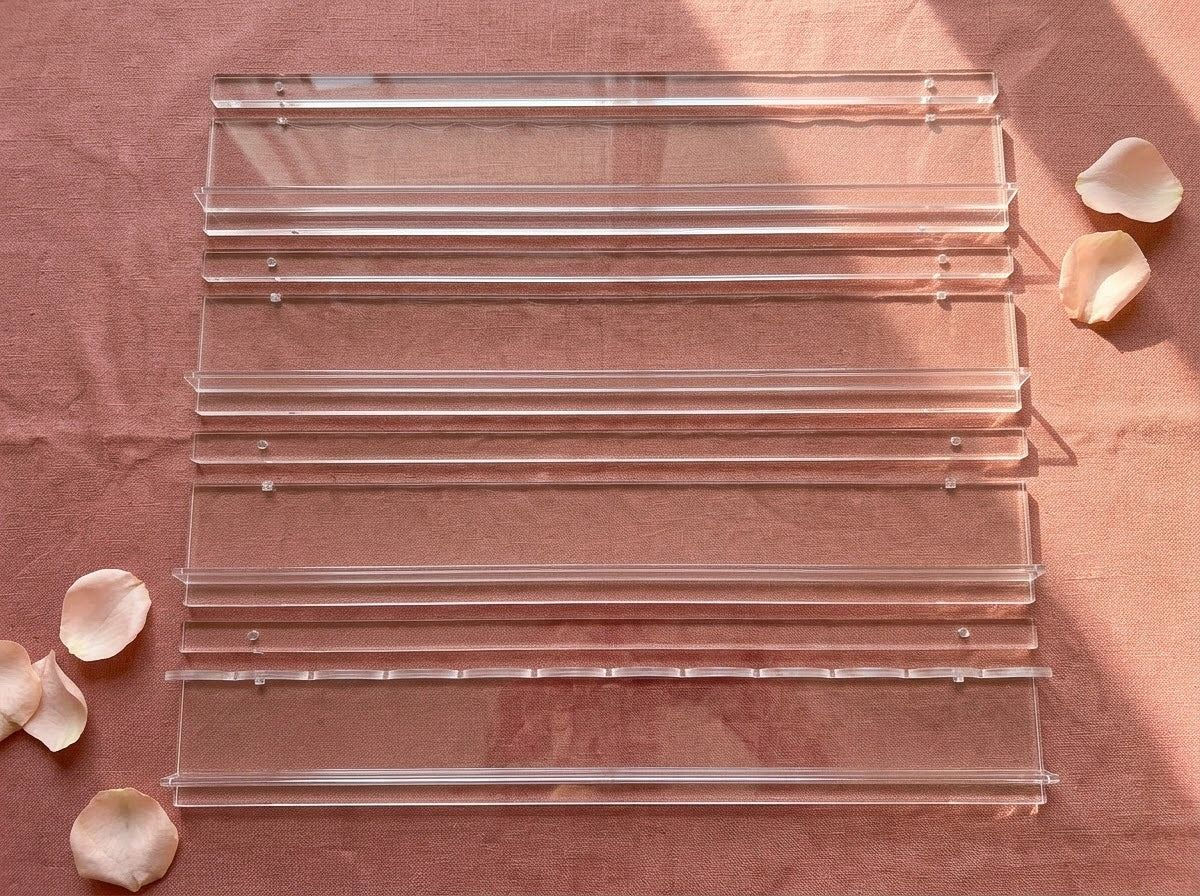
Before sitting down, verify your set is complete: American mahjong sets contain 152 playing tiles plus 8 jokers, all clearly marked and easy to read. If tiles are worn, chipped, or hard to distinguish, you'll misread the discard pile and make unsafe throws. Our best-selling sets feature high-contrast engravings and durable acrylic so every tile is visible. Also set up a proper play surface: a mahjong mat keeps the discard pile organized and legible, helping you read dead tiles accurately. Clear racks with pushers let you organize your hand without fumbling—you'll spot discards faster and decide with confidence. Good equipment removes friction; you can focus entirely on reading the table and making sound defensive choices.
✨ Find your Mahstead set — free US shipping →
The bottom line: safe discards are built on reading, not luck.
Safe discard strategy isn't about magic. It's discipline: count visible tiles, read discard patterns, adjust for position, and study the card. Early-game, play dead tiles and avoid honor tiles until you've seen them played. Mid-game, watch your opponents' hands closely—their exposed melds reveal what they don't need. Late-game, when everyone is close, nearly everything is risky; throw only tiles you've seen elsewhere. The biggest mistake is panic. Stay calm, track the board, and adjust your strategy as the hand unfolds. Every tile you discard is information; every discard you read is defense. Master this one skill, and your win rate climbs immediately.
🎁 See our most-loved mahjong sets & accessories →

FAQ
Can you ever throw a tile that is 100% safe?
No. Any tile could theoretically help someone win. The goal is to minimize risk by choosing tiles that have already been played (dead tiles) and reading which tiles your opponents don't need. Probability, not certainty, guides safe play.
Why do experienced players throw flowers so often?
Flowers are used in relatively few hand types compared to number suits. Late in the hand, when most players have defined their melds, a flower is statistically lower risk. But early game, a flower can be risky—read the board first.
How do I know if an honor tile (wind or dragon) is safe?
Look at the discard pile. If you've already seen a copy of that wind or dragon played, the remaining copy is safer. If you haven't seen it yet, hold it. Winds especially appear in nearly every hand type, so new honor tiles are usually hot.
Does throwing to the player on my left really make a difference?
Yes. That player draws next and has the first chance to call your discard. Throwing an edge-case tile to her is riskier than throwing it to the player across the table. Position amplifies risk; adjust accordingly.
What's the best way to track dead tiles during a fast game?
Glance at the discard pile every turn before you throw. Count visible copies: if you've seen two 3 Bams discarded, the third is safer than a 3 Bam you haven't seen. Keep a quick mental tally; with practice, it becomes automatic. A clear mahjong mat organized by discard rounds makes this much easier.
When should I ignore the "safe discard" rules and throw a hot tile anyway?
If your hand is complete and you need to discard to win, throw whatever works. Also, if you're the only player hunting and everyone else looks secure, you can throw higher-risk tiles to build your own hand faster. Offense sometimes beats defense—but read the table first.


View More
View More
View More
