
Mahjong Party Ideas in Boca Raton: Host Like a Pro
Last updated: Nov 23, 2026
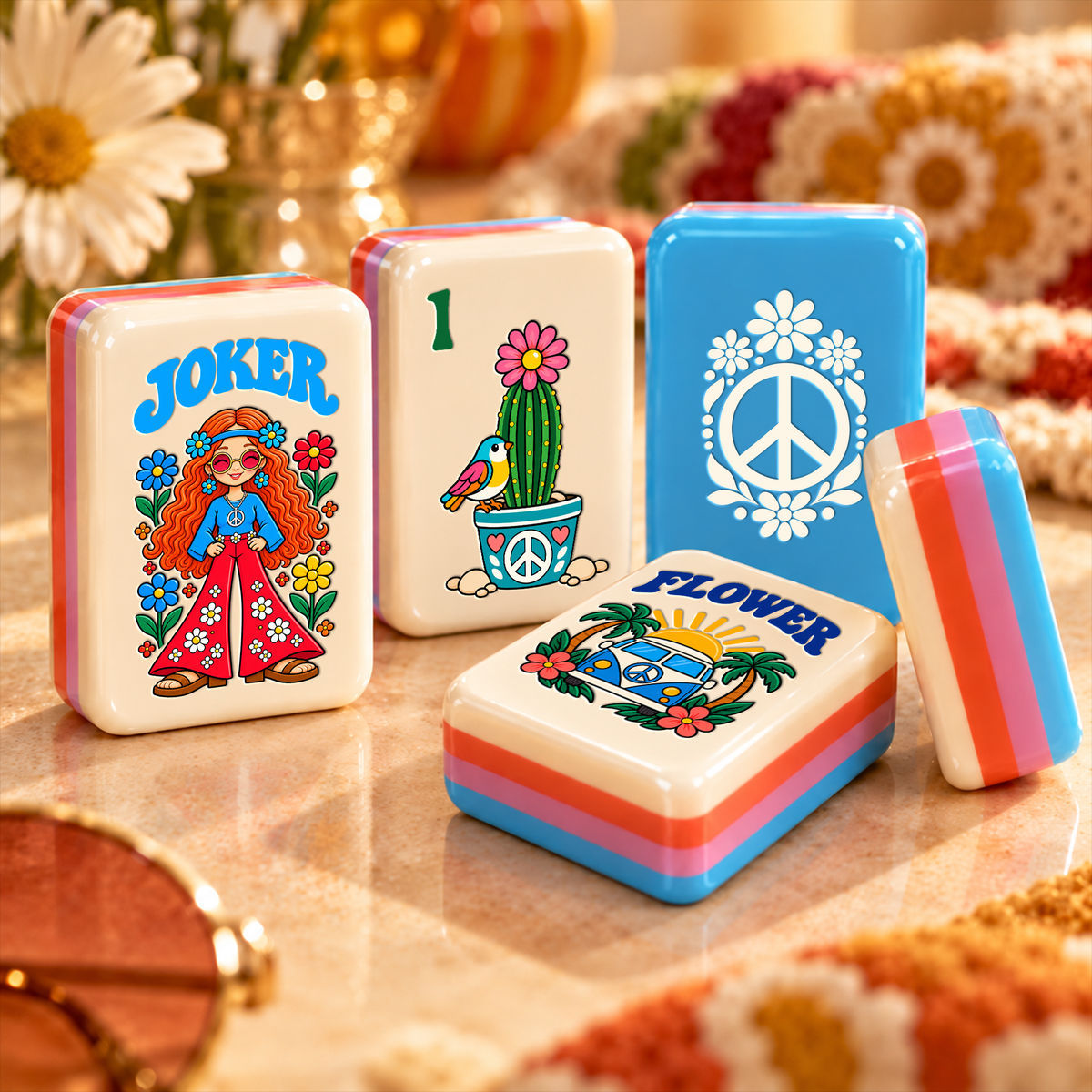
Hosting a mahjong party in Boca Raton means having a level playing surface (dining table or dedicated mat), four players, a set of 152 tiles plus spares, the current year's National Mah Jongg League card, and snacks. Boca Raton community centers, libraries, and country clubs often host open game groups, or you can start your own at home—the game takes 20–40 minutes per hand and plays best with four equal-skill players or mixed levels if everyone agrees on house rules upfront. You'll need an American mahjong set from our best-selling collection (with 152 playing tiles and extras), a mat to protect your table and organize tiles, racks if players prefer not to hold tiles, and the current League card. Budget your space: a standard four-player game needs roughly a 36–42 inch square surface. Avoid common first-timer mistakes: don't mix house rules mid-game, don't let jokers substitute in pairs, and don't play off an outdated card.
Hosting your first mahjong party in Boca Raton is simpler than you might think, but getting the details right makes the difference between a chaotic evening and one people ask to repeat. We've hosted dozens of games across South Florida and learned what turns a casual Tuesday into a tradition worth planning around.
Where do Boca Raton players actually meet to play?
Community centers, public libraries, and country clubs in the Boca Raton area host regular open mahjong groups—many listed on community bulletin boards and library websites. Synagogues and senior centers are also strong hubs. If you can't find a standing group, your best move is to start one: invite friends, coworkers, or family members who want to learn, set a weekly or biweekly time slot, and host at home or rotate houses. Most groups meet for 1–2 hours, which is enough for 2–4 hands. Post flyers at local coffee shops, yoga studios, or ask your neighbors directly.

What's the bare minimum equipment you need to start?
You need exactly four things: a 152-tile American mahjong set (which includes four identical suits, winds, dragons, flowers, and jokers), a copy of the current-year National Mah Jongg League card, a flat playing surface, and four players. The set is the most critical piece—it's the one thing you can't improvise. We recommend starting with a set from the best-selling mahjong collection; these are acrylic, easy to clean, and the tiles are loud enough for everyone to hear when they're drawn and discarded. A mat protects your table and keeps tiles from sliding. Racks hold tiles upright so shorter players or those with hand mobility issues can see all their tiles easily. Dice (typically two) determine who goes first and manage betting if your group uses that. A scoring pad helps track points across multiple hands.
🀄 Shop best-selling mahjong sets →
How do you set up a four-player game in your home?
Arrange four chairs around a table (36–42 inches square is ideal) with one player on each side. Place the tile set in the center, still in its rack or loose in a neat line. Each player draws eight tiles at random during setup—this determines seating order and who deals first. Then, the dealer draws fourteen tiles and the game begins. Before tiles are drawn, players pass tiles to one another in a choreographed exchange called the Charleston—a ritual that adds strategy before the first hand is played. The current League card goes in the center of the table so all players can reference it. If anyone needs to handle tiles (to organize a discard or read a hand), keep movement slow and controlled so other players can see what's happening. Use a mahjong mat to define play zones and keep tiles from scattering—it also marks where discards go and protects your dining table.
What's the biggest hosting mistake new players make?
The single largest mistake is not having everyone at the table agree on the rules before starting. American mahjong has one standard ruleset for how jokers work, how to read the hand card, and how scoring works—but house variations exist. Before your first hand, clearly state: whether you're using jokers freely or limiting them, if you're keeping score by hand or playing for casual fun, and whether you'll use racks with pushers (which make it much easier for newer players). Never start a game assuming everyone knows the rules. The second mistake is mixing player skill levels without a plan—pair a beginner with someone patient, or run a teaching round first with the League card wide open on the table. A third mistake is using an outdated League card; the card changes every spring, and a hand that was valid last year might not be legal this year.

How do you teach someone who's never played before?
Walk them through these steps in order: (1) Show them the four suits and explain that a valid hand requires matching the pattern on the current League card. (2) Teach them how to count tiles: a pung (set of three identical tiles), a kong (four identical tiles), a quint (five identical), a sextet (six identical), or a pair (two identical). (3) Explain that in American mahjong, you can only show pungs, kongs, quints, and sextets—there are no sequences or chows like in other variants. (4) Show them the Charleston and do a practice round without keeping score. (5) Play one complete hand with the card visible and paused after each move so you can explain why a discard was chosen. (6) On hand two, step back and let them play with the card visible, but answer questions freely. Most new players need two or three hands to feel comfortable; don't rush. Have snacks nearby and keep the mood light—mahjong is social first, competitive second.
🎁 See our most-loved mahjong sets & accessories →
What should your equipment checklist look like before guests arrive?
Use this table to prepare:
Item | Purpose | Check |
152-tile American mahjong set | Play tiles and jokers | ✓ Count: 108 suited tiles + 16 winds + 12 dragons + 8 flowers + 8 jokers = 152 |
Current-year League card | Hand validation | ✓ Check issue date; never use last year's |
Flat 36–42" table or mat | Playing surface | ✓ Clear clutter; set up before guests arrive |
Mahjong mat (optional but recommended) | Tile organization & table protection | ✓ Smooth, no wrinkles or tears |
Racks with pushers (optional) | Tile display for players with mobility issues | ✓ One per player if using; ensure all four match |
Two dice | Seating & dealing order | ✓ Check both roll evenly |
Pen and scoring pad | Track points across hands | ✓ Keep within arm's reach of one player |
Snacks & beverages | Social comfort | ✓ Avoid greasy foods near tiles |
What's the difference between hosting a casual game and one with stakes?
Casual games are for fun and bragging rights; you keep score on paper, and the winner might get a treat or first pick at next week's snacks. Games with stakes usually involve small per-point payments (quarters, dollars, or chips) settled at the end—common in regular groups where everyone agrees upfront. If you're hosting strangers or mixing skill levels, we recommend no stakes until everyone knows each other and plays at similar levels. If someone asks to play for money before the game starts, confirm the house rules: many strong players decline to play for stakes in someone's home on the first visit. Keep the vibe inclusive. The game's real value isn't cash; it's the strategy, the social connection, and the satisfaction of completing a hand.
What to check before you buy your set and mat
Tile material and feel: Acrylic sets are easy to clean, loud (you'll hear tiles snap together), and last years of weekly play. Make sure the set includes eight jokers and that extras (spares) are included—useful when a tile cracks. Mat size: Measure your table first. A mat that's too small cramps play; one that's too large overhangs and risks spilling tiles. A 27×27 inch mat works for most home tables; if your table is unusually large or small, verify dimensions before ordering. Racks for accessibility: Not every player needs racks, but if anyone in your group has hand tremors, arthritis, or prefers not to hold tiles, having one or two sets of racks with pushers on hand removes the barrier to participation. Storage: After a few games, you'll want a bag or case to keep tiles organized and protected between parties—it also makes it easy to carry your set to someone else's home if you rotate hosts.
✨ Find your Mahstead set — free US shipping →

FAQ
Do I need a special table to play mahjong at home?
No. Any flat, level surface works—dining table, card table, kitchen counter. A mat protects your furniture and organizes tiles, but it's optional if you're careful. Make sure the surface has at least 36 inches of clear space per side.
Can I play mahjong with fewer than four people?
Yes, but the game changes significantly. Two- or three-player variants use different rules, hand patterns, and tile counts. Check local groups for their preference; if you're starting out, we recommend learning four-player first, then exploring 2 and 3 player rules once you're comfortable.
How long does one hand of mahjong take?
20–40 minutes, depending on player skill and experience. Beginners often take 40 minutes; regular players average 25 minutes. A typical party game runs 2–4 hands in 60–90 minutes.
What if someone doesn't know how to read the hand card?
Show them how to read a mahjong card step by step before the first game. The card is organized by hand type and pattern. Every player should have access to it during play—keep it in the center of the table and encourage questions.
Can I use an online mahjong set on my phone instead of physical tiles?
You can learn the rules that way, but physical tiles teach hand-building and strategy much faster. Most players who learn online still prefer to play in person; the tactile experience and social rhythm are different. For hosting a real party, get an American mahjong set.
How do I find other mahjong groups in Boca Raton to join before hosting my own?
Check community center websites, library bulletin boards, and Meetup or Facebook groups for "mahjong near Boca Raton" or "South Florida mahjong." Visit a standing group as a guest first—you'll learn house rules, meet regulars, and get invited to home games where you'll see how different setups work.


View More
View More
View More
