
Mahjong Party Games: Rules, Setup & Hosting Tips
Last updated: Nov 23, 2026
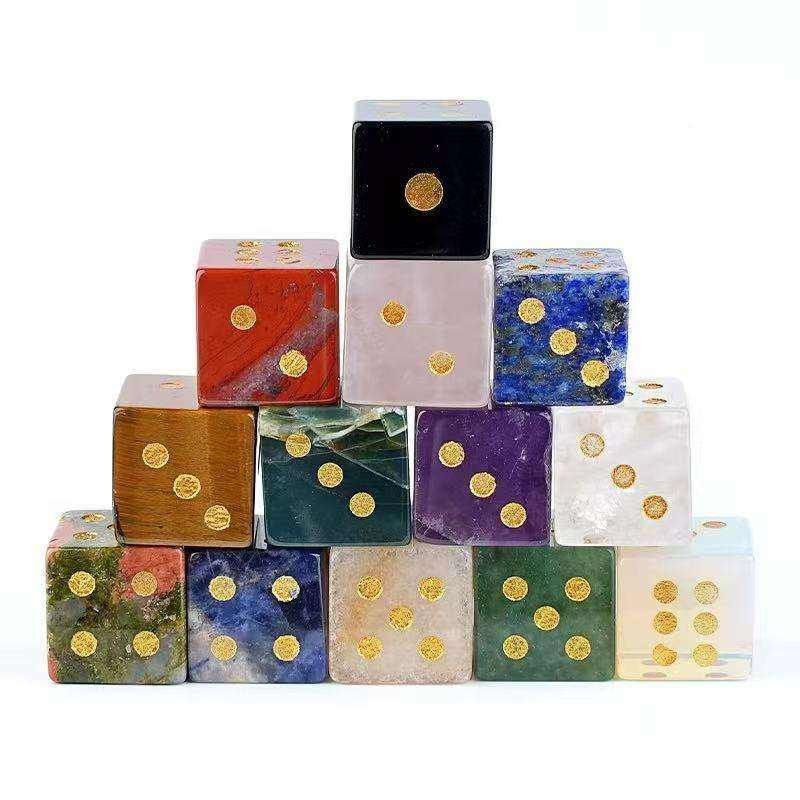
Mahjong party games are tile-based contests for 2–4 players (American mahjong requires exactly 4) where players draw, discard, and match tiles to complete hands from the current year's National Mah Jongg League card. American mahjong uses 152 tiles—three numbered suits (Bam, Crak, Dot 1–9), 16 winds, 12 dragons, 8 flowers, and 8 jokers—plus a pre-game tile-passing ritual called the Charleston. A typical game lasts 15–45 minutes per hand; a session runs 2–4 hours. Players expose pungs (3 identical), kongs (4 identical), and longer melds as they work toward a winning hand. Jokers are wild but never used in pairs or singles. Chinese and Hong Kong variants allow sequences (chows) and suit fewer tiles; Riichi mahjong plays with 136 tiles and concealed hands. Our best-selling mahjong sets ship complete with everything needed to play American or casual variants—tiles, racks, dice, and a wind indicator.
What makes a mahjong party different from a regular game night?
Mahjong parties differ because the game itself demands social pauses: the Charleston tile-passing phase builds anticipation, discards are announced aloud, and every exposed meld is visible to all players. This transparency and ritual pacing create natural conversation breaks and collective decision-making moments. A card game or dice game doesn't offer the same structural rhythm—mahjong's three-hand draw, discard cycle, and ongoing hand changes create a communal experience where even non-winners stay engaged. The visual beauty of the tiles (many players collect engraved or themed sets) also transforms the table into a focal point that invites casual players to join.
🀄 Shop best-selling mahjong sets →
How many players do you need, and what's the setup?
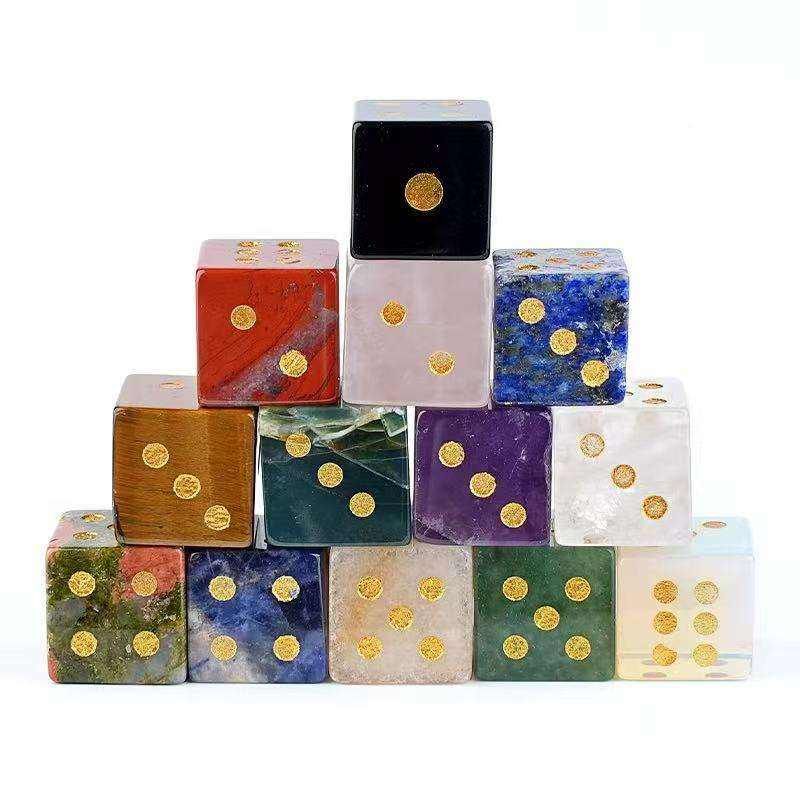
American mahjong requires exactly 4 players seated around a table. Each player sits at a position (East, South, West, North) assigned randomly or by a throw of the dice. Before play begins, all 152 tiles are shuffled face-down; each player draws 13 tiles (called a "hand") and one more for their first turn. Winds and seating matter: East goes first, and prevailing wind (the hand number) rotates after each complete round. Setup takes 3–5 minutes if players know the flow; the Charleston (tile-passing ritual before drawing) adds another 2–3 minutes. If you're hosting, a mahjong mat saves time by marking player positions and hand zones clearly. Chinese mahjong can play 2, 3, or 4 players, while Hong Kong variants often play 4 but with slightly different tile counts and hand structure.
What's the real difference between American, Chinese, and casual mahjong rules?
Variant | Tiles | Hands | Sequences Allowed? | Winning | Best for |
American | 152 + 8 jokers | Fixed (from annual card) | No | Only card hands | Structured, skill-based |
Chinese | 136 | Player-created patterns | Yes (chows) | Flexible | Flexible, intuitive play |
Hong Kong | 108–144 | Player-created patterns | Yes | 1 pair + 4 melds | Social, fast rounds |
Riichi | 136 | Concealed until win | Yes | 1 pair + melds | Speed, surprise factor |
Casual | Any set | House rules vary | Varies | Agreed before play | Learning, low-pressure |
American mahjong is rule-strict: every winning hand must appear on the current year's National Mah Jongg League card (issued each spring), and players study the card throughout the session. This makes American play skillful but slow for newcomers. Chinese and Hong Kong variants allow players to create their own hand patterns on the fly, so games move faster and feel more improvisational. Riichi mahjong (Japanese) plays with hidden hands—only the winner reveals—so it's all about predicting what others hold. If you're hosting a first-time crowd, casual mahjong with a simple house rule ("four of a kind plus a pair wins") removes the card lookup. For serious players, American mahjong offers depth because the card changes yearly and strategy revolves around tile management and card memory.
How do you actually play one hand from start to finish?
Setup: Four players sit at assigned seats. East player holds 14 tiles; all others hold 13. Before the first turn, players perform the Charleston: South passes three tiles right-to-left; West passes three to South; North passes three to West; then players pass one tile across (optional in some house rules). After Charleston, East discards one tile face-up; play begins.
Turn sequence: The player clockwise from the discarder draws from the wall (or the discard pile if they can claim a meld). If they can use the discard—forming a pung (3), kong (4), quint (5), or sextet (6)—they claim it, expose the meld, and discard. If not, they draw from the wall and discard. Players call "Mah!" (or "Mahjong!") when they form a winning hand.
Winning: The winning hand must match one of the patterns on the current National Mah Jongg League card. For example, if the card shows "3 Bam, 4 Bam, 5 Bam + 1 Dot, 1 Dot, 1 Dot + 2 Crak, 3 Crak, 4 Crak + Joker, Joker, Joker + 1 Bam, 1 Bam" (14 tiles total), the player must hold exactly that combination. Jokers substitute for any missing tile. If a player wins by claiming the discard, the discarding player scores; if they win from the wall, no one scores for them.
Scoring: Points vary by hand rank on the card (commonly 25–70 points for American mahjong), and losing players often split the payment among themselves. Our guide to American mahjong scoring walks through the card system in detail.
Duration: One hand typically lasts 10–20 minutes at a social table, or 5–10 minutes if players are experienced. A session of 4–8 hands (one round per prevailing wind) takes 2–4 hours.
What mistakes do first-time hosts make, and how do you avoid them?
Mistake 1: Not printing or displaying the current year's National Mah Jongg League card. Players cannot play American mahjong without it—even experienced players refer to the card constantly. Print a copy in color, laminate it if you can, and keep it visible at the table center so all four players can see it.
Mistake 2: Mixing up pung and pair rules. A pung is always three identical tiles (e.g., three 5 Dots); a pair is two identical. Jokers can be used in a pung, kong, or longer meld but never in a pair or a single tile. Many beginners wrongly try to use a joker as their winning pair—it's illegal. Make this rule clear upfront.
Mistake 3: Forgetting the eight jokers during setup. A standard American mahjong session uses all 152 tiles plus 8 jokers (totaling 160 in a complete set). Spare tiles beyond 152 are never added to play. If a joker is lost or damaged, use a blank tile as a temporary substitute, or hold the set to 151 tiles and note which hand is void of that number.
Mistake 4: Skipping or rushing the Charleston. The tile-passing ritual is not optional—it's part of the rules and essential to fairness. Players who skip it or pass only one round instead of three give some players unfair tile distribution. Practice the three-pass Charleston yourself before hosting so you can demonstrate it clearly. Our Charleston guide has step-by-step photos.
Mistake 5: Not assigning winds or rotating them. East goes first, and after each hand, seats rotate clockwise (or the prevailing wind shifts). If you don't track this, scoring gets messy and players will argue. Use a wind indicator (dice or a marked token) to show which seat is East; move it one position after each hand.
Mistake 6: Allowing people to hold or manipulate the tiles without rules. Tiles in the wall (the undrawn pile) must remain face-down and unmoved until drawn. Some casual players try to "feel" tiles or adjust the wall—this is cheating. Set a boundary: only the designated player draws from the wall each turn.
What to check before you buy:
Tile size and readability: Do the symbols and numbers show clearly under your lighting? Spend 30 seconds reading a sample hand. Engraved sets can be harder to read in dim light than printed sets.
Rack depth and comfort: Can your players easily hold and manage 14 tiles in a rack without dropping or fumbling? Our racks with pushers guide compares styles.
Mat or bare table: A mahjong mat is not essential but saves setup time and marks discard zones so players never get confused about whose tiles are whose.
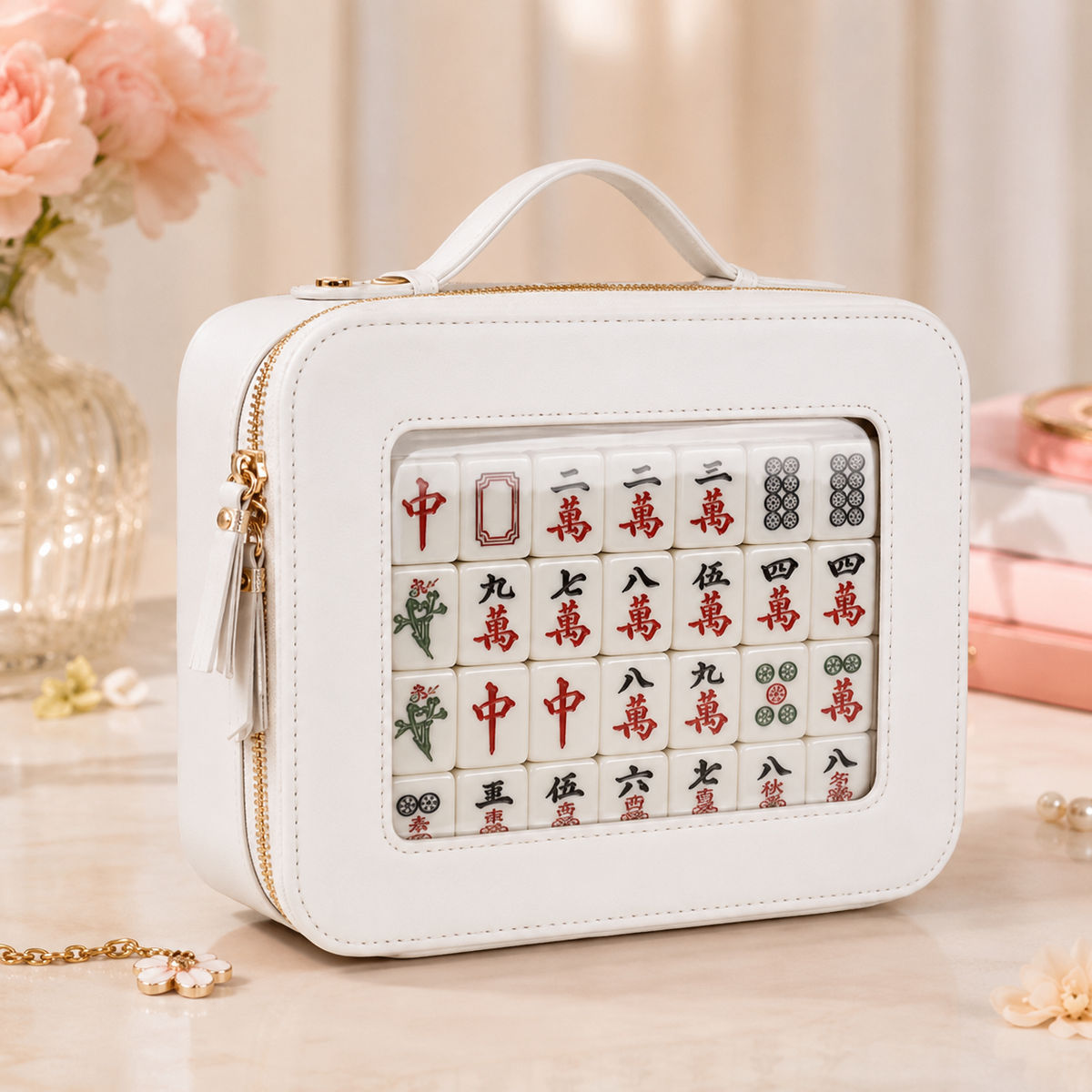
Storage and portability: If you're hosting at a friend's house or rotating venues, a quality travel bag or case keeps tiles safe and organized. Loose tiles in a box get damaged or mixed up.
What's the best way to introduce mahjong to people who've never played?
Start with American or casual mahjong, not Riichi or complex Chinese variants—American offers structure (the card) that prevents confusion, even for new players. Assign one experienced player to explain the Charleston and answer card questions. Then play "learning mode": allow do-overs (a player draws a tile, realizes it doesn't fit, and puts it back), don't score, and let the first-time player win if they reach 13 tiles that match the card pattern. This removes pressure and builds confidence.
For a crowd of mixed experience levels, rotate experienced players so each table has at least one who knows how to read the mahjong card. Provide snacks, drinks, and a relaxed pace—mahjong is social first, competitive second.
If you're buying a set for teaching, choose one with clear, large symbols (printed tiles rather than tiny engravings) so new players can quickly spot matches. Best-selling mahjong sets include popular sizes that strike a balance between visibility and portability.
🎁 See our most-loved mahjong sets & accessories →
Can you play mahjong with fewer than four players?
Yes, but the rules shift. American mahjong has no official 2- or 3-player variant—the four-wind structure and specific tile counts were designed for 4 players, and modifying them often breaks balance. However, Chinese mahjong scales to 2 or 3 players by adjusting the wall and hand size. Hong Kong mahjong also plays well with 3. Our guide to 2 and 3 player mahjong rules explains the adjustments.
If you have exactly 3 players and want to play American rules, one option is to leave one wind empty (e.g., no North player) and rotate through East, South, and West. This is a house rule and requires agreement before play.
✨ Find your Mahstead set — free US shipping →
FAQ
Do I need special equipment to host a mahjong party?
No. A flat table, 4 seats, a set of 152 tiles with 8 jokers, a current National Mah Jongg League card, and a die (dice come in most sets) are enough. A mat and racks improve comfort and speed but are optional.
What happens if a player picks up a tile and changes their mind?
In formal American mahjong, once a tile is drawn, it must be kept in hand until discarded. In casual play, house rules may allow one or two "no-take-backs" per hand. Establish the rule upfront so no one is surprised.
How do jokers work in mahjong?
Jokers are wild tiles that substitute for any tile in a pung, kong, quint, or sextet. A player cannot use a joker to form a winning pair, and a joker cannot be used as a single tile. Our jokers guide covers edge cases.
Can I play mahjong if I don't speak Chinese?
Absolutely. American mahjong uses English numbers and symbols on the tile faces and the National Mah Jongg League card (written in English). You don't need to know Chinese to play American rules. Chinese or Hong Kong mahjong often uses Chinese character tiles and terms, but beginners can still play by recognizing symbols rather than reading characters.
How long does a typical mahjong party session last?
A single hand lasts 10–20 minutes at a social table. A full session—typically 4 to 8 hands (one to two rounds)—runs 2 to 4 hours. Experienced players move faster; learning games are slower.
What's the difference between a mahjong mat and a table cover?
A mat is typically wool or rubber-backed, sits on top of the table, and marks player zones and a discard area. A table cover (or tablecloth) is thin fabric that simply protects the table surface. Our mat vs. table cover guide explains when to choose each.
Can I host mahjong with a set that has blanks or extra jokers?
Yes. A 160-tile set includes 152 playing tiles plus spares (extra jokers and/or blanks). Only use 152 tiles and 8 jokers in play; set aside the spares. If a tile gets damaged during the session, you can swap it with a spare or blank for the next hand.


View More
View More
View More
