
Is Mahjong Good for Grandparents and Grandkids?
Last updated: Nov 23, 2026
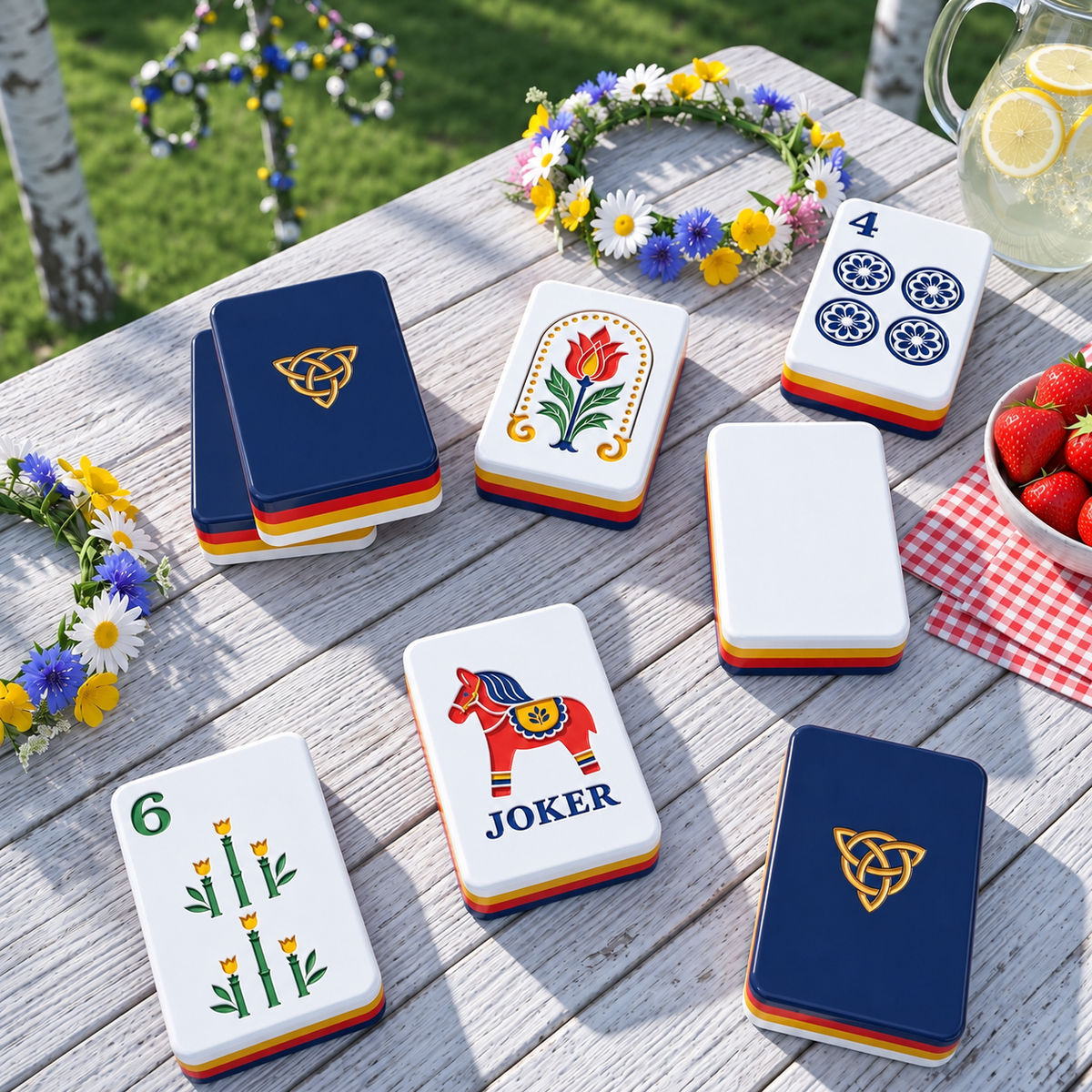
Yes, mahjong is excellent for grandparents and grandkids. The game requires no physical strength, works on any flat surface, and rewards memory and strategy over speed—natural advantages for experienced players. A standard American mahjong set includes 152 tiles, racks, and jokers; a game lasts 1–2 hours and follows hands from the annual National Mah Jongg League card. Grandparents often lead because they recognize patterns faster; kids learn patience and focus. Start with mahjong for beginners rules, use large-print tiles if needed, and play for fun rather than stakes. Most families find their rhythm within 3–4 games. A quality set from Mahstead designed for clarity—with large characters and contrasting colors—removes visual strain that can discourage mixed-age play.
Mahjong is one of the few games that genuinely works across age gaps. The game requires no physical strength, works on any flat surface, and rewards memory and strategy over speed—natural advantages for experienced players. A standard American mahjong set includes 152 tiles, racks, and jokers; a game lasts 1–2 hours and follows hands from the annual National Mah Jongg League card. Grandparents often lead because they recognize patterns faster; kids learn patience and focus. Start with beginner rules, use large-print tiles if needed, and play for fun rather than stakes. Most families find their rhythm within 3–4 games.
Why Grandparents Excel at Mahjong with Grandkids
Mahjong favors pattern recognition and memory over reflexes. Grandparents who've played for decades spot tile combinations instantly; kids develop these skills by watching. The game also enforces turn-taking—no rushing, no simultaneous decisions—which naturally suits multi-generational play. Unlike fast-paced card games, mahjong rewards thinking aloud, letting younger players learn strategy by listening. Grandparents don't lose to speed; they lose only to better tile knowledge. This balance keeps games competitive without being discouraging.
🀄 Shop best-selling mahjong sets →

How Long Does a Game Take, and Is the Ruleset Hard to Learn?
American mahjong games typically run 1–2 hours, depending on how fast players recognize hands. Beginners often take longer; experienced players move quicker. The core rule is simple: build a hand matching the current year's National Mah Jongg League card, then declare "Mahjong." Unlike Chinese mahjong, American rules forbid sequences (chows)—only identical-tile groups (pungs, kongs, quints, sextets) count. Most grandparents and grandkids grasp the fundamentals in one session and play confidently by game two. The card itself feels overwhelming at first, but how to read the mahjong card breaks it down into manageable sections.
What Do You Need to Set Up Your First Game?
A best-selling American mahjong set contains everything: 152 tiles (three suits—Bams, Craks, Dots—plus winds, dragons, flowers, and jokers), four racks, pushers, and a wind indicator. You'll also want a mat to protect the tiles and define the play space; a durable mahjong mat is an investment that lasts years. The current year's National Mah Jongg League card (released each spring) is essential and is available from the League or many online sellers. A notepad and pen track scores. If playing outdoors or traveling to a grandchild's home, a protective mahjong bag or case prevents tiles from shifting or spilling. For a first game, the set and card are enough; the mat and case become worthwhile once you're playing weekly.
Setup Item | Who Needs It | Why It Matters | When to Buy |
American mahjong set (152 tiles) | Everyone | Contains all tiles, racks, pushers | First game |
National Mah Jongg League card (current year) | Everyone | Defines playable hands | Before game day |
Mahjong mat | Regular players | Protects tiles, defines play area | After 3–4 games |
Bag or case | Traveling players | Prevents loss and damage | When hosting away from home |
Rack with pushers (if not in set) | Players with arthritis | Eases tile management | If standard racks strain hands |
Common Mistakes: What to Avoid
Mixing old card versions. Each year's National Mah Jongg League card is different. Playing with last year's card mid-game will confuse hands and derail play. Keep only the current year's card at the table.
Not explaining the Charleston. The tile-passing ritual before play (called the Charleston) feels odd to newcomers. The Charleston explained shows exactly how it works; walk through it once before the first hand.
Using jokers wrong. Jokers substitute for missing tiles in sets (pungs, kongs, etc.) but can never be used as a pair or a single tile. Many beginners waste jokers early. How jokers work clarifies when to save them.
Picking tiles that are too small. If a grandparent has vision challenges, standard tiles may strain their eyes. Sets with larger characters and high contrast between tile colors reduce fatigue and keep play enjoyable.
Playing for money. Money changes everything. Play for fun first. Once everyone's comfortable, you can agree on small stakes if you want—but never force it.

How to Host Your First Multi-Generational Game
Choose a day and time. Pick a time when both generations have energy and focus—mid-afternoon often works better than late evening.
Set up on a clean, flat surface. A dining table or a dedicated mat works. Remove clutter so everyone has clear sightlines.
Distribute the mahjong set. Each player draws a tile to determine wind (North, East, South, West). East goes first. Shuffle and distribute the starting hand.
Run the Charleston. Pass tiles right, center, and left before play begins. How to play American mahjong includes a step-by-step Charleston tutorial.
Have the card visible. Place the National Mah Jongg League card where all four players can see it clearly. Many players photograph it or print extra copies.
Keep scoring simple at first. Focus on finishing hands and understanding the card. Once everyone wins a hand, scoring logic becomes obvious.
Play 3–4 hands. One game isn't enough to build confidence. By hand four, most players ask to go again.
🎁 See our most-loved mahjong sets & accessories →
What to Check Before You Buy a Set
Tile size and contrast. Compare character legibility in photos. If anyone at your table has presbyopia or color-blindness, prioritize large print and high-contrast tiles. Engraved sets with hand-painted details often provide clearer contrast than mass-produced ones.
Rack comfort. If anyone has arthritis or dexterity concerns, mahjong racks with pushers make managing 14 tiles much easier. Test-hold a rack if possible.
Durability. Acrylic tiles last decades if handled gently. Wood tiles are heavier and can chip; bamboo is lighter but wears faster. For weekly intergenerational play, acrylic withstands the volume.
Completeness. Verify the set includes 152 playing tiles, four racks, pushers, a wind indicator, and jokers. Some sellers add extra jokers or blanks as spares—useful for replacements but never added to play.
Portability. If you'll travel to a grandchild's house or take it on vacations, a protective travel bag or case is worth the cost. Loose tiles in a cardboard box invite loss and damage.
The Real Benefit: Time and Connection
Mahjong works for multigenerational play because it's inherently slow. There's no timer, no sneaking a play, no advantage to reflexes. Grandparents and grandkids sit together, often talking between turns, watching patterns emerge. A two-hour game becomes an afternoon. Weeks of games become a ritual. We've seen families who live far apart reserve Thursday nights for video calls and mahjong—each at their own table, same card, same game. The tiles are just the vehicle; the real win is presence.
✨ Find your Mahstead set — free US shipping →

FAQ
Can a grandparent teach a grandchild mahjong if the grandparent hasn't played in decades?
Yes. Memory fades for hands, but strategic intuition remains. Start with the current year's card and how to play American mahjong as your guide. Play a few casual hands to rebuild muscle memory, then teach the grandchild alongside your own relearning.
Is American mahjong easier or harder than Chinese mahjong?
American mahjong has simpler scoring but a more rigid ruleset—hands come only from the annual card. Chinese mahjong allows any hand combination but has more complex point calculations. For mixed generations, American is less frustrating for beginners because the card eliminates argument.
What if a grandchild has poor color vision?
Request a set with large numerals and symbols, not just color coding. Avoid sets that rely on red/green distinction alone. Many engraved mahjong sets with hand-painted details include texture and contrast beyond color.
How do we score if nobody wants to keep detailed records?
Play for fun first. Once you've finished a few hands, add basic scoring: first hand to declare "Mahjong" earns points per American mahjong scoring rules. For casual play, tracking winner each round is enough.
Should we play with just two or three people if we can't gather a full four?
Yes. 2 and 3 player mahjong rules adapt the game for smaller groups. Games are shorter and tiles move faster, which some grandparents and grandkids prefer.


View More
View More
View More
