
Hong Kong Mahjong vs. Filipino Mahjong: Key Differences
Last updated: Nov 23, 2026
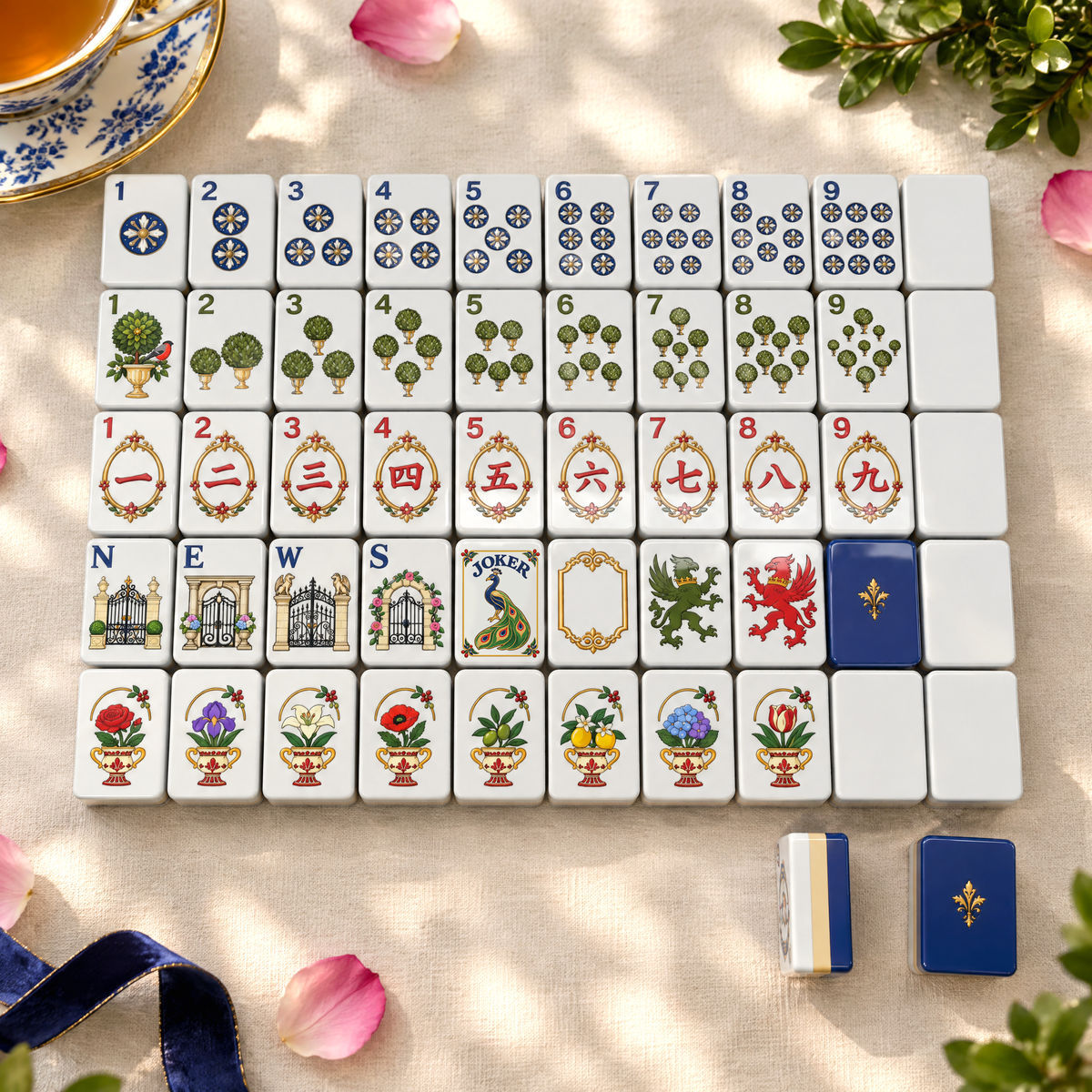
Hong Kong mahjong uses 144 tiles (108 numbered suit tiles plus winds, dragons, and flowers), focuses on pung/kong combinations and sequences called chows, and awards points based on hand complexity and luck. Filipino mahjong, also called "mahjong solitaire" in some contexts but more accurately played as "Filipino style" in multiplayer settings, typically uses 144 tiles but emphasizes different hand patterns and often includes a "wall game" mechanic where players draw from a central pile. Hong Kong play values concealed hands and minimal exposure until winning; Filipino play tends toward faster rounds, simpler scoring, and more frequent exposures. Both are played with four players and take 15–30 minutes per round. The core difference: Hong Kong rewards strategic concealment and complex melds, while Filipino play prioritizes speed and accessibility. Neither variant uses the spring-issued hand card required in American mahjong. If you host weekly games and want to experiment beyond American mahjong rules, understanding these distinctions helps you adopt the right tile set and reference guide for your group.
How many tiles are in each game, and why does it matter?
Both Hong Kong and Filipino mahjong play with 144 tiles: 108 suit tiles (three suits—Bams, Craks, Dots—numbered 1–9, four copies each), 16 winds (four each: North, East, West, South), 12 dragons (four each: Red, Green, White), and 8 flowers (sometimes called "seasons"). American mahjong, by contrast, uses 152 tiles and includes jokers, making hand patterns more flexible and open. The 144-tile standard in both variants means shorter walls, faster exhaustion of the draw pile, and fewer jokers to substitute for missing tiles. This creates tighter, more skill-dependent play: if you cannot meld what you need, you cannot simply joker your way out. For weekly players accustomed to American rules, switching to 144-tile variants requires learning that concealment and forced draws are not luxuries—they're the game's spine.

What are the core hand-winning patterns in each variant?
In Hong Kong mahjong, a winning hand must contain four melds (pung, kong, or chow) plus a pair. A chow is a sequence of three consecutive numbers in the same suit (like 4-5-6 Bams); you can build chows with tiles you draw, but you cannot call or expose them. Once you win, all four melds are exposed to verify the hand's legality. Scoring depends on the composition: all-honors hands, all-terminals, all-simples, concealed vs. exposed melds, and "specials" (like seven pairs in certain schools) yield different point multipliers. Filipino mahjong, in contrast, often emphasizes simpler patterns and faster recognition. Many Filipino games allow seven pairs, two sets of triplets plus a pair, or three sets plus a pair; the exact rules vary by region and house style. Scoring is typically lower and less formula-driven than Hong Kong's. Neither variant uses the National Mah Jongg League's annual hand card that defines American play. If you want to explore variants, our best-selling collections include standard-duty sets suitable for learning multiple rule systems.
How does play flow differ—concealed vs. open exposure?
Hong Kong players keep their hands mostly hidden until winning. You draw, discard, and wait for opponents to either call your discard for a pung/kong or pass. Calling is rare because chows cannot be called (only pungs and kongs), and winning usually requires a concealed hand for bonus points. The game moves slowly and rewards patience. Filipino play is more open and conversational. Players expose tiles more freely, often to signal strength or block opponents. The pace quickens because fewer hands go to the very last tile. Draw mechanics also differ: Hong Kong uses a wall system where players draw in turn from a diminishing stock; Filipino play may include a "dead wall" (reserved tiles drawn only for kongs) or a "loose tile" drawn by whoever needs it. These flow differences mean Hong Kong games require focus and memory (tracking discards and inferring hidden melds), while Filipino games reward speed and social reading. For groups used to the speed of American mahjong with its joker flexibility, Hong Kong feels methodical; Filipino feels somewhere between American accessibility and Hong Kong discipline.
What is the scoring difference, and how does it affect strategy?
Hong Kong scoring is cumulative and based on multiplier. A hand's base points depend on its pattern, and bonuses apply for concealment, lucky draws, all-honors, all-terminals, and other factors. Points often range from 1 to 8+ (doubled or tripled per multiplier), and a single hand can earn hundreds of points in tournament play. Settlement is per-hand, and scores are tracked throughout the session. Filipino scoring is simpler: most hands award flat points (e.g., 1 point for winning, 2 for a concealed win, bonus for special patterns). Some regions use a "pay all" system (losers each pay the winner a fixed amount); others use a "pay two" system (only two losers pay). Scores reset each round; no cumulative card. American scoring, by contrast, uses the National Mah Jongg League card to verify hands and assign points based on pattern and draw type (from wall, by calling, or winning from the tile after a kong). For weekly players, Filipino scoring is easiest to track and quickest to settle; Hong Kong requires a scoresheet and mental arithmetic; American requires the current year's card. Strategy shifts with scoring: Hong Kong play favors long-term hand building because bonuses reward patience; Filipino play favors quick wins because flat scoring means speed matters more than elegance.

Which variant should you learn first, and where do you find the rules?
Start with the variant your existing group plays. If you are already hosting American mahjong nights, learning Hong Kong or Filipino play requires new tiles, new reference materials, and new hand-recognition habits—a worthwhile adventure but a genuine time investment. If you are brand new to mahjong altogether, American is easiest because the annual hand card removes ambiguity (legal hands are printed; all others are illegal). Hong Kong is harder because regional rule variations exist (different schools award different bonuses), and you must memorize patterns. Filipino play occupies the middle: fewer patterns than Hong Kong, more flexibility than American. To learn, seek out YouTube tutorials (search "Hong Kong mahjong rules" or "Filipino mahjong tutorial"), local clubs via community centers or libraries, or printed guides specific to your chosen variant. Online tutorials often show live play, which clarifies flow better than text alone. Because neither variant requires an annual card, you can find stable, free rule summaries online; American play, by contrast, requires the current National Mah Jongg League card (issued every spring) and a subscription or purchase to access legal hands.
Variant | Tile Count | Winning Structure | Concealment Bonus | Chows Allowed? | Play Speed | Best For |
American | 152 + 8 jokers | 4 melds + pair (card-defined) | Yes, bonus points | No, pungs/kongs/quints only | Medium | Annual reference; rule clarity |
Hong Kong | 144 | 4 melds + pair (pung/kong/chow) | Yes, high multiplier | Yes, called pung/kong only | Slow | Strategic depth; memory games |
Filipino | 144 | 4 melds + pair (region-varies) | Yes, minor bonus | Yes (rules vary) | Fast | Social play; simple scoring |
What to check before you buy a variant set
If you decide to host Hong Kong or Filipino play, verify the tile set is labeled for that variant. Standard 144-tile sets work for both; however, some sets include region-specific markings (e.g., "Cantonese style" or "Bangkok style") that signal house conventions you may not follow. Check that the tiles are clearly marked (numbers/symbols legible, winds/dragons/flowers distinct) because play relies on quick recognition. Inspect the case or bag: Hong Kong and Filipino players often play longer sessions than casual American games, so durability matters. Ensure the tiles are acrylic or bamboo with clear engraving; poorly printed tiles fade and invite disputes. If your group is mixed (some know American, some know Hong Kong), consider hosting "rules tournaments" where each night follows one variant, with a printed or downloaded rule summary at the table. This prevents mid-game arguments and lets players learn at their own pace. For American mahjong groups considering a side game in another variant, you do not need to replace your American set—buy a separate 144-tile set. Our mats and racks work with any tile set, so your existing accessories scale.
🀄 Shop best-selling mahjong sets →
Real scenarios: when to choose each variant
Scenario 1: You host a multigenerational family game. American mahjong's annual hand card removes disputes; everyone checks the same reference. Grandma cannot argue about a hand because it is literally printed. For family peace, choose American.
Scenario 2: You are learning mahjong for the first time and have a mentor. If your teacher plays Hong Kong or Filipino, learn their variant first because live correction beats rule books. Transfer to American later if desired.
Scenario 3: You play weekly with the same four people. Hong Kong's deeper strategy and memory demands reward consistent groups. You will know opponents' habits and read their discards. Play deepens over months.
Scenario 4: You host casual game nights with rotating players. Filipino's simpler scoring and open play suit drop-in crowds. American's annual card also works if you keep it at the table and enforce it strictly.
Scenario 5: You run a mahjong club and want variety. Rotate: American Tuesdays, Hong Kong Thursdays, Filipino Saturdays. Advertise each variant so members choose. A single set of engraved racks and a durable mat adapt to all three.
🎁 See our most-loved mahjong sets & accessories →
A practical switching checklist
[ ] Download or print the full rule summary for your chosen variant.
[ ] Verify tile set is 144-tile (or 152+ for American).
[ ] Check that tiles are clearly marked and legible.
[ ] Assign one player as "rule keeper" for the first session.
[ ] Play one trial round on practice scoring before betting.
[ ] Ask experienced players to watch and correct silently (no shouting mid-hand).
[ ] Keep the rule sheet visible all evening; refer to it often.
[ ] After three sessions, ask the group: "Shall we keep this variant or return to our regular game?"
Most weekly groups find that one variant becomes the default within a month. American mahjong's clarity and annual card tend to stick; Hong Kong's strategic depth attracts competitive players; Filipino's speed suits social groups. Switching is not about replacing—it is about expanding your table's repertoire.
✨ Find your Mahstead set — free US shipping →

FAQ
Can I play Hong Kong or Filipino mahjong with an American tile set?
Technically yes, but the jokers and extra tiles complicate things. Hong Kong and Filipino both use 144 tiles with no jokers; American's 152 tiles plus 8 jokers change hand possibilities. For clarity, use a dedicated 144-tile set.
Is Filipino mahjong the same as "mahjong solitaire" I see online?
No. Mahjong solitaire is a single-player tile-matching puzzle (no mahjong gameplay). Filipino mahjong is a four-player variant with standard melds and winning conditions, played at tables with real opponents.
Do I need a new mat or rack if I switch variants?
No. Mats and racks work with any 144 or 152-tile set. If you have an American mat (12" × 12" or larger), it adapts to Hong Kong and Filipino play without issue.
Which variant is hardest to learn?
Hong Kong, because regional rule variations exist and patterns require memorization. American is easiest (annual card is definitive); Filipino is medium (simple scoring, fewer exceptions).
Can a mixed group (some know American, some know Hong Kong) play together?
Yes, but designate one variant per session and post the rule sheet. Switching mid-game creates conflict. Rotate variants night-to-night if players want variety.
Where do I find opponents for Hong Kong or Filipino mahjong?
Check community centers, libraries, university clubs, and online Meetup boards for "mahjong" groups in your area. Many regional clubs welcome learners and have house rules documented online or in printed guides.


View More
View More
View More
