
Mahjong Solitaire Setup: Tiles, Layout & Table Rules
Last updated: Nov 23, 2026
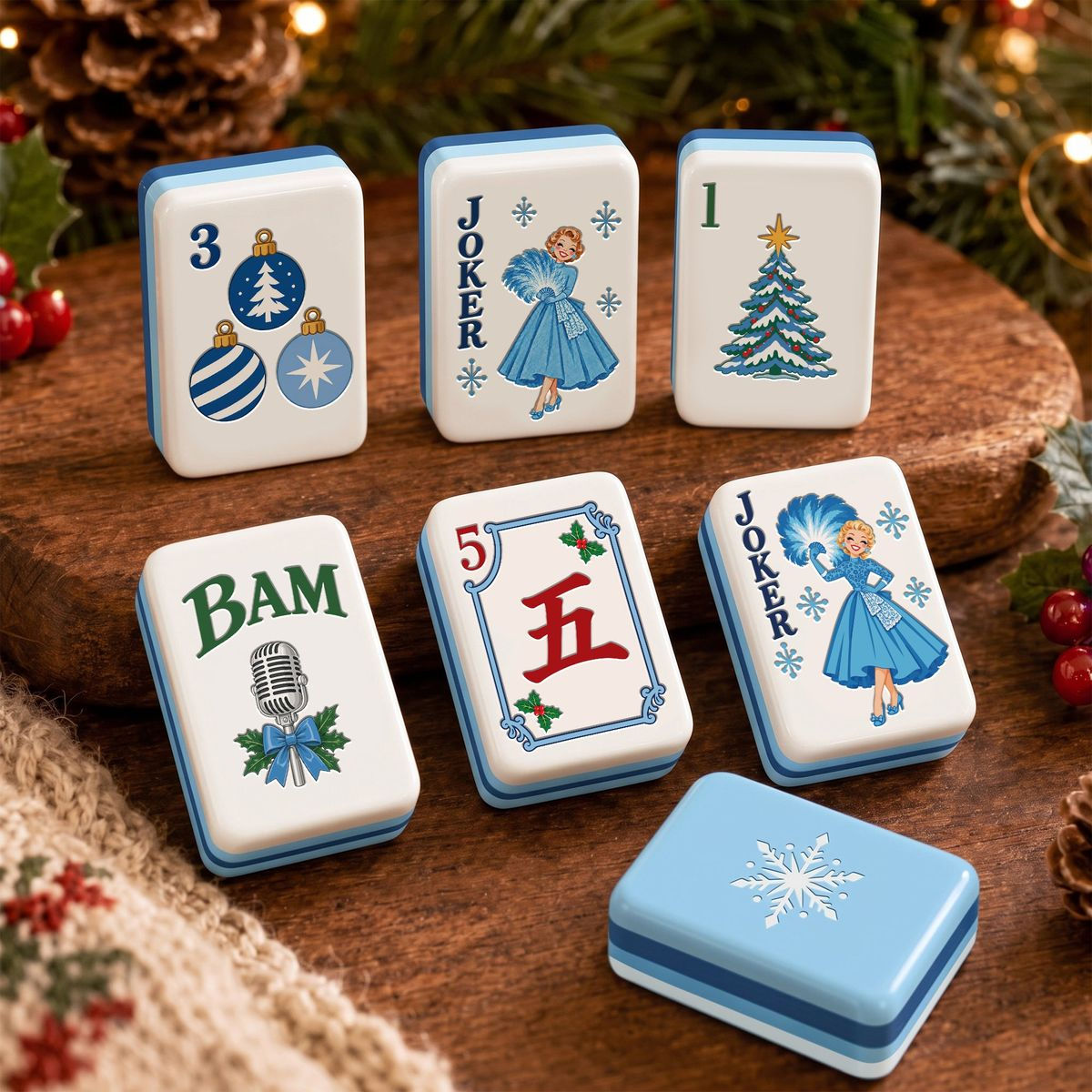
Mahjong solitaire uses a fixed arrangement of all tiles (not shuffled) stacked in layers: typically a pyramid with exposed faces, where you match pairs of identical tiles by touching them simultaneously, then remove both and continue until the board clears or you reach a deadlock. Setup takes 5–10 minutes and requires a flat, roomy surface. You need a full single-suit tile set plus a table mat or dedicated solitaire board (available preprinted or buildable on your own surface). Unlike American four-player mahjong—which draws from a wall and follows the National Mah Jongg League card—solitaire is purely a matching game with no hands, no scoring, no dealer role. You play alone at your own pace, restarting as many times as you wish until you win or reset. It's perfect for travel, quiet evenings, or learning tile names without pressure.
Mahjong solitaire is a meditative solo puzzle, not the four-player rummy-like game most people know. If you've played American mahjong around a table, solitaire will feel like a completely different world: no opponents, no time pressure, no luck in dealing, and no reference card needed. You control the entire game. The appeal is pure problem-solving—can you clear the board by matching every pair before you run out of valid moves?
The most common layout is a pyramid or stepped pyramid, where tiles sit in layers: bottom rows fully exposed, middle rows partially covered, top tiles completely clear. You remove a pair only if both tiles are exposed and touchable without moving any other tile. Some boards use a dragon layout (shaped like a dragon or castle), others a square grid. Setup is identical in principle: arrange all tiles in the chosen pattern, face up, and begin.
What layout should I choose for my first game?
The pyramid is most forgiving because lower rows are easy to access and you can see the entire board at once. A traditional seven-tier pyramid uses all 144 tiles in a neat triangle: 18 tiles on the bottom, then 16, 14, 12, 10, 8, 6, then 4, 2, and 1 at the top. Start with this if you're new to solitaire; it teaches tile pairing quickly. Advanced players prefer castle or dragon layouts, which hide more tiles and demand sharper strategy.
Key first step: before you arrange anything, ensure your playing surface is clean, dry, and large enough. A standard mat (roughly 30 × 30 inches or larger) gives room to breathe. Shuffle all 144 tiles face-down in a pile, then flip them face-up as you stack them into your chosen layout. Do not use jokers or blanks—solitaire uses the core single-suit set only.

How do I arrange tiles step-by-step?
For a seven-tier pyramid:
Tier 1 (bottom, fully exposed): Place 18 tiles in a horizontal row.
Tier 2 (offset): Place 16 tiles, staggered so each tile sits on top of two tiles below (like a roof tile). This partial coverage matters: a tile in Tier 2 is considered "exposed" only if nothing sits on top of it.
Tier 3–7: Repeat the stagger-and-reduce pattern (14, 12, 10, 8, 6, 4, 2, 1 tiles per tier).
Top tile: Place the final tile alone at the peak—it's always exposed and a legal match if its pair exists and is also exposed.
Once stacked, you cannot move tiles. If two identical tiles are both exposed (not covered by any tile above), you may touch them simultaneously to remove the pair. The tiles beneath them then become newly exposed.
What counts as an "exposed" tile?
A tile is exposed if nothing sits directly on top of it. In a pyramid:
Bottom-tier tiles are exposed unless a tile from Tier 2 rests on them (usually two tiles do).
Middle-tier tiles are exposed only if they have no tile directly above.
Top-tier tile is always exposed.
You can remove a pair only if both are exposed. This rule creates the puzzle: you must plan ahead, because removing one pair exposes new tiles below, which may unlock hidden matches. A deadlock occurs when no two exposed tiles match—game over, try again.
How is solitaire different from American group mahjong?
American four-player mahjong is a hand-rummy game with dealers, discards, and the National Mah Jongg League card that changes yearly. You draw and discard, build melds (exposed sets of three or more), and race to complete a legal hand. Solitaire has none of this:
Feature | American Group | Solitaire |
Players | 4 (or 2–3 variant) | 1 |
Starting setup | Shuffled wall, dealt hands, Charleston | Fixed pyramid or layout, no dealing |
Tile movement | Draw, discard, claim from discard pile | No movement; match exposed pairs only |
Reference card | Yes (yearly NMJL card) | No card needed |
Scoring | Yes, hand-by-hand | No scoring; goal is to clear board |
Time pressure | Yes (other players waiting) | None; go at your own pace |
Winning condition | Complete a legal hand from the card | Match and remove all 144 tiles |
Solitaire uses the same 144 tiles as American mahjong (three suits, winds, dragons, flowers) but ignores suits and sequences entirely—you match only by identical tile.
🀄 Shop best-selling mahjong sets →

What equipment do you need to play solitaire?
A full set of 144 tiles is mandatory. You can play on any flat surface—a coffee table, cardboard, or a dedicated mahjong mat, which is helpful for protecting tiles and keeping the board stable during stacking. Many players appreciate a mat because it defines a play zone and makes setup faster the second time.
Optional but useful:
A printed solitaire board template: some mats come with solitaire pyramid guides etched or printed on, so you know exactly where each tile goes.
A small notebook: to track which layout you attempted and which moves you made (helpful if you want to replay a game or learn from mistakes).
A carrying bag: if you play solitaire in different rooms or travel, a mahjong bag or case protects tiles from dust and makes setup portable.
From the best-selling mahjong sets collection, our standard acrylic sets come with 152 tiles (144 playing tiles plus 8 jokers as spares), which is perfect—the jokers stay in the bag, and you use only the core 144. No need for a 160- or 166-tile set unless you also play group American mahjong.
How long does a typical game take?
Setup: 5–10 minutes if you're methodical, faster as you practice. Active play: 10–30 minutes, depending on layout difficulty and how quickly you spot matches. Many players enjoy the meditative pace—there's no rush. If you reach a deadlock (no exposed matching pairs remain), you restart; most beginners clear a pyramid about 1 in 5 attempts at first, then improve as they learn tile names and pattern recognition.
🎁 See our most-loved mahjong sets & accessories →
What common mistakes kill a solitaire game?
Stacking tiles unevenly: if your pyramid isn't stable, tiles shift and may fall, ruining the exposed-tile logic. Use a mat for grip and a steady hand.
Forgetting the pyramid rule: removing a tile from Tier 3 when it's covered by a Tier 4 tile doesn't count—both tiles must be fully exposed.
Misidentifying duplicate tiles: all 144 tiles exist in one suit only. Check that your pair is truly identical (same number, same suit, same symbol). With acrylic tiles, printed details can vary by production run; if tiles feel identical but look slightly different, verify against the other three copies of that tile.
Playing too fast: solitaire rewards patience. Scan the whole board before each move to see what will unlock below.
Using jokers: jokers are spares and never part of solitaire play. Set them aside from the start.
What to check before you buy
Tile count: confirm your set has all 144 tiles (plus spares). A complete set guide details every tile type and count.
Tile size: acrylic tiles typically measure around 1¼ inches, which is comfortable for most hands and stacks neatly. If your hands are very small or you want a portable travel set, verify dimensions on the product page.
Set condition: inspect tiles for cracks, chips, or faded printing. Solitaire demands clear, readable symbols to avoid matching errors.
Playing surface: if you don't have a mat, you'll want one—it makes stacking and removing tiles much easier and protects the tiles and your table.
✨ Find your Mahstead set — free US shipping →

FAQ
Can I use the same set for American group mahjong and solitaire?
Yes. One standard American mahjong set contains 152 tiles (144 base tiles plus 8 jokers). You use all 144 for solitaire; when playing group American mahjong, you use exactly 144 plus 8 jokers for a 152-tile table game. No conversion needed.
What if I accidentally remove a pair that wasn't exposed?
In casual solo play, you simply note it and restart. In solitaire challenges or tournaments (rare), the move is invalid and you undo it. There's no penalty since no opponents are involved—just your own satisfaction matters.
How do I know when a tile is "exposed" in a multi-layer layout?
A tile is exposed if no other tile rests directly on top of it. In a pyramid, look straight up; if you see empty air (no tile above), it's exposed. When you remove a pair, check the tiles directly beneath them—those become exposed next.
Is there a "winning" solitaire game, or do I just keep playing?
Your goal is to clear all 144 tiles by removing matching pairs. If you do, you win that layout. If you reach a deadlock—no two exposed tiles match—that layout is "lost" and you restart with the same or a different pyramid. Some players track win-loss records over many games.
Where can I learn other solitaire layouts besides the pyramid?
Dedicated mahjong solitaire apps and websites show dozens of layouts (dragon, castle, spiral, etc.). Physical board kits sometimes print multiple layouts on a mat or card. Experiment: any arrangement of all 144 tiles works as long as you follow the "exposed tile" rule.
Do I need the National Mah Jongg League card to play solitaire?
No. The NMJL card applies only to group American mahjong hand-building. Solitaire is pure tile-matching and needs no reference card—just your eyes and patience.


View More
View More
View More
