
How to Use the 2 Crak Tile in American Mahjong
Last updated: Nov 23, 2026
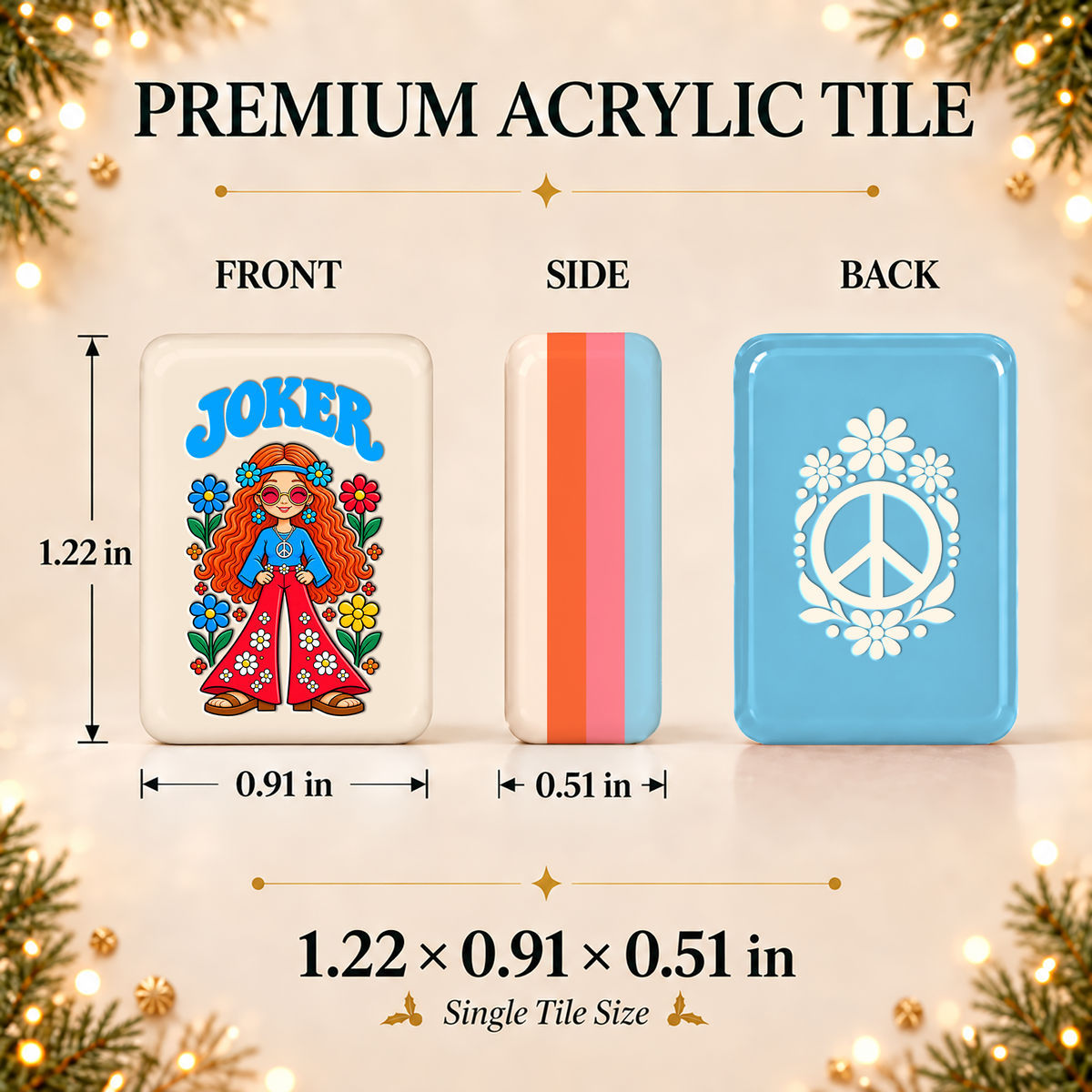
The 2 Crak is one of four identical numbered tiles in the Crak (characters) suit, ranging 1 through 9. In American mahjong, you build hands only from patterns listed on the current year's National Mah Jongg League card. The 2 Crak appears in pungs (three identical tiles), kongs (four identical), or as part of longer groups like quints and sextets—never in sequences or chows, which do not exist in American play. You cannot use jokers to fill a single tile or a pair; they substitute only within exposed melds of three or more identical tiles. The 2 Crak typically costs the same as any other numbered tile in a 160-tile acrylic set from our best-selling collection, where all suits ship with standard, readable engravings so players can spot it quickly during fast-paced rounds.
Where does the 2 Crak appear on the mahjong card?
The mahjong card organizes hands by hand type: pairs, pungs, kongs, quints, sextets, and combinations. The 2 Crak shows up wherever numbered Craks are listed—often in mixed-suit patterns that call for "any Crak" or specific numbered Craks. Reading the card correctly is the first skill you need; each section groups hands by complexity and point value. When you scan a hand type labeled with Craks, you'll see the 2 Crak included as one legal option, never in isolation. The card is printed fresh each spring, so hand listings change yearly. Memorizing a few key sections makes spotting the 2 Crak instant during gameplay.

Can you use a joker in place of a 2 Crak?
Yes, but only in specific circumstances. In American mahjong, a joker can substitute for the 2 Crak inside a pung, kong, quint, or sextet—but never as the single 2 Crak itself, and never as half of a pair. So if your hand calls for a pung (three 2 Craks), you could have two 2 Craks plus one joker, and that group counts as valid. However, if your hand needs a pair of 2 Craks, you must use two actual 2 Craks; jokers cannot fill pairs under any rule variant in American play. Understanding how jokers work prevents costly mistakes at the table—many new players assume jokers are wild for everything, which costs them winning hands. Always check the hand on the card before declaring a meld with a joker substitution.
What hands commonly use multiple 2 Craks?
Hands that call for multiples of the same Crak—or "any Crak" groups—will use the 2 Crak alongside the 3, 4, 5, or other numbered Craks. For example, a hand might ask for "two kongs of Craks"; you could build one kong of 2 Craks and another of, say, 7 Craks. Another common pattern is a quint (five identical tiles); if the card lists a quint of 2 Craks, you'd need all four 2 Craks in the deck plus one joker. Hands mixing Craks with other suits—such as "pung of 2 Craks, pung of 5 Bams, kong of Green Dragons"—are everyday patterns. The key is that the 2 Crak must always pair with identical tiles (three or four 2 Craks, no blending of 1s, 2s, and 3s into a sequence). Review your mahjong set's tile distribution before play to confirm you have all four 2 Craks available.
How do you spot a 2 Crak quickly during a fast game?
Speed matters at the table. A 2 Crak displays the character "二" (meaning two in Chinese) or the numeral "2" on an acrylic tile, printed alongside the Crak suit symbol. Engraved tiles from our titled collection use large, clear numerals so even players sitting across the table can read them instantly. Discard racks—especially racks with built-in pushers—keep tiles upright and visible, eliminating the squint-and-search moment. Avoid sets with tiny fonts or ornamental designs that obscure the number; practical tile size and contrast are non-negotiable for fluent play. Organize your hand by suit and number as you draw; a 2 Crak pulled early means you're already scouting for the other three or looking for a joker to complete the pung.

What's the difference between a 2 Crak and a 2 Bam or 2 Dot?
All three are distinct tiles—the 2 Crak belongs only to the Crak (character) suit, never to Bams (bamboo) or Dots (circles). A hand calling for a pung of 2 Craks cannot accept two 2 Craks and one 2 Bam; each suit is separate. American mahjong requires identical tiles across the same suit, not just identical numbers across different suits. This rule prevents confusion and keeps hands clearly defined. The visual distinction on your tiles matters: the Crak 2 displays a character symbol, the Bam 2 shows bamboo stalks, and the Dot 2 displays circles—usually in different colors or textures for quick recognition under pressure. If you're unsure which suit a tile belongs to, ask before discarding or claiming a meld; mixing suits is an easy slip for beginners and costs you the hand.
Hand Type | 2 Crak Role | Joker Allowed? | Min. Tiles Needed |
Pung (3 identical) | One of three tiles | Yes, as substitute | 2 actual + 1 joker OR 3 actual |
Kong (4 identical) | One of four tiles | Yes, as substitute | 3 actual + 1 joker OR 4 actual |
Quint (5 identical) | One of five tiles | Yes, as substitute | 4 actual + 1 joker |
Sextet (6 identical) | N/A (only 4 exist) | N/A | Impossible |
Pair | Must be 2 Craks only | No joker allowed | 2 actual only |
Mixed suit hand | Part of Crak group | Yes, within group | Per card hand |
🀄 Shop best-selling mahjong sets →
How does the 2 Crak interact with the Charleston before play begins?
The Charleston is the ritual tile-passing exchange before the hand starts; players pass tiles to one another to randomize the starting draw. The 2 Crak is treated like any other tile during this exchange—no special handling or trading advantage. Your goal during the Charleston is to break up unwanted tiles and steer your hand toward a viable card pattern. If you receive a 2 Crak and it doesn't fit your developing hand, you pass it along. If three or four 2 Craks land in your rack, you'd actively hunt for a quint or kong pattern on the card that uses them. Understanding the Charleston teaches you when to hold and fold early tiles; the 2 Crak is valuable only in context of the current year's card. Many newcomers over-cling to numbered tiles, forgetting that the card changes each spring, so last year's winning 2 Crak combo may vanish entirely.
🎁 See our most-loved mahjong sets & accessories →
Common mistakes when playing with the 2 Crak
Mistake 1: Mixing numbered tiles across suits. You cannot use a 2 Crak, 2 Bam, and 2 Dot as a valid pung. American mahjong requires identical tiles in the same suit only.
Mistake 2: Using a joker as the pair. A pair of 2 Craks demands two actual 2 Craks. No joker can stand in for a pair under any rule.
Mistake 3: Discarding a 2 Crak you later needed. Once you see the card, estimate how many 2 Crak hands are available. If none call for a 2 Crak pung, discard it early; if several do, hold it longer.
Mistake 4: Forgetting the card changes yearly. A hand using the 2 Crak last year may not exist this year. Always reference the current card before declaring a winning hand.
Mistake 5: Assuming suit symbols are interchangeable. Learn the Crak symbol (character), Bam symbol (bamboo), and Dot symbol (circles) so you never confuse a 2 Crak for another suit under pressure.
What to check before you buy a set for serious play
A quality American mahjong set must include four of every numbered tile (1–9) in each suit, meaning four 2 Craks exactly. Verify your 160-tile acrylic set arrives with all 152 playing tiles present; a missing 2 Crak (or any numbered tile) breaks half the hands on the card. Check that numerals are large and high-contrast against the tile background—you'll scan tiles dozens of times per round, and eye strain leads to misreads. Confirm the Crak symbol is distinct from Bams and Dots, either through color, texture, or clear iconography. If you play weekly, invest in a durable mat and matching racks with pushers to keep tiles visible and upright; this setup alone speeds up spotting the 2 Crak by seconds per turn. Store your set in a padded travel bag or case to prevent tile chipping or fading, which erodes readability over years of play.
✨ Find your Mahstead set — free US shipping →

FAQ
Is the 2 Crak a high-value or low-value tile?
American mahjong doesn't rank tiles by value individually; only complete hands on the card earn points. A 2 Crak in a low-point hand is worthless; in a rare pattern, it's gold. Check the card's point column for the hand's value, not the tile itself.
Can I draw a 2 Crak during the game and use it immediately?
No. You draw a tile, add it to your hand, and then decide your next move—either discard a tile, claim a discard from another player, or check if you've completed a winning hand. The 2 Crak is usable only as part of a valid hand listed on the current card.
What happens if my set is missing a 2 Crak?
Your set cannot play all hands on the card legally. A missing 2 Crak means any hand requiring that tile becomes impossible. Always verify all 152 playing tiles are present before your first game, especially the four copies of each numbered tile per suit.
How many 2 Craks can appear in a single winning hand?
At most four—one in each of two separate kongs, plus two more in a pung and pair, or all four in a quint plus a joker. Some hands use none; it depends entirely on what the current year's card lists.
Do the rules for using a 2 Crak differ between American and Chinese mahjong?
Yes, significantly. Chinese mahjong allows chows (sequences like 1-2-3), and the 2 Crak plays a different role. American mahjong forbids sequences; the 2 Crak only appears in identical-tile melds. Always confirm which variant your group plays before sitting down.
Should I learn every hand using the 2 Crak before my first game?
Not necessary. Learn to read the card during play, and ask your group for help spotting relevant hands. Most players develop pattern recognition within three to five sessions; try a practice round with your Mahstead set and mat at home first.


View More
View More
View More
