
Mahjong Finger Foods: What to Serve During Game Night
Last updated: Nov 23, 2026
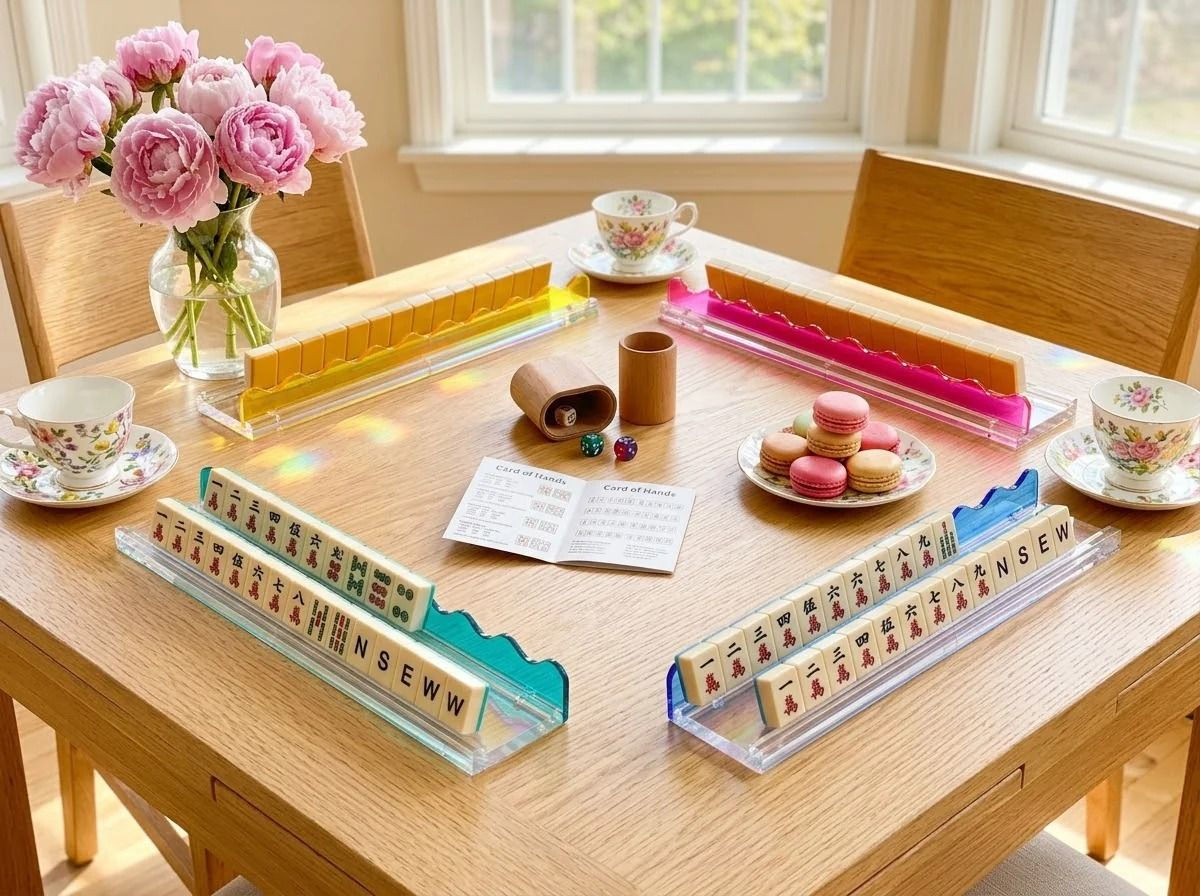
Mahjong finger foods are snacks and light bites designed to be eaten one-handed while sitting at the table, keeping tiles and hands clean. The best choices are sturdy, dry or low-moisture (nuts, cheese, crackers, dried fruit), individually wrapped or portioned, and require no utensils. Avoid anything greasy, saucy, crumbly, or requiring two hands—these stain tiles, clog pushers, and disrupt tile handling. We serve portions in small bowls or platters placed at arm's length; reset between rounds. Most games run 2–4 hours, so plan 3–4 snack rotations. Costs vary by choice (homemade nuts cost less; purchased charcuterie more), and quality finger foods signal respect for the game. A well-fed table plays longer and stays engaged.
Why does food choice matter at the mahjong table?
Mahjong tiles—whether acrylic, bamboo, or bone—are handled constantly for 2–4 hours. Grease, moisture, and crumbs transfer from fingers to tiles and racks, dulling finishes, staining light tiles, and jamming pushers. Wet fingers slip on tiles; sticky residue attracts lint and grit. A single greasy round ruins a new set's feel. We learned this after one game where someone brought buttered popcorn; the tiles took weeks to clean. Choose foods that dry quickly on your fingers or leave no residue—your equipment and the next host will thank you.

What are the top five finger foods that actually work?
Nuts and seeds (almonds, cashews, sunflower seeds): dry, one-handed, no prep. Portion in small bowls; players grab a handful between rounds.
Cheese cubes and hard cheeses: pre-cut cheddar, gouda, or gruyère; wipe fingers on napkins without transferring oils to tiles.
Crackers and breadsticks: sturdy varieties that don't crumble (Rosemary Ritz, gourmet crackers); pair with cheese for a light meal feel.
Dried fruit (apricots, figs, mango): satisfying sweet-salty balance, no mess, naturally shelf-stable for multi-hour games.
Roasted chickpeas or edamame: seasoned for flavor but dry-coated, not oily; trendy and surprisingly filling.
Pretzels and wasabi peas: crunchy, flavorful, minimal residue. Avoid if your tiles are white or pale—dark seasonings show.
Rotate snacks every 60–90 minutes. Fresh bowls reset the mood and signal a pause before the next hand.
What finger foods should you absolutely avoid?
Greasy foods (chips, fried appetizers, bacon): oils coat tiles and racks, creating a slippery, dirty feel.
Chocolate and candy: melts on warm hands; stains light-colored tiles and pushers permanently.
Hummus, guacamole, dips: require crackers or vegetables, forcing players to use both hands; residue is stubborn.
Fruit with juice (grapes, oranges, strawberries): fingers stay wet; water droplets spot tiles. If you serve fruit, provide small forks or toothpicks.
Peanut butter and spreads: sticky, requires a second hand to eat cleanly.
Olives and marinated items: brine drips; pits create distraction and risk of broken teeth mid-game.
Pastries and donuts: crumbs everywhere, grease coating hands and tiles.
Spicy foods (hot wings, sriracha): players wipe eyes, then tiles. Just don't.
The rule: if it requires two hands, leaves residue, or stains a light napkin, it's not mahjong-safe.
How do you plan quantities and timing?
For a four-player game lasting 3 hours, plan snacks in waves. Start with light options 15 minutes before tile-up (nuts, crackers, cheese). After the Charleston, offer water and a second small plate. Midway through (after 90 minutes), introduce a fresh bowl of something different—perhaps dried fruit or roasted chickpeas. Many groups bring a main snack during a longer break (e.g., a cheese board mid-session) and return to finger foods for the final round.
A practical host formula: one small bowl per two players, refreshed every 60–90 minutes, ensures no one's hungry without tempting overindulgence. Provide small napkins at each place setting and a trash bowl for pits or wrappers. Wet wipes on the sideboard—not at the table—let players clean hands between rounds.
🀄 Shop best-selling mahjong sets →

What table setup helps keep food and tiles separate?
Position snack bowls at the 12 and 6 o'clock points of a round table, just outside the playing surface. If you use mahjong mats or a dedicated mat, snacks stay completely outside the boundary; this psychology matters—players reach away from tiles. Some hosts use small side tables or lazy susans for snacks, rotating them as needed. If you're using mahjong racks with pushers, keep snacks away from the rack's end; grease on pushers is impossible to remove fully and will migrate to tiles.
Designate a napkin dispenser or stack at each corner, separate from the snack area. A small trash bowl or plate at each player's 4 o'clock catches napkins and pits without clutter. This one small habit keeps tiles pristine and the mood focused.
Setup Element | What Works | What Doesn't |
Snack placement | Outside mat boundary, arm's length away | Directly on mat or beside racks |
Bowl type | Small, shallow (nuts/cheese don't pile up) | Large communal bowls (promotes overeating) |
Napkins | Pre-portioned stack at each place | Roll of paper towels players tear (messy) |
Trash | Small plate or bowl per player | Napkins stuffed in shirt pockets |
Refreshment timing | Every 60–90 min, small new portions | Constant refilling (becomes overwhelming) |
Water | Sealed bottles or covered pitcher + cups | Open glasses near tiles (spill risk) |
What's the best hosting checklist for food and game night?
Before guests arrive:
Prep snacks and portion into small bowls (not shared dishes).
Set out mahjong mats and verify your set is clean and complete (152 tiles plus jokers).
Place snacks outside the mat boundary.
Lay napkins and small trash bowls at each seat.
Chill water; use bottles or a pitcher with a cover.
Before the Charleston:
Offer light snacks (nuts, crackers, cheese).
Let players settle, eat, and hydrate.
Between rounds:
Refresh snack bowls with fresh portions or a new flavor.
Collect trash and dirty napkins.
Wipe down the mat's edge if needed (dry cloth, no spray).
After the game:
Store snacks in airtight containers.
Clean tiles with a dry or barely damp microfiber cloth (never submerge).
Air-dry the mat fully before storing.
Hosting mahjong well means anticipating hunger and thirst so players stay focused on the tiles, not their stomachs. Quality snacks and thoughtful setup signal respect for the game and your guests.
🎁 See our most-loved mahjong sets & accessories →
What to check before you buy snacks
Packaging: Buy individually wrapped items when possible (cheese sticks, nut packs, dried fruit bars). Less mess, easier to portion.
Shelf life: If hosting weekly, buy snacks that last 5–7 days without staleness (nuts, hard cheese, crackers). Avoid soft items that dry out.
Seasonality: Summer calls for lighter, cooler options (berries with forks, cheese boards); winter welcomes roasted chickpeas and nuts.
Allergies: Ask your group in advance. Nut-free alternatives (seeds, wasabi peas, pretzels) are always safe.
Budget: Homemade roasted nuts and cheese boards cost half of pre-made charcuterie. Both are respectable.
Leftovers: Choose foods you'd eat if not finished. Stale crackers are sad; extra nuts are a gift.
A well-fed table is a happy table. Plan ahead, choose wisely, and let the tiles speak.
✨ Find your Mahstead set — free US shipping →

FAQ
Can I serve chips or other crispy snacks during mahjong?
Greasy chips leave residue on tiles and pushers. If you must serve crunchy snacks, choose oil-free options like plain pretzels or roasted chickpeas. Provide napkins and encourage players to wipe hands before touching tiles. Your set will thank you.
What's the best way to handle drinks at the mahjong table?
Use sealed water bottles or cups with lids and coasters placed away from the mat. Avoid open glasses near tiles—one spill can damage acrylic or bamboo sets. Designate a drink station separate from the snack area for safety and focus.
How often should I refresh snack bowls during a game?
Change snacks every 60–90 minutes with fresh portions or a new flavor. This refreshes energy, signals a natural pause, and keeps the evening engaging. Small, frequent refills beat one large spread.
Are homemade snacks better than store-bought finger foods?
Both work. Homemade roasted nuts or charcuterie boards are economical and personal. Store-bought individually wrapped items (cheese sticks, nuts, dried fruit) are convenient and portion-controlled. Choose based on your prep time and budget.
What should I do if someone gets snack residue on the tiles?
Immediately wipe the tile with a dry microfiber cloth. For stubborn residue, use a barely damp cloth (not wet) and air-dry thoroughly. Prevent future stains by offering napkins, small trash bowls, and snacks away from the mat. Clean tiles thoroughly after the game.
Can I serve hot appetizers during mahjong?
Avoid hot foods that cool and become unappetizing (mini quiches, meatballs). Hot items also risk steam and splatter on tiles. Stick to room-temperature or cold finger foods—they're safer, cleaner, and easier to manage one-handed while playing.


View More
View More
View More
