
American Mahjong FAQ: Rules, Tiles, Sets & Setup
Last updated: Nov 23, 2026
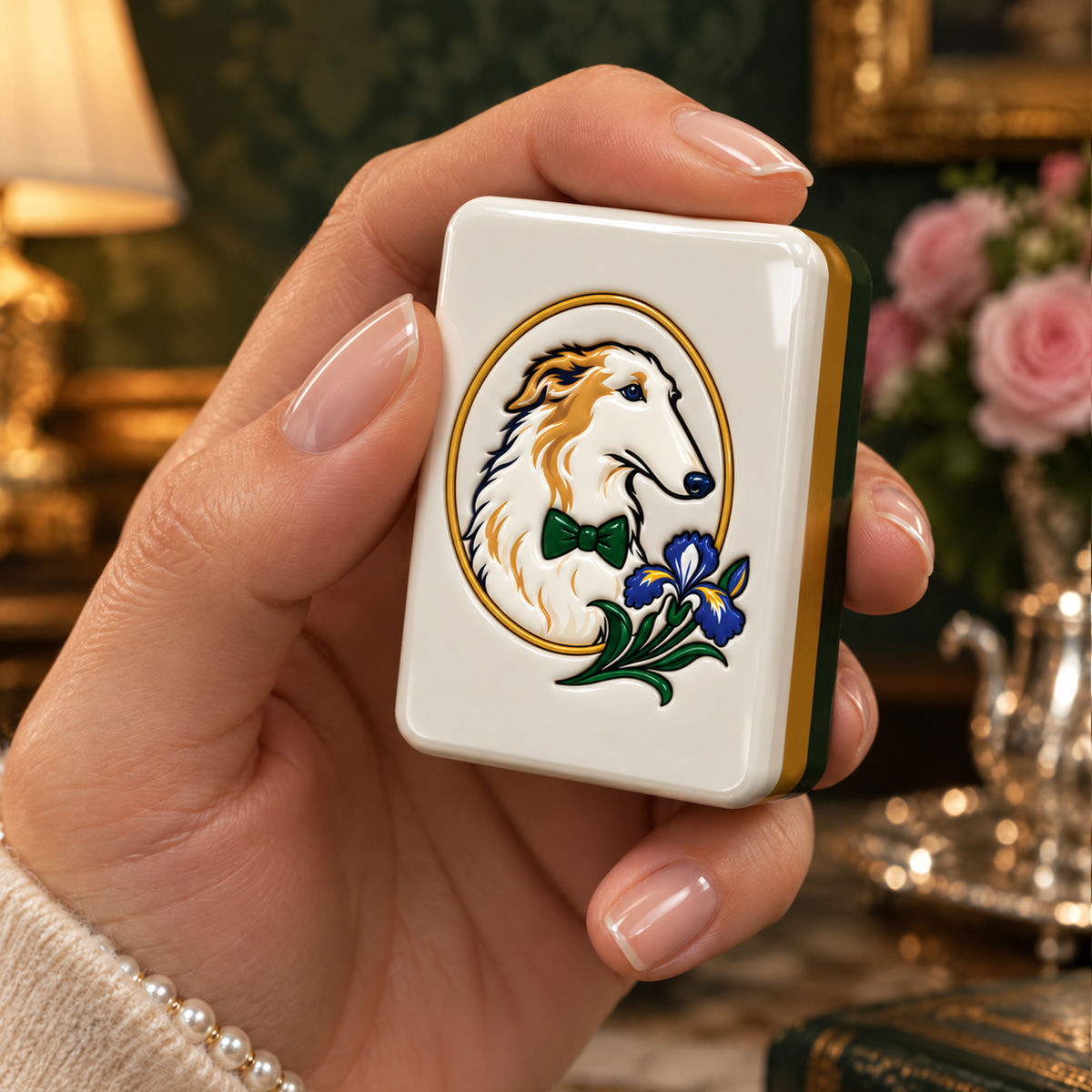
American mahjong uses 152 playing tiles (three Bam/Crak/Dot suits numbered 1–9 in four copies each, 16 winds, 12 dragons, 8 flowers) plus 8 jokers, always dealt from a standard 160-tile set. Valid hands come only from the current year's National Mah Jongg League card—no jokers appear in pairs, and no chows (sequences) can be called or exposed. The game requires four players, starts with a ritual called the Charleston to pass tiles, and typically lasts 30–60 minutes per hand. Unlike Chinese or Riichi variants, American mahjong is a contract game: you must announce your specific hand from the card before claiming it. A quality set from our best-selling mahjong sets ensures clear, durable tiles and accurate counts.
What tiles are in a standard American mahjong set?
An American mahjong set contains exactly 152 playing tiles: 108 from the three suits (Bams, Craks, Dots)—each numbered 1 through 9 with four copies—plus 16 winds (four each: North, East, West, South), 12 dragons (four Red, four Green, four White), and 8 flowers. Eight jokers are added to play, making 160 tiles total during a game. The 1 Bam shows a bird. Most sets sold today are 160-tile sets; the extra tiles beyond 152 are spare jokers or blanks kept off the table. This standardization has been fixed since the National Mah Jongg League established rules in the 1930s, so every game uses the same tile composition.
🀄 Shop best-selling mahjong sets →

How many jokers are there, and how do they work?
Eight jokers are used during active play; they substitute for any single tile you need to complete an exposed pung, kong, quint, or sextet. Jokers can never form a pair, appear alone in a hand, or be used in the pair tile itself. If you call a hand that relies on a joker, you must specify which tile it replaces before showing. One key rule: a joker cannot "float"—it must complete a meld you've already started or need to finish your hand. Learn how jokers work in detail, including when you can swap them and how table rules vary.
What is the Charleston, and why do we pass tiles before playing?
The Charleston is a ritual tile exchange before the first hand begins. Each player passes three tiles to the right, then three to the left, then three across the table, then receives three back from across, three from the left, and three from the right. On the second Charleston (optional by house rule), players may pass fewer tiles or skip it entirely. The purpose is to randomize starting hands fairly and add strategy—you decide which tiles to give away based on your opening hand. Some groups omit the second Charleston or allow a "courtesy" swap (one player exchanges one tile with one neighbor). The Charleston explained covers all variations.
Can you use a hand from an old mahjong card?
No. American mahjong hands are valid only from the current year's National Mah Jongg League card, issued every spring. Using an older card invalidates your hand and results in a dead hand (no points). The card changes every year to keep the game fresh and ensure all four players have the same reference. When teaching newcomers, you must use this year's card and a copy at the table for everyone to check. If you're starting a new season (spring), update your cards; playing off-season uses that year's card until the new one arrives.
What makes American mahjong different from Chinese, Hong Kong, or Riichi variants?
American mahjong is a contract game: you must declare your specific hand from the card before claiming it, and all melded sets (exposed pungs, kongs, quints, sextets) must follow the exact pattern on the card. Chinese and Hong Kong mahjong allow chows (1-2-3 sequences) that can be called and exposed; American rules forbid chows entirely. Riichi (Japanese) is a draw-and-discard variant with no card and plays with 136 tiles. Taiwanese variants add honor tiles and operate on honor and luck, not a fixed card. American mahjong also requires exactly four players and uses 152 fixed tiles. The card—a laminated sheet with hand patterns, point values, and limits—is non-negotiable in American play.

What should we look for in a quality mahjong set?
Quality checklist for purchasing:
Feature | Why it matters | What to check |
Tile count | Must be 160 (152 play + spares) | Confirm count in product description |
Material | Durability and shuffle feel | Acrylic or resin tiles last; verify thickness ≥0.25 in. |
Weight & balance | Fair draws; prevents bias | Tiles should feel substantial, not hollow |
Face clarity | Quick pattern recognition | Number, suit, and wind symbols must be crisp and large |
Racks included | Smooth, pushable gameplay | Look for racks with built-in pushers or purchase separately |
Joker count | Exact 8 for correct play | Product page should state joker count |
Our best-selling mahjong sets use acrylic tiles that are durable, shuffle smoothly, and survive years of weekly games. Engraved sets let you personalize tiles or customize for a club or gift.
🎁 See our most-loved mahjong sets & accessories →
What else do I need to start playing?
Beyond the set, you'll want: a mat (to protect the table and make tile movement easier); racks with pushers (so tiles don't slide or hide); a dice cup and dice (to determine dealer and seating); and a bag or case (to transport and store your set safely). A mat also organizes the dead wall, player hands, and discards, keeping play clean. How to choose a mahjong mat walks you through sizes (small for compact tables, large for tournament setups) and materials. Racks with pushers guide explains how they improve grip and prevent accidental reveals. Beginners often skip these extras and regret it; a full set-up elevates gameplay and comfort significantly.
✨ Find your Mahstead set — free US shipping →
What's the easiest way to learn the hand patterns?
Newcomers should start with the current year's National Mah Jongg League card and focus on one section at a time—usually Pung hands, then Kong hands, then mixed patterns. Each section groups hands by similarity (all one suit, all honors, mixed). Play practice rounds offline, laying out tiles on the mat without betting, so you can refer to the card without pressure. Most groups practice with one or two "teaching hands" before real money play. Never rush; learning the card takes weeks, and experienced players still consult it every game. Mahjong for beginners has step-by-step guidance.
How is the dealer chosen, and what does the dealer do?
Dice are rolled to determine seating and the first dealer (East). Each player rolls two dice; highest total sits East and deals. Ties roll again. The dealer draws and discards first, has priority in hand calls over others (in case of a tie), and collects payment from all players if someone else's hand goes out (rather than just from the player who paid out). If the hand goes "dead" (no one wins), the deal passes clockwise. Some players alternate dealer every hand; others keep the dealer for the round. House rules vary, so agree before starting. The dealer advantage is slight but real in scoring.
Before you buy: what to check
Tile count matches your game format: American standard = 160 tiles (152 play + spares). Confirm in the product description.
Racks and pushers: Decide whether your set includes them or if you'll buy separately—both affect cost and ease of play.
Storage solution: A bag or case protects your investment and makes hosting easier. Check whether it fits your set size.
Card included: Some sets include a laminated current-year card; others don't. Verify or plan to buy one separately.
Personalization: If buying as a gift or for a club, engraved American mahjong sets let you add names, initials, or dates.
Quality over novelty: cheap sets have poorly marked tiles, uneven weights, or missing jokers—confirmed by players returning them. Invest once in a set that lasts.

FAQ
Can I play American mahjong with only three people?
Technically yes, but standard rules assume four. 2 and 3 player mahjong rules adjust tile counts and deal mechanics. Most casual groups use four; three-player variants are less common but doable.
What if someone calls a hand that's wrong or not on the card?
That hand is dead—the player scores zero and no one pays. The deal passes clockwise. Always double-check the card before claiming; experienced players do this aloud.
Do I have to memorize all the hands on the card?
No. Every player should have the card visible at the table. Memorization comes naturally after 20–30 games. Beginners should never play without a card copy.
Are there house rules that override the National Mah Jongg League card?
Some groups modify the Charleston, dealer payouts, or penalty rules—but the hands and tile composition never change. Agree on house rules before the first hand.
How often does the National Mah Jongg League card update?
Every spring (usually March or April). A new card is issued annually. Using last year's card during the new season is invalid play.
Can jokers be used in the winning pair?
No. The pair must be identical natural tiles (e.g., two 5 Dots). Jokers can only fill melds (pungs, kongs, quints, sextets).
What's the difference between a pung and a kong?
A pung is three identical tiles; a kong is four identical tiles. Both can be exposed (laid on the mat) or concealed (kept in your hand). Kongs score higher.
Should I buy a mat if I'm just learning at home?
Yes. A mat keeps tiles organized, prevents sliding, and makes the game feel official. How to choose a mahjong mat covers sizes and styles for any budget.


View More
View More
View More
