
Brunch Mahjong Party Food: What to Serve & How to Prep
Last updated: Nov 23, 2026
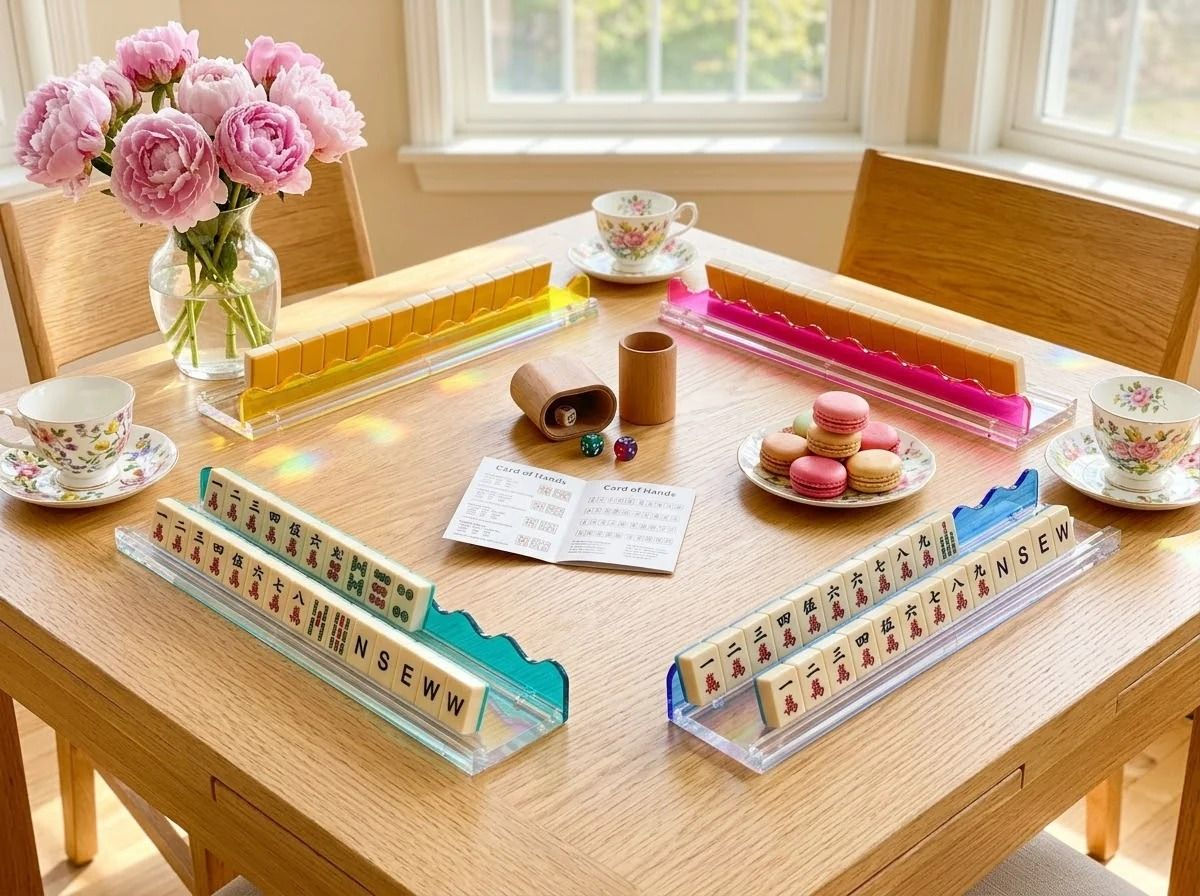
Brunch mahjong parties thrive on finger foods that guests can eat between hands without staining tiles or creating crumbs: quiches, pastries, fruit, cheese, nuts, yogurt parfaits, and cured meats work well. Serve coffee, tea, and sparkling water; avoid sticky jams, loose powders, and sauces. Set out food on a separate table away from play, use small plates and napkins, and build in a 30-minute eating window before the Charleston so hands stay clean. A 160-tile American mahjong set and washable mat from our best-selling collection gives you the right tiles and protection if spills happen; plan for four players, one wall, eight jokers, and roughly two hours of play.
What foods won't ruin tiles during a mahjong brunch?
Sticky, wet, or powdery foods are mahjong's enemies. Croissants, pastries, quiches, and fruit platters are safe because they crumble minimally and dry quickly. Nuts, cheese cubes, cured meats, and hummus with crackers keep fingers relatively clean. Avoid chocolate (melts), jam (sticky), icing (powder), honey (transfers), and fresh berries unless you plate them first. Yogurt, granola, and pastries work if served in small cups or on napkins held away from the table. A rule we follow: if it stains cloth in ten seconds, it doesn't sit at the mahjong table.

How do you time food so players stay focused?
Serve a substantial snack—pastries, quiche, fruit—30 minutes before you deal the first hand, during the Charleston tile-passing phase. Players eat while they're distracted by shuffling and learning each other's styles. By the time play starts, mouths are full and hands want to be dry. Offer lighter pick-up foods (nuts, cheese) between games when players are already seated; keep a napkin holder and a wet-wipe dispenser within arm's reach. Coffee and tea should be in a thermal carafe away from the mat, refilled every 45 minutes. One mid-game break at the 90-minute mark—15 minutes, no tiles touched—lets people refresh without losing momentum.
What's the one-handed eating rule?
Players deal with one free hand while tiles occupy the other. Foods that require two hands (sandwiches, pizza, bowls of soup) force awkward pauses. Ideal brunch mahjong foods: miniature quiches, scones with jam on the side, croissant quarters, apple slices, cheese cubes on toothpicks, smoked salmon on crackers, and pastry bites. Pre-cut everything into fork-or-pinch size. Serve dips in small bowls stationed at each player's elbow if they want them; give hummus, guacamole, or cream cheese a wide berth near the tiles. Drinks should have lids or be kept in a separate zone. We've learned that a napkin in your lap saves more games than a paper towel roll in the center of the table.
What's the equipment setup that handles spills?
A washable, padded mahjong mat is the first line of defense—liquids bead up or wipe clean within seconds. Pair it with a 160-tile set in a durable case so tiles stay protected when not in play. Racks with pushers keep tiles upright and angled away from the action, so coffee spills roll off the table rather than onto your hand. A travel bag or case means you can pack wet tiles safely if a real accident happens—they dry sealed and won't warp. Keep paper towels, a spray bottle of water, and lint-free cloths under the table. Most spills we've seen happen because tiles sit flat on bare wood; a mat changes everything.
How many dishes do you actually need for four players?
A light brunch mahjong spread for four needs three to five items: one pastry or quiche, one fruit component, one savory (cheese or cured meat), and one light carb (crackers, nuts). This prevents decision paralysis and keeps the table uncluttered. Two thermal beverages—coffee and tea—plus a water pitcher with glasses. Multiply portions by 1.5 if players have strong appetites or if the game runs three-plus hours. The table itself should remain clear except for the mat, the set, and a single napkin dispenser within reach of everyone. Too many dishes means people stay at the snack table instead of playing; too few means someone gets hungry mid-game and loses focus. We've found a small cheese board, a basket of pastries, a fruit platter, and nuts on the side strikes the right balance.

What's the timing checklist for a four-hour brunch mahjong day?
Time | What's Happening | Food Task |
30 min before | Guests arrive, tiles shuffle | Set out pastries, fruit, coffee. No play yet. |
0 min | Charleston begins | Eating winds down. Wet hands dry. |
45 min in | First game underway | Refill coffee. Keep water cold. |
90 min in | Mid-game break | Small snacks (nuts, cheese) available. Stretch. Bathroom run. Tiles stay on mat. |
120 min in | Game two begins | Light refreshments only. Focus on play. |
180 min in | Final game(s) or wrap | Finish remaining food. Tiles packed. |
Start your setup 45 minutes early so you're calm when guests arrive. A clean mat and organized set communicate that you take the game seriously. Players respond to that energy and eat mindfully instead of chaotically.
🀄 Shop best-selling mahjong sets →
What's the "do not buy" list for brunch mahjong parties?
Avoid foods that transfer oils, powders, or dyes to fingers: chocolate, donuts with glaze, bagels with seeds, berry pies, cookies with frosting, messy sandwiches, anything with sticky fingers as a feature. Carbonated drinks on the table itself—condensation runs underneath tiles. Whole fruits (apples, oranges) unless pre-cut. Hot sauces, pesto, or any condiment that stains. Alcohol served at the table (messy hands + slower reaction times). Strongly scented foods like fish or garlic-heavy dishes distract players and can linger on tiles. We learned these limits the hard way; now we assume: if it requires a napkin check before every tile play, it doesn't belong at brunch mahjong.
How do you handle dietary restrictions without adding work?
Ask guests a week ahead: gluten-free, vegetarian, vegan, nut allergy, caffeine preference. Plan one core option for each group (a gluten-free pastry, a hummus plate, dairy-free yogurt, decaf coffee) and let other foods be naturally shareable. No need to label or separate; just ensure one safe pile for each person. Most guests bring a small dish if they have strict needs, which lightens your load. A simple email: "Brunch mahjong, 10 a.m. Saturday. Bringing a pastry platter and fruit—let me know if you have dietary needs and I'll add one more dish." Keeps it relaxed and inclusive.
What you'll need for a smooth brunch mahjong service
Our best-selling mahjong sets come with all 152 tiles, eight jokers, and a protective case—ready to go. Add a padded mahjong mat to protect from spills, racks with pushers so tiles stay upright and clean, and you're set. If you're hosting monthly, a travel bag or case keeps everything organized and transportable. No need for custom designs unless you're gifting—standard sets play the same. The mat is your real investment: it's washable, durable, and makes guests feel like you've planned seriously for play.
🎁 See our most-loved mahjong sets & accessories →
What to check before you buy or host
Tile count: Every American mahjong set has exactly 152 playing tiles and eight jokers. Don't add extra jokers or blanks to the game—they stay in the box as spares.
Mat material: Cloth pads soak spills; vinyl or neoprene wipes clean in seconds. Invest in one that matches your table size.
Setup time: Shuffle and deal takes 15 minutes for new players, 5 for regulars. Plan accordingly.
Guest count: Four is the standard. Two- and three-player variants exist but require rule changes and a different card—stick with four for a brunch party.
Food quantity: More than five dishes clutters the space and slows the game. Three to five items and two beverages is the sweet spot.
Cleanup plan: Damp towels, a trash bin nearby, and a zipped case mean you pack up in five minutes, not 30.
✨ Find your Mahstead set — free US shipping →

FAQ
Can I serve coffee or tea at the mahjong table?
Yes, but use lids or keep beverages on a separate side table. Condensation and spills ruin tiles fast. A thermal carafe away from play is safer than individual cups within reach.
What happens if someone spills jam or chocolate on a tile?
Wipe immediately with a damp cloth. If it stains the face, it's typically still playable—American tiles tolerate minor marks. Staining is why a washable mat and lint-free cloths matter; contain the mess before it spreads.
Do I need special plates for brunch mahjong?
Small appetizer or dessert plates work best. Large dinner plates encourage big bites and two-handed eating, which pauses the game. Give each guest one plate for the entire brunch to reduce trips to the snack table.
How early should food be ready?
15 minutes before guests arrive. Final checks: beverages hot, fruits fresh, cheeses uncovered. This lets you greet people without racing to the kitchen, which sets a relaxed tone.
Can I serve alcohol at a mahjong brunch?
Technically yes, but light only—mimosas or wine, not rounds of cocktails. Alcohol slows decision-making and makes hands clumsy around tiles. A one-drink-per-person maximum keeps the game sharp and the table clean.
What's the best way to dry tiles after a spill?
Pat gently with a lint-free cloth; don't rub. Let them air-dry for an hour before sealing them back in the case. Moisture trapped inside will warp tiles over time.


View More
View More
View More
