
What Set Do You Need for Two-Player Mahjong?
Last updated: Nov 23, 2026
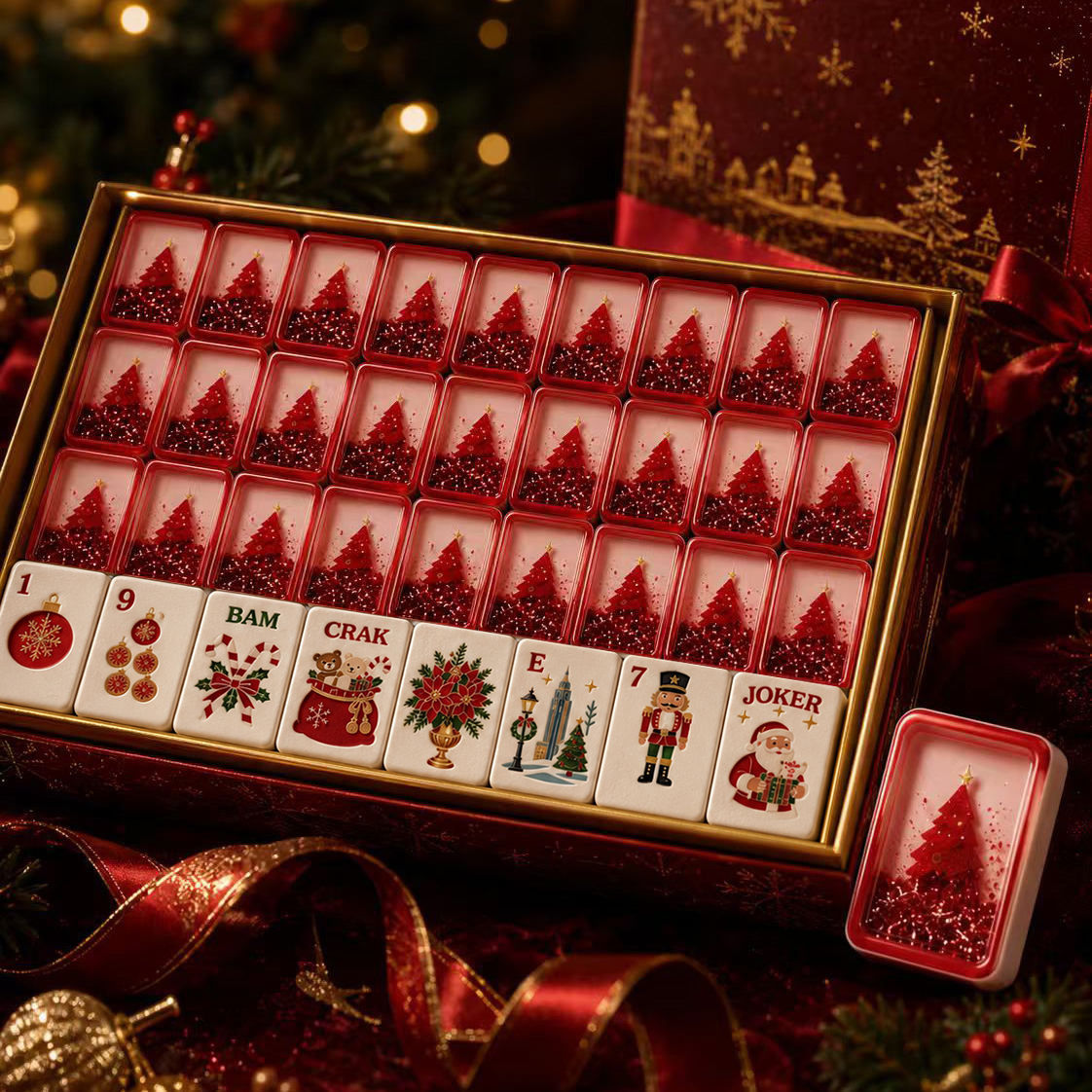
Two-player mahjong uses the same 152 tiles as four-player American mahjong, but players use only 13 tiles per hand instead of 14, and specific rule adjustments apply—detailed in the National Mah Jongg League rulebook. You need one standard 160-tile acrylic set (which includes 152 playable tiles plus spares), mahjong mats for hand visibility, and racks with pushers to organize your tiles and protect your back from strain. No special "two-player set" exists; any American mahjong set works. The main difference is that the Charleston (the pre-game tile-passing ritual) skips exchanges with players sitting across from you, and the discard wall shrinks because only two players draw. Most players pay close attention to the current year's National Mah Jongg League card because winning hands come only from that official card, whether you're playing two-player or four-player. 🀄 Shop best-selling mahjong sets →
Do I need a different set for two players?
No. A standard American mahjong set works for two, three, or four players. You need exactly 152 tiles and 8 jokers for any variant. The equipment—tiles, rack, mat, dice—stays the same; only the rules and hand layout change. Buy one best-selling American mahjong set and you're covered for any player count your group chooses.

What are the key rule changes for two-player mahjong?
In two-player American mahjong, each player draws 13 tiles instead of 14 per turn, and the Charleston tile-passing exchange omits passes to the player directly across from you (since there's no "across"). The discard wall builds faster because only two players draw; winning hands come only from the current year's National Mah Jongg League card, just as in four-player. The hand itself is organized differently—you have fewer tiles, so your rack footprint shrinks. Wind assignments and scoring remain the same. Always check the official rulebook before your first two-player session to confirm local house rules, because some groups adjust scoring or the number of jokers available.
What equipment do you need to play two-player mahjong?
Item | Why You Need It | Who Should Buy |
160-tile acrylic set (152 playable) | Holds all tiles; spares prevent game halts | Every player |
Mahjong mat | Organizes 13 tiles; protects your spine | Long-session players |
Racks with pushers | Keeps tiles visible; prevents wrist strain | Serious hosts |
Dice | Determines starting player; game-rule-required | Essential |
Bag or case | Protects tiles; enables transport | Players who host multiple locations |
The only truly essential item is the 160-tile set. Mats and racks make two-player more comfortable—13 tiles is manageable on a bare table, but a mat keeps your hand organized during longer sessions, and racks reduce fatigue if you play weekly. Dice come with most sets. If you host at home or travel to games, a padded bag or case protects acrylic tiles from cracks during transport.
🎁 See our most-loved mahjong sets & accessories →
Should you buy an acrylic or bamboo set for two-player?
Acrylic sets are louder, easier to clean, lighter to carry, and last decades without warping—ideal for casual and serious two-player groups. Bamboo sets are heavier, quieter, and develop patina over time; they require periodic seasoning and care. For two-player specifically, acrylic wins on portability (you're less likely to have a permanent table) and durability. An engraved acrylic set from Mahstead—with titles, names, or inside jokes—adds personality to your regular game and makes a strong gift for a co-player. Bamboo suits players who own a dedicated table and want the traditional tactile experience. Both work equally for rule play; your choice depends on lifestyle, not gameplay.

What to check before you buy
Set completeness: Verify the set includes all 152 tiles plus 8 jokers before ordering. American mahjong sets should contain 36 Bams, 36 Craks, 36 Dots, 16 Winds (4 each direction), 12 Dragons (4 Red, 4 Green, 4 White), 8 Flowers, and 8 Jokers—totaling 152. Any set sold as 160-tile includes these 152 plus spares (extra jokers or blanks) that never enter play.
Tile size and weight: Smaller tiles (around ¾ inch) feel cramped in two-player; standard size (1 inch) gives you room on a mat without dominating a small table. Acrylic tiles average 6–7 grams each and feel substantial in hand without exhausting your wrist over three hours.
Rack height: If you buy racks, choose ones 2–3 inches tall so your 13 tiles sit at eye level. Too-short racks force you to crane your neck; too-tall ones obstruct your line of sight to the discard pile.
Mat dimensions: A mat for two players should measure 24×24 inches minimum—enough room for your rack, your partner's discard pile, and the live wall without crowding. Larger mats (28×28 or bigger) work fine if you enjoy space.
Transportation: If you'll move your set between homes, measure your bag and ensure your tile rack disassembles or fits. Soft cases work for mat + set; hard cases protect everything in a car trunk.
Which design or set theme works best for two players?
Two-player groups often become lifelong partnerships, so engraved acrylic sets with shared inside jokes, your initials, or a funny title ("Unstoppable Pair," "Tile Therapy," "East Wind Dominion") create lasting memory and pride. Solid-color sets work anywhere; metallic tiles (gold, silver accents) brighten regular play and photograph well. Christmas-themed sets make perfect gifts if your partner plays seasonally or you host holiday tournaments. Neutral designs in cream or black suit players who play multiple games a week and want equipment that blends into a home setup. Custom engraving—if your group ever expands or you host a one-time two-player championship—turns a set into a trophy.
✨ Find your Mahstead set — free US shipping →
Can you use your existing four-player set for two-player mahjong?
Yes. If you own an American mahjong set (152 tiles, 8 jokers, or a 160-tile set with spares), it works for two-player without modification. The rules change; the tiles don't. Simply follow two-player guidelines—13 tiles per hand, adjusted Charleston, same scoring and card. One warning: if your set is older than 2010 and uses non-standard tile sizes or lacks clear suit markings, it may confuse two-player sessions where visibility matters more on a smaller layout. Modern sets from Mahstead print clear suit symbols and numbers on every tile, making two-player reading effortless.
How does two-player mahjong differ from Chinese or Riichi variants?
Two-player American mahjong follows the National Mah Jongg League rulebook—hands come only from the official card, no melds are called mid-hand (you expose only complete melds when you win), and jokers fill single tile or sequence gaps freely. Chinese two-player mahjong allows called chows (1-2-3 sequences) on your turn, scoring is calculated differently, and winning hands aren't restricted to one annual card. Riichi (Japanese) two-player uses a different tile set, calling and exposing rules, and a waiting pattern system foreign to American play. If you're learning two-player mahjong for the first time, clarify which variant your group plays—American, Chinese, or another—before buying a set, because tile counts and equipment may differ slightly. For pure American two-player, stick with a standard 160-tile American set and the current National Mah Jongg League card.

FAQ
Can two players use a set with fewer than 152 tiles?
No. American mahjong always uses 152 tiles (or a 160-tile set with extras never added to play). Sets with 144 tiles are incomplete and cannot form all legal American hands. Buy a full-size set to avoid frustration.
Do I need special dice for two-player mahjong?
No. Standard mahjong dice (two cubes, numbers 1–6) work for any player count. Dice determine who starts and which position draws first; the function remains identical in two-player games.
Is a mahjong mat essential, or can I play on a bare table?
A mat is not essential but strongly recommended. It organizes 13 tiles, protects a wood table from scratches, and improves hand visibility during longer sessions. Two-player games can last 2–3 hours; mats reduce wrist and neck strain.
What's the biggest mistake two-player beginners make?
Forgetting that the discard wall builds faster with only two players drawing. Beginners often play as if a full four-player wall exists, leading to miscounted remaining tiles and incorrect hand timing. Count the live wall carefully before each draw.
Can I play two-player mahjong using an older set from the 1980s?
Maybe. If the set has 152 tiles, 8 jokers, clear symbols, and no cracks, it works. Older sets sometimes lack sharp tile markings or have non-standard sizes that make reading difficult in crowded two-player layouts. Test it first before committing to regular play.
Should I buy a travel case if I only play two-player at home?
Not immediately. If you host only one game weekly at the same table, a soft cloth bag protects your set between sessions. Buy a padded case only if you transport your set regularly or attend games in multiple locations.


View More
View More
View More
