
What Is Prevailing Wind in Mahjong
Last updated: Nov 23, 2026
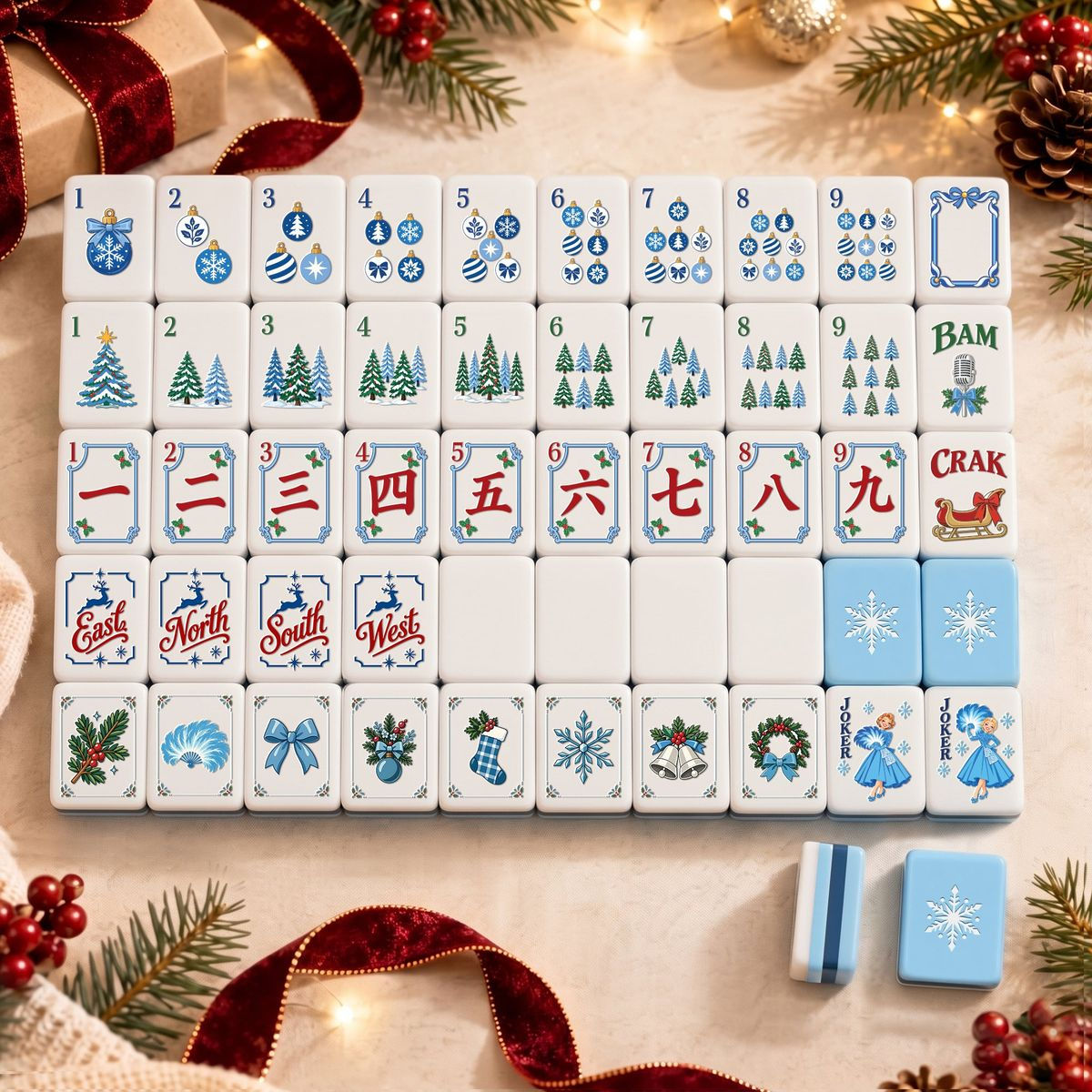
Prevailing wind is the wind tile—North, East, West, or South—that remains fixed for an entire round of mahjong, typically lasting four hands. It determines which seat holds the dealer position and doubles the payout if your hand matches your prevailing wind or your seat wind. American mahjong players set prevailing wind before the game begins, usually rotating it after each round so every player experiences the dealer advantage. The four wind tiles appear on the standard American mahjong set (North, East, West, South winds plus Dragons and Bams, Craks, Dots), and prevailing wind stays constant while seat winds follow each player's rotation. Understanding prevailing wind is essential for reading hands correctly on the annual National Mah Jongg League card and calculating final scores accurately.
Prevailing wind is the foundation of American mahjong's rotation system. Unlike seat wind (the wind belonging to your position this hand), prevailing wind applies to the entire table and doesn't change as players rotate around it. This distinction matters because scoring bonuses depend on matching your prevailing wind—and knowing which tiles to hold or discard hinges on tracking both winds correctly.
How does prevailing wind differ from seat wind?
Prevailing wind stays the same for all four players during a complete round (four hands). Seat wind changes every hand as players rotate seats—North player becomes East, East becomes South, South becomes West, West becomes North. Only prevailing wind remains constant, making it the "table wind" that defines the round. For example, if prevailing wind is East and you hold the East wind tile in your winning hand, you earn a double payout. Seat wind applies only to your individual position and changes with every hand played.

Where does prevailing wind appear on the mahjong card?
The annual National Mah Jongg League card, issued each spring, lists valid hands organized by category. Prevailing wind notation appears within hand descriptions—you'll see references like "Prevailing Wind (East)" or "Seat Wind (South)" printed next to specific tile patterns. When you read a hand on the card, the prevailing wind symbol tells you whether that hand qualifies only during a specific wind round or whether it pays a bonus if matched. Learning to read wind notation quickly saves time at the table and prevents scoring disputes. Our guide to how to read the mahjong card covers this notation in detail.
What happens when you win with prevailing or seat wind?
Winning with prevailing wind doubles your payout from all opponents. Winning with both prevailing wind and seat wind quadruples it. This scoring multiplier creates strategic tension: sometimes a hand paying double with prevailing wind is worth holding longer than a simpler hand that doesn't match. When calculating your final payment, multiply the base hand score by the wind bonus before dividing among players who paid you. For instance, a hand normally worth 30 points becomes 60 points if you hold prevailing wind, or 120 points if you hold both prevailing and seat wind. American mahjong scoring explains the full payment calculation including all bonuses.
How do you decide which wind to set as prevailing?
Rotate prevailing wind clockwise after each complete round (four hands). Start with East prevailing for the first round, then South, then West, then North, then repeat. Some groups begin with a random draw or house preference, but clockwise rotation is standard. Before the game begins, all four players agree on the starting prevailing wind—typically East. After four hands have been played (each player has dealt once), change prevailing wind to the next seat going clockwise. This rotation ensures every player experiences the dealer round with each prevailing wind during an evening of play. Document prevailing wind on your scorecard or with a wind tile placed visibly at the center of the table.
Prevailing Wind Sequence | Hand 1 | Hand 2 | Hand 3 | Hand 4 | Hand 5 |
Dealer seat | East | South | West | North | East |
Prevailing wind | East | East | East | East | South |
Round name | East Round | East Round | East Round | East Round | South Round |
Seat rotation | N→E→S→W | E→S→W→N | S→W→N→E | W→N→E→S | N→E→S→W |

Why does prevailing wind matter for strategy?
Prevailing wind shapes which hands are worth pursuing. During an East prevailing round, hands featuring the East wind tile are more valuable because they carry the wind bonus—you're more likely to win them and collect the double payout. Experienced players recognize which hands on the current year's card have prevailing wind built in and play accordingly. Discarding wind tiles outside prevailing is generally safer because fewer opponents will win with them. Tracking prevailing wind also helps you identify when an opponent is fishing for a prevailing wind hand, allowing you to hold safer discards. Strategic tile retention depends equally on prevailing wind awareness as on recognizing which suits or numbers appear most often in the current season's card.
What's the most common mistake players make with prevailing wind?
Forgetting to reset prevailing wind after four hands leads to disputes and incorrect scoring. Some new players confuse prevailing wind with seat wind and think it changes every hand. Others misread wind notation on the card and miscalculate bonuses. The clearest way to avoid these errors is to designate one player as scorekeeper and have them announce the prevailing wind aloud before each hand begins. Write prevailing wind and the current round number at the top of your scoresheet. If you're playing with a mat that has directional markers, place a spare wind tile at the table center as a visual reminder. Many groups use mahjong mats with printed seat markers and add a note card to track prevailing wind clearly.
🀄 Shop best-selling mahjong sets →
How do prevailing wind rules differ in other mahjong variants?
Chinese and Hong Kong mahjong use prevailing wind similarly but handle seating and rotation differently. Riichi mahjong (Japanese) does not use prevailing wind in the American sense; instead it uses round designations (East Round, South Round, etc.) and a dealer bank system. Taiwanese mahjong incorporates prevailing wind but with different tile sets and scoring rules. If you play multiple variants, establishing clear house rules about which prevailing wind system applies prevents confusion. American mahjong's prevailing wind is simpler than some variants because it rotates systematically and scoring is transparent. Mahjong for beginners clarifies how American rules simplify the game for new players.
What to check before you buy your first mahjong set
Verify the set includes all four wind tiles (North, East, West, South) clearly marked so beginners can identify them easily. Look for tiles with engraved or printed wind symbols rather than poorly printed characters that fade. Test the tile size and weight in hand if possible—tiles should feel substantial enough to shuffle comfortably and read quickly. Confirm the set includes the current year's best-selling mahjong sets are designed with clear tile markings and arrive ready to play. Check that your mahjong racks with pushers hold tiles upright so wind tiles remain visible to all players. A mat with seat markers reinforces proper wind positioning, especially during your first dozen games.
🎁 See our most-loved mahjong sets & accessories →
The wind system in American mahjong creates rhythm and fairness: every player rotates through dealer status and scoring bonuses, and prevailing wind ensures each round has consistent rules. Mastering prevailing wind separates confident players from those who pause mid-hand to recalculate. Once you internalize that prevailing wind stays fixed while seats rotate, you'll read hands faster, calculate bonuses correctly, and explain the system to new players. Keeping prevailing wind visible—whether announced, written, or marked with a tile—transforms a potential source of confusion into a simple, clear table convention.
✨ Find your Mahstead set — free US shipping →

FAQ
Can prevailing wind change mid-round if players agree?
No. Prevailing wind must remain constant for all four hands of a round. Changing it mid-round invalidates scores and breaks the rotation system that ensures fairness.
What if a hand lists both prevailing wind and seat wind bonuses on the card?
You score both bonuses. A hand won with both prevailing and seat wind pays four times the base hand value (double for prevailing, double for seat wind).
Do beginners need to memorize all four prevailing wind rounds?
No, just understand that prevailing wind rotates East → South → West → North → East. Your scorekeeper announces it before each hand; focus on playing well.
If I play multiple groups, do they all use the same prevailing wind rotation?
House rules vary. Always confirm with your group before playing—most follow the standard clockwise rotation starting with East, but some begin randomly.
How does prevailing wind affect which hand I should hold in the opening draw?
Hands featuring prevailing wind tiles are worth holding longer because they carry a double payout bonus. Scan the card during the Charleston to spot prevailing wind patterns you can build toward.


View More
View More
View More
