
Why Busy Professionals Love Mahjong: Brain Game, Social Break, Unwind
Last updated: Nov 23, 2026
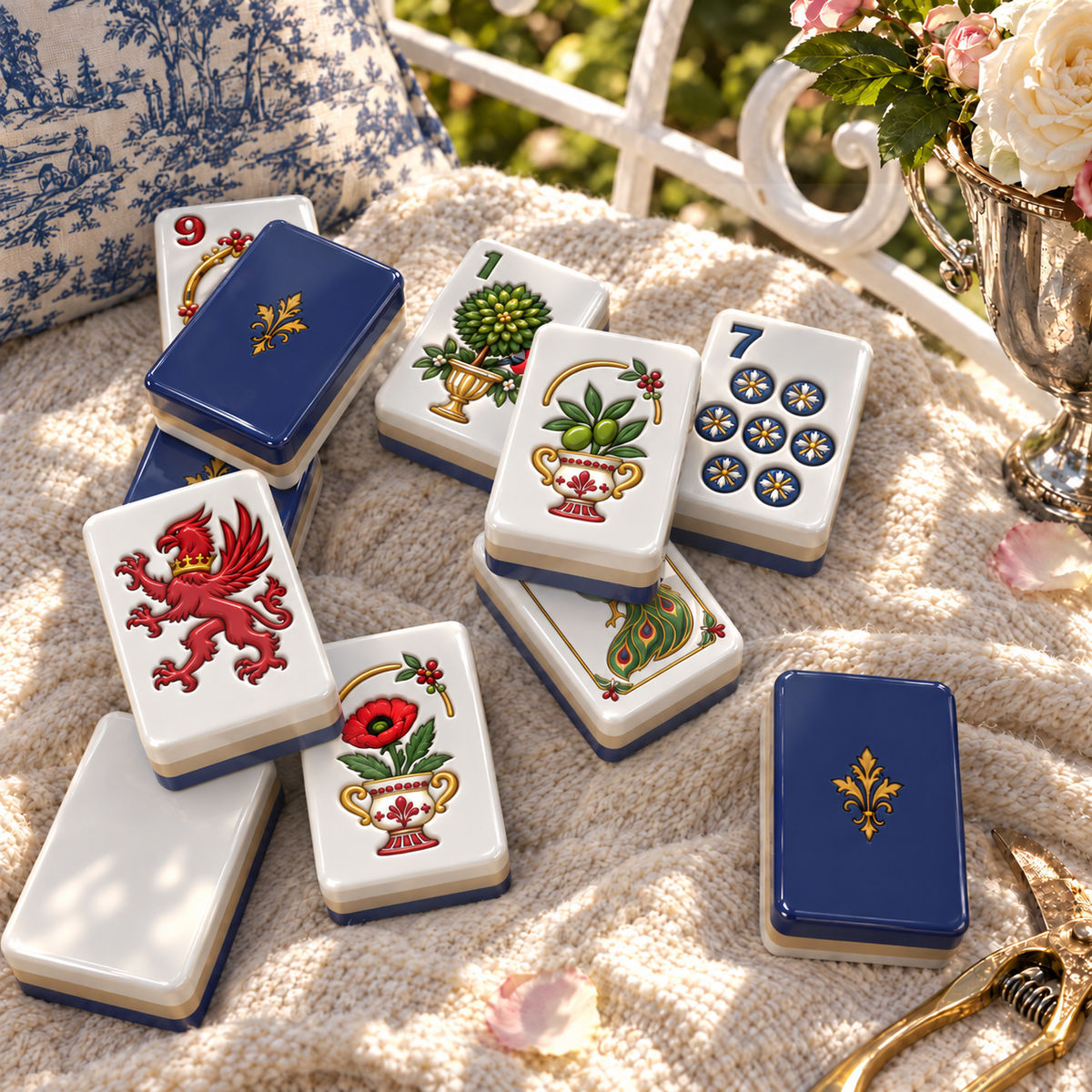
Busy professionals love mahjong because it demands focus without screen glare, builds trust through ritual, and delivers a genuine 90-minute off-ramp from email and decisions. Unlike meditation (which many abandon), mahjong creates a social contract: you show up, you play by rules, you disconnect completely. The game teaches probability and memory while soothing the competitive brain. American mahjong requires four players, works in homes or offices with a single set and mat, and costs far less than therapy—all while building a reliable friend group. From Mahstead's best-selling mahjong sets, a 160-tile acrylic set with engraved tiles and a mat ships free across the US and lasts decades with zero maintenance.
What makes mahjong different from other games professionals play?
Mahjong is the only game that forces real-time decision-making under incomplete information, mirrors work priorities, and ends with a hard stop at 90 minutes. Chess is slower and more solitary; poker rewards bluffing over pattern recognition; bridge requires constant verbal negotiation. Mahjong rewards clean observation, speed, and memory—the exact skills that pay you by day. Players describe the experience as "work mode off, brain mode on." Because the game changes yearly (the National Mah Jongg League issues a new card every spring), no professional can sleepwalk through a hand. Every session teaches something new.
🀄 Shop best-selling mahjong sets →

Does mahjong actually reduce stress, or is it just a distraction?
It's both, but the science leans toward genuine stress reduction. The game occupies working memory completely—you cannot think about a client email while tracking four players' discard patterns and counting your own winning combinations. Neuroscience research on puzzle games shows that activities requiring constant calculation and visual tracking suppress the default-mode network (the brain's rumination center). What separates mahjong from scrolling: it has a clear end, a social anchor, and a winner. The ritual matters. Professionals we've talked to report that a Tuesday evening game reliably improves Wednesday focus, and the Tuesday ritual itself (setting the table, shuffling tiles, running the Charleston) becomes the meditation that meditation never was.
Why do busy people actually show up every week?
The commitment structure works. You have a standing date with three specific humans who depend on you. No email can move a 7 p.m. Tuesday game—or at least, it shouldn't. The game is short enough (one round of four hands is roughly 90 minutes) that no professional has to cancel for a legitimate conflict, but long enough that deep friendship forms. Mahjong players build a rare thing in adult life: a no-agenda third place. You see the same faces, learn their patterns, argue about scoring in ways that are safe and playful, and leave without checking Slack. The game's rules are fixed and fair, unlike office politics. That predictability and fairness are the actual drug.

What's the practical barrier to starting a game?
You need exactly four people, a 152-tile set, a mat to protect your table, and a place to gather. The only real barrier is recruiting a steady group. Start by asking colleagues or neighbors if they've ever played; second choice is a local community center, library, or synagogue (many host open games or classes). Learning takes two or three games. Our guide to getting started covers the fundamentals in a single sitting. Once a group forms, equipment becomes the secondary conversation. The acrylic sets we make are designed to survive 20 years of weekly play—no cracking, no yellowing, legible tiles, and a mat that won't slide. They ship free and need no assembly.
🎁 See our most-loved mahjong sets & accessories →
How does a professional fit mahjong into a packed calendar?
Mahjong occupies a unique time slot: after work (7–9 p.m. on a weeknight), in someone's home or office. It replaces, not adds to, the social calendar. Most professional groups choose Tuesday or Thursday and stick to it for months. The game does not bleed into prep time or follow-up time like golf (no 3-hour travel window, no scorecard to tend). A Tuesday night game is vertical time: 7 p.m., you sit; 8:30 p.m., you leave. The investment is purely the time at the table. No email before, no strategizing after. This makes mahjong a rare thing for high-achievers: a no-homework commitment.
Comparison: How Mahjong Stacks Against Other Professional Leisure Activities
Activity | Time per week | Setup needed | Social depth | Skill barrier | Equipment cost |
Mahjong (weekly) | 90 min–2 hrs | Table, 4 players, mat | Very deep (same group) | Medium (2–3 games to learn) | Low (acrylic set, mat) |
Golf | 4–5 hours | Course, cart, time travel | Medium (rotating groups) | High (years to improve) | High (clubs, membership) |
Bridge | 3–4 hours | Table, 4 players | Deep (leagues and pairs) | Very high (convention system) | Low (cards, scorecards) |
Poker | 2–4 hours | Players, chips, quiet room | Varies (can be anonymous online) | High (probability, psychology) | Low–medium |
Book club | 2 hours | Members, location | Medium (topic-dependent) | None | Low (books) |
Mahjong wins on time efficiency, social depth, and zero-prep learning. Professionals choose it because 90 minutes feels luxurious and complete—not a taste of a longer hobby.
What equipment do you actually need to host your first game?
A 160-tile acrylic American mahjong set (which includes 152 playing tiles plus spares), a mat to protect your table, and preferably racks with pushers so no one's hand tangles mid-game. Many players also use a dice set to determine who goes first (sets sold together with mats ship as a unit). If you're hosting at an office or moving between homes, a padded bag or case keeps tiles organized and tiles safe. The mat is non-negotiable: tiles slide and crack on bare wood or glass, and a mat solves this silently. Our acrylic sets are engraved so tiles remain legible after years of play; they don't yellow or stick like plastic, and they're heavy enough to feel substantial without being unwieldy. Everything ships free across the US.
What to check before you buy:
Is your set acrylic or plastic? (Acrylic survives 20+ years; plastic becomes opaque and sticky.)
Does the mat have a lip or edge to contain tiles? (A flat mat is nearly useless; a beveled lip keeps tiles from sliding off.)
Are the tiles engraved or printed? (Engraved wins; printed wears away after 2–3 years of use.)
Does the set include racks with pushers? (Optional for beginners, essential once the group settles.)
Is shipping included? (Mahstead includes free US shipping on all sets.)
✨ Find your Mahstead set — free US shipping →

FAQ
Do I need to know how to play before hosting a game?
No. Learn by playing. Watch a 10-minute video on American mahjong rules, download the current National Mah Jongg League card, and play a practice hand with your group before you begin scoring. Most groups take one full game (four hands, 90 minutes) to settle into rhythm. Mistakes in rounds 1–3 are expected and harmless.
Can you play mahjong with fewer than four people?
American mahjong strictly requires four. Variants like two- and three-player exist but use different rules and fewer tiles. If you can't field exactly four every week, consider a rotating backup player or suggest your group recruit a fourth. The full-group commitment is part of the appeal.
How much does a good mahjong set cost, and is it worth the investment?
Mahstead sets are competitively priced and last 20+ years with zero maintenance. See current prices on the product page. Most professionals amortize the cost across 52 weeks of play: roughly pennies per session. Compare that to golf, dinner out, or therapy, and the math is obvious.
What's the difference between a mahjong mat and a table cover?
A mat has a beveled lip that contains tiles and prevents sliding; a tablecloth or cover is purely decorative and offers zero grip. For weekly play, a real mat is mandatory. If you want aesthetics plus function, Mahstead mats come in many designs and ship with or without a set.
Should I buy racks with pushers, or is a flat table enough?
Flat table works for casual play, but racks are worth the investment if the group plays weekly. Racks keep hands organized, prevent accidental tile reveals, and reduce arm fatigue. Most professional groups add them after 3–4 months once the group is stable. Learn which style fits your play style.
I want to start a game at my office. What should I tell colleagues to attract a steady group?
"Weekly game, Tuesday 7–9 p.m., my office, no experience needed, fun and low-stakes." Host a learning session (invite 6–8 people, expect 4 to return). A printed copy of the beginner's guide at your first table answers 90% of questions. Consistency matters more than rules perfection in building a group.


View More
View More
View More
