
Is Mahjong Similar to Bingo? Key Differences & How to Learn
Last updated: Nov 23, 2026
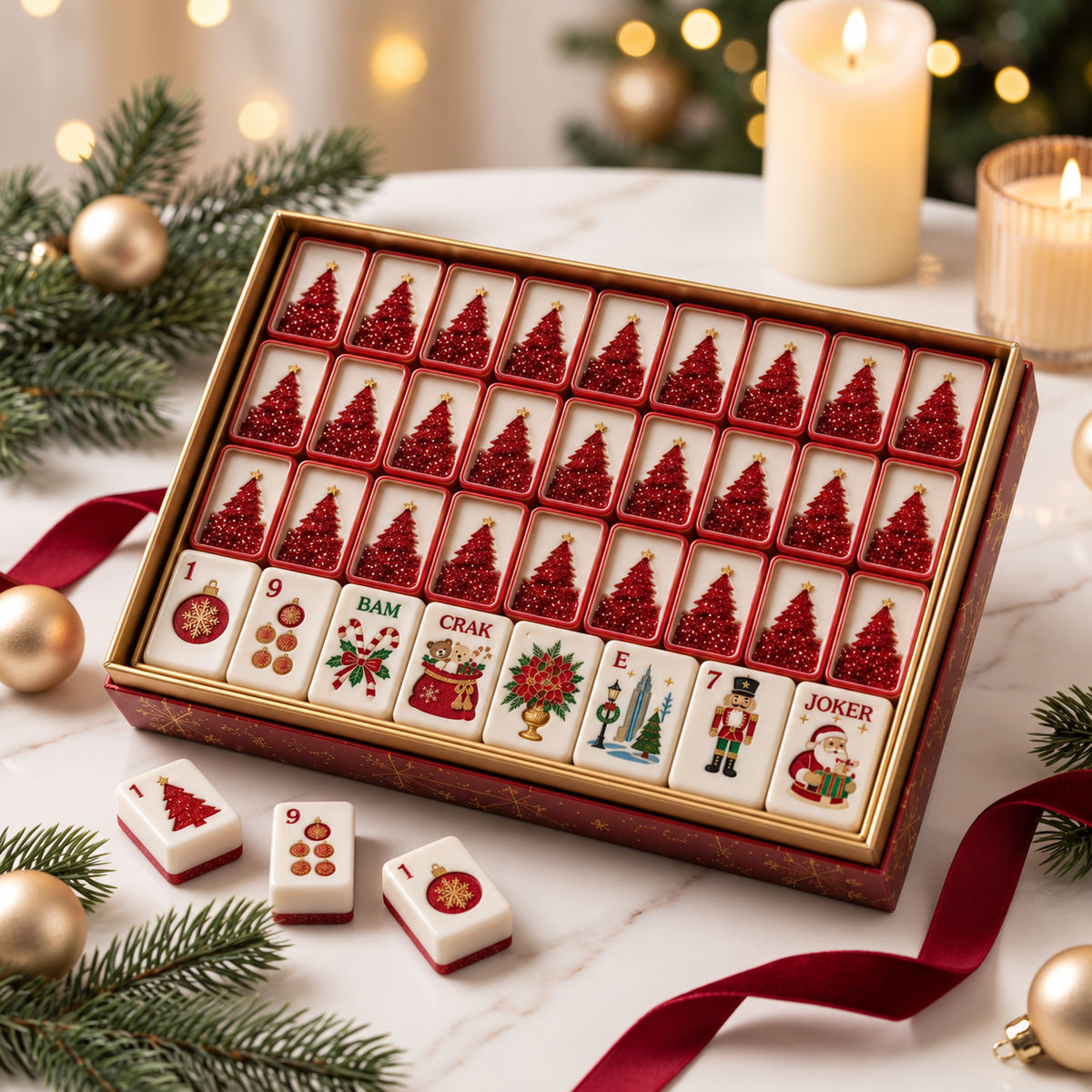
Mahjong and bingo share surface similarities—both involve luck, draw mechanics, and social gatherings—but they are fundamentally different games. Bingo is passive: you mark pre-printed cards as numbers are called, and the first to complete a line wins. Mahjong, by contrast, is active and strategic. You draw and discard tiles from a 152-tile set, build melds (sets of three, four, or more matching or sequential tiles), and must match one of dozens of winning hand patterns from the current year's official card. Where bingo takes minutes to play a round, mahjong games typically last 1–2 hours. Bingo rewards luck alone; mahjong rewards memory, probability judgment, and tactical discards. The National Mah Jongg League has governed American mahjong rules since 1937, and competitive players study the annual card for months. If you're drawn to bingo's ease, mahjong offers a richer challenge. A standard best-selling mahjong set includes tiles, jokers, a rack, dice, and a card stand—everything you need to start. 🀄 Shop best-selling mahjong sets →
What makes bingo and mahjong feel similar at first?
Both games involve waiting, hoping, and announcing a win to a group. In bingo, a caller reads numbers aloud and you mark a card. In American mahjong, one player draws a tile and the group watches for discards they need. Both games are social, played around a table, often with snacks and conversation. Both reward attention—missing your number or forgetting a discard costs you. And both rely partly on chance: you can't control which tile is drawn next any more than you can control which number is called. If you enjoy bingo's rhythm and company, mahjong offers the same gathering energy with a much deeper puzzle to solve.

Why is mahjong actually nothing like bingo?
Bingo has no decisions: you mark or you don't. Mahjong demands constant choice. Every tile you draw forces a judgment: Do I keep this for my current hand, or switch strategies? Do I discard high-value or low-value tiles? Should I claim a discard from another player or wait? These decisions compound over 15 rounds per game. Bingo's winner is determined by luck in minutes; mahjong winners are earned through pattern recognition and probability. You must memorize or have access to the official hand card—the National Mah Jongg League card updated annually—which lists hundreds of winning combinations. Bingo has one way to win: complete a line. Mahjong has dozens, and you must plan which one you're pursuing before the game ends. Bingo is entertainment; mahjong is a skill-building pursuit that takes years to master.
Aspect | Bingo | Mahjong |
How you win | First to mark a line | Collect tiles matching official hand patterns |
Your role | Passive (mark or wait) | Active (draw, discard, claim, decide) |
Luck vs. skill | 100% luck | ~60% strategy, ~40% luck |
Game length | 5–10 minutes per round | 1–2 hours per game |
Decisions per game | 0–2 | 60+ |
Rules to learn | 1 pattern type | 100+ hand patterns per year |
Memory required | Minimal | High (patterns, tile count, discard history) |
Age to master | Immediate | 6 months to 2 years |
How do new players often confuse bingo and mahjong?
Many people hear "mahjong" and think of a simpler game—perhaps because of its exotic name or association with casual family play. Bingo players who try mahjong often expect to relax and mark tiles. Instead, they face the Charleston (a pre-game tile-passing ritual), a card with 52 different hand options to learn, and rules about how jokers work that reshape strategy mid-hand. A common mistake: thinking any three matching tiles form a "win." In American mahjong, you must match a specific pattern from the official card—not just any combination. Another: forgetting that jokers cannot sit in a pair or as a single tile, which locks beginners into dead-end hands. If you shift from bingo expecting a similar ease, you'll be frustrated for the first 3–4 games. The payoff, though, is that mahjong becomes more rewarding as you improve; bingo stays the same.
What skills from bingo transfer to mahjong?
Your bingo experience does help in one way: you've practiced sustained attention and pattern spotting in a group setting. Both games reward alertness—in bingo, you must hear numbers quickly; in mahjong, you must notice what tiles others are discarding. Bingo teaches you to track multiple pieces of information at once, which is essential when reading the mahjong card and counting remaining tiles. Social composure—staying calm at a table of four—transfers directly. But that's where the skill overlap ends. Mahjong demands math, memory, and long-term planning; bingo requires none of these. If you're a competitive bingo player, you have the focus and patience that mahjong requires. You'll need to learn a new skill set, but your discipline will serve you well as you move through mahjong for beginners stages.
🎁 See our most-loved mahjong sets & accessories →

What do you actually need to start playing mahjong?
Unlike bingo, which needs only a card and chips, mahjong requires equipment: a set of 160 tiles (152 playing tiles plus spares), racks to hold your tiles, a mat to organize the table, dice, and the current year's hand card. You also need four players (bingo works with two; mahjong needs exactly four). If you're used to bingo's simplicity, the setup may feel elaborate—but once you own a set, it lasts for years. A complete mahjong set from Mahstead arrives ready to play, with tiles pre-sorted and a durable mat included. You'll want racks with pushers to keep tiles organized (essential for beginners who lose track of their hand), and a mat that defines each player's zone and protects the table. If you travel or host weekly games, a bag or case keeps everything organized between sessions. Unlike bingo, where you can start with a pen and dauber, mahjong requires an investment—but the payoff is a game that improves your mind every time you play.
How long does it take to go from bingo player to mahjong player?
Most bingo players learn mahjong's basic rules in one session—perhaps 30–45 minutes of instruction. But learning to play well takes 6–12 games. By game four, you'll stop asking "Is this a winning hand?" By game ten, you'll predict what opponents are building. Competitive depth—the ability to read table position, count unplayed tiles, and adapt your strategy—emerges after 20–30 games over 2–3 months. Bingo offers instant gratification; mahjong is a journey. The game's complexity is its gift: there's always something new to learn, always a better play to discover. If you're used to bingo's quick wins, expect your first mahjong week to feel slow. But players who stick with it report that mahjong becomes deeply absorbing—the kind of game you think about between sessions and genuinely look forward to playing again. Consider starting with a beginner-friendly set and joining a weekly group rather than playing casually; the consistency accelerates your learning curve.
✨ Find your Mahstead set — free US shipping →
What to check before you buy your first mahjong set
Ensure it includes the current year's official hand card. Mahjong rules change each spring; an old card locks you out of the game. Every Mahstead set includes the current card or tells you where to download it.
Choose tiles you can read quickly. Engraved or large-print tiles slow beginners down; clear symbols and numbers are worth the upgrade as you learn. Our best-selling sets use high-contrast designs for fast recognition.
Test the racks in person if possible, or read reviews carefully. Racks that slide or tip over frustrate beginners mid-game. Mahstead racks include pushers that grip securely and hold 13–17 tiles without wobble.
Plan for storage. Unlike bingo cards, mahjong sets don't fit in a desk drawer. If you host regularly, a mat and case protect your investment and make setup faster. If you're buying as a gift, a polished set with a case signals "this is serious."

FAQ
Can you play mahjong with two people like you can play bingo?
No. Mahjong requires exactly four players. Two-player and three-player variants exist but use different rules and tile sets. Standard American mahjong is unplayable with fewer than four.
Is mahjong purely luck like bingo?
No. While tile draws involve luck, mahjong is roughly 60% strategy (your choices about which hand to pursue, which tiles to discard, when to claim a tile) and 40% luck (what tiles are available). Skilled players win far more often than novices over 20 games.
Do I need to memorize the mahjong card before I start?
No. Beginners keep the official card visible at the table and reference it constantly. By your fifth game, you'll recognize 70% of common hand patterns. Memorization comes naturally through play, not study.
How much does a mahjong set cost compared to a bingo card?
A bingo card costs a few dollars; a mahjong set is a one-time purchase that serves thousands of hands over years. See current pricing on the product page. It's an investment in a game you'll return to repeatedly.
Can someone who loves bingo actually enjoy mahjong?
Yes—if you enjoy bingo's social aspect and pattern-spotting. Mahjong offers the same gathering energy plus mental engagement. Bingo players often become serious mahjong enthusiasts within a month of learning the basics.
Where do people in my area play mahjong?
Search for community centers, libraries, synagogues, country clubs, and online meetup boards in your region. Many host weekly open games for all skill levels. If none exist nearby, start a group: most mahjong communities begin with four friends and a set.


View More
View More
View More
