
What Is Calling a Tile in American Mahjong
Last updated: Nov 23, 2026
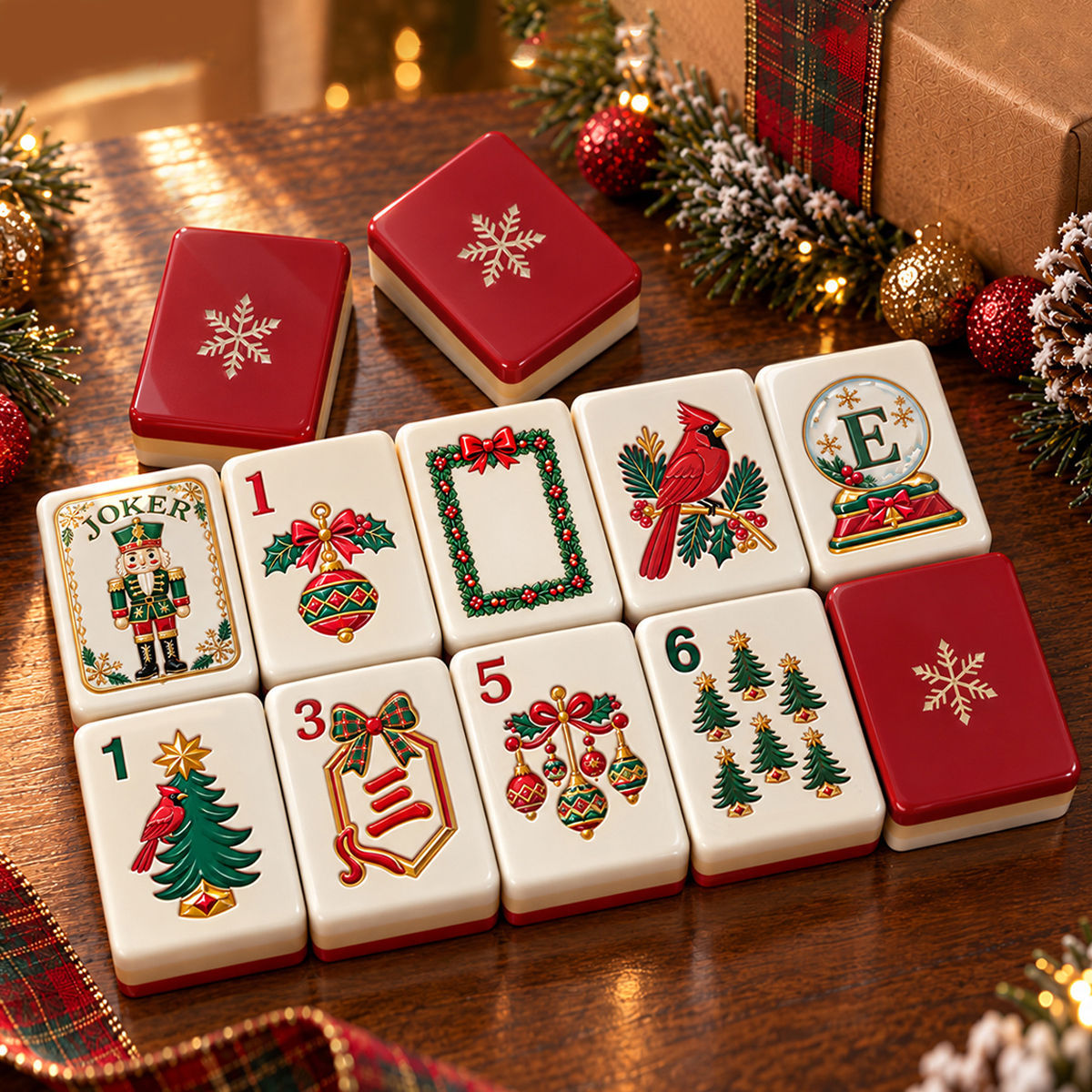
Calling a tile in American mahjong means claiming a discard from another player to add to your hand and expose a group (pung, kong, quint, or sextet). You call only when the discard completes one of these melds on the current hand pattern from the National Mah Jongg League card. Unlike Chinese variants, American mahjong forbids chows (sequences); every exposed group must be identical tiles. You announce your call aloud, claim the tile by rotating it into your rack, and add a joker if the hand pattern shows one in that position. Calling stops play momentarily; the player to the next discarder's right becomes the new discarder. Jokers can never substitute in a single tile or a pair—only in exposed groups of three or more. When you call, all players verify your hand against the current year's card before play resumes.
What tiles can you actually call?
You can call only a discard from another player—never from the wall or a previous discard. The discard must complete a pung (three identical tiles), kong (four identical), quint (five identical), or sextet (six identical) on the hand pattern you're building. Every tile in that group must be exactly the same number and suit: three 5 Craks, four 1 Dots, five South winds. The tile you call must also match the joker count shown on the card for that group. If the pattern shows one joker in a pung of Red Dragons, you need two Red Dragons plus one joker when you call the third Red. You cannot call to fill a single tile, a pair, or any position that contains fewer than three tiles in that group on the card. This rule is what separates American mahjong from other variants—you expose only pungs and larger melds, never pairs or singles.

When exactly do you announce a call?
Call the moment the tile is discarded and before the next player draws. If you hesitate or wait, you lose the right to claim it. Say "pung," "kong," "quint," or "sextet" aloud so everyone hears; then rotate the tile into your rack with your other matching tiles, face-up and exposed. If the hand requires a joker in that group, take one from your hand and place it in the same meld. Once you call, the player whose turn would normally come next skips their draw; instead, the player to the discarder's right (or the next player in turn order) becomes the new discarder. Play pauses for a few seconds while everyone at the table verifies your call matches the current hand card. If it does not, you must return the tile and incur a penalty (typically a point deduction or payment, depending on house rules).
Why jokers matter when you call
Jokers are wild tiles that stand in for any single tile in an exposed group of three or more. When you call a meld that includes a joker position, you must place the joker in that exact spot. For example, if the card shows a pung of 7 Bams with one joker, and you call the third 7 Bam, you add one joker to your exposed meld. The joker serves that single tile position only—you cannot use it elsewhere, and you cannot move it later. Here's the critical point: jokers can never be used to fill a pair, a single tile, or anywhere outside an exposed group. They also cannot be used in your concealed tiles (the ones you hold hidden). Learn how jokers work in detail, because incorrect joker use causes more penalties than any other rule mistake. Count your jokers carefully before each hand—most 160-tile sets include eight jokers, and you will discard one at the start of each hand or use extras for practice.
What stops you from calling?
Several rules prevent you from calling even if a tile fits your hand. First, you cannot call if all four copies of that tile are already exposed elsewhere on the table. Second, if the hand pattern from the current year's card contains no valid position for that tile that you can complete, you cannot call it. Third, you are not required to call—American mahjong allows you to refuse a tile if you prefer to wait for another discard. This strategic choice lets advanced players hold back their calling to fish for a higher-scoring hand. Fourth, if you call incorrectly and your hand does not actually match the card, you must pay a penalty and return the tile. Fifth, if you have already claimed a tile in a previous turn and the hand has advanced, you cannot retroactively call an earlier discard. Check the card before you call—hesitation costs you the opportunity, but a wrong call costs you points or chips.
How calling changes your strategy
Calling slows the game and exposes your progress to every player, so you risk losing your competitive edge. Skilled players sometimes wait longer before calling, fishing for jokers or high-scoring patterns that pay more than an exposed meld. By calling early, you reveal your hand plan and competitors can adjust their discards to block you. Conversely, calling quickly signals strength and can pressure opponents to play cautiously. New players often call the first legal opportunity; experienced players hold off unless they need to secure the hand or risk running out of draws. The decision also depends on table stakes: in friendly play, the pressure is low; in tournaments or betting rounds, calling is a calculated move. Always look at what tiles other players have already exposed before you commit to a call—if someone else is one tile away from mahjong, your call might accidentally give them the winning draw.

Common mistakes when calling
Mistake | Why It Happens | How to Avoid It |
Calling without a joker when the pattern requires one | Scanning the card too fast | Point to the pattern and joker position before claiming the tile |
Calling a group with mixed tiles (e.g., two 5 Dots and one 5 Bam) | Confusing suits under poor lighting | Use a quality mat with contrast to distinguish tile marks; slow down |
Calling after the next player draws | Not paying attention to turn order | Call instantly when the tile hits the discard pile; say "pung" aloud |
Calling a tile when four copies are already exposed | Losing track of discards | Watch the table and count suits during each hand; take notes if needed |
Using a joker in a pair or single tile | Misreading the card layout | Jokers only in exposed groups of three or more; never in pairs |
Calling too early and revealing a weak hand | Impatience or nervousness | Wait one or two more discards; fish for a higher-scoring pattern |
Calling errors are the most common source of penalties in American mahjong. The fix is simple: read the current year's card before each hand, point to the pattern you're building, count your tiles aloud, and verify the joker position before you claim the discard. Tables with good lighting and engraved or color-marked tiles reduce confusion. Ask the table to wait two seconds while you confirm the card; no one minds a careful call.
Practice calling without fear
The only way to get faster and more accurate is to call regularly in low-stakes games. Play with friends before you join a club or league table. Use a set with clear markings and a stable mat so tiles don't shift when you move them. If you make a mistake during casual play, laugh it off, pay the penalty, and move on. After five to ten games, calling becomes automatic—your eye will spot the match before your brain does, and you'll call with confidence. Set up a standing weekly game if you can; regularity builds skill faster than occasional play. Many players find calling easier once they memorize the main hand patterns, so spend time reading the mahjong card between games.
🀄 Shop best-selling mahjong sets →
What you'll need to play with confidence
Clean, high-contrast tiles make calling faster and less error-prone. If your set has faded marks or small numerals, you'll hesitate every time—and hesitation means you lose the tile. Look for sets with engraved designs or bold print so you can read suits at a glance. A sturdy mahjong mat keeps discards and your hand organized, reducing mix-ups. Consider racks with pushers if you struggle to manage tiles while holding them—they let you build melds quickly and call without fumbling. A clear, current-year hand card printed on card stock (not your phone) lets you point and verify in seconds. Many new players set up their first game with whatever they have on hand; as you play more, upgrading to cleaner equipment pays back in faster turns and fewer penalties.
🎁 See our most-loved mahjong sets & accessories →
The psychology of the call
A well-timed call signals confidence and experience to the table. New players often call hesitantly or apologize; seasoned players call clearly and move on. Your tone sets the mood: call firmly, verify your hand once, and let play resume. If you're unsure, say "let me check the card" and take five seconds—no one penalizes you for caution. Conversely, if you rush and call wrong, you'll earn a reputation for sloppiness. The best call is one you're certain about before you say it aloud. This comes with practice and familiarity with how to play American mahjong as a whole system, not just individual rules.
✨ Find your Mahstead set — free US shipping →

FAQ
What's the difference between calling and picking from the wall?
Calling claims a discard from another player and exposes your meld immediately. Picking from the wall draws a concealed tile that stays hidden in your rack. Only discards can be called; wall draws are silent and private.
If I call a tile, can I take it back?
No. Once you call aloud and rotate the tile into your exposed group, the claim is final. You cannot return it or undo the call. This is why pausing to verify the card first is critical.
Can I call a tile if I don't have a joker to place in the required position?
No. If the hand pattern shows a joker in that group and you have no joker in your hand, you cannot call the tile. You must wait for the right tile to drop or fish for a joker first.
Do I have to call every legal tile I can?
No. You can refuse any call and keep waiting. Refusing a legal call is a strategic choice and is always allowed. You simply pass and let play continue.
What happens if I call a tile but someone else has the same tile already exposed?
It does not matter. Duplicate tiles can be part of different melds on the table. You can call a 5 Dot even if someone else has already exposed a 5 Dot in their hand.
Can I call a discard if the player is still holding it?
No. You can only call after the tile has been fully discarded and placed on the discard pile. If the player is still holding it or thinking, you must wait.
What if two players try to call the same tile?
Priority goes to the player closest to the discarder in turn order (usually the player to the discarder's left). The second player loses that tile but can still play normally on their next turn.


View More
View More
View More
