
The Charleston Step by Step: Right, Across, Left
Last updated: Nov 18, 2026

Mahjong Rules Guide › Level 2 — Set up & the Charleston · Guide 10 of 25
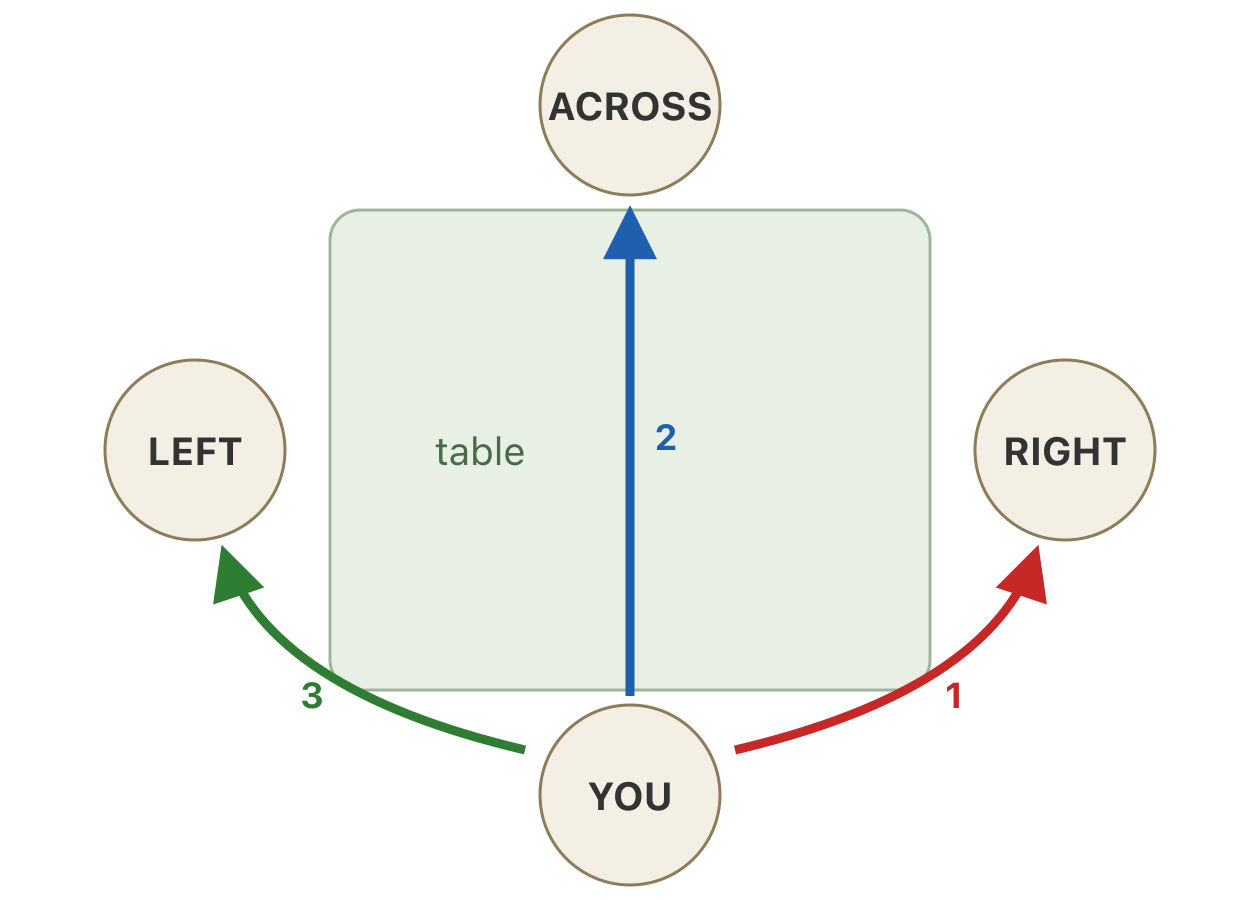
The Charleston is the mandatory exchange that begins every American mahjong game, right after dealing the tiles: why East starts with 14. Every player passes exactly three tiles in three directions—right, across, and left—following the compass. This phase scrambles the hand strategically, gives you a second look at your tiles, and sets the stage for the optional second Charleston, stopping it, and the courtesy pass.

Why the Charleston Matters
The Charleston does three things at once. First, it lets you swap out tiles you don't want for ones your neighbors discard—before anyone reveals a strategy. Second, it gives newer players breathing room; you're not locked into your original hand. Third, it makes every player's starting position slightly different, so the game feels fresh each week even with the same group. Whether you're setting up at home or bringing a best-selling mahjong sets, the Charleston is always the same: right, across, left.
Step 1: Decide Which Tiles to Pass Right
Before the Charleston begins, look at your hand (East has 14 tiles, everyone else has 13). Pick three tiles you want to give away—usually tiles that don't fit your strategy, or tiles you suspect no one around your table is chasing. Don't pass three completely different suits; that spreads your risk thin. What to pass in the Charleston (and what to keep) explores this choice in detail, but the basic rule is: pass what you can't use easily.
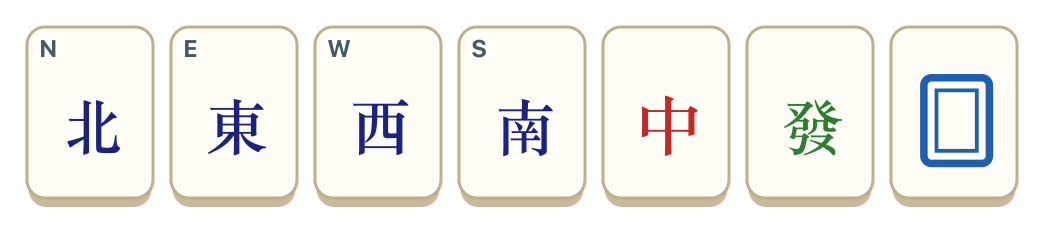
Example: You have D1, D2, D3, D4, B5, B6, B7, N, E, W, S, RD, RD, GD and you see a "Quint Dots" hand on the card. Keep your dots and dragons. You might pass N, E, W to your right neighbor—the winds are cluttering your hand and may not help.
Step 2: Place Your Three Tiles on the Table (Right)
Set the three tiles face-down in front of you on the table, in the direction of your right-hand neighbor . You pass to your right, meaning the player on your right receives from you.
All four players do this at the same time. Everyone slides or places their three tiles toward the player on their right. No player peeks yet. Once all three players have passed, everyone picks up the three tiles they received from their left neighbor. You now have the tiles the player on your left passed to their right (which is you).
Key point: Do not pick up your new tiles until everyone has finished passing. This keeps the pace even and prevents accidentally influencing someone else's choice.
Step 3: Decide Which Tiles to Pass Across
Now that you've received three tiles, look at your full hand again. You've gone from 13 or 14 to 14 or 15 temporarily. Decide which three you want to pass across (directly opposite you). These three can include tiles you just received if they don't help, or tiles from your original hand.
Again, the across pass is simultaneous. All four players choose and place three tiles face-down in front of them, pointing toward the player across the table. Once all four have done so, everyone picks up the three tiles from the player across from them.
Example continuation: You picked up N, E, W from your left neighbor. You took in N, E, W and already sent three tiles away, so you still hold 13 tiles (14 if you are East). You see a "Quint Craks" hand on the card instead. Craks are suddenly more appealing. You pass D1, D2, S to your across-table neighbor—you're shedding dots and an extra wind.
Gear for this step
Practising the charleston step by step? It's easier with the right setup — see our best-selling mahjong sets.
Step 4: Decide Which Tiles to Pass Left
You are back to 13 tiles (14 if you are East). For the third and final mandatory pass, choose three to send to your left-hand neighbor . All four players pass simultaneously, placing three tiles face-down toward their left. Then everyone picks up from their right neighbor.
This final pass is the last mandatory exchange. After the left pass, the Charleston is complete unless the group chooses to do the optional second Charleston, stopping it, and the courtesy pass.
Example final pass: After receiving three tiles from across (which might include craks or something else), you hold 13 tiles again (14 if you are East). You pass B5, B6, RD to your left neighbor. Every pass is three out and three in, so your count never changes. Pick up the three from your right neighbor and you're ready for the optional second Charleston or to proceed to the game.
Compass Directions: Right, Across, Left
Directions are always counted from your own seat. Here's how to remember which direction is which:
Right: The player to your right hand (sitting on your right side). You pass to your right, so they receive from you.
Across: The player directly across the table from you.
Left: The player to your left hand (sitting on your left side). You pass to your left, so they receive from you.
If you are ever confused, ask the group. A few seconds of clarity beats 45 minutes of a misdirected hand.
Timing and Etiquette
The Charleston must flow smoothly to keep the game moving and fair. Here are the unwritten rules we follow:
Simultaneous pass: All four players select and place their three tiles at roughly the same time. If someone takes much longer than others, the group may gently hurry them.
No peeking: Once tiles are face-down in passing position, don't flip them until everyone is ready. No one should see the tiles they're about to receive before the full group has placed theirs.
No talking during selection: You may talk during a pass (after you've placed your tiles), but discussing which tiles to keep is fair game only after you've committed.
Pick up together: Wait until all players have placed their three tiles before picking up. Then everyone picks up at once.
Common Mistakes
Passing Four or Two Tiles Instead of Three
The rule is always three tiles per direction in the mandatory Charleston. If you accidentally pass four, the group should catch it immediately and fix it. If no one notices until you've picked up, most home games let it slide for that round, but table rules vary—ask before you play.
Peeking at Tiles You're About to Receive
Tempting, but unfair. If you see the three tiles your left neighbor is passing before you place your own, you've gained information the others didn't. Place your three first, then pick up.
Forgetting the Order: Right, Across, Left
Some players mix up across and left, or repeat a direction. If the group hasn't done a second Charleston before, it's easy to jumble. Say it aloud once as a group before the first pass: "Right, across, left." This takes five seconds and prevents confusion.
Not Checking Your Tile Count After Each Pass
After passing left, you should have exactly 14 tiles (if you're East) or 13 tiles (if you're South, West, or North). If you have 15 or 12, something went wrong. Don't play with the wrong count; fix it now. How to set up an American mahjong game, step by step includes a full tile-count checklist.
Passing a Joker in the First Charleston
You can pass a Joker just like any other tile. However, if you're passing Jokers strategically (e.g., hoping someone won't need them), remember that most hands on the card include Jokers as wild tiles. Passing all your Jokers away might hurt you more than help.
What Happens Next
Once the mandatory Charleston (right, across, left) is complete, the group decides whether to play a second Charleston, stopping it, and the courtesy pass. Any player can propose or stop the second Charleston at that point. After all Charleston phases are done, the game officially begins with the discard and draw cycle.
FAQ
What if two players want to pass different numbers of tiles in the second Charleston?
The mandatory first Charleston (right, across, left) is always three per direction. The second Charleston is optional, and any player may stop it before it begins. If it begins, the same three-tiles-per-direction rule applies. You cannot pass one tile in round one and two in round two.
Can I pass a Joker in the Charleston?
Yes. Jokers count as regular tiles during the Charleston—pass them if you want to. Many hands use Jokers as wildcards, so passing them away might regret later, but it's legal.
Do I have to participate in the Charleston if I'm sitting out that round?
If you're not playing that hand (sitting out), you do not participate in the Charleston. Wait until the next hand to pass. The three active players pass among themselves.
Why do we pass left last instead of right first and left second?
The order (right, across, left) is a convention set by the National Mah Jongg League. It's not about strategy—just tradition. Following the same order every time keeps everyone synchronized and reduces mistakes.
What if I accidentally take four tiles from the pass instead of three?
Stop immediately and put one back. If no one catches it until you've mixed your hand, most groups will let you sort it out quietly, but house rules vary. Ask your group before you play.
Can the player who deals choose whether to do a second Charleston?
No. Any of the four players can propose a second Charleston after the first mandatory pass (left) is complete. If all three other players agree (or don't object), you do it. If one player says "no second," the game moves forward.
More in Level 2 — Set up & the Charleston
Ready to play at your own table?
Engraved 160-tile American mahjong sets, mats and racks — free shipping across the US.


View More
View More
View More
