
Quints in Mahjong: Examples, Rules & How to Play Them
Last updated: Nov 23, 2026
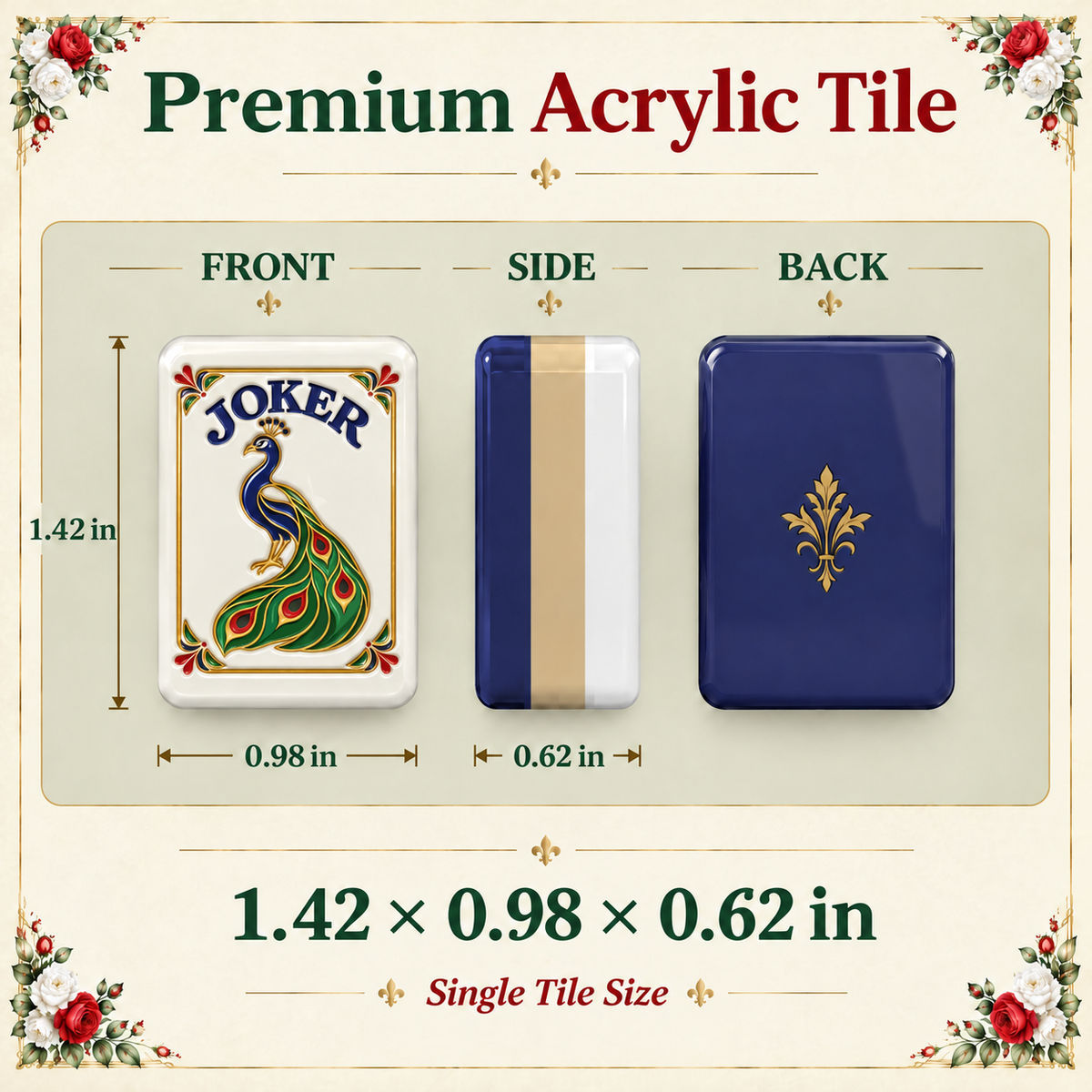
A quint in American mahjong is an exposed group of five identical tiles—for example, five 3 Dots or five East winds. You form a quint by starting with a pung (three identical tiles, which you call when another player discards the fourth) and then adding the fifth matching tile when it's drawn or discarded to you. You cannot use a joker in a quint; all five tiles must be the real tile. Quints appear on the current year's National Mah Jongg League card in specific hand patterns—usually in the "Like Numbers" or "Consecutive Run" sections. Once exposed, a quint stays on the table and counts toward your final winning hand. Quints are less common than pungs and kongs but unlock higher-scoring patterns when you need them; mastering when to hold or build toward a quint separates casual players from consistent winners.
What tiles can make a quint?
Any tile that appears four times in the full American set can form a quint—you hold or draw the fifth copy. The game uses exactly four copies of every numbered tile (1–9 in each of three suits: Bams, Craks, Dots), all four winds (North, East, West, South), and all three dragons (Red with Craks, Green with Bams, White/"Soap" with Dots). This is the standard 152-tile core used in every game. Since jokers cannot substitute in a quint, you need all five genuine tiles in hand or available on the table. If you're holding three 7 Bams and another player discards a 7 Bam, you call pung and expose it; if a fourth 7 Bam appears later, you can add it to form a quint. Wind and dragon quints work the same way—all five must be genuine tiles, no jokers allowed.

How do you build a quint step by step?
Start with a pung. You hold two matching tiles in your hand. When another player discards the third identical tile, you call "pung," claim it, and expose all three on the rack in front of you. This is your foundation. Wait for the fourth. As tiles are drawn and discarded around the table, watch for the fourth copy of your pung tile. If you draw it from the wall during your turn, add it to your exposed pung without announcing anything—it becomes a kong. If another player discards it, you can also claim it and convert your pung to a kong. Add the fifth. When the final matching tile appears—either from the wall on your turn or discarded by an opponent—claim it and append it to your kong to form a quint. No announcement needed; simply slide it onto the end of your exposed group. The quint then stays on the table until hand completion or the game ends. This progression (pung → kong → quint) is the only legal way to build one; you cannot skip straight to a quint by holding all five tiles in your closed hand and then exposing them.
🀄 Shop best-selling mahjong sets →
Can you use jokers in a quint?
No. A quint must consist of five identical genuine tiles; jokers are never allowed. This is one of the strictest rules in American mahjong. Jokers can substitute in pungs, kongs, sextets, and pairs—but never in quints. The logic is practical: quints are rare and powerful, and the rule forces you to commit real tiles to unlock them. If you're building a quint of 4 Craks, all five must be actual 4 Craks; you cannot use four 4 Craks and one joker. If your hand pattern calls for a quint but you only have four of that tile and a joker, you'll need to pivot to a different hand or find the fifth genuine tile. Understanding how jokers work in American mahjong helps you manage this trade-off—knowing where jokers are legal saves you from costly exposure mistakes during play.
Where do quints appear on the mahjong card?
Quints live in specific sections of the current year's National Mah Jongg League card, usually clustered in patterns that emphasize holding identical tiles. The card is organized by category—"Like Numbers" (all tiles are the same number across different suits), "Consecutive Numbers" (runs that step up by one), "Winds and Dragons," "Flowers," and others. Within each section, certain rows or boxes show hand diagrams that include a quint; these are typically marked as five consecutive copies of the same tile (shown in the hand line). Because the card changes every spring, the exact location and frequency of quints shift year to year. When you're learning how to read the mahjong card, spend time scanning for the quint symbol (usually five of the same tile drawn in a row) so you recognize it at a glance during play. Spotting a quint pattern early lets you build toward it instead of accidentally discarding tiles you need.

What's the difference between a quint, a kong, and a pung?
A pung is three identical tiles, a kong is four identical tiles, and a quint is five identical tiles. Pungs and kongs are both called exposures in American mahjong—you call a pung when a tile is discarded, or you add a tile to an existing pung to form a kong. Quints are also exposures but require all five genuine tiles and no jokers. The scoring weight increases: a pung is worth less than a kong, and a kong is worth less than a quint on most hands. Sextets (six tiles) also exist, but they are extremely rare and require the sixth copy of a tile plus joker substitutions in some patterns. In practice, most players will see far more pungs and kongs than quints over their lifetime of play. The table below shows the core differences:
Exposure | Tile Count | Joker Allowed? | How It Forms | Rarity |
Pung | 3 | Yes, one | Call a discard | Very common |
Kong | 4 | Yes, one or two | Add to pung or draw fourth | Common |
Quint | 5 | No | Add fifth tile to kong | Rare |
Sextet | 6 | Yes | Add sixth + jokers | Extremely rare |
Common mistakes new players make with quints
Mistake 1: Using a joker in a quint. We see this almost every week when someone new to the game holds four 2 Dots and a joker, and tries to call it a quint. It's illegal. The rule is absolute: no jokers in quints. Mistake 2: Holding all five tiles closed and exposing them at once. Quints must be built step by step—pung first, then kong, then quint. If you hold five 6 Craks in your closed hand, you cannot suddenly expose all five as a quint; that violates the progression rule. You'd have to wait for a call or draw to start exposing. Mistake 3: Confusing a quint with a five-tile pair or run. On the mahjong card, some hands show five tiles that are not identical—for example, 1-2-3-4-5 Bams. That's a run, not a quint. A quint is always five of the same tile. Mistake 4: Discarding a tile you need for a quint too early. If you're building toward a quint and another player needs that same tile type for their pung, they'll call it and block you. Pay attention to what's been exposed on other racks; if three 8 Dots are already showing, the fourth and fifth are precious. Mistake 5: Abandoning a partial quint too late. If you have a kong of 5 Dots and the fifth tile hasn't appeared by mid-game, let it go and focus on completing a winnable hand instead of waiting for lightning to strike.
🎁 See our most-loved mahjong sets & accessories →
Real-play scenario: Building a quint in action
It's your turn; you hold two 9 Bams in your closed hand. Your left-seat opponent discards a 9 Bam. You call "pung" and expose all three 9 Bams in front of you on your rack. Three turns later, you draw the fourth 9 Bam from the wall on your turn; you add it to your pung and now have a kong. Two more rounds pass. Your right-seat opponent discards a 9 Bam. You claim it and append it to your kong—you now have a quint of 9 Bams. This quint counts toward your hand if your current year's card pattern includes a quint of 9 Bams (often in "Like Numbers" sections). If your hand pattern instead calls for a different grouping (say, a pung of 9 Bams plus two more tiles elsewhere), the quint still counts—you simply discard something else to make your hand work. The key takeaway: quints emerge from genuine tile flow, not forced creation, and patience beats impatience every time.
What to check before you buy a set for quint-heavy games
If you're the host of a regular game or building a set for your group, consider these factors to avoid frustration during play:
Tile clarity. Ensure your tiles are easily readable in bright light so you don't miscount or misread a tile during pung/kong/quint calls. Acrylic tiles with clean printing hold up better than bone over time.
Joker count. Because quints cannot use jokers, you'll lean on genuine tiles more heavily in hands that feature quints. A standard American set includes 8 jokers per the 152-tile count. Verify that your set has the full complement so you're not short when playing other hands.
Rack space. When you build a quint, you'll need visible room on your rack to display all five tiles. Some racks are tight; look for racks with pushers that allow clean tile organization so your exposures don't crowd or hide.
Mat or table protection. Repeated exposures wear the table surface and can scatter tiles. A mahjong mat protects your table and keeps tiles anchored during play, especially if your group plays quint-heavy hands regularly.
✨ Find your Mahstead set — free US shipping →
For detailed rules and how quints fit into the broader game, read our guide to how to play American mahjong. And if you're just starting, our mahjong for beginners guide covers all exposures in plain language.

FAQ
Can you have two quints in one hand?
Yes, if your hand pattern on the card shows two separate quints. You'd need ten genuine tiles (five of one kind, five of another) with no joker substitutes. This is extremely rare but legal.
What happens if the fifth tile for my quint is still in the wall when the hand ends?
Your partial kong remains exposed, but you don't win. Your hand is dead, and play continues or restarts. Next hand, the tiles are shuffled and dealt fresh.
If I'm building a quint and another player calls the fourth tile before I do, what happens?
If another player discards the fourth tile and calls pung before you can react, their call takes priority—the tile goes to them, and your pung stays as-is. You can't interrupt a call.
Do quints score higher than kongs?
Yes, generally. The exact point value depends on your hand pattern on the current year's card. Read American mahjong scoring to see how quints are weighted on specific hands.
Can I expose a quint in a 2- or 3-player game?
Yes. The rules for quints are the same whether you're playing 4-player standard, 3-player, or 2-player. Our guide to 2 and 3-player rules covers all exposure variants.
Do flowers and winds ever form quints?
Winds yes (North, East, West, South—each appears four times, so a fifth can form a quint). Flowers no—there are only eight flowers total in a set (four unique types, four copies total), so you can never have five identical flowers.


View More
View More
View More
