
Vietnamese Mahjong Scoring: How to Count Points Fast
Last updated: Nov 23, 2026
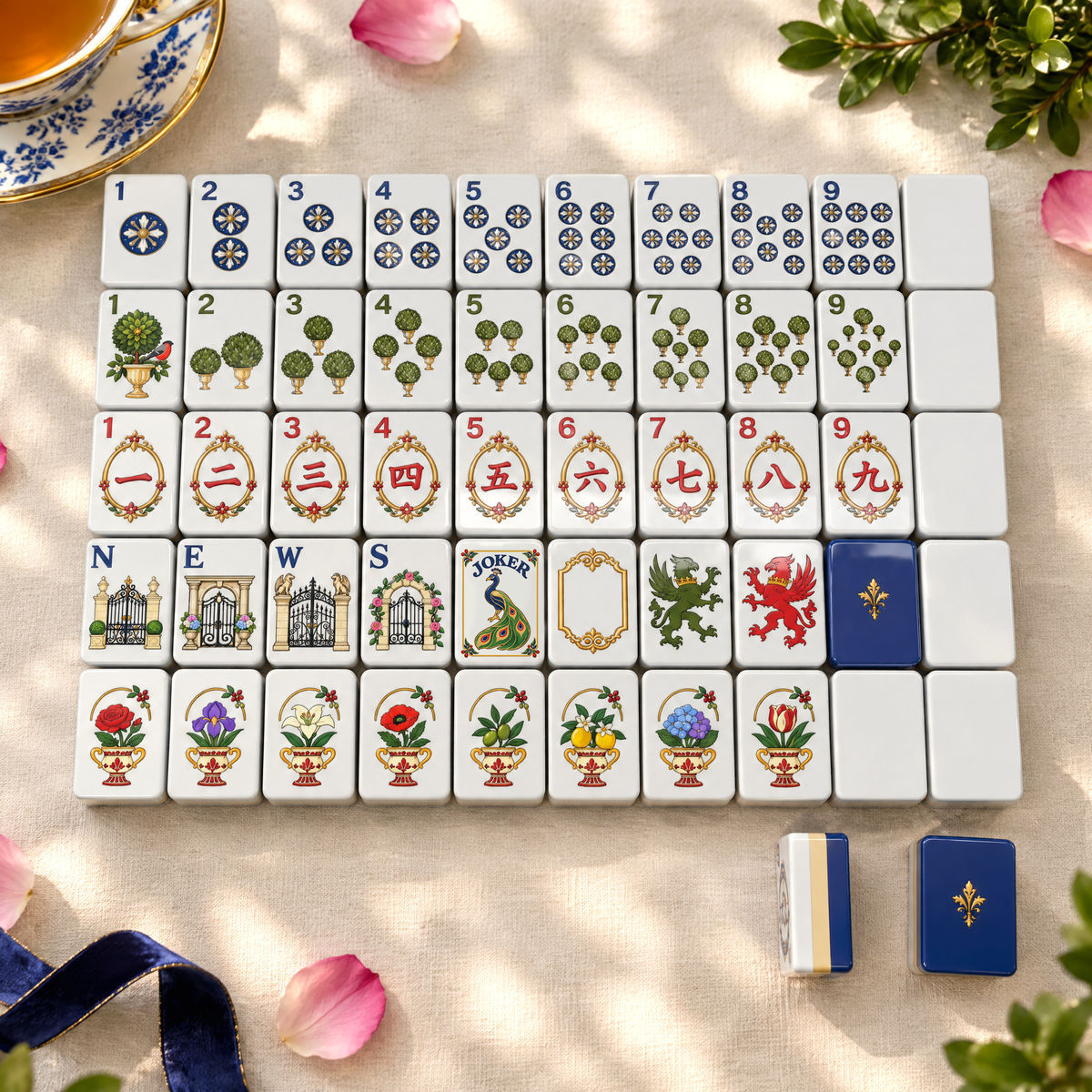
Vietnamese mahjong (also called Cantonese or Hong Kong mahjong) scores via "fan" (doubles) and "points" (base unit). A winning hand earns fans based on melds, patterns and seat position; you multiply the base points by 2^fan count, then settle payments between all players. The dealer pays more than non-dealers to losers; winners collect from all three players. Unlike American mahjong, which follows a fixed yearly card, Vietnamese scoring relies on rule sets agreed before play—usually the "old hand" or "new hand" standard. Most casual games use simple fan counts (1–3 fans per hand); competitive play may go higher.
What are "fans" and how do they change the payout?
A fan is a multiplier, not a point value. Each pattern in your winning hand earns you one or more fans. You start with a base—often 20 or 30 points—then multiply it by 2^fan count. If your hand is worth 2 fans at 20 base points, the dealer pays you 20 × 2² = 80 points; non-dealers pay you 40 points each. The more fans you earn, the exponential growth kicks in: 3 fans = 8×, 4 fans = 16×. The dealer's position matters hugely: they pay the full amount to any winner, while non-dealers pay only half. This is why fan calculation is the heart of Vietnamese play—it determines who pays what in seconds.

Which tile patterns and combinations score fans?
Common fan-earning patterns include: Pung of dragons (1 fan), pair of seat wind (1 fan), all Pungs (1 fan), terminal/honor tiles only (1–2 fans), two Dragons (2 fans), Concealed hand (1 fan extra). Some hands score Quint (5 identical tiles, if your ruleset allows them; usually 2–3 fans). Flower melds (if included in your rules) earn 1 fan each. Chows (sequences like 4–5–6 Dots) are cheaper—no fans by themselves—so they're less valuable than Pungs. All Chows hands exist but are rarer and worth fewer fans than all-Pung or mixed honor hands. Your exact rulebook (agreed with your group before the game) defines which patterns pay what. Always clarify before the first hand.
🀄 Shop best-selling mahjong sets →
How do you calculate payments in a four-player game?
In Vietnamese mahjong, the winner takes from all three losers. The dealer pays double; non-dealers pay single. Here's a worked example:
Your hand wins with 2 fans.
Base points: 20.
You're East (dealer).
Payout: 20 × 2² = 80 points per loser.
Losers (all non-dealers) each pay you 80 points = 240 total to you.
Compare if a non-dealer wins the same hand:
The dealer pays 80 points (double).
The two other non-dealers each pay 40 points (half).
Winner receives 160 total.
If 3 fans: 20 × 2³ = 160 base. Dealer pays 160; non-dealers pay 80 each. The dealer's risk is real—they fund more of every payout. This is why dealer position rotates and why seasoned players rotate seats to share the burden.
Scenario | Fan Count | Base | Dealer Pays | Each Non-Dealer Pays | Winner Total |
Non-dealer wins | 2 | 20 | 160 | 80 | 320 |
Dealer wins | 2 | 20 | N/A | 80 | 240 |
Non-dealer wins | 3 | 20 | 320 | 160 | 640 |
Dealer wins | 3 | 20 | N/A | 160 | 480 |
What tiles and honors score the most fans?
Terminal and honor tiles (1s, 9s, Winds, Dragons) are premium. A Pung of 1 Bam (1 fan) beats a Pung of 5 Bam (0 fans). All Pungs of terminals and/or honors is a high hand (often 3–4 fans depending on ruleset). Green Dragon Pung (1 fan) is always respected. Red Dragon Pung (1 fan) likewise. White Dragon (the tile we call "Soap") often earns 1 fan for a Pung. Wind Pungs each earn 1 fan if they match the player's seat (East wind is worth most for the dealer). Honor-heavy hands climb faster because each honor Pung pays fans; a hand of three Dragon Pungs alone could be 3–6 fans (per ruleset). Sequence hands (Chows) score zero fans for patterns themselves—you must add other features like a Pung of an honor or a Flower to make the hand valuable. This reward structure pushes players toward Pungs and discourages long Chow sequences unless combined with dragons or winds.

Common mistakes that slow down counting—and how to avoid them.
Mistake 1: Forgetting the dealer pays double. Write it down: dealer × 2, others × 1. If you get it wrong, you'll underpay or overpay the winner, killing trust.
Mistake 2: Confusing fan count with point count. Fans are multipliers (1, 2, 3…). Points are the base (usually 20 or 30). Never add them; always multiply 2^fan.
Mistake 3: Not agreeing on the ruleset beforehand. Before sitting down, confirm: do Flowers count? Do Quints exist? Is the base 20 or 30? Is a Concealed hand +1 fan? Silence here = table chaos.
Mistake 4: Miscounting Pungs in your own hand. Count twice: How many Pungs? Which are honor/terminal? Which match the seat wind? Write the fan total on paper before announcing—no take-backs.
Mistake 5: Paying the winner in stages. Collect from all three losers at once, settle cleanly, and move to the next hand. Sloppy settlement breeds disputes.
Pro tip: Keep a pen and scorepad. Write each hand's fan count, payout to dealer, payout to non-dealers. This record is your proof if anyone questions the math later.
🎁 See our most-loved mahjong sets & accessories →
Where do Vietnamese and American mahjong scoring diverge most?
American mahjong uses a yearly National Mah Jongg League card that lists 80+ hand patterns with fixed point values—no fans, no multipliers. You simply match your hand to the card and pay the listed amount. Vietnamese mahjong uses fan multiplication, which rewards complexity and honor tiles exponentially. American hands are predetermined each year; Vietnamese fans are calculated on the spot. American sets include eight jokers; traditional Vietnamese sets have none. American requires exactly 152 tiles in play; Vietnamese uses 144 standard tiles. If you've only played American, Vietnamese will feel slower at first because you're calculating mid-game rather than looking up a card. But once fan logic clicks, many players find it more dynamic—every hand can score differently based on how you arrange your melds.
If you're learning both variants, the key is: separate the scoresheet mentally. American = card lookup. Vietnamese = fan count + multiply. Don't mix them or you'll confuse your table. Practice one variant until you're confident, then switch. Our best-selling collection includes sets suitable for learning both American and casual variants; check the product descriptions to confirm tile counts and what's included.
What to check before you buy a Vietnamese mahjong set.
If you're shopping for a set to play Vietnamese mahjong:
Confirm it has 144 tiles, not 152. American sets add jokers; Vietnamese traditional play does not.
Check that it includes Flowers. Not all rule variants use them, but most casual games do; verify with your group first.
Look for clear tile markings. You'll be calculating fans fast; blurry numbers slow you down.
Ensure the case or mat fits your space. Vietnamese games often run 2–4 hours; a comfortable, durable mat saves wrists.
Verify the set includes a rulebook or scorepad. Many sellers don't; you'll need to source one separately or download a PDF from your local Vietnamese mahjong club.
✨ Find your Mahstead set — free US shipping →

FAQ
Can American mahjong players switch to Vietnamese scoring without buying a new set?
Yes, if your set has 152 tiles, remove the 8 jokers to get to 144 and play Vietnamese. However, the flower melds, Quint rules, and payment structure are entirely different, so you'll need to learn new hand patterns and buy a rulebook specific to Vietnamese variants.
How fast can you learn to count Vietnamese fans?
Most players grasp basic 1–2 fan hands in 2–3 games. Intermediate play (3–4 fans, dealer/non-dealer distinctions) takes 1–2 weeks of weekly play. Expert-level calculation (rapid multi-fan combos, ties) comes after months of practice.
Is Vietnamese mahjong harder than American scoring?
Not harder, just different. American requires memorizing a 100-page card; Vietnamese requires understanding fan logic and quick multiplication. Many players find Vietnamese more intuitive once they see that fans = multipliers. American beginners often struggle with the card lookup; Vietnamese beginners struggle with the math.
What's the most common fan count in a casual Vietnamese game?
2–3 fans. Most winning hands score 2 fans (one or two honors Pung plus a pattern bonus). Hands worth 4+ fans are rare and usually involve all-terminal, all-honor, or concealed melds. Casual play rarely sees hands worth more than 4 fans.
Do all Vietnamese mahjong rulebooks agree on fan values?
No. Regional variations exist—Hong Kong, Cantonese, and Taiwanese variants each have slightly different fan lists and point bases. Always agree on a specific ruleset (e.g., "Hong Kong old hand rules" or "Cantonese new hand rules") before the first game, or download a shared PDF and print it for the table.
Can you play Vietnamese mahjong with just a set, or do you need a mat and racks?
You need only tiles, but a mat and racks make play clearer and faster. A mat gives everyone equal space; racks with pushers let you organize your melds neatly and hide your hand from other players. For serious play or longer sessions, they're worth the investment.


View More
View More
View More
