
British Mahjong Terms and Glossary: American Players' Guide
Last updated: Nov 23, 2026
British mahjong uses the same 152-tile structure as American mahjong but follows Hong Kong hand-building rules: sequences (chows) and triplets (pungs) can be exposed or concealed, jokers substitute any tile freely, and the player who completes their hand (whether winning off the wall, from a discard, or with a kong) declares victory. Major British terms include "winds" (North, South, East, West; East is dealer and starts each hand), "dragons" (Red, Green, White/Soap), "honors" (winds and dragons combined), "flower tiles" (seasonal bonus tiles worth extra points), "pung" (three identical tiles), "kong" (four identical tiles, drawn from the live wall or claimed from a discard), and "chow" or "sequence" (three consecutive numbered tiles in one suit). British scoring emphasizes base points plus multipliers for specific tile combinations and winning conditions; a "limit" hand awards maximum points. British play typically uses full joker substitution (unlike American rules where jokers cannot form single tiles or pairs), and concealed hands rank higher than exposed ones. The National Mahjong Association (British Isles) and international tournament bodies recognize these rules. If you're shopping for sets to play British rules with clarity, our best-selling mahjong sets work beautifully for any variant—the tiles are identical; the strategy is what changes.
What do "winds" mean in British mahjong?
Winds in British mahjong are the four cardinal directions—North, South, East, and West—each represented by a tile and a seating position. East always deals first and has a positional advantage. Winds are "honors" (not numbered) and often key to winning hands because they form melding sets and trigger bonus scoring. If your seat is East and you hold three East wind tiles, you already own a pung (a completed triplet worth points).

How is a "pung" different from a "chow"?
A pung is three or four identical tiles in the same suit and number—for example, three Red dragons or four 5 Bams. A chow (or sequence) is three consecutive numbered tiles in one suit: 3–4–5 Dots, for instance. British mahjong rewards you for combining both types in a single winning hand. In American mahjong, only pungs and kongs can be exposed; British play allows both pungs and chows to be shown openly on the table, altering strategy and hand concealment value.
What does "honors" mean and why does it matter?
Honors are non-numbered tiles: the four winds and three dragons. They form their own melding category and cannot be combined with numbered tiles into sequences (chows). Hands heavy in honors—called "honor-rich" hands—often score bonuses because they're harder to build. A hand of all honors plus one numbered tile, for instance, may trigger a special scoring multiplier. Recognizing honor-heavy hands early helps you decide whether to pursue them or pivot.
How do jokers work in British mahjong?
In British mahjong, jokers (often called "wild tiles") substitute for any tile you need to complete a pung, kong, or chow. Unlike American rules, a joker can be part of a single tile or a pair—you're not restricted. Once you claim or draw a joker into your hand or an exposed meld, you declare what tile it represents and it stays locked in that role until that meld is scored. This flexibility makes building and declaring faster than American play, though it reduces the tactical weight of hand concealment.
What is a "flower tile" and does it affect winning?
Flower tiles (also called "season tiles" or bonus tiles) are typically four special tiles marked 1–4 or bearing seasonal symbols. When you draw or are dealt a flower, you immediately lay it aside and draw a replacement tile from the end of the wall. Flowers don't contribute to your winning hand itself but award bonus points—usually one point per flower—when you go out. British players often count flower bonuses separately on the scoresheet, so tracking them is crucial.
British vs. American Mahjong: Key Terminology Differences
Term | British Usage | American Usage | Why It Matters |
Chow | Three consecutive numbered tiles; can be exposed or called from a discard | Not permitted (American hands have only pungs, kongs, quints, sextets) | Affects hand-building strategy and variety |
Honor tile | Wind or dragon (four different winds, three dragons); no numeric value | Same definition but fewer scoring bonuses | Scoring multipliers differ |
Joker substitution | Replaces any tile; can form single tiles or pairs | Cannot form single tiles or pairs; never used in a single or pair | Impacts hand speed and concealment tactics |
Going out | Winner can complete from wall, discard, kong, or claimed tile | Winner claims only from current discard or self-drawn kong | Changes who can win on any given turn |
Concealed hand bonus | Higher score for a hand built entirely without exposing melds | Lower emphasis; American hands often exposed | Favors hidden strategies |
Flower bonus | Automatic bonus per tile drawn; laid aside immediately | Not part of American variant | Direct scoring advantage |
🀄 Shop best-selling mahjong sets →

Which terms appear most often in British scoring?
British scoring sheets reference "base points," "fan" (multipliers, often worth 2× or 4× base), "limit hands" (maximum scoring for rare patterns), and "flower bonus" (flat bonus per flower laid aside). A single "fan" might double your base points; a hand worth four fans earns maximum points regardless of complexity. Keeping a scorecard template handy—one that labels each term—helps new players follow live games without pausing the table.
How do you declare a winning hand in British mahjong?
When your hand is complete (14 tiles if you drew the final tile yourself, 13 if you claimed a discard or kong), you announce "Mah-jong!" and lay down your entire hand on the table, organized by meld type (pungs, kongs, chows, pairs, flowers). Other players verify that each meld follows suit, that sequences are consecutive, and that you hold no duplicate melds (unless flowers). The declarer scores points based on the hand's composition, fan count, and any bonuses. Incorrect declarations forfeit the hand and may trigger penalties.
Can an American player switch to British rules easily?
Yes—the underlying 152-tile set and basic concepts (pungs, dragons, winds) are identical. The main learning curve is hand-building with chows (sequences are now legal), joker flexibility, and the new scoring system. Most American players adapt within two to three sessions by focusing on practicing with a British scorecard and playing at a slower pace initially. Many clubs and online communities offer British rule tutorials; playing alongside experienced players accelerates learning far more than reading alone.
What to check before you buy a set for British play
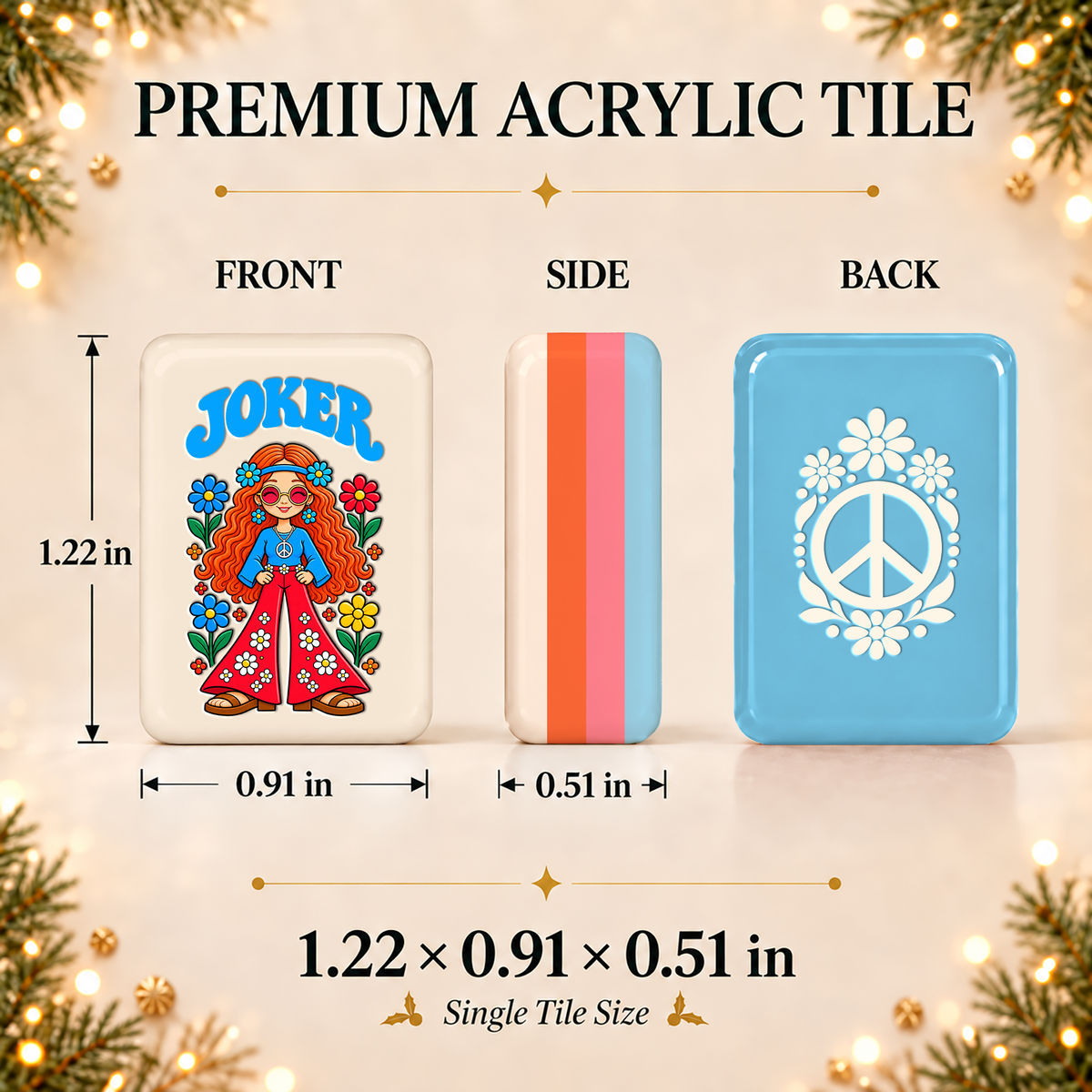
Tile size and clarity: British competitive play often uses standard size (approximately 1⅛" × ⅞"). Verify your set's dimensions match your table and hand comfort.
Joker count: Confirm your set includes a sufficient number of jokers (British play frequently uses all jokers; some sets include spares to prevent shortages).
Suit and honor identification: Ensure your tiles' symbols are crisp and color-coded (Bams, Craks, Dots, winds in distinct shades). British players scan tiles quickly; unclear markings slow the game.
Wear resistance: If you'll play weekly, acrylic or resin tiles withstand shuffling and stacking far better than bamboo over time.
🎁 See our most-loved mahjong sets & accessories →
Common mistakes when learning British terminology
Confusing pungs with chows: A pung is three identical tiles (all 5 Dots); a chow is three consecutive tiles (3–4–5 Dots). Write both on your scorecard until muscle memory kicks in.
Forgetting to lay flowers aside immediately: New players sometimes keep drawn flowers in hand, disrupting tile count. Establish a rule: flower on the table, replacement from the wall, every time.
Misunderstanding joker limits: British rules don't cap jokers per meld (unlike some variants), but the live set contains only a fixed number total. If you've already used eight jokers, the ninth tile drawn must be a real tile.
Not tracking bonus points separately: Many British scoresheets bundle base, fan multipliers, and flowers into one number. Separating them (especially flowers) during scoring prevents arithmetic errors.
Assuming American hand patterns match British hands: A British hand can use sequences, which changes legal combinations entirely. Studying a British hand glossary (available from competition organizations) saves table confusion.
✨ Find your Mahstead set — free US shipping →
When you're ready to host British mahjong nights, invest in a mat designed for tile organization—it keeps melds visually distinct and speeds scoring rounds. Pair it with quality racks and pushers so each player can manage their 13 tiles cleanly without accidents. A durable travel bag protects your set during weekly club visits, and engraved sets make a memorable gift for friends joining your table.

FAQ
Is British mahjong played with the same 152 tiles as American mahjong?
Yes. British and American sets contain identical tile counts: 108 numbered tiles (Bams, Craks, Dots), 16 winds, 12 dragons, 8 flowers, and 8 jokers. The rule differences—not the tiles—define each variant.
Can I use an American mahjong set to play British rules?
Absolutely. An American 160-tile set works perfectly for British play because tiles are universal. The only adjustment is learning British hand patterns and scoring instead of following the American National Mah Jongg League card.
What's the biggest difference between British and American terminology?
British recognizes "chows" (sequences)—a core hand-building unit American rules forbid. This single rule change opens dozens of new hand patterns and alters strategy fundamentally.
How do I find a British mahjong club or group?
Search "British mahjong" or "Hong Kong mahjong" in your city; check community centers, libraries, and online platforms like Meetup. The National Mahjong Association (British Isles) website lists affiliated clubs and tournament calendars.
Do I need a special scorecard for British mahjong?
Not special—just one designed for British scoring. British scorecards show base points, fan multipliers, and flower bonuses in separate columns. American scorecards won't align with British calculations, so print or purchase a British template before your first game.
Are there regional differences within British mahjong rules?
Yes. British play has variations influenced by Hong Kong, Singapore, and international tournament bodies. Competition rules are standardized; casual clubs may house-rule elements like flower bonuses. Always confirm the version before joining a new table.


View More
View More
View More
