
Pie Mahjong Rule Explained: How to Play & Win
Last updated: Nov 23, 2026
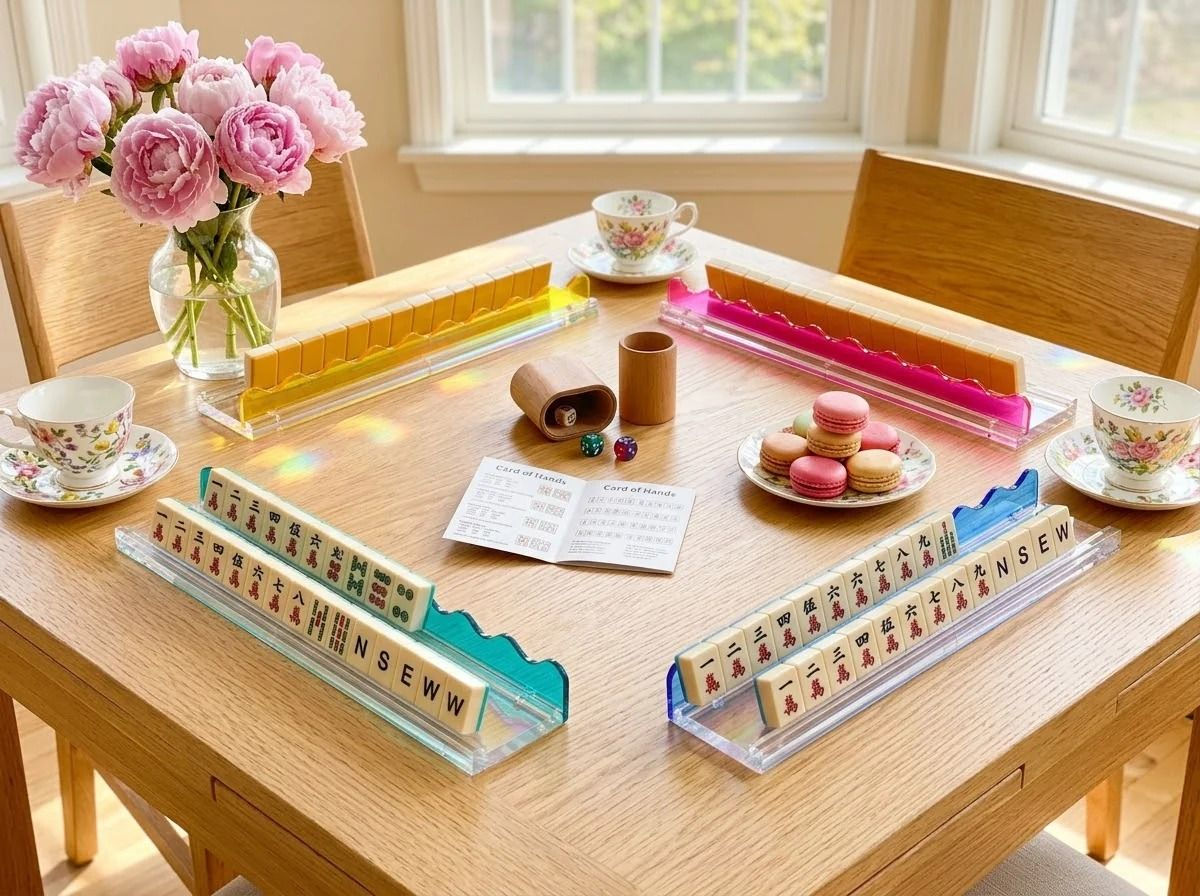
The pie rule is an optional third tile exchange that happens after the Charleston in American mahjong. During the pie, each player discards one tile face-down to their right neighbor, who picks it blind without seeing it first—you're literally "blind passing" a single tile. It takes about 30 seconds total and is called "pie" because you're dividing the tile pool one more way before the game truly starts. The pie is not mandatory; groups decide whether to use it before anyone sits down. Most casual groups skip it; competitive play often includes it. It doesn't cost anything—it's just part of the ritual. We use it when we notice uneven tile distribution after the Charleston leaves one player with a weak hand, though it's pure luck whether the pie fixes that problem. Check your group's house rules: some players pass one tile, others pass two, and some don't pie at all.
🀄 Shop best-selling mahjong sets →
How does the pie fit into the Charleston?
The Charleston is the three-phase tile-passing ritual that every American mahjong game begins with. During the Charleston, each player passes 14 tiles in three separate exchanges: first pass, second pass, and return. The pie comes after the Charleston ends and every player has 14 tiles in hand. Once the Charleston is done and everyone has checked their hand, the pie happens as a single optional blind exchange—one tile, face-down, passed to the right. Then play begins immediately: the player who won the previous round (or the East player in game one) draws from the wall and discards to start tile flow.

Why do players use the pie instead of skip it?
The pie serves one purpose: balance. After the Charleston, sometimes one player has drawn unexpectedly strong tiles while another is stuck with harder combinations. The pie adds a final small element of chance and fairness—it's a "soft reset" that doesn't undo the whole exchange ritual but gives luck one more word. In our weekly games, we've found that groups who want a casual, social feel skip the pie entirely, while groups playing for a small stakes (bragging rights, snacks, or chips) tend to use it. The pie doesn't change hand odds dramatically—it's just one tile—but psychologically it feels fairer, especially to the player holding the weakest hand after the Charleston. Most American mahjong clubs don't mandate it; the decision is made house-by-house.
What's the step-by-step pie procedure?
Here's exactly how to execute the pie without confusion:
The Charleston ends. All four players have 14 tiles, the Charleston exchanges are complete, and tiles are settled in racks.
Announce the pie. The East player (or whoever managed the Charleston) says clearly, "Ready for pie?" If anyone says no or hesitates, skip it and draw the wall.
Prepare your pie tile. Each player picks one tile from their hand without showing it to anyone.
Pass together. All four players pass their tile face-down to the right simultaneously—one tile, one motion, no peeking.
Receive blind. Each player receives their neighbor's tile blind (they don't know what it is) and adds it to their hand. You now have 15 tiles.
Draw immediately. The East player (or the player designated earlier) now draws from the wall to start the game—they'll discard one tile after looking at what they drew, bringing their hand back to 14.
Don't overthink it; the whole thing takes under a minute. A common mistake: someone peeks at their pie tile before everyone has passed. That breaks the blind rule and usually voids the pie (though house rules vary). Another mistake: passing two tiles when the rule is one. Agree beforehand: one tile, blind, right only.
🎁 See our most-loved mahjong sets & accessories →
Does the pie change hand probability or scoring?
No and no. The pie is not a scoring event and doesn't affect hand value. You don't announce it, score it, or tally it—it's purely pre-game ritual. It changes which tile you're holding, but not your final hand's point value. If you win after a pie, you score your hand normally; the pie doesn't multiply points or trigger bonuses. The only edge the pie creates is psychological: you might swap a weak tile for a strong one (or vice versa), which shifts your odds of completing a hand. But mathematically, each player has an equal 25% chance of getting a "good" pie tile, so over many games the edge washes out. We think of the pie as the game's way of saying, "One last shuffle before the real deal starts." It's luck, not skill—unlike your reading the mahjong card to identify valid hands, which is pure strategy.

What are the common pie rule variations across groups?
House rules for the pie vary widely. Here's a comparison of what we've seen in different circles:
Variation | How it Works | Who Uses It | Why |
No pie | Skip the extra pass entirely; play after Charleston | Casual home games | Speeds up start; fewer rules to teach |
One tile, blind | Pass one tile face-down to the right (standard) | Competitive leagues, many clubs | Balanced fairness, keeps game flowing |
Two tiles, one blind | Pass two tiles; one blind, one seen | Some regional groups | Adds more control and strategy |
Pie both ways | Pass one tile right and one left simultaneously | Rare; seen in some tournament circuits | Maximum shuffling before play |
No pie, straight draw | After Charleston, East draws immediately, no pass | Fast casual games, online play | Shortest setup time |
The one tile, blind, right only version is most common in American mahjong clubs we've played with. If your group hasn't decided on a pie rule yet, start there—it's easy to explain, fair, and quick. Always confirm the rule before the Charleston starts, not after someone's already passed a tile the "wrong" way.
How do you teach the pie to a new player?
New players often get confused between the Charleston and the pie because both involve passing tiles. Here's the clearest way to explain it in your living room or at the table:
"The Charleston is the big shuffle—everyone passes 14, then 14 again, then 14 back. It's intentional; you're swapping the tiles you don't want. The pie is after that. It's a single blind pass: you pick one tile without looking, and so does everyone else. You pass it face-down to your right. You don't know what you're getting, and your neighbor doesn't know what you're sending. It's quick, it's fair, and it's optional—we decide before we start if we're doing pie."
Then walk through it in real-time: sit down, do a mini Charleston with them, then stop and say, "Now if we're doing pie, everyone picks one tile secretly and we pass it right, face-down. Go." Repeat it once. New players pick it up in about 90 seconds. The key is contrasting it with the Charleston—one is known and intentional, the other is blind and random.
✨ Find your Mahstead set — free US shipping →
What to check before you buy a set for pie-playing groups
If you're hosting games where the pie rule applies, your setup doesn't need to change—the pie works with any standard American mahjong set. But a few practical details matter:
Tile readability in hand. Acrylic tiles with clear engraving let players quickly identify the tile they're about to pie without hesitation. Bamboo or horn tiles with worn characters slow the moment down.
Rack capacity. Most American racks hold 14 tiles comfortably. During the pie, you're holding 15 for 10 seconds, then drawing to pull from the wall (still 15) before you discard. Make sure your racks don't feel cramped when you're managing an extra tile.
Mat size and wall layout. If you're playing on a dedicated mahjong mat, there's no change—the pie happens above the wall, in your hand. A mat just keeps play organized and makes the Charleston and pie easier to spot from any angle.
Non-slip racks or mat. When passing tiles blind, it helps if your racks or mat don't slide around. Accidental tile scatter mid-pie is awkward and slows the game.
We recommend starting with a best-selling set that includes a quality mat and racks with pushers—the combination makes the Charleston, pie, and entire game flow smoothly, especially when teaching new players.

FAQ
Is the pie rule mandatory in American mahjong?
No. The pie is optional and decided by the group before anyone sits down. Casual home games often skip it; competitive play frequently includes it. Always confirm your table's house rules upfront to avoid confusion mid-Charleston.
Can you look at your pie tile before passing it?
No. The pie rule specifically requires a blind pass—you don't see the tile, and your neighbor doesn't see yours. Peeking breaks the rule and typically voids the pie (though house rules vary). Pick without looking, pass face-down, stay honest.
What if someone doesn't like their pie tile—can they swap it back?
No. Once a pie tile is passed and received, it stays in your hand. The whole point is the element of luck. If someone tries to swap back, you've broken the pie ritual. Stick to the rule or skip the pie next hand.
Does the pie affect which player goes first?
No. The player order and the designated East player (who draws first) don't change. The pie happens after the order is set. East draws from the wall to start the game, regardless of what pie tile they received.
How is the pie different in Chinese or Hong Kong mahjong?
Chinese and Hong Kong variants don't use the pie as American mahjong does. They have different tile sets, hand structures, and no Charleston ritual. The "pie" concept is essentially unique to American mahjong's pre-game sequence and doesn't translate to other regional styles.
Can you pie more than once?
Rarely. Standard American play includes one pie per game, after the Charleston, before the first draw. Some experimental groups have tried multiple pies, but it's not standard and slows the game significantly. Stick to one pie if you use it at all.


View More
View More
View More
