
2 Dot Mahjong Tile Meaning & Role in American Play
Last updated: Nov 20, 2026
The 2 Dot tile is a number tile in the Dot suit (one of three suits alongside Bams and Craks). In an American mahjong set, you receive four copies of the 2 Dot. Dots represent coins or circles in traditional iconography; the 2 Dot shows two circular pips arranged vertically. It ranks between the 1 Dot and 3 Dot and has no special honor status like winds or dragons. You can use 2 Dots in any hand pattern listed on the current year's National Mah Jongg League card—most commonly in pungs (three identical 2 Dots), kongs (four 2 Dots), or as part of longer sequences when the card permits. Jokers can substitute for any 2 Dot when you're one tile short of completing a pattern. The 2 Dot carries equal weight in scoring across American mahjong; it has no bonus or penalty value. What's in an American mahjong set explains the full tile distribution and suit names in detail.
The 2 Dot is a basic number tile in the Dot suit (one of three suits alongside Bams and Craks). In an American mahjong set, you receive four copies of the 2 Dot. Dots represent coins or circles in traditional iconography; the 2 Dot shows two circular pips arranged vertically. It ranks between the 1 Dot and 3 Dot and has no special honor status like winds or dragons. You can use 2 Dots in any hand pattern listed on the current year's National Mah Jongg League card—most commonly in pungs (three identical 2 Dots), kongs (four 2 Dots), or as part of longer sequences when the card permits. Jokers can substitute for any 2 Dot when you're one tile short of completing a pattern. The 2 Dot carries equal weight in scoring across American mahjong; it has no bonus or penalty value.
🀄 Shop best-selling mahjong sets →
Why does the 2 Dot appear in so many hands?
The 2 Dot is statistically one of the most-called tiles because it sits in the middle-low range of the Dot suit. Most hands on the card use number combinations from 1–9 within each suit. The 2 Dot bridges early and mid-game draws. Because you hold four copies and need only three for a pung or four for a kong, the odds of collecting 2 Dots during tile draws favor quicker completion than rare honor tiles. Players often build hands around low number combinations—1–2–3, 2–3–4—early in a game. When you're hunting for a 2 Dot late in a hand, jokers usually fill the gap.
How do you read a 2 Dot tile on your rack?
A standard 2 Dot tile displays two circular pips (dots) arranged vertically or in a clear pair formation on the face. The pips are evenly spaced and uniform in size, distinguishing the 2 Dot from the 1 Dot (one pip) or the 3 Dot (three pips). On engraved or custom sets, the design may include a bold numeral "2" alongside the pips for faster visual recognition during rapid play. Color remains consistent across all four copies—typically white, cream, or the base acrylic color of your set. Acrylic sets from our best-selling collection use sharp, consistent engravings so tiles read clearly under table lighting. Always check tile legibility before your first game; worn or poorly printed tiles slow play and cause disputes.
Can a joker replace a 2 Dot in any pattern?
Jokers can substitute for a 2 Dot in any exposed group—a pung, kong, quint, or sextet—where a 2 Dot would normally complete the set. However, jokers cannot be used in a single tile or a pair position per American mahjong rules. If a hand calls for a pair of 2 Dots, you must use actual 2 Dot tiles; a joker cannot fill either position. This distinction matters most in the final stages of a hand when you're one tile short of mah jongg. Jokers also cannot replace tiles in concealed melds before exposure. How jokers work covers substitution rules and scoring implications in full detail.
What's the difference between a 2 Dot and other low number tiles?
Tile | Suit | Pips | Common uses | Scoring value |
1 Dot | Dot | One (bird) | Opening hand, low sequences | None |
2 Dot | Dot | Two | Pungs, kongs, mid-rank hands | None |
3 Dot | Dot | Three | Bridges 1–3 sequences | None |
1 Bam | Bam | One (bird) | Opening, low sequences | None |
1 Crak | Crak | One (character) | Opening, low sequences | None |
All number tiles—regardless of suit or rank—score equally in American mahjong. The value of your complete hand depends on the pattern you form (listed on the current year's card), not the individual tile. A hand containing 2 Dots, 3 Dots, and 4 Dots scores the same as a hand with 7 Dots, 8 Dots, and 9 Dots if both patterns are listed as equivalent on the card.
How do beginners mistake the 2 Dot?
New players often confuse the 2 Dot with the 2 Bam or 2 Crak because all three show "2" pips but in different suits. The Dot suit displays circles; the Bam suit shows bamboo stalks or segments; the Crak suit shows character-like symbols. Under poor lighting or with worn tiles, these distinctions blur. The clearest way to avoid error: sort your hand by suit first, then by number within each suit. Look at the overall symbol shape—circles (Dots), bamboo lines (Bams), characters (Craks)—before reading the count. Mahjong for beginners walks through suit identification and tile recognition step-by-step. Some players also misread a 2 Dot as a 3 Dot if engravings are shallow or overlapping; high-quality acrylic sets with deep engraving prevent this mistake.
🎁 See our most-loved mahjong sets & accessories →
What to check before you buy a set with clear 2 Dot tiles
Engraving clarity: Hold each tile to light. The two pips should be distinct and evenly spaced, not blurred or faint.
Consistency across all four copies: Lay all four 2 Dots side by side. Engraving depth and pip size should match; variation signals poor quality control.
Contrast against the base color: If your set uses white or cream acrylic, the 2 Dot engraving should show dark, crisp lines. Glossy or translucent acrylic benefits from matte finishes to reduce glare.
Legibility at arm's length: Stand one meter away. You should read each tile without squinting or tilting the rack.
Durability in shuffling: Rub the 2 Dot face gently with a dry cloth ten times. Engravings should not fade, wear, or lift. This simple test reveals whether the engraving is surface-level or deeply cut.
Sets designed for weekly home games demand higher durability than novelty sets. If you host regular play, invest in engraved American mahjong sets built for thousands of shuffles.
✨ Find your Mahstead set — free US shipping →
FAQ
Is the 2 Dot tile the same in Chinese, Hong Kong, and riichi mahjong?
No. American mahjong uses only the 1–9 number tiles in each suit. Chinese and Hong Kong variants add 0 tiles (blank or "soap") and use different hand patterns. Riichi adds yakus (melds with scoring bonuses) unknown in American play. The 2 Dot symbol shape may also differ—Chinese sets often display more stylized or brush-stroke designs. American sets follow the National Mah Jongg League standard exclusively.
Can I use any old mahjong set to play American mahjong if it has a 2 Dot?
Only if it holds exactly 152 playing tiles plus 8 jokers and matches the National Mah Jongg League tile distribution. Many vintage or international sets have wrong tile counts, missing jokers, or extra blank tiles. These sets will not work for American play. Always verify your set contains all four copies of each 1–9 number tile in all three suits before starting a game.
What happens if I lose one 2 Dot tile mid-game?
Stop play immediately. American mahjong must be played with exactly 152 tiles and 8 jokers. A missing 2 Dot makes the game invalid. Keep spare tiles in your set storage. Sets sold as 160-tile collections include spares for this reason.
Does a 2 Dot ever count as a wild card like a joker?
No. Jokers are the only wild cards in American mahjong. A 2 Dot tile always represents itself—a 2 Dot, never a different rank or tile. You cannot use a 2 Dot in place of a 5 Crak or any other tile. Only actual jokers substitute.
How many 2 Dots should I see when I open my new set?
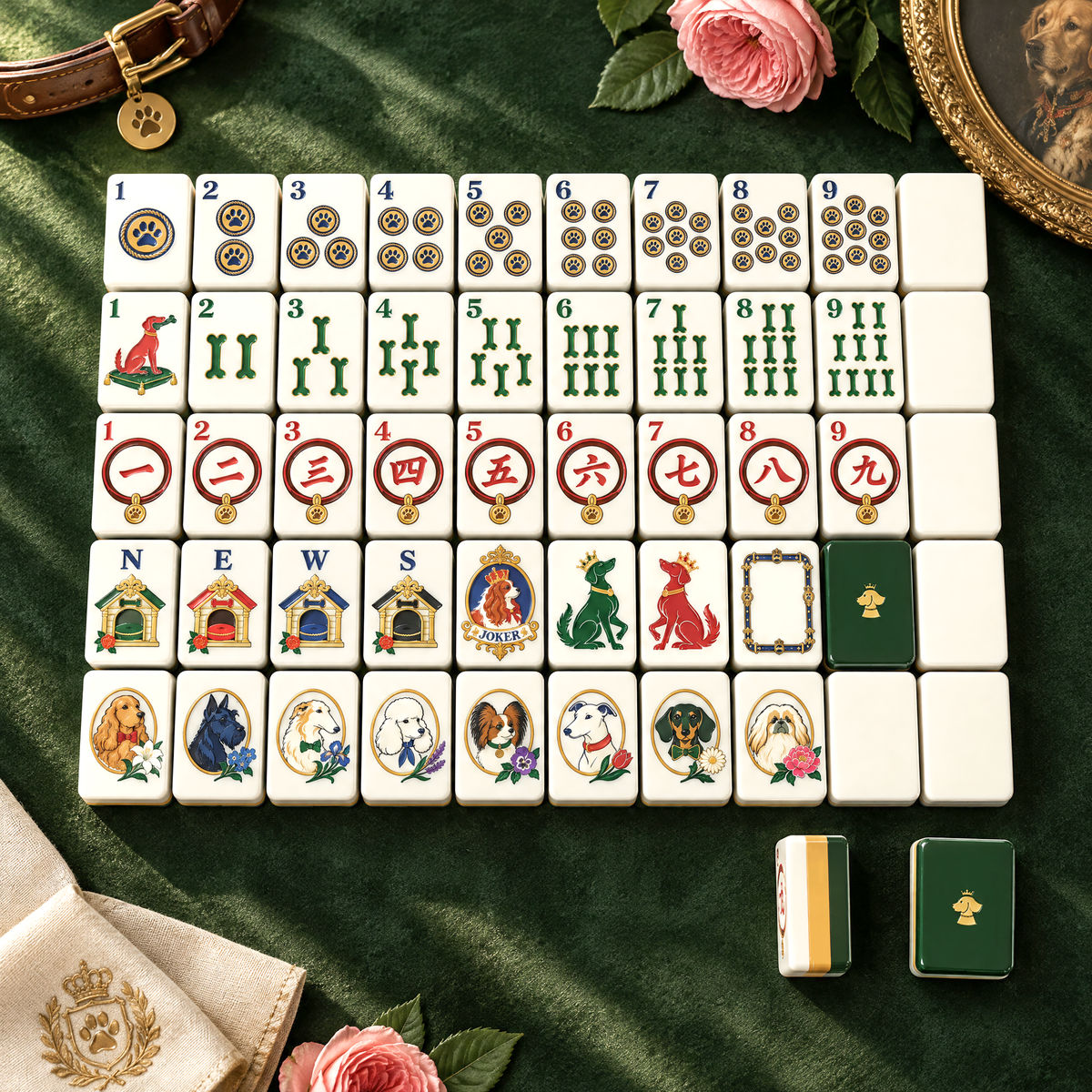
Exactly four. One set of four identical 2 Dot tiles represents the complete distribution for a full 152-tile American mahjong set. If you receive fewer or more, the set is incomplete or incorrect. Count all number tiles 1–9 in each suit (Dots, Bams, Craks) before first play.


View More
View More
View More
