
Two-Player Mahjong Cheat Sheet: Rules & Quick Setup
Last updated: Nov 23, 2026
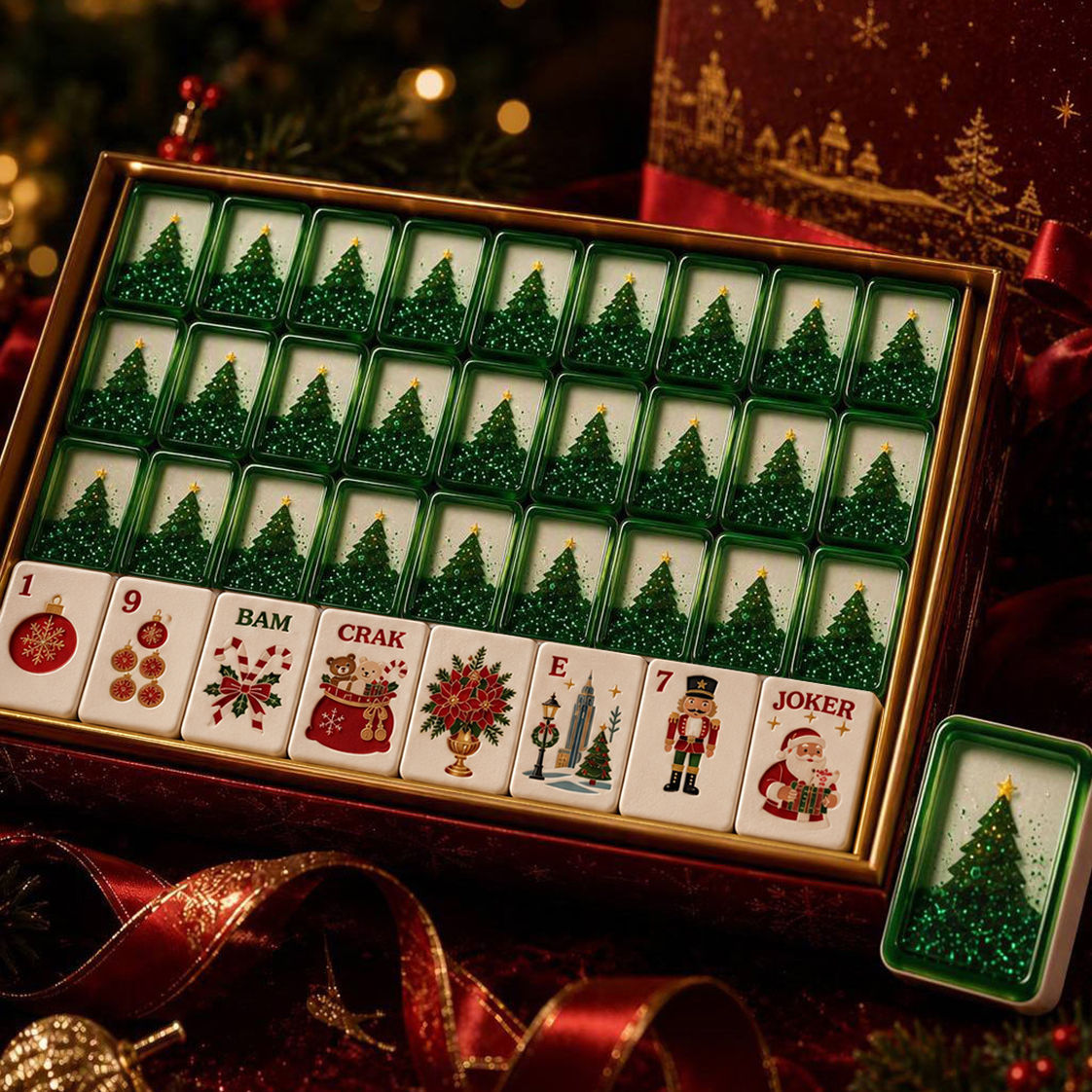
Two-player American mahjong uses the same 160-tile set (152 active tiles + 8 jokers) and current year's National Mah Jongg League card as four-player, but substitutes one player's winds for extra tiles from the spare jokers and blanks. Each player draws 13 tiles instead of 14 after the Charleston; the wall is shortened by removing two wind tiles (usually North and West). Legal hands remain identical: you still need 14 tiles, including exactly one pair, and at least one set (pung, kong, quint, or sextet). Jokers work the same way—never in pairs or singles, always as wildcards in sets. The game plays faster because fewer players mean fewer waiting turns and quicker draws. No chows exist in American mahjong regardless of player count, so focus only on pungs and kongs from the card. Most two-player games last 15–20 minutes per hand compared to 25–35 for four.
Two-player mahjong keeps the core rules intact—the National Mah Jongg League card, tile counts, and joker rules stay exactly the same—but the wall and player tile counts shrink to balance the game. We've hosted two-player games during holidays and lunch breaks for years, and the key is understanding where the adjustment happens and why, so you don't accidentally play with an illegal hand or run out of tiles mid-game.
How does the tile distribution change in two-player?
In standard four-player American mahjong, each player draws 13 tiles, then draws 1 more after the Charleston to hold 14. Two-player keeps that final hand size (14 tiles) but removes four wind tiles from active play entirely, leaving 148 tiles in the wall instead of 152. You draw only 13 tiles at the start (not 14 yet), then the dead wall shrinks to 16 tiles instead of 16—only the Charleston tile-pass phase changes: each player passes 3 tiles clockwise once, then 3 tiles counter-clockwise once, then 1 tile clockwise; no second counter-clockwise pass. After the Charleston, both players draw one more tile to reach 14. The wall sits between you two in a single line (not four sides), and the East player keeps the break in the same position but deals to herself and then to West alternately throughout the game.

What hands stay legal in two-player format?
Every hand on the current National Mah Jongg League card remains legal—nothing is removed. You still need exactly 14 tiles: one pair plus two sets of three, one pair plus one set of four, or other standard combinations. Pung (3 identical), kong (4 identical), quint (5 identical), and sextet (6 identical) all work the same. Jokers cannot substitute in a pair or as a single tile; they can only fill spots inside a set of three or more. No chows (1-2-3 sequences) exist in American mahjong, so ignore them entirely. The constraint is simply that fewer players mean fewer discard tiles flowing around the table—so hands that require specific Dots or Craks become slightly harder to complete, because each player discards fewer tiles before you need to draw or win. Study your year's card carefully and note which hands use wild tiles (jokers or blanks); those hands become your safety net when precise tile draws feel unlikely.
What's the fastest way to set up before the first hand?
Place the set on a padded mat and lay all 160 tiles face-down in front of you. First, remove two wind tiles—typically North and West—and set them aside; these do not rejoin play. This leaves 158 tiles. Remove the 8 jokers and all blank tiles (spares from the set) and set them face-up on the table; this confirms your joker count. Now build the wall: shuffle the remaining 152 tiles face-down into a line of 38 stacks (two tiles high, or laid flat in pairs if your mat has space). The East player (usually the first player dealing) draws the break position by rolling dice, then deals 13 tiles to West, then 13 to herself, alternating. Proceed with the Charleston. After the Charleston pass phase ends, each player draws 1 tile from the wall to reach 14. East discards first. Write down the starting East player on a notepad so you rotate correctly each hand (after hand completion, the loser becomes East next hand in American mahjong). Many two-player hosts use a compact mahjong mat designed for smaller groups to keep the wall organized and prevent tiles from sliding.
How do scoring and winning change?
Scoring is identical to four-player: you win only by matching one hand from the current year's card. Points do not increase or decrease based on player count in American mahjong—they remain fixed per hand as printed on the card. If you win on a discard, the discarding player pays you the full hand value. If you win on a draw (self-draw), both players pay you equally (split the total, so if a hand is worth 40 points, each player pays 20). Ties are not possible: the winner is whoever completes a legal 14-tile hand first. Play continues until neither player can draw a legal hand—if all tiles are drawn and no one has won, that hand is a dead wall, and play moves to the next hand with a new East player. In two-player, dead walls happen more often because fewer discards are available, so the game teaches patience and card-reading faster than four-player. Keep a running score sheet so you know who is ahead after each hand.

What are the most common two-player mistakes?
The biggest error is forgetting that you cannot use the second counter-clockwise Charleston pass in two-player—the pass sequence is clockwise, counter-clockwise, clockwise (three passes only), not the full four-pass cycle of four-player. Many new players also lose track of which tiles are removed from play (North and West winds in our standard setup) and accidentally try to use them mid-game; lay them face-up away from the wall before play starts so no one claims them. A second frequent slip is drawing from the wrong spot in the wall—establish which end is the "head" of the wall before the first discard, and always draw from the same end (not alternating). Do not expose tiles during the Charleston unless you are passing them; accidental early exposure ruins the pass phase. Finally, remember that jokers can never be used for the pair (the 2 non-identical tiles that complete every hand) and never stand alone as a single tile—they are wildcards only inside sets of 3 or more, so if a hand calls for 2 Red Dragons and 1 joker, the joker replaces the third Red, giving you a valid pung of three Reds. If a hand calls for "2 Red Dragons and joker for pair," that is illegal, and you cannot play that hand.
Common Mistake | Why It Breaks the Game | How to Fix It |
Using four Charleston passes instead of three | Unbalanced tile distribution; one player gets more fresh tiles than intended | After clockwise, counter-clockwise, and final clockwise, stop and draw |
Forgetting North and West winds are removed | Tiles go missing; wall count falls short; someone claims a removed tile illegally | Before the Charleston, set the two removed winds face-up outside the wall |
Drawing from alternating ends of the wall | Breaks the dealing order; players draw out of turn; wall collapses unevenly | Mark one end of the wall as the "head"; both players always draw from that end |
Using a joker or blank for the pair | Illegal hand; breaks the American mahjong ruleset | Pairs must be two identical natural tiles; jokers can only fill sets of 3+ |
Not tracking East player rotation | Scoring confusion; player advantage shifts unpredictably | After each hand, the loser becomes East next hand; write it down |
🀄 Shop best-selling mahjong sets →
What should you check before your first two-player game?
Verify the set contains exactly 160 tiles (152 playing tiles plus 8 jokers and spare blanks). Count the jokers—all 8 should be present and identical in design. Inspect the tiles for cracks, uneven borders, or printing fading; two-player means heavy handling of the same tiles over many hands, so quality matters. Confirm the mat or table surface is level and padded to prevent tiles from sliding or chipping. Read through the current year's National Mah Jongg League card once before the first game and identify one hand that uses mostly simple tiles (high number Dots, common Winds) as your practice target. If you're ordering a set online, choose one from our best-selling collection and include a padded mat to keep the two-player play smooth and protect your tiles during frequent draws. Allow 15 minutes for the first game just to practice the Charleston; the second game will run at normal speed. Have a pen and paper ready to track score and note which hands you both completed—this helps you learn the card faster.
Why does two-player mahjong teach the game better than four-player?
Fewer players mean you see the same tiles cycle through the discard pile more often, so pattern recognition accelerates. You draw every other turn instead of every fourth turn, so waiting time vanishes and focus stays sharp. Errors—like exposing a tile accidentally or misreading a hand—happen immediately, and you can correct them before the rest of the game wastes time. You also finish a hand faster, which means you can play 3–4 games in the time four-player completes one; more repetition builds muscle memory and card familiarity. Two-player is ideal for lunch breaks, rainy afternoons, or practicing the current season's card before hosting a full four-player night.
✨ Find your Mahstead set — free US shipping →
Are there other two-player variants worth trying?
American mahjong two-player is the ruleset we've covered here—it removes two winds and shortens the wall. If you're curious about other variants, Chinese mahjong and Hong Kong mahjong offer their own two-player adaptations, but they use different tile counts, hand-winning logic, and scoring (chows are legal, for example). Riichi and Taiwanese mahjong also have two-player modes. However, if you own an American mahjong set and follow the National Mah Jongg League card, stick to the American two-player rules above—mixing variants mid-game creates confusion and stalled hands. If you want to explore other variants later, you'll likely need a different tile set and rule card, so master one ruleset deeply before branching out.
🎁 See our most-loved mahjong sets & accessories →

FAQ
Can I play two-player American mahjong without removing any tiles?
No. Standard American mahjong uses exactly 152 active tiles; two-player requires removing two wind tiles (usually North and West) to shorten the wall and balance hand frequency. Without this adjustment, the game stalls because the wall empties too slowly and few legal hands appear.
Do I use a different card for two-player, or the same National Mah Jongg League card?
Same card—every hand printed on the current year's National Mah Jongg League card is legal in two-player. The card does not change; only the wall setup and Charleston sequence change.
How much faster is a two-player hand compared to four-player?
Typically 15–20 minutes per hand in two-player versus 25–35 minutes in four-player, because fewer discards mean the game cycles faster and dead walls occur sooner. Your actual speed depends on how quickly both players read the card and decide on their strategy.
If I win on a self-draw in two-player, who pays me?
Both players pay you equally. If the hand is worth 40 points and you draw it yourself, each opponent pays 20 points (split payment). This keeps two-player scoring fair and encourages strategic play over aggressive discarding.
Can I use three-player American mahjong rules instead of two-player if a fourth person cancels?
You can, but three-player and two-player have different tile removals and wall setups. Two-player removes two winds; three-player removes one wind and one dragon (usually North and White Dragon). If you're unsure, stick to two-player rules—they are simpler and the hand balance is tested. See our guide on 2 and 3 player mahjong rules for details on three-player if you need it later.
What tiles do I remove if I don't want to use North and West?
You can remove any two wind tiles—North and West, North and East, or South and West—as long as you remove exactly two before the game starts. The standard choice is North and West, but consistency matters more than which pair you choose; pick one and stick with it across all your two-player games so the tile count feels familiar.


View More
View More
View More
