
Mahjong vs Gin Rummy: Which Game Fits Your Table?
Last updated: Nov 23, 2026
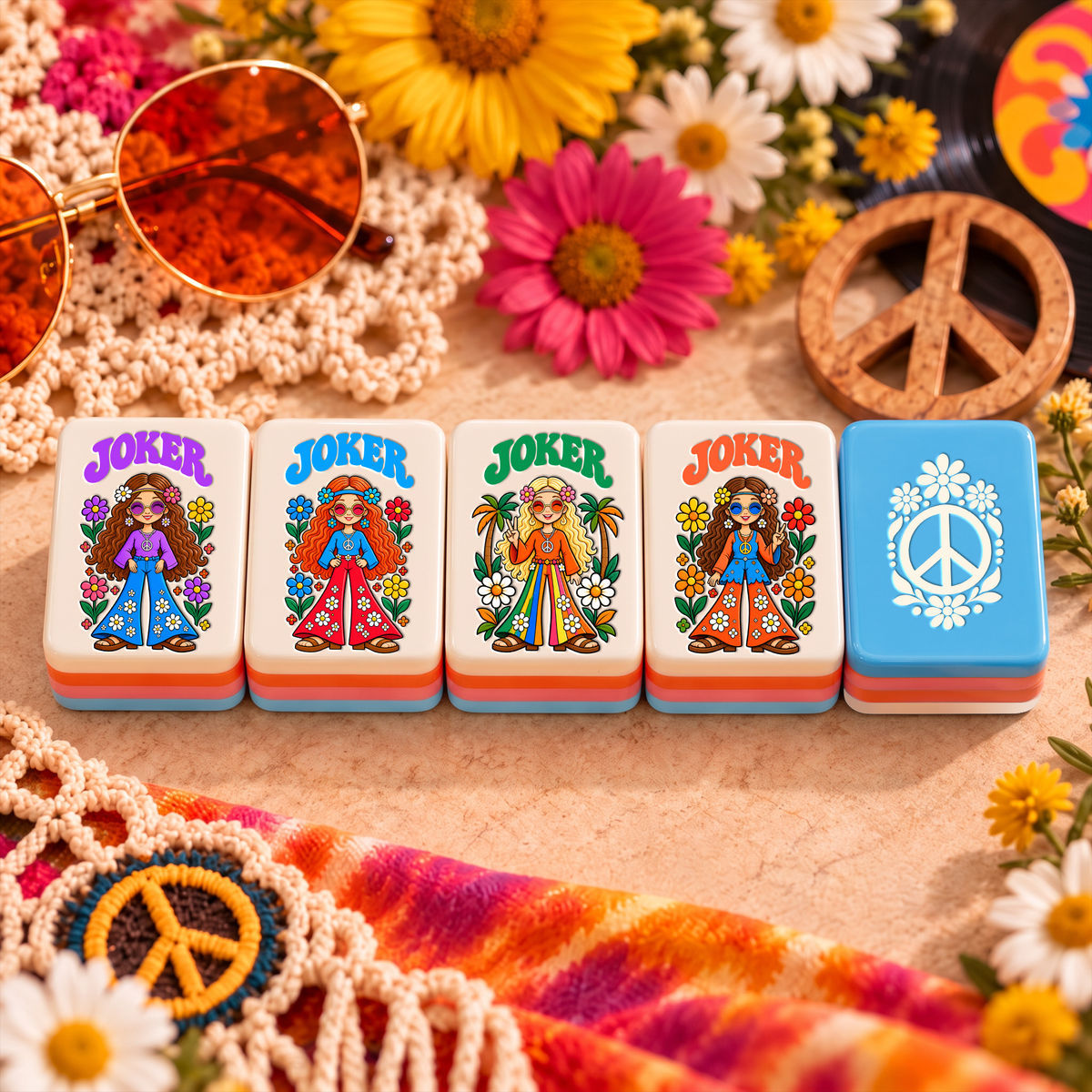
Mahjong and gin rummy are trick-free, hand-building card and tile games, but they diverge sharply in almost everything else. Gin rummy uses a standard 52-card deck, plays two players only, and ends in 15–30 minutes per hand; you score by melding sets (three or four identical ranks) or runs (three+ consecutive cards of the same suit), and your opponent can "knock" to end play early. American mahjong uses 152 specific tiles across three suited symbols (Bams, Craks, Dots), winds, dragons, and flowers; requires exactly four players; runs 45–90 minutes; and hands are scored by exact pattern match to that year's National Mah Jongg League card. Mahjong demands a ritual tile pass (the Charleston), tile racks, a mat, and jokers as wild tiles. Gin rummy needs only a deck and pen. If you're hosting a weekly four-player group and want a slower, pattern-driven social game, mahjong fits; if two of you want fast competitive rounds, gin rummy wins. We'll walk you through both so you pick the right fit.
Mahjong and gin rummy look similar on the surface—both are melds-based, no-luck-free games where players build matching sets and avoid giving opponents easy wins. But once you sit down, the differences become impossible to ignore. The setup, player count, tile or card complexity, hand length, and scoring systems diverge so completely that choosing between them means knowing what your group actually wants: speed and intimacy, or ritual and pattern mastery.
How many players does each game need?
Gin rummy is strictly a two-player game. One standard 52-card deck, one opponent, one scorepad. If a third person arrives, one sits out. Mahjong is built for exactly four players—North, East, South, West—and the deal rotates. Two- or three-player variants exist, but they're formal exceptions, not the default. If your group has three friends who want to play together, gin rummy folds; mahjong requires you to add a fourth or adapt rules.

What's the real difference in hand length and pace?
Gin rummy hands last 15–30 minutes on average. You pick and discard one card per turn; once someone knocks, the hand ends in seconds. A full game (first to 100 points) might take two hours. Mahjong hands typically run 45–90 minutes because turns involve more decision-making: you draw, evaluate your hand against the season's National Mah Jongg League card, consider which tiles to discard, and remember the Charleston wind passes before play even starts. There's no "knock"—the hand ends only when someone completes a valid pattern or the wall runs out. If your table prefers short, snappy rounds, gin rummy suits you. If you want a slower evening where conversation and reading your opponents matter more than speed, mahjong is the answer.
Which game is easier to learn: tile patterns or card melding?
Gin rummy rules fit on one page: make sets (three or four cards of the same rank), make runs (three+ consecutive cards, same suit), knock when you have ten points or fewer unmatched cards, score by deadwood and bonuses. You can teach it in ten minutes; a new player can play competently in one hand. American mahjong has more moving parts. You must learn the 152-tile composition, understand how to read the mahjong card for the current year, master how jokers work, and execute the Charleston tile-passing ritual. First-time players often misread the card or miscalculate a pung vs. a kong. Learning curve: gin rummy is two hours; mahjong is two to four weeks of weekly games. If you want a game your nephew can join after five minutes, gin rummy wins. If you're committing to a skill-building social practice, mahjong deepens over a season.
How do you keep score and what counts as a win?
Gin rummy scoring is mathematical and rigid. You score based on unmatched cards (deadwood) in your opponent's hand when they knock or go "gin" (zero deadwood). Games end at a predetermined point total, usually 100 or 150. Your scorepad tracks cumulative totals across multiple hands. One clear winner emerges each evening. Mahjong scoring is pattern-specific and tied to the League card. Each valid hand pattern has a set point value (often 30–60 points), adjusted for bonuses (doubles, special conditions, pay-by-limit). A game is one round of four hands (East, South, West, North); players settle chips or points after each hand based on who won and paid. A typical session involves three or four rounds. The winner depends on cumulative payouts, not a race to a magic number. If you want a single, definitive winner per evening, gin rummy feels cleaner. If you like the idea of wins and losses balancing across a longer session, mahjong's per-hand payoff model may suit you better.
Dimension | Mahjong | Gin Rummy |
Players required | 4 (exactly) | 2 (exactly) |
Hand length | 45–90 min | 15–30 min |
Tiles or cards | 152 tiles + 8 jokers + mat & racks | 52 cards + pen |
Learning curve | 2–4 weeks | 2 hours |
Setup ritual | Charleston (tile pass) | Deal 10 cards each |
Scoring basis | Pattern match to yearly card | Unmatched card totals |
Typical game | 3–4 rounds, per-hand payoff | First to 100–150 points |
Social feel | Ritual, slower, conversation | Fast, competitive, intense |
Best for | Weekly group, pattern lovers | Quick two-player sessions |
🀄 Shop best-selling mahjong sets →

What equipment do you actually need to start?
Gin rummy requires a deck of playing cards (any standard deck works; many players prefer plastic to avoid wear) and pencil and paper for scoring. Total outlay: under ten dollars. One player can bring both and you're ready. Mahjong requires far more. You need a 152-tile set with the correct composition (152 playing tiles plus spare jokers and blanks). From our best-selling mahjong sets, you'll also want a padded mat to protect the tiles and define the wall, four racks with pushers to hold and organize your hand (racks help prevent showing tiles to neighbors), a bag or case if you rotate hosting homes, a copy of the current year's National Mah Jongg League card (printed or digital), and ideally a score sheet or score app. New players often skip the mat or racks and regret it—tiles scatter, hands are visible, play slows down. If your group already owns one mahjong set and rotates hosting, one person's home set is enough. If you're starting fresh and all four of you will host, each pair should probably own a travel-friendly mahjong bag. For gin rummy, one deck lives in the drawer forever.
🎁 See our most-loved mahjong sets & accessories →
Which game fits a rotating weekly group?
Both work for a standing weekly game, but in different ways. A gin rummy group of two can meet every week for a decade with the same deck and pad. Mahjong groups thrive on ritual and consistency: same four players, same night, same set if possible (though sets rotate). Mahjong players often travel with their set, so owning one personal set reduces friction. If your four players are stable and you like building toward mastery of the year's card patterns, mahjong rewards commitment. If you have a core pair who meets every week but others drop in and out, gin rummy adapts easily—add a third? One sits out, or play cutthroat (three-player variant). Mahjong with three is possible but not the intended game. Long-term, mahjong groups stabilize around regular faces because the learning curve and card-pattern study create a real community. Gin rummy is more pickup-friendly.
✨ Find your Mahstead set — free US shipping →
What to check before you buy
If you're leaning mahjong:
Confirm your group will commit to four players and weekly or near-weekly play for at least a season.
Download or purchase the current year's National Mah Jongg League card—mahjong without the card is just tile shuffling.
Verify your set has exactly 152 playing tiles plus spares; we ensure all Mahstead sets meet this standard.
Budget for a mat and racks if hosting; they're not optional for serious play.
If you're leaning gin rummy:
One deck is sufficient for a lifetime of play.
Confirm both players enjoy competitive scoring and fast rounds.
No additional tools needed.

FAQ
Can I play mahjong with three people?
Yes, but it's a formal variant with rule adjustments (dummy hand, modified dealing, changed scoring). American mahjong was designed for four; three-player versions are slower and less popular. See 2 and 3 player mahjong rules for details.
Is gin rummy harder than mahjong?
No. Gin rummy has a lower floor—rules are learned in minutes—but a high ceiling for strategy. Mahjong has a higher floor (you must memorize tile composition, card patterns, joker rules) but rewards pattern recognition and memory. Choose based on whether you prefer simplicity or ritual.
Do I need an expensive mahjong set to play well?
No. A standard 160-tile set from Mahstead's best-selling collection works just as well as a luxury set. What matters is tile readability and correct composition, not price. Engraved or personalized sets are gifts for players who already love the game.
How long does it take to get good at mahjong?
Most players feel competent after 4–8 weeks of weekly play. Pattern recognition becomes intuitive after a season. Gin rummy skill builds faster (within two to four games), but the ceiling is lower.
Can I play both games in one evening?
Yes. Many groups play one to two gin rummy hands (30–60 minutes) as a warmup, then mahjong for the main event. They work well together because gin rummy is fast and lets latecomers catch up before the serious game starts.


View More
View More
View More
