
Hong Kong vs. Vietnamese Mahjong: Key Rules & Tile Differences
Last updated: Nov 23, 2026
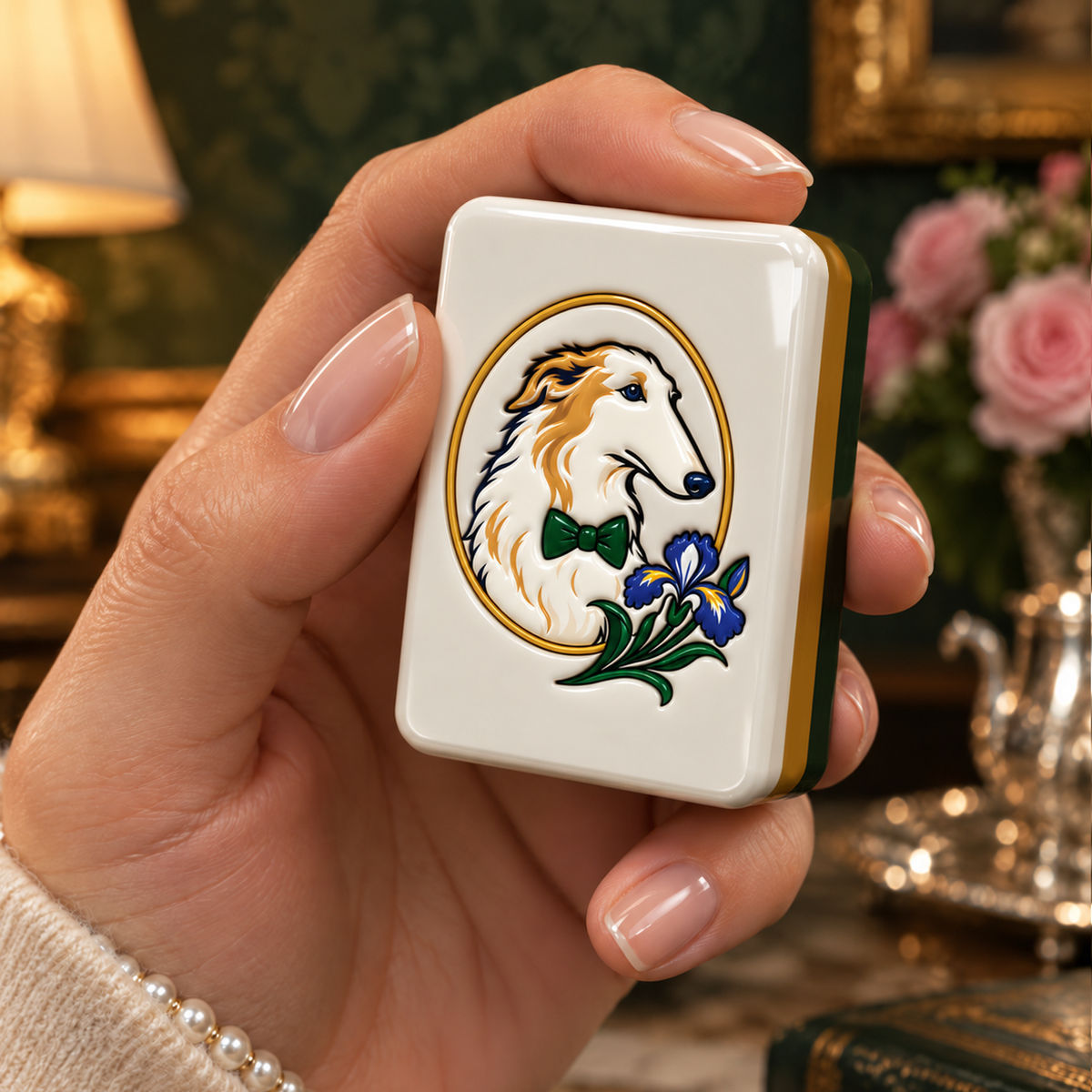
Hong Kong mahjong uses 144 tiles (108 in three number suits, 16 winds, 12 dragons, 8 flowers) and allows sequences (chows), pungs, and kongs as exposed melds, with a fixed hand format per round. Vietnamese mahjong, played with the same 144-tile structure, emphasizes quick play, often uses wild tiles more liberally, and relies on simpler scoring based on melds rather than complex point calculations. Hand-building in Hong Kong follows strict scoring rules tied to specific tile combinations and player position; Vietnamese play prioritizes speed and melding flexibility. Both variants differ fundamentally from American mahjong, which uses 152 tiles, forbids sequences entirely, and requires all hands to match a current-year card. If you host mixed-origin games, clarify which rule set applies before tiles are drawn—the tile composition and winning mechanics don't translate between them.
Hong Kong and Vietnamese mahjong are cousins that diverged centuries ago into distinct games played across Asia and diaspora communities worldwide. Both emerge from classical mahjong's foundation but enforce different tile counts, meld types, and winning conditions. Understanding these differences matters if you're learning a new variant, hosting players from different regions, or simply curious why your Vietnamese aunt plays by rules your Hong Kong neighbor doesn't recognize.
American mahjong players switching to either Asian variant encounter a shock: sequences (chows) are allowed and powerful, tile counts differ, and no card constrains the winning hands each round. This guide maps the core rules, shows where Hong Kong and Vietnamese play diverge, and helps you set up a game that works for your table.
What tile set does each variant use?
Hong Kong and Vietnamese mahjong both play with 144 tiles: 108 in the three number suits (Bam, Crak, Dot—numbered 1–9 with four copies each), 16 winds (four each of North, East, South, West), 12 dragons (four each of Red, Green, White), and 8 flowers (four each of two flowers, or one flower per player in some rule sets). Neither variant uses jokers as wild tiles; the 144-tile structure is fixed and complete. American mahjong, by contrast, plays with 152 tiles (the same 144 plus 8 jokers), removes all sequences from legal melds, and requires hands to match the National Mah Jongg League card printed each spring. If you own an American set with 160 tiles, those extra tiles are spares—not part of the 152 active tiles in play. A Hong Kong or Vietnamese game exhausts all 144 tiles by the end, whereas American play typically ends when one player wins or tiles run dry.

Can you make sequences (chows) in both variants?
Hong Kong mahjong allows and rewards sequences: three consecutive numbered tiles like 3-4-5 Bam form a chow, which can be called (taken from the discard) or melded from your hand. Sequences are core to hand-building strategy—many winning combinations rely on multiple chows plus a pung or two. Vietnamese mahjong also permits sequences, but often plays with faster, more flexible meld-calling rules and sometimes allows wild tiles or jokers (depending on house rules) to substitute for missing tiles, accelerating play. American mahjong forbids sequences entirely: every legal hand is built from pungs (three identical tiles), kongs (four identical), quints (five), sextets (six), and pairs—no sequences exist on the card. This single rule change reshapes the entire game, shifting strategy from sequence spotting to strict pattern matching. If you're hosting a night where rules vary by player origin, establish upfront whether sequences are in or out; confusion here derails the entire hand.
How does scoring differ?
Hong Kong mahjong scoring is granular and position-dependent: the hand's value depends on the specific tiles involved (dragons, terminals, honors), the number and type of melds, whether you went out on a draw or a discard, and your seat (dealer vs. non-dealer). A single winning hand might score 2 points or 32, depending on these factors. Scores are typically settled per hand in chips or counters. Vietnamese mahjong simplifies scoring by awarding fixed points for meld types—a chow might be worth 1 point, a pung 2, a kong 3—with bonuses for speed or special patterns. No position or dealer advantage inflates the calculation. American mahjong scoring is the most rigid: the hand on the card for that round has a fixed base value (typically 30 or 40 points for most hands), with doubles multiplying the payout; players cash out after four hands (one per seat). Hong Kong play rewards reading the table and spotting high-value patterns; Vietnamese play rewards tempo; American play rewards pattern matching against a published list. None of these systems transfers—you must relearn scoring for each variant.
What are the core strategic differences?
Aspect | Hong Kong | Vietnamese |
Meld speed | Deliberate—plan sequences, read tile flow | Fast—call early, build simple melds |
Tile tracking | Essential; sequences depend on predictable draws | Looser; wild tiles or flexible rules ease planning |
Winning hand format | Varies widely; many valid combinations | Often simpler patterns; speed valued |
Discard pressure | High—every discard risks a chow call | Medium—fewer meld combinations to fear |
Hand length | 13 tiles at win (14 on your draw) | 13 tiles at win; same structure as Hong Kong |
Joker use | None in classic play | Often allowed per house rules to speed play |
Hong Kong play demands sharp tile memory and forward planning: you must track which numbers are safe to discard, predict which sequences opponents need, and read table position to know when to hold back or push. Vietnamese play prioritizes action and flow—building melds quickly and calling liberally keeps hands moving. If you've grown up with American mahjong's rigid card-based rules, both Asian variants will feel anarchic at first; the freedom to call any sequence or pung from the discard on your turn (in Hong Kong) or with looser rules (in Vietnamese play) takes adjustment. Seasoned Hong Kong players often find Vietnamese play too lenient; Vietnamese players find Hong Kong's position-based scoring arcane. Neither judgment is wrong—they're simply different games with different rhythm and skill expression.
🀄 Shop best-selling mahjong sets →

Which variant is easier for beginners?
Vietnamese mahjong is generally gentler for newcomers because the rules often accommodate house variations: wild tiles, simplified scoring, and looser meld-calling conventions lower the penalty for missteps. Hong Kong mahjong demands stricter rule adherence and sharper tile tracking, making it less forgiving but ultimately rewarding for players who invest in learning. American mahjong sits between them: the card-based system feels rigid and prescriptive at first, but once you learn to read the card, hands resolve quickly and scoring is deterministic. If you're teaching a mixed group, start with a house-rules Vietnamese game (with wild tiles allowed) to build comfort, then migrate to classic Hong Kong if interest grows. American mahjong is best learned one variant at a time, usually via the National Mah Jongg League card and its conventions.
How do you know which rules your group should play?
Before tiles touch the table, agree explicitly on three things: (1) tile set (144 for Hong Kong/Vietnamese; 152 for American); (2) whether sequences are legal (yes for Hong Kong/Vietnamese; no for American); (3) scoring method and point structure. If your group is mixed by origin, propose a trial hand under one rule set, then ask: does this feel like home, or shall we try another? Most experienced players can code-switch between variants, though switching mid-session confuses everyone. Printed rule sheets or cheat cards help; some players bookmark online reference guides on their phones. The goal isn't to make everyone an expert in every variant, but to ensure everyone at the table plays the same game. Document house rules in writing (for example: "Wild tiles allowed only in Vietnamese rounds" or "Hong Kong play, classic scoring, no wild tiles") and refer to them when disputes arise.
🎁 See our most-loved mahjong sets & accessories →
What equipment do you actually need for each variant?
Both Hong Kong and Vietnamese mahjong require the same physical tools: a 144-tile set, a mat or table surface to organize tiles, individual tile racks or stands to hide your hand, and a scoresheet or counter chips to track points. American mahjong players add the current-year card and often use jokers more visibly during play. If you host games in both variants, a durable mat with clear sections for discard piles and hand zones keeps both flows smooth. Racks with pushers help players organize exposed melds and draw new tiles without fumbling. A travel bag or case becomes essential if you rotate between venues—tiles and mats are fragile, and organized transport saves setup time and wear. For Hong Kong or Vietnamese play, acrylic tiles with clear faces are superior to bone or bamboo because fast games demand instant tile identification; our best-selling sets are designed precisely for that clarity and durability.
What to check before you buy equipment for a new variant:
Tile legibility: Does each tile face read instantly? Fast games punish slow sorting.
Rack stability: Will your racks stay upright during quick melding calls? Unstable racks slow play.
Mat durability: Does the mat flex without cracking? Frequent travel and shuffling wear vinyl fast.
Case fit: If traveling, do your tiles, mat, and racks fit in one bag? Fragmented equipment gets left behind.
Rule clarity: Before buying, confirm your group's exact variant—American sets won't work for Hong Kong without modification, and vice versa.
✨ Find your Mahstead set — free US shipping →
Comparison: Which variant should your group play?
Choose Hong Kong mahjong if your group values strategic depth, enjoys tile-reading and prediction, or has players with prior Hong Kong experience. Plan for longer games (2–4 hours) and regular rule clarification. Choose Vietnamese mahjong if your group prioritizes social play, speed, and looser rules that welcome newcomers. Plan for shorter, fluidly-paced sessions. Choose American mahjong if you want a published, standardized rule set that doesn't require house negotiation, or if your players are already familiar with the card-based system. The three variants appeal to different temperaments—none is objectively "best," but each suits a specific table culture.

FAQ
Can I use an American mahjong set (152 tiles) to play Hong Kong or Vietnamese?
No. American sets include 8 jokers, which are never used in classic Hong Kong or Vietnamese play; you'd have extra tiles and no native rule for them. You need a 144-tile set (no jokers). Some house-rule variants permit one or two jokers as wild tiles, but standard Hong Kong forbids them entirely.
Is winning in Hong Kong or Vietnamese mahjong faster than American?
Potentially yes. Hong Kong and Vietnamese play allow more liberal calling of discards (any chow, pung, or kong can be claimed), which speeds meld formation. American play requires exact card-match, slowing hand completion. However, scoring calculation in Hong Kong is more complex, offsetting some time gain.
Do Hong Kong and Vietnamese players often play together?
Sometimes, but rarely without a pre-agreed ruleset. Most experienced players can switch, but mixing rules mid-game creates chaos. If both groups gather, play separate tables by variant or vote on one rule set for the night.
What's the biggest rule-learning mistake for American players switching to Hong Kong?
Expecting all hands to be predetermined. American mahjong binds you to that year's card; Hong Kong mahjong offers unlimited hand patterns. Many newcomers spend minutes reading a phantom card before realizing it doesn't exist—a humbling moment, but a quick recalibration.
How long does a typical Hong Kong game take vs. Vietnamese vs. American?
Hong Kong: 2–4 hours for four rounds. Vietnamese (house-ruled, fast play): 1–2 hours. American: 1.5–2.5 hours for four hands. Speed varies with group experience and rule complexity—newcomers add 30+ minutes per game.
If I buy tiles, can I write rules on the mat or box for quick reference?
Acrylic tile sets and mats resist marker ink permanently if you use a dry-erase pen; avoid permanent markers. Printing a laminated cheat sheet and storing it in your mahjong bag is more durable and portable than writing on equipment.
Are jokers ever used in classic Hong Kong or Vietnamese play?
Never in traditional Hong Kong. Some Vietnamese house rules include one or two jokers as wild tiles to speed play, but this is a local variant, not the standard game. Always clarify before assuming.
Which variant has the steepest learning curve?
Hong Kong, because position-based scoring and tile-reading strategy require both memorization and pattern recognition. Vietnamese is most forgiving. American sits between—rigid card rules but mechanical, once learned.


View More
View More
View More
