
How to Use the White Dragon Tile in American Mahjong
Last updated: Nov 23, 2026
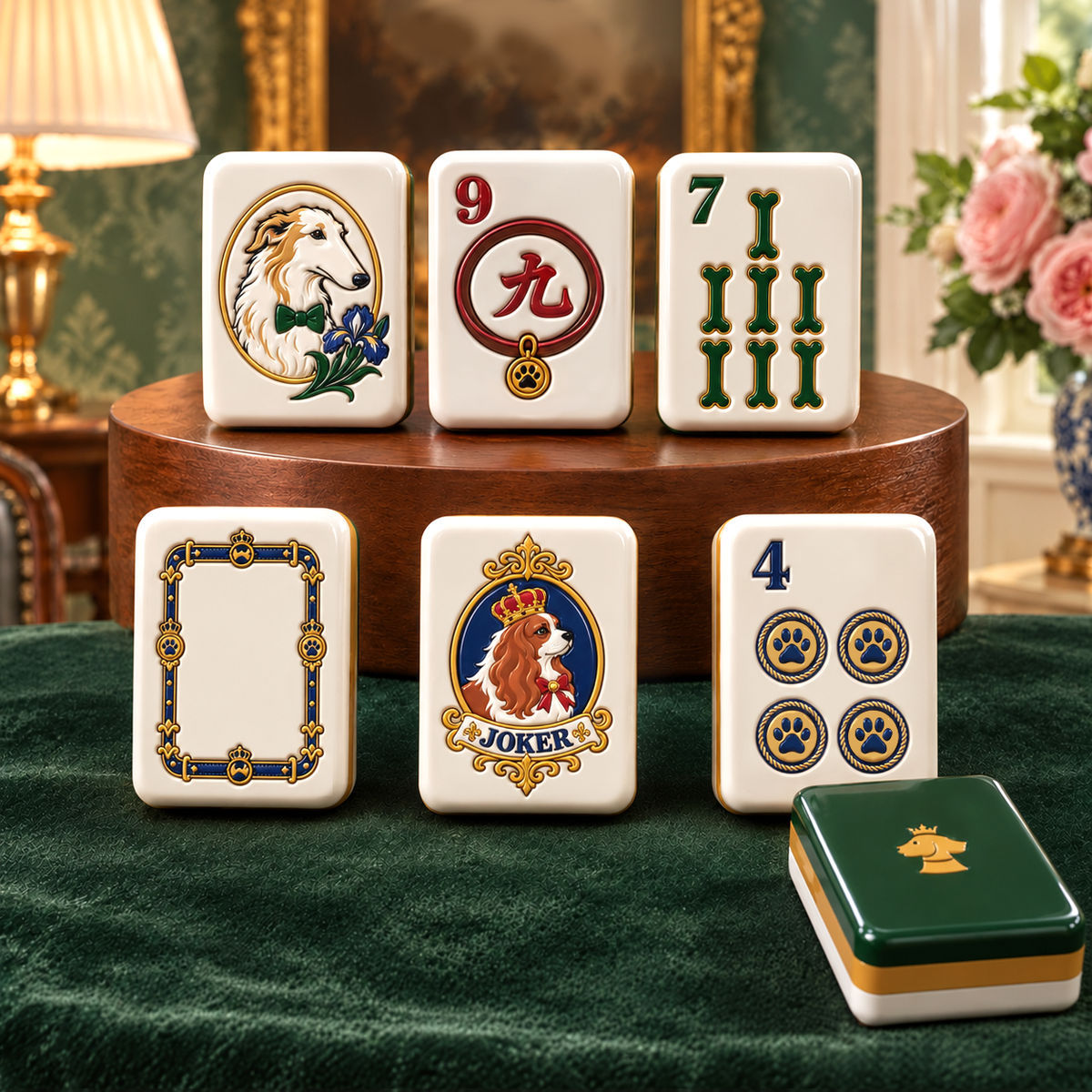
The White Dragon (also called Soap) is one of 12 dragons in an American mahjong set, with four copies in play. Unlike the Red Dragon (paired with Craks) and Green Dragon (paired with Bams), the White Dragon pairs with Dots and serves a second function: it represents zero, acting as a blank or wildcard in certain hand patterns. On the tile rack or table, you'll recognize it as plain white or ivory, with no symbol or border—it looks intentionally empty. You use it exactly like any other dragon when matching three or four identical Whites together, but you may also substitute it for missing numbered tiles in specific patterns shown on that year's National Mah Jongg League card. The key rule: jokers can never fill a single tile or a pair, but the White Dragon's "zero" function lets it complete exposed pungs (3), kongs (4), quints (5), and sextets (6) in hand patterns on the card. Mistake to avoid: treating it as a joker—it is not. When you call a hand that includes a White Dragon in a pung, you must have at least one actual White Dragon tile in your exposed group; jokers fill the rest. Read our guide to what's in an American mahjong set for the full tile breakdown. 🀄 Shop best-selling mahjong sets →
Why is the White Dragon called "Soap"?
The nickname "Soap" has no universal origin story we've pinned down—it's one of those player traditions passed down through decades of Thursday night games and tournament circuits. Some say it came from the tile's blank, unmarked look (clean like soap), others trace it to regional variants. What matters: when someone says "Soap," every player at your table knows you mean the White Dragon. Use both names interchangeably; either is correct in American mahjong.

What's the difference between the White Dragon and a joker?
Jokers are wild tiles that can substitute for any tile in an exposed pung, kong, quint, or sextet—but never for a single tile or a pair. The White Dragon is a real, named tile that happens to also represent zero in certain hand patterns on the League card. You cannot use the White Dragon in place of a joker when you need a joker, and jokers cannot substitute for a White Dragon when you need an actual White Dragon. For example: if your hand calls for a pung of White Dragons but you've drawn only two actual Whites plus a joker, you cannot call it complete. You need at least one real White Dragon. If a pattern asks for "0 Dots" (zero Dots), the White Dragon fills that role, and jokers can fill the other two positions to complete the group.
How do you identify the White Dragon on your tiles?
Open your set. The White Dragon tile is blank—completely plain, typically white or cream-colored, with no number, symbol, or pattern printed on it. In a full American set of 152 tiles, there are exactly four White Dragons. Contrast this with the Red Dragon (marked with a red symbol or border, representing Craks) and Green Dragon (marked with green). Some engraved American mahjong sets include subtle designs—initials, names, or decorative borders—but the White Dragons remain blank across the face so players can see that "zero" function clearly. If your tiles are worn or aged, the White Dragon may look faded or slightly yellowed, but it will still be the only completely unmarked dragon tile in your rack.
When do you call a White Dragon versus discard it?
Consult that year's National Mah Jongg League card. Hands are published in sections—each shows specific tile combinations (called patterns) that win. The card will list patterns using numbers, suit symbols, and sometimes the notation "0" for zero. If you've drawn tiles that match a pattern including a zero position, the White Dragon becomes a legal play there. Before you call mahjong, verify: (1) you have at least one real White Dragon for that group, (2) the pattern on the card shows a zero Dot position, (3) all other groups on your hand also match the card exactly. If you discard the White Dragon early, you remove a versatile tile from your hand—a strategic loss, since it may have completed a zero-Dot pattern later. New players often discard it too early. Play conservatively: hold your White Dragon until you're sure it doesn't fit your developing hand.
Can a joker ever replace a White Dragon?
No. When a hand pattern on the League card shows "White Dragon," you must have a real White Dragon tile exposed in your pung, kong, quint, or sextet. Jokers cannot substitute for a named dragon tile. Jokers fill other tiles within an exposed group—not the named tile itself. For instance: a pattern calls for a pung of White Dragons and a quint of 5 Craks. You have two real White Dragons in hand, plus a joker. You cannot declare the White Dragon pung complete; you need three real Whites or two Whites plus one more real tile. The joker must go into the 5 Craks quint to help fill that group. This is a frequent beginner mistake: assuming jokers are universal wildcards. They are not.

What's the strategic difference between holding Whites early versus late?
Early game: You've just drawn tiles in the Charleston phase. Holding a White Dragon early signals flexibility—you keep options open for zero-Dot patterns. But it also telegraphs to other players that you might be working toward a pattern with Dots, which can change their discards. Late game: If you've narrowed your hand to one or two possible winning patterns and neither includes a zero-Dot group, the White Dragon becomes a dead tile. Discard it before the endgame. If one of your two possible patterns does include a zero position, keep the White. A useful rule: count how many hands on the current League card include zero-Dot patterns in your player position (East, South, West, North). If fewer than three hands fit, the White Dragon is riskier to hold. If many do, keep it longer.
Scenario | Hold White? | Why |
Early game, two possible patterns, both include zero Dots | Yes | Flexibility |
Early game, patterns don't include zero Dots | No | Reduces clutter, lowers exposure |
Late game, one pattern remaining, includes zero Dots | Yes | Necessary for win |
Late game, one pattern remaining, no zero Dots | No | Dead weight, discard safely |
Mid-game, uncertain of final pattern | Maybe | Hold until discards narrow options |
🎁 See our most-loved mahjong sets & accessories →
How does the White Dragon differ across mahjong variants?
American mahjong is unique: the White Dragon has a true dual function (named dragon and zero tile). In Chinese mahjong, the White Dragon exists but carries no zero-tile role; it's simply one of three dragons. Hong Kong and Taiwanese variants also treat dragons as fixed, not blank. Riichi (Japanese) mahjong doesn't use dragons the same way at all—sequences and melded runs dominate. If you've played other variants, unlearn the idea that the White Dragon is "just a dragon." In American play, context matters: check the card each time you consider whether it's a dragon or a zero. One more note: the acrylic tiles in our best-selling mahjong sets print the dragons consistently across all variants, so the White stays unmarked no matter who you're playing with.
What you'll need
Tile set: A full 152-tile American mahjong set with four real White Dragons. Our best-selling mahjong sets include cards, jokers, and a rack so you can practice identifying and using the White correctly.
Current League card: Download or print the 2026 National Mah Jongg League card. Free versions are available online; many players buy a laminated card from suppliers. Lamination prevents accidental water damage during weekly games.
Organized rack: A mahjong rack with pushers keeps your tiles upright and grouped by suit, making it faster to spot your White Dragons and count tile positions for patterns.
What to check before you buy a set
Tile clarity: Can you instantly spot the White Dragon? It should be completely blank—no logo, no symbol. If it has markings, it's a design choice, not standard American tile.
Full dragon count: Open the box. You should have exactly four White Dragons, four Red Dragons, and four Green Dragons.
Accompanying materials: Comes with a current League card? Instructions on dragon and joker use? Jokers clearly marked (usually bright or patterned)?
Joker count: An American set plays with exactly 8 jokers. Don't confuse extra spares (which come in 160-tile sets) with playable jokers.
✨ Find your Mahstead set — free US shipping →

FAQ
If I draw a White Dragon on my last turn before the discard, must I play it, or can I hold it?
You can choose to discard it or hold it based on your hand and winning pattern. There's no rule forcing you to play a White Dragon. However, if you're close to calling mahjong and need a zero-Dot group to complete your hand, keeping the White is strategic. If you don't need it, discard early to reduce clutter.
Can I use the White Dragon as a pair in a winning hand?
Yes, if the League card shows a pattern with a pair of White Dragons. Jokers cannot fill a pair position—you must have two real White Dragon tiles. Pairs are always matched, never mixed with jokers.
What if someone draws the White Dragon and doesn't know it's a zero tile—can they discard it early by mistake?
Yes, and it happens. New players often discard the White Dragon thinking it's just another dragon to get rid of. Once discarded, it's in the dead wall. Advise new players at your table to hold the White through at least mid-game until patterns narrow. Review the League card before play so everyone knows zero-tile positions exist.
Is the White Dragon more valuable than the Red or Green Dragon?
Yes, because it has two functions: named dragon and zero tile. The Red and Green Dragons serve only one function each. Hold the White longer in your hand and discard it later if your pattern doesn't need it. If you need a dragon pung (three of the same dragon), all three dragons are equal.
How do I know if a pattern on the League card uses a White Dragon as a zero or as an actual dragon?
Read the card notation carefully. If the pattern shows "Dragon" with a white symbol or outline, it's asking for an actual White Dragon tile. If the pattern shows "0" (zero) in a Dots position, you use the White Dragon's zero function. Most League cards use symbols; study a few hands before your first game so you can read fluently.
Can I substitute a joker for a White Dragon in an exposed pung if I've already called it?
No. Once you call a pung, kong, quint, or sextet, the tiles are locked in. You cannot change or add jokers after the call. Plan your exposed groups before you declare them.


View More
View More
View More
