
Mahjong Tournaments in Arizona: Where to Play & What to Know
Last updated: Nov 23, 2026
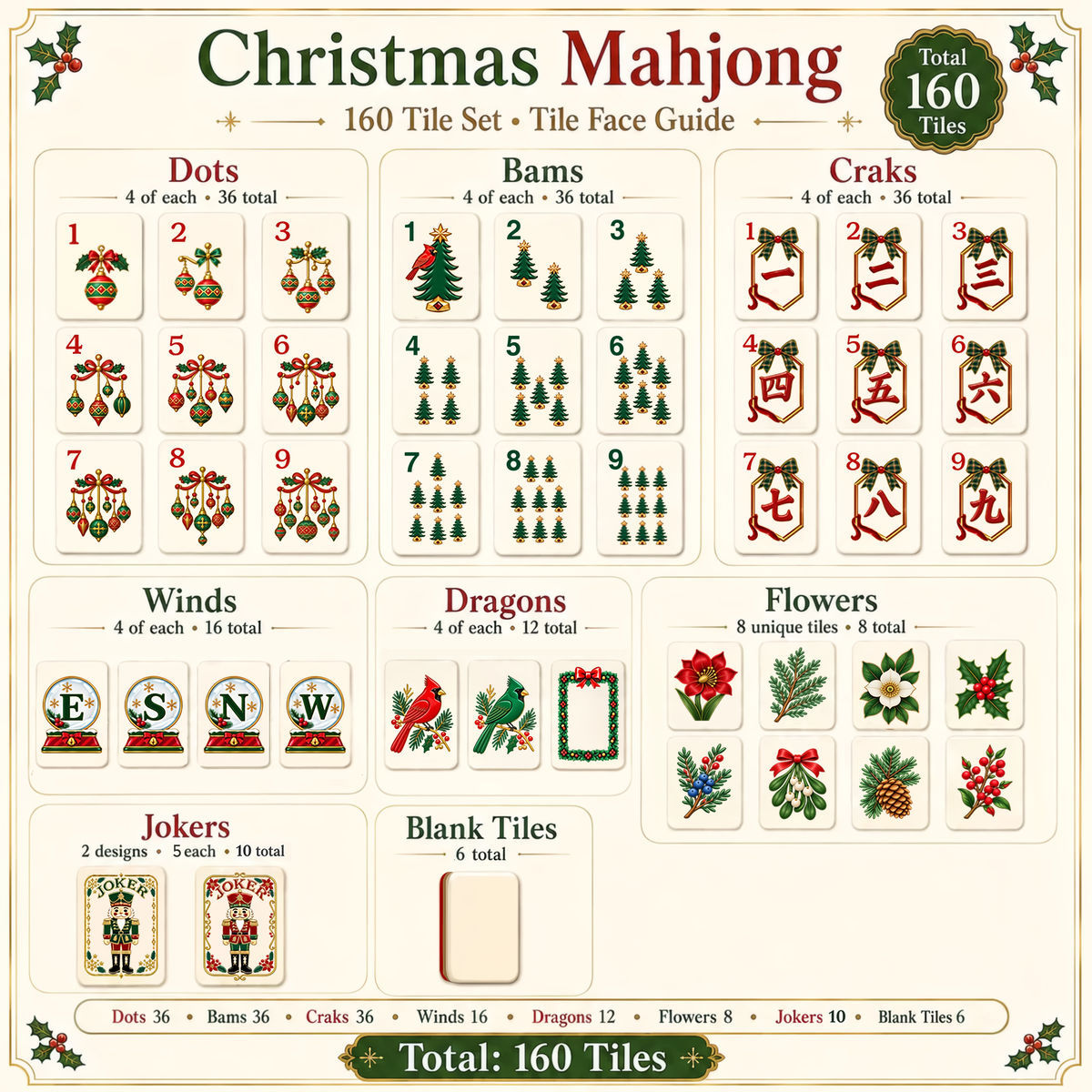
Arizona hosts American mahjong tournaments year-round through senior centers, community clubs, and the National Mah Jongg League sanctioned events. Most tournaments run weekend mornings or afternoons, last 3–5 hours, and charge a modest entry fee. To compete, you'll need a standard 160-tile American mahjong set with acrylic tiles and a current-year National Mah Jongg League card. Start by contacting your local senior center, library, or community center—they often host weekly games and can connect you to tournament organizers. Look for mahjong meetups on community boards or through Mahstead's best-selling mahjong sets guides, which reach players statewide. Most Arizona venues welcome beginners and intermediate players separately, and many loan sets if you're new to the game. 🀄 Shop best-selling mahjong sets →
How do Arizona tournaments differ from casual home games?
Tournament play follows strict National Mah Jongg League rules: you must call hands from the current year's official card only, the Charleston (tile-passing round) is standardized, and scoring is verified by a director. Home games vary widely—some use older cards, skip the Charleston, or allow house rules. Arizona tournaments enforce a 30–45-minute hand limit, ban cell phones at the table, and require proof of current League card membership to enter official events. Casual play is slower and more forgiving; tournament play demands precision and speed.

Where in Arizona can I find mahjong tournaments?
Phoenix area clubs host the most frequent tournaments, typically in upscale retirement communities, senior centers near downtown Ahwatukee or Arcadia, and country clubs in Scottsdale and Paradise Valley. Tucson has active groups meeting at senior centers and community libraries. Flagstaff and Yuma have smaller but steady groups. Your fastest path: call community centers directly—ask for the activities coordinator or senior program director. Many post schedules online or on bulletin boards. Meetup websites and Facebook groups tagged "Arizona mahjong" often list upcoming games. Check with regional libraries; some host tournaments quarterly or recommend local clubs.
What's the typical tournament schedule and entry format?
Most Arizona tournaments run Saturday or Sunday mornings, 9 a.m. to noon, or afternoons, 1 p.m. to 5 p.m., eight to sixteen players per session. Four players sit at each table; you rotate tables every 2–3 hands to play against different opponents (progressive format). Entry fees depend on the venue and prize structure—typically a small participation charge covers the director, prizes, and facility. Some tournaments offer split pots (prize money divided among top finishers); others award gift cards or trophies. Sign up 1–2 weeks in advance; many cap at 16–32 players. Beginners and advanced players often run in separate brackets on the same day, so skill level won't hold you back.
What equipment do you need to bring (and what's supplied)?
You must bring your own mahjong set and current-year National Mah Jongg League card—both are non-negotiable for League-sanctioned events. Most tournaments provide tables, racks, pushers, and scoring sheets. Some venues loan sets if you forget, but arriving prepared shows respect and speeds up play. Our best-selling mahjong sets ship free across the US and come tournament-ready with clear acrylic tiles. Bring a pen, notepad, and cash or card for entry and snacks. A padded mahjong bag keeps your set safe in your car during multiple rounds. If you're new to Arizona tournaments, arrive 15 minutes early to meet the director and verify house rules.
🎁 See our most-loved mahjong sets & accessories →

How do you prepare and train for Arizona tournaments?
Study the current-year National Mah Jongg League card weekly—know how hands are coded, which tiles go where, and how to spot quints and sextets quickly. Host or join a weekly home game at least once a month; speed and pattern recognition improve fastest with consistent play. Watch for common mistakes: calling "ready" (one tile away) too early, forgetting joker rules, or mixing up the Charleston positions. Practice dealing, shuffling, and stack-breaking smoothly. Read guides on how to read the mahjong card and how jokers work—these are the two areas where beginners lose the most points. Join a club 2–3 months before your first tournament; Arizona clubs are welcoming and often have mentors.
What to check before you buy tournament gear
Gear | Who it's for | Why it works |
Acrylic 160-tile set | Tournament players | Clear tiles, precise sizing, no cracking mid-play |
Engraved set | Regular players + gifts | Personalized, memorable, shows serious commitment |
Padded travel bag | Venue hoppers | Protects investment across multiple tournaments |
Bamboo mat | Serious players | Quiet, durable, improves tile control and speed |
Racks with pushers | Nervous hands | Organizes tiles, prevents spillage under pressure |
Before purchasing, verify the set is American (not Chinese or Hong Kong)—American uses no chows, only pungs and kongs. Check tile size: 1¼ inches square is standard for Arizona tables. Confirm the set includes jokers (8 minimum) and a current-year card. If you're gifting a set, engraved options add personal flair without altering play. Review best American mahjong sets to compare tile feel and durability.
✨ Find your Mahstead set — free US shipping →
Common tournament mistakes—and how Arizona players avoid them
Misreading the card. The League card is revised every spring. Many players cling to last year's version. Arizona tournaments require the current card; using an old one disqualifies your hand. Solution: buy a fresh card each March and practice one week before your first tournament.
Forgetting joker rules. Jokers can be used in exposures (pungs, kongs, quints, sextets) but never as a single tile or a pair. Many new players try to reserve a joker for a pair on their rack. Solution: read how jokers work and drill this rule weekly.
Slow hand decisions. Tournament directors enforce time limits—hesitating on every tile slows the table and frustrates players. Practice at home until tile-calling feels automatic. Arizona clubs often run casual speed rounds before tournaments to warm up players.
Tile mix-ups. Confusing Bams, Craks, and Dots under pressure costs points. Solution: study the tile icons on a what's in an American mahjong set guide and handle your set daily for a month.
Poor Charleston execution. Passing tiles incorrectly or in the wrong order violates League rules. Arizona directors can call a dead hand if the Charleston is botched. Solution: review the Charleston explained in detail and practice with your club before entering a tournament.
Finding Your Arizona Mahjong Community
Starting out? Check your local senior center or community library—most will recommend their mahjong leader by name. Ask specifically for American mahjong (not Chinese or Riichi). Many Arizona communities have Facebook groups or Meetup pages; search "mahjong Phoenix," "mahjong Tucson," or your town name. The Arizona Senior Games often feature mahjong competitions open to 55+; the deadline is usually in spring. Once you've played 3–5 home games and learned how to play American mahjong, sign up for a beginner tournament—you'll gain tournament experience risk-free.

FAQ
Do I have to own a mahjong set to play in Arizona tournaments?
No. Some Arizona venues loan sets to first-time players, but you still must bring your own National Mah Jongg League card. If you play regularly, owning a set—especially acrylic from Mahstead—improves your speed and familiarity with tile feel during critical rounds.
Are Arizona mahjong tournaments sanctioned by the National League?
Some are officially sanctioned; others are club-run and follow League rules but aren't registered. Sanctioned tournaments are stricter and count toward regional standings. Call the venue in advance to confirm.
What's the typical cost to enter an Arizona tournament?
Entry fees vary by venue and prize structure. Ask the organizer directly—most charge a modest participation fee covering the director and facility. Prize payouts, if offered, are disclosed upfront.
Can beginners compete, or do I need prior tournament experience?
Beginners can compete immediately. Most Arizona tournaments offer separate beginner and intermediate brackets, so skill level isn't a barrier. Join a club weekly for 4–8 weeks beforehand to build confidence and speed.
Which Arizona cities have the most active mahjong tournaments?
Phoenix hosts the most tournaments, especially in retirement-heavy areas like Ahwatukee and Arcadia. Scottsdale and Paradise Valley run frequent afternoon games. Tucson, Flagstaff, and Yuma have smaller but growing communities. Contact your local senior center for the nearest active group.


View More
View More
View More
