
Play Three Player Mahjong Online: Rules, Platforms & Setup Guide
Last updated: Nov 23, 2026
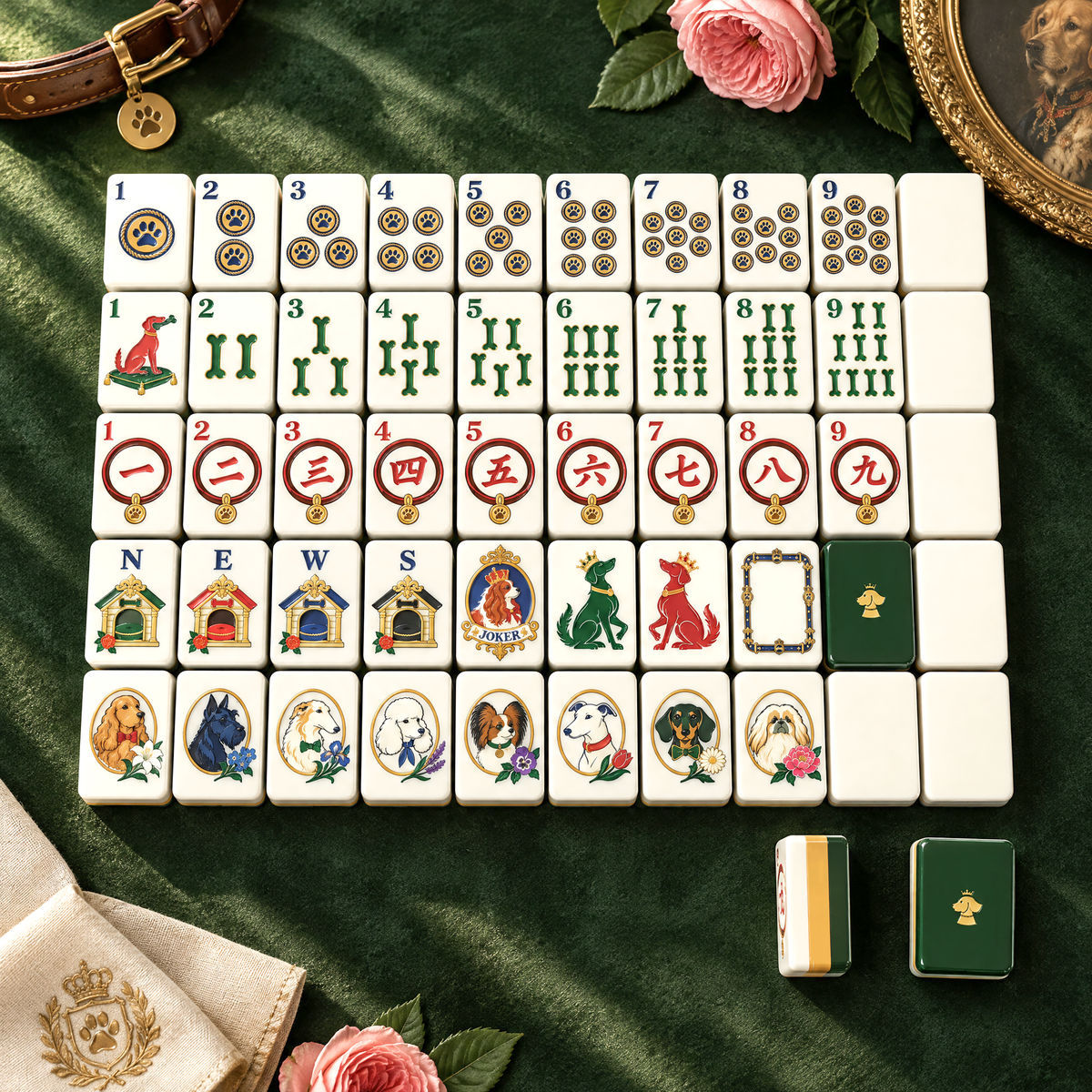
Three-player mahjong removes one player's seat and adjusts tile counts and winds to keep the game balanced. American three-player uses 108 tiles (removing the fourth wind), while Chinese variants drop one suit or use 120 tiles. Online platforms—Mahjong Soul, Pogo, and specialized three-player apps—host live or async games; many run on browser or mobile with no download needed. In-person three-player requires the same skill but faster hand-reading since fewer melds block your path. Rules differ by variant: American removes melding restrictions that don't exist in three-player anyway, while Chinese three-player speeds up draws. Physical sets work for three-player if you reset the fourth station; best-selling mahjong sets include all tiles you need, and a mahjong mat marked for three stations keeps play organized. 🀄 Shop best-selling mahjong sets →
Is three-player mahjong real mahjong, or a house rule?
Three-player mahjong is a legitimate, documented variant played across Asia and the West for decades. Chinese three-player (san ma) removes the South wind and reduces tile count to 108. American three-player adapts the standard 152-tile set by removing the fourth wind and resetting after each hand. Online platforms like Mahjong Soul offer full three-player rule sets with scoring balancing built in. The variant works because fewer players mean faster play, steeper tile pressure, and more aggressive early melding—skilled players often prefer it. Three-player is not a compromise; it's a complete game.

What are the core rule changes for three-player American mahjong?
In American three-player, you remove one complete wind (usually South), leaving East, West, and North. That cut removes four tiles. You then play with 148 tiles instead of 152; some rule sets discard one joker to keep the math clean. Winds rotate by player order, not compass direction—East still breaks the wall, but only three rotations occur per round instead of four. The National Mah Jongg League card is not designed for three-player, so most groups use a subset of standard hands (blocking sequences, triplets, and kongs only) or adopt a three-player-specific hand chart published by regional clubs. Pay careful attention: unlike four-player, discards travel faster and safer calls vanish within two turns. Draw pacing stays the same: dead wall, live wall, draw on your turn, discard one tile. A full hand takes 12–16 minutes instead of 18–22.
Which online platforms let you play three-player mahjong?
Mahjong Soul (mahjong.soul) offers Chinese and Japanese (Riichi) three-player modes with real-time and replay support; no payment required to start. Pogo (pogo.com) runs American and casual three-player games with a free trial; chat features let you find friends. Three Player Mahjong (dedicated apps on iOS and Android) focuses only on three-player Chinese and simplified rulesets; turn-based play means games can stretch across days. Mahjong Table (browser-based) hosts open lobbies for three, four, and five player games; games run live with 30-second timers. None require money to join a game, though most offer premium cosmetics or ad-free play. Log in with email or a social account, join a lobby filtered by rules (American, Chinese, Riichi), and wait for two other players. A single game takes 30–45 minutes live; turn-based can take hours or days. Most platforms show your hand, discard history, and winning melds on screen—no physical tiles needed.
🎁 See our most-loved mahjong sets & accessories →
How does three-player American mahjong scoring work?
Standard American scoring applies, with one critical shift: payouts are three-way instead of four-way. When you win, the other two players each pay you the full hand value (not split among four). If the hand is worth 30 points, you collect 30 from each opponent—90 total. If you hit a limit hand (e.g., 80 points), both opponents pay 80 each. This means winning hands are worth 50% more than in four-player, which rewards aggressive play and punishes hesitation. Losers never pay each other unless there's a penalty (e.g., dead hand, wrong claim). Scoring cards used for American mahjong still apply; only the payout count changes. Many clubs use a simplified three-player card that eliminates rare hands to speed play. American mahjong scoring deep-dives the full system; the three-player rule is: double the frequency of wins, triple the payout per opponent.
Variant | Tile Count | Wind Removal | Hand Pacing | Beginner-Friendly |
American 3-player | 148 (or reset to 152) | South or one wind | 12–16 min | Fair—needs combo chart |
Chinese 3-player | 108 | South | 10–14 min | Yes—fewer hands |
Online (Mahjong Soul) | Varies by rule | Platform sets | 30–45 min live | Yes—auto-scoring |
House rule (casual) | 152 (all tiles) | None—skip seat 4 | 18–22 min | Yes—play standard hands |

What equipment helps you host three-player games at home?
For in-person three-player, you need the same core gear as four-player: a full 160-tile set (152 tiles plus spares), a mat, and racks. The difference: only three stations are in use, so one side of a standard mat lies dormant. A mahjong mat printed for four players works fine; just leave the fourth station empty or covered. Position the three active seats 120 degrees apart if your table is round, or in a triangle if it's rectangular. Each player needs a personal rack with pushers to hold and read their tiles—this matters more in three-player because hand density is higher and errors happen faster. Set the dead wall at the East player's right, mark it clearly (some mats have printed zones; if yours doesn't, use a divider card or tape). A travel bag keeps your set organized between games and protects tiles during transport. Dice (included in most sets) determine the breaker and hand order—same ritual as four-player.
One angle many miss: three-player games on a four-player mat can feel cramped if all three players sit at adjacent stations. Spread out. Leave the unused station's space as a buffer zone for the discard pile. This prevents tiles rolling off and keeps turns clear. If you rotate hosts, a mat that folds small (mahjong mats in the Mahstead collection range from compact travel sizes to full 36-inch play surfaces) makes transport easier.
✨ Find your Mahstead set — free US shipping →
What common mistakes trip up new three-player players?
Forgetting wind rotation: In three-player, after each hand, the East seat shifts to the next player clockwise. If you miss this, the betting order breaks and scoring becomes ambiguous.
Using a four-player hand chart: The National Mah Jongg League card is built for four-player American mahjong. Three-player hands are shorter and favor simpler melds (pungs, kongs, quints). Using the full card leads to hands that are nearly impossible to complete—switch to a published three-player chart or an online platform that handles rule logic for you.
Drawing from the wrong wall section: The dead wall shrinks in some three-player rulesets (96 tiles instead of 14). Confirm your group's dead wall size before play begins.
Discarding too fast: With only three players, the next discard comes in seconds. Hold your hand face-down a moment longer; three-player is faster and mistakes compound.
Mixing American and Chinese rules: If your group pivots from four-player American to three-player, clarify: Are we using an American three-player chart, or switching to Chinese three-player rules entirely? Mixing creates chaos mid-game.
What to check before you buy or host your first three-player game
Platform or physical? Decide online (Mahjong Soul, Pogo) or in-person tiles before inviting players. Online is instant; physical requires a full set and a clear play surface.
Rule source: Find a published three-player chart (American, Chinese, or your club's house rules) and share it with all players before the first hand.
Player skill level: Three-player is faster and tighter than four-player; newer players may feel rushed. Host a practice round first.
Tile condition: If using a physical set, check that all 152 tiles are present and readable. Mahstead 160-tile sets include extra jokers and spares; ensure the base 152 are clean and matched.
Mat markings: If your mat is printed for four stations, confirm all three active stations are clearly marked so players don't sit in the dead zone.
Time commitment: Plan 45 minutes to 1.5 hours per session, including a practice hand if anyone is new to three-player.

FAQ
Can I play three-player American mahjong using the standard National Mah Jongg League card?
No. The League card is designed for four-player only. Use a published three-player chart or subset of standard hands (pungs, kongs, quints). Online platforms auto-correct the hand rules, so they're safer for three-player if you're new to the variant.
Do I need to buy a special three-player mahjong set?
No. A standard 160-tile American mahjong set works for three-player. You remove one wind (e.g., South) before play, leaving 148 tiles. Some groups just reset the fourth station and play with all 152. One set handles both four and three-player games.
How long does a three-player mahjong game take?
A single hand takes 12–16 minutes. A full session (8 hands) runs 1.5–2 hours. Online live games often auto-play faster (30–45 min per full game). Turn-based online games can stretch across multiple days if players move slowly.
Is three-player mahjong harder than four-player?
Yes, it's faster and more aggressive. Fewer players mean fewer tiles to block your path, quicker discards, and higher pressure to call or win fast. Beginners often struggle with pacing; play a practice round first.
Which online platform is best for learning three-player mahjong?
Mahjong Soul is best if you want Chinese or Riichi three-player with clear rules. For American three-player, use house-rule groups on Pogo or specialized American mahjong forums. Most platforms show tiles clearly and enforce rules automatically, so mistakes are rare.
Can I rotate between three-player and four-player at the same table?
Yes. Remove one wind and one player, then reset when the fourth player returns. Use the same set and mat. Just reset the dead wall and hand order after each switch.


View More
View More
View More
