
Mahjong Retreats in New Jersey: Host, Play & Learn
Last updated: Nov 23, 2026
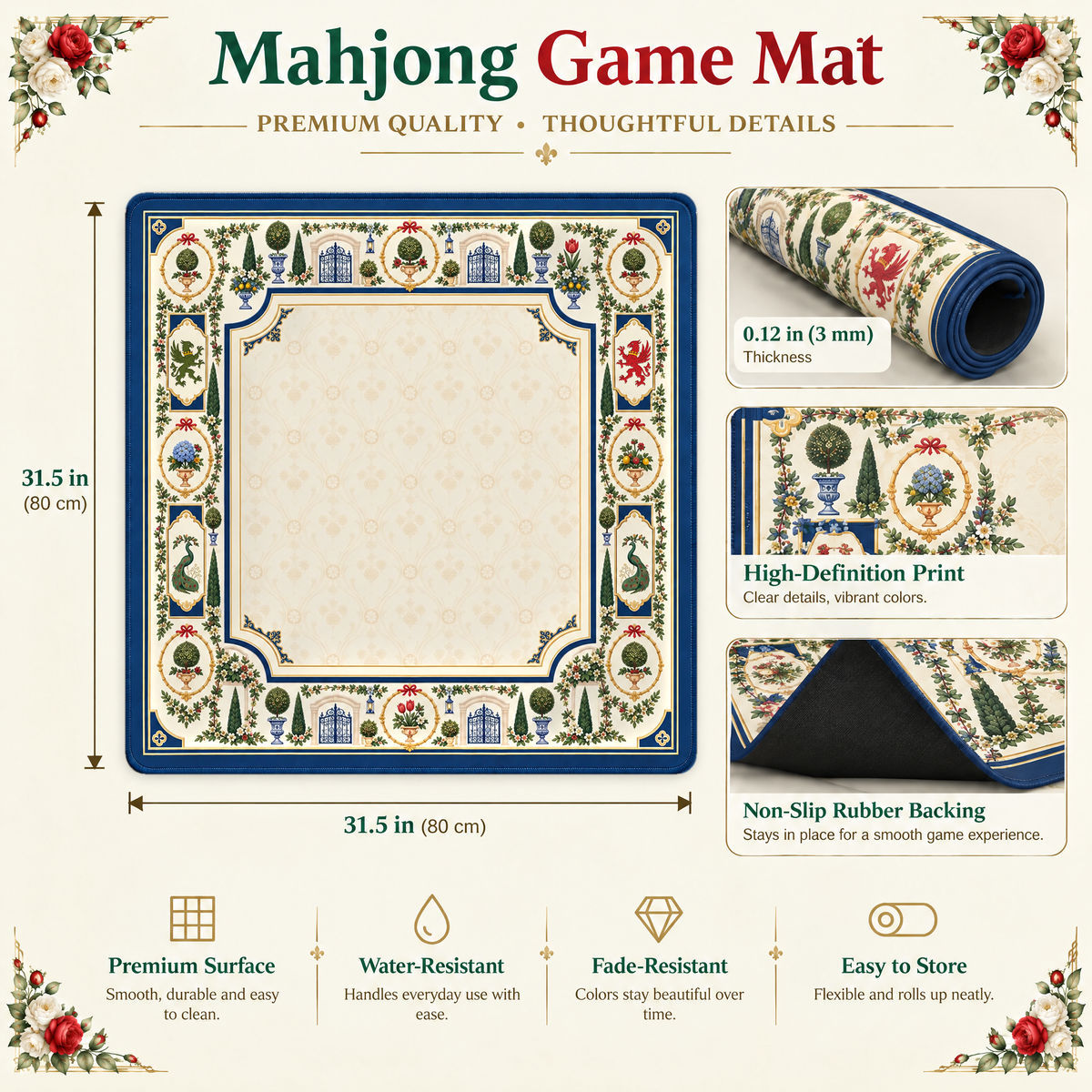
A mahjong retreat in New Jersey typically means renting a house, cabin, or community space for two to five days where four players gather for games, socializing, and skill-building—usually organized by friends, synagogues, or mahjong clubs. The state has access to community centers, country clubs, libraries, and private rental platforms (Airbnb, VRBO) that accommodate four-person mahjong tables. Most retreats run Friday–Sunday or full weeks in spring or fall. Costs split among attendees; equipment (a 160-tile set, mat, racks, and dice) costs only once if shared. The National Mah Jongg League card (current year only) is mandatory—download it free from the League website before arrival. American mahjong has no steep learning curve if someone already knows the Charleston tile exchange and how jokers work; beginners should practice one afternoon before serious play starts.
How do I find a retreat venue in New Jersey?
Check community centers, synagogues, country clubs, and Airbnb/VRBO for properties with a large dining or game table. Public libraries often host or recommend spaces. Ask local mahjong groups on Meetup or Facebook—they often organize annual retreats or can suggest tested locations. Space needs: a table 2.5–3 feet square, seating for four, a warm room, and WiFi. Many retreat groups book one year ahead.
🀄 Shop best-selling mahjong sets →

What equipment do I need for four players at a retreat?
One 160-tile American mahjong set with jokers and dice, one mat (to protect the table and define the space), one or two racks with pushers per player, and one copy of the current National Mah Jongg League card per person. If players are traveling, a mahjong bag or case keeps the set safe. Engraved or personalized sets (our custom mahjong sets line, for example) add a memory keepsake to the trip. Many retreats ship equipment ahead or ask one player to bring it, saving luggage space.
What do I teach a beginner before the first game?
Spend 60 minutes on the American mahjong basics: tile names (Bams, Craks, Dots, winds, dragons), how to read the card, and the Charleston (the pre-game tile-passing ritual that takes 3–4 minutes per hand). Teach joker rules—jokers substitute for any single tile in exposed sets (pung, kong, quint) but never as a pair or single tile. Show a completed hand from the card so they see what "winning" looks like. Play two unscored practice hands. The biggest beginner mistake: thinking sequences (1-2-3) can be called—they cannot in American mahjong. Only exposed sets of identical tiles (pung = 3, kong = 4, quint = 5, sextet = 6) and jokers count.
Setup Element | What & Why | Time to Master |
Tile names | 36 tiles per suit (Bams, Craks, Dots) + 16 winds + 12 dragons + 8 flowers | 30 min |
Card reading | Decode hand patterns: like 1-9 combos, pairs, matching suits | 20 min |
Charleston | Pass-left, pass-right, pass-across tile exchange before each game | 5 min live play |
Joker placement | Substitute in exposed sets only; never as pair or single | 10 min + practice |
Scoring | Points vary by card year; League card shows all values | varies |
How do I avoid conflicts around the rules and the card?
Before day one, assign one player as the "card keeper"—their job is to check calls, disputes, and scoring against the current League card. Print a two-page "quick rules" sheet and post it at the table (tile names, when to call, joker limits, pung vs. kong spacing). Many retreat groups play "open card" (all hands visible on-table after each game) so newer players see winning patterns. If someone claims "that hand wasn't on the card," the card keeper verifies and the group accepts it—no second-guessing mid-game. Store the card in a sheet protector so it survives four days of play. Agree on scoring: some groups keep score across all games; others reset each hand. Write the rule down.
🎁 See our most-loved mahjong sets & accessories →

What's the retreat schedule that keeps everyone happy?
A typical two-day retreat (Saturday–Sunday) runs: Saturday 2–5 p.m. (setup, beginner lesson, one practice hand), 5–7 p.m. (dinner/social), 7–10 p.m. (three scored games). Sunday 9 a.m.–12 p.m. (three games), 12–1 p.m. (lunch), 1–4 p.m. (three more games or freestyle play). Three games take roughly 90 minutes; plan breaks every second game. Longer retreats (full weeks) add day trips, yoga, or a skill clinic led by an experienced player. The key: don't pack more than six games per day—hands become sloppy and players fatigue. Evening games often draw the biggest crowd because daylight ones feel like "homework." Offer both.
What do I bring personally if I'm a guest?
Comfortable clothes (sleeves help when you're reaching across the table), the current League card (free to download), a notebook for scoring, snacks or a dish to share, and realistic expectations about how often you'll win. Most players win 25–30% of hands; don't expect better. If you're driving to the venue, confirm car-pooling so you're not stressed about parking. Bring sunscreen or a book for outdoor breaks. One clever touch: bring a photo of your group from the previous year's retreat so newer players feel welcome and you build memory. Let the host know any dietary needs early.
What to Check Before You Book
Table size & shape: Round tables slow the game (tiles are harder to reach). Look for a 2.5 × 3 ft. square or rectangular table, or a dining table 4 ft. wide.
Seating & lighting: Four firm chairs with armrests are ideal; poor lighting strains eyes during five-hour play days.
WiFi & cell coverage: So organizers can confirm attendance and reach vendors if a mat or set arrives late.
Kitchen & bathrooms: Ensure coffee, water, and two bathrooms are clean and stocked.
Payment & booking: Lock in your dates early (peak retreats book March–April and August–September); confirm the cancellation policy.
Equipment shipping: If the venue is far, arrange for the mahjong set, mat, and racks to arrive three days early rather than risk a lost overnight shipment.
✨ Find your Mahstead set — free US shipping →
How is hosting a retreat different from a weekly game?
Weekly games are usually in a home or club space that's pre-set—you show up, play one to three hands, and leave. A retreat is immersive: you arrive Friday evening and don't leave until Sunday. That means more hands (12–18 instead of 3–4), deeper social bonding, and time to experiment with different play styles. Retreats also allow you to invite less-frequent players who can't commit to weekly attendance, and they give beginners a "safe" environment to make mistakes without judgment. Scoring sometimes runs cumulative across two days, turning the retreat into a mini-tournament. The setup is more formal: you'll rent the space, bring all equipment, and coordinate meals. For experienced players, retreats are where you plateau as a casual player and start thinking about intermediate tactics—when to hold a tile, when to play safe, and how to read other players' discard patterns.

FAQ
Can a retreat have fewer than four players?
Yes. Two- or three-player American mahjong follows different rules—the tile pool, deal, and winning conditions change. Many New Jersey groups mix two-player games on quiet mornings and four-player games in afternoons. One player usually sits out and scores or cheers.
Do I need to memorize the League card before the retreat?
No. Print it, bring it, and check it after each hand. Experienced players recognize patterns quickly; beginners learn by playing and seeing examples. The card keeper does most of the work. Spend your prep time on Charleston rules and joker placement instead—those matter every single hand.
What if we have a disagreement about a winning hand?
The card keeper consults the current League card. If the hand matches a printed pattern, it wins. If not, it's declared invalid and play resumes. Most retreats also agree beforehand: one re-check per player per game. After that, the table moves on. Write this rule down on your "quick guide" sheet.
Should we buy a new set for the retreat or use an old one?
A 160-tile acrylic American mahjong set with clean, legible tiles and working jokers is essential. Old bamboo or plastic sets sometimes have missing or illegible tiles—don't risk it. If you're sharing equipment among multiple retreat groups, a durable acrylic set lasts years and withstands packing.
How much should we charge guests if we're hosting the retreat?
Split the rental cost, food, and equipment wear evenly—typically guests pay per night (venue) plus a shared fee for meals. Equipment (mat, set, racks) is usually free if you own it. Many organizers keep a "retreat fund" so players who attend multiple years accumulate a small credit toward hosting the next one.
What's the best way to organize a New Jersey retreat if we've never done one?
Pick one organizer, use a free tool like Google Sheets or a Doodle poll to confirm attendees and dates, scout two venues (one backup), book four weeks ahead, and email the group a "retreat rules" sheet two weeks before. Send the current League card link one week prior. Have the organizer bring the set, mat, and racks or arrange early shipping. The less left to chance, the happier everyone is.


View More
View More
View More
