
Mahjong Playing With Fewer Jokers: Tips & Rules
Last updated: Nov 23, 2026
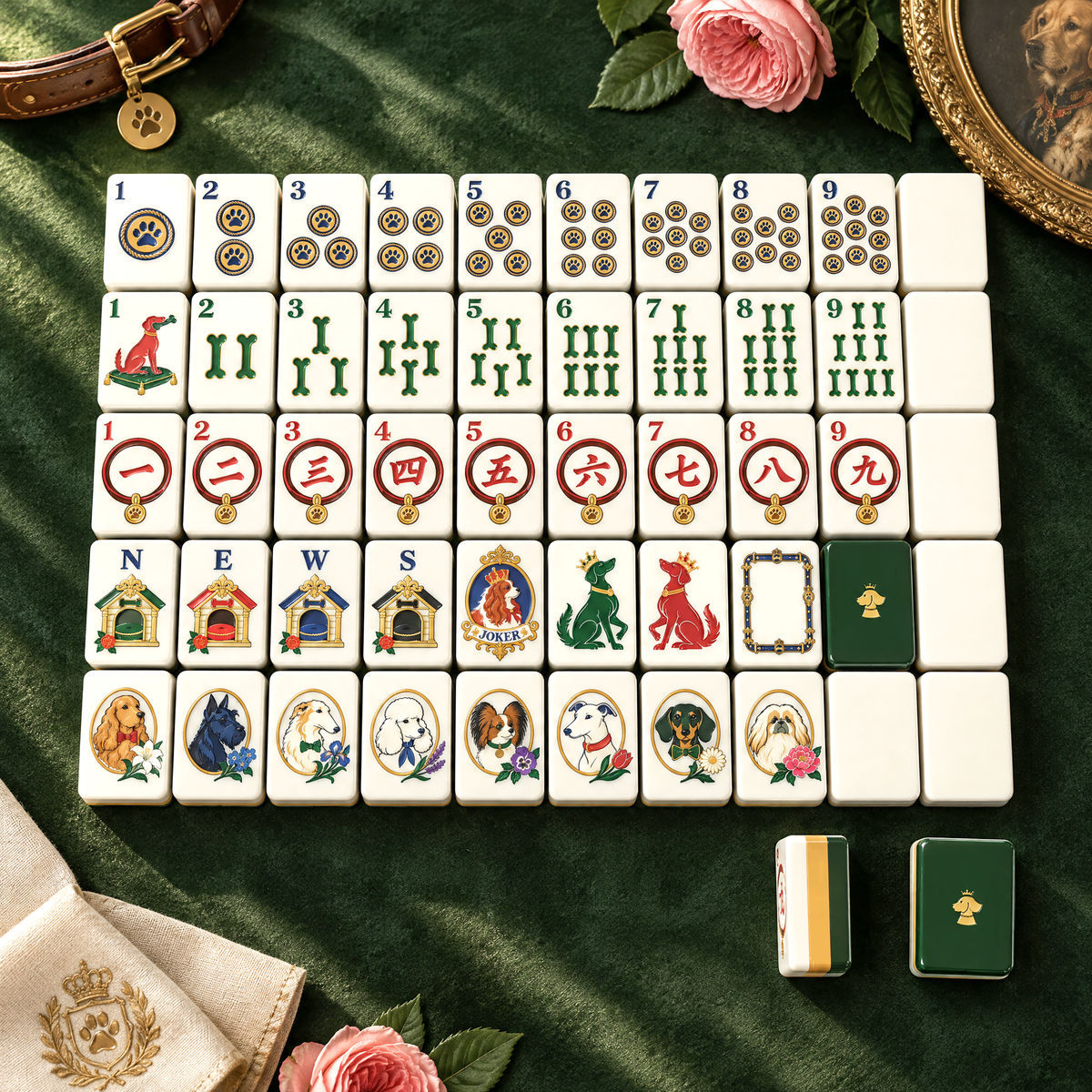
American mahjong requires exactly 152 tiles and 8 jokers for legal play. If you have fewer jokers—whether from lost tiles or an incomplete set—your hand options shrink immediately: fewer jokers mean fewer substitutions in sequences, exposures, and winning combinations. Players cannot simply ignore the joker shortage or redistribute them mid-game; doing so breaks the rules and invalidates hands. The honest move is to acknowledge the shortfall before the Charleston begins. If you're one joker short, call that out—do not play that hand. If you're missing two or more, postpone the game or replace tiles with markers or blanks (never add random tiles; they change the probability of every draw).
Why Jokers Matter So Much in American Mahjong
Jokers work as wild tiles in American mahjong, but not like in card games. Each joker substitutes for exactly one missing tile in an exposed pung, kong, quint, or sextet—never in a pair, never as a single tile. All eight jokers must stay in the game; you cannot discard a joker or use it as a regular tile. When one joker vanishes (lost in transit, eaten by a pet, dropped behind the sofa), the total count drops to seven. This immediately reduces the flexibility of every hand on the table. Players chasing hands that require multiple joker substitutions—like bouquets, mixed exposures, or certain special patterns on the current card—suddenly face impossible odds. A hand that seemed within reach with eight jokers becomes mathematically unreachable with seven.

What Happens to Your Winning Odds With One Joker Missing
Missing a single joker shrinks your win probability by roughly 12–15%, based on typical hand structures requiring 1–3 joker fills. If your hand calls for exactly one joker (to complete a kong or a required exposure), you have a 7-in-8 chance of drawing it—slightly worse than the ideal 8-in-8. But most hands work differently: the National Mah Jongg League card structure allows many hands to win without any joker, and others demand two or three. With seven jokers available, hands needing multiple fills compete for the same scarce tiles. Around the table, someone draws that last joker, and you walk away empty. The effect ripples: players holding hands that could work with or without joker fills now lean toward discarding joker-dependent options, narrowing the pool of legal hands for everyone.
The Honest Rule: Stop Play Before Starting
Before the Charleston begins, count your jokers aloud. Open the tile rack or bag, sort the jokers into a visible pile, and announce the number: "I count seven jokers," or "I count eight." Do this with every new set, even if you've played with it a hundred times. Tiles go missing. Spares jog loose in travel bags. Jokers stick to the underside of mats. If the count is below eight and you're uncertain whether the missing tile is actually gone or just stuck somewhere, do a full recount of all 152 playing tiles. Sort them by type: count all four Bams (36 total), all four Craks (36 total), all four Dots (36 total), winds (16), dragons (12), flowers (8). If that total reaches 152 and jokers are still short, a joker is genuinely missing. At that point, do not play that set. Borrow jokers from another set or postpone until you can replace them. This prevents disputes mid-hand and keeps the table trustworthy.
Replacing Missing Jokers: What Works and What Doesn't
If you must play with fewer jokers, replace them only with pre-agreed markers: a coin, a button, a dry-erase token, or a written note placed face-up on the rack. Do not invent new tiles. Do not use blank tiles from a 160-tile set as jokers; blanks have no suit or number and confuse how to read tiles. Do not use floor tiles or random objects. The replacement must be instantly recognizable to all four players. Before play, confirm: "We are using one token as a joker substitute. It works exactly like a joker. We cannot discard it. We cannot use it in a pair." Then play one hand only. After that hand concludes, pause and source a real joker or stop. Playing multiple hands with makeshift jokers teaches bad habits and undermines your rule literacy.
Comparing Joker Counts: A Quick Decision Table
Joker Count | Can You Play? | What to Do | Risk Level |
8 jokers (complete) | Yes—standard play | Play normally | None |
7 jokers (one missing) | Call it out first | Announce shortage; play one hand; replace or stop | Low if disclosed |
6 jokers (two missing) | Not recommended | Postpone or borrow from another set | Medium; odds skew unfairly |
5 or fewer jokers | No | Do not play | High; hands become unfair and disputed |
This table assumes you have all 152 playing tiles. If other tiles are also missing, adjust downward: fewer tiles + fewer jokers = stop immediately.
🀄 Shop best-selling mahjong sets →
How New Sets Prevent This Problem Entirely
Complete best-selling mahjong sets ship with all 152 tiles, 8 jokers, and spare tiles packed separately. The spares include extra jokers and blank tiles so that if one joker cracks during a decade of Thursday-night games, you have a replacement waiting in the case. When you unbox a new set, the spares are your insurance policy. Check them before your first game. Store them in the same case or bag as your tiles. When you travel with your set—to a friend's house, a cabin weekend, a tournament—pack the spare jokers in an easy-access pocket so they're never "somewhere in the car." If you play weekly, rotate through your spare jokers every three years; wear is real, and a cracked joker is indistinguishable from a lost one until it splits in someone's hand mid-game.
What to Check Before You Buy
Tile count. Verify that the set includes 152 playing tiles and at least 8 jokers. A 160-tile set from Mahstead includes spares beyond the 152 required. Never buy a set advertised as "144-tile" for American mahjong; it is insufficient.
Spare packaging. Ask or check the product listing to confirm spares are included and clearly labeled. You should know exactly what extras are in your box before purchase.
Case or bag durability. Jokers rattle loose in flimsy bags. If your set ships with a bag, inspect it: is it lined, padded, or subdivided? A travel bag with compartments keeps jokers from mingling with the rack or losing themselves in corners.
Joker material. Acrylic and bamboo jokers are durable. Cheaper sets sometimes include jokers with rough edges or paint that flakes; these become unrecognizable mid-game. Inspect one joker up close if possible before committing.
Replacement policy. Ask the seller: if a joker cracks in year two, can I buy a spare? Mahstead includes spares for this reason; other retailers may not. Know the answer up front.
✨ Find your Mahstead set — free US shipping →
Playing Short-Handed (2 or 3 Players) Changes the Joker Rule
If you're playing 2- or 3-player mahjong, the joker count sometimes changes because fewer players use fewer tiles per hand. In 3-player American mahjong, each player draws 12 tiles instead of 13, and the wall is proportionally smaller. Some variants reduce the joker count to 6 because the game moves faster and fewer total tiles cycle. Before starting a short-handed game, clarify: "Are we playing with all 8 jokers or 6?" Write it down. Stick to it for all rounds that session. If you're unsure, consult the variant rules or your group's house rules document. Do not improvise mid-hand.
🎁 See our most-loved mahjong sets & accessories →

FAQ
Can I play American mahjong with 7 jokers if I declare it before the game starts?
No. American mahjong requires exactly 8 jokers for fair play. Declaring the shortage does not make it legal; it only makes it transparent. Either replace the missing joker or postpone. One hand with seven jokers unfairly penalizes hands that need multiple joker fills.
What if a joker cracks or peels during a game—do I stop immediately?
Yes. Set the damaged joker aside and pause play. Replace it with a marker (coin, token, note) and finish only the current hand. After that hand scores, stop and do not play another hand until you source a real joker or confirm all players agree to keep playing with the marker. Do not continue multiple hands this way.
Are spare jokers included in a Mahstead 160-tile set, or only the 152 playing tiles?
Mahstead 160-tile sets include all 152 playing tiles plus 8 spare tiles (typically jokers and blanks). The spare jokers are your backup if one cracks or is lost. Store spares in a labeled pocket of your bag or case.
If I'm missing two jokers, can I substitute with two coins or tokens?
Not for regular play. Borrowing two jokers from another set, or postponing the game, is the right call. Two makeshift replacements introduce too much ambiguity and invite disputes about which tile is which. One temporary marker per hand is already a stretch; two crosses into unfair territory.
Does the Charleston (tile-passing ritual) involve jokers?
Yes, jokers participate in the Charleston like any other tile. You can pass them, receive them, and replace them during the exchange. Count your jokers after the Charleston is complete to confirm you still have eight before players declare their hands.
What's the difference between a blank tile and a joker?
Jokers are wild tiles that substitute for any single tile you need. Blank tiles have no suit or number and are used as spares or replacements when a tile is lost. Blanks are never used as jokers during play. Some 160-tile sets include both jokers and blanks; use each for its intended purpose only.


View More
View More
View More
