
Mahjong Party Ideas in Orange County: Host Games Like a Pro
Last updated: Nov 23, 2026
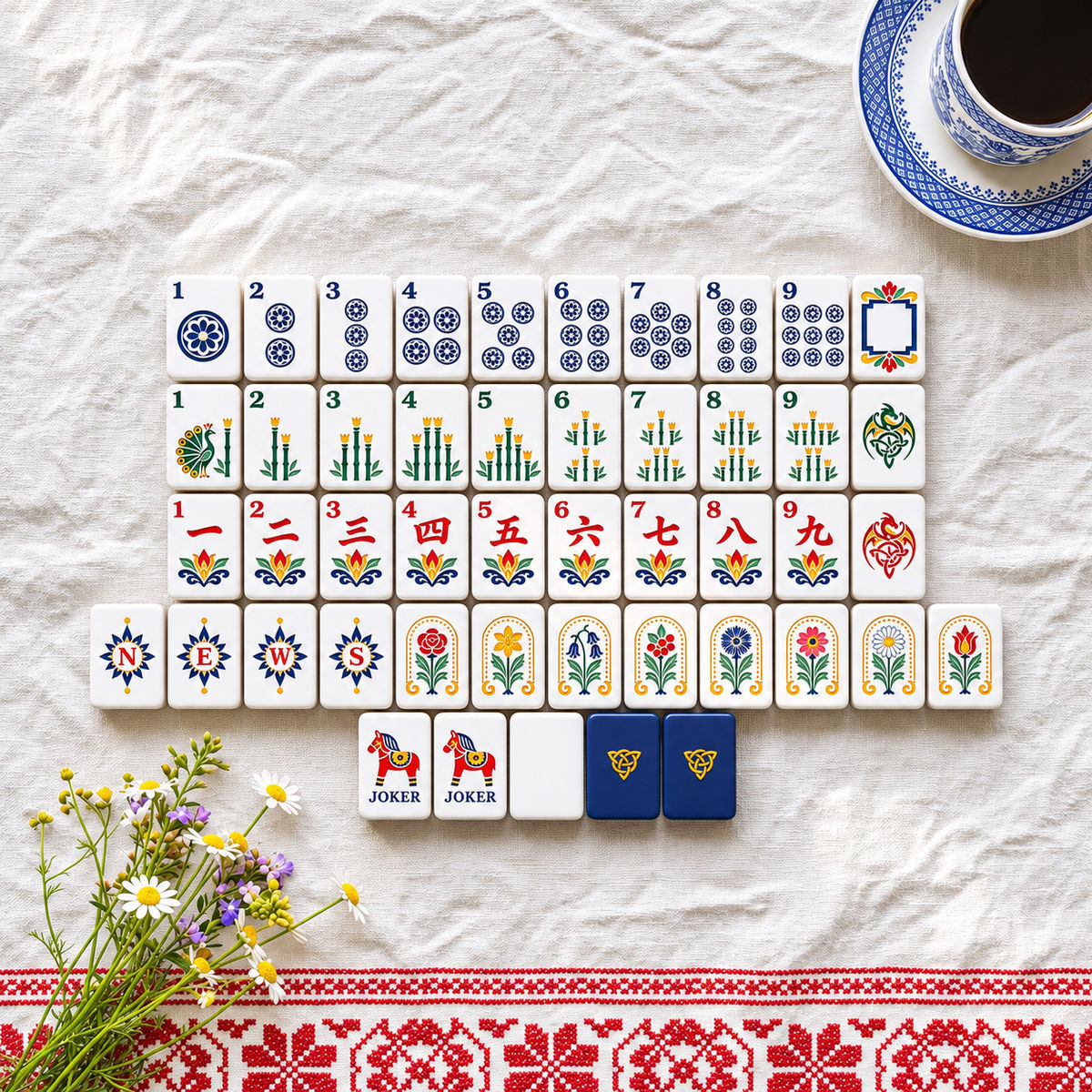
Orange County hosts mahjong in community centers, synagogues, libraries, and country clubs—ask at your local senior center or check community meetup boards to find existing groups. To throw your own party, you need a 160-tile American mahjong set, a felt mat, racks with pushers for each player, the current year's National Mah Jongg League card, and a clear table. Plan for four players, allow 30–60 minutes per game, and start with beginner-friendly hands from the card. Snacks, good lighting, and a scorepad make a huge difference. Our best-selling mahjong sets come with everything except the mat and racks, so you can start hosting tonight. Orange County's mix of established clubs and newer casual groups means you'll find your fit—whether tournament-serious or purely social.
Where do Orange County mahjong players meet?
Orange County has a strong mahjong presence across libraries, community centers, synagogues, and country clubs. Check your local public library's bulletin board or ask the reference desk about game nights; many host monthly meetups or maintain player lists. Community centers often advertise ongoing games on their websites and in seasonal guides. Synagogues (particularly on the coast and inland areas) typically host weekly sessions and welcome players of all faiths. Country clubs sometimes offer lessons or casual groups. Search community meetup boards and neighborhood apps for "mahjong Orange County" to find active circles; many players post or respond to hosting opportunities there. The surest path: walk into a community center game and ask regular players where else they play.

What's the minimum setup to host four players?
You need a standard 160-tile American mahjong set, a mat to define the playing surface, four racks with pushers (one per player), the current year's National Mah Jongg League card, pen and scorepad, dice, and a clear table about 3 feet square. The set contains 152 playing tiles and 8 jokers. A mat protects tiles and speeds play by keeping everything in one zone. Racks hold tiles upright so players don't reveal their hands; pushers let you move tiles forward when you've played. The card is essential—American mahjong hands come only from the current year's official card, issued each spring. Our best-selling mahjong sets ship with tiles and a card; pair them with a mat and racks to be match-ready. Skip fancy décor until your group becomes regular; a folding card table works fine to start.
How do you run the first 15 minutes of a new game?
Begin with the Charleston, a three-round tile-passing ritual. Each player receives 13 tiles, then all four players simultaneously pass three tiles to the right. In round two, pass three to the left. In round three, pass one to the right. Any player can swap up to three additional tiles face-down with the center discard pile (called a "blind"). After the Charleston, the player who drew 14 tiles (determined by dice roll) goes first and plays one tile to start the discard pile. Other players then take turns drawing from the wall, checking if they can form a hand on the current year's card, and discarding. This ritual takes 5–10 minutes once your group knows it. New players often rush it; go slow and let everyone ask questions. Learn the Charleston step-by-step in our full guide so you can teach it confidently.
What beginner hands should you suggest on your card?
Look at your card's Like Numbers and Consecutive Numbers sections—these are forgiving. For example, hands made of three identical numbers (e.g., three 2 Bams, three 2 Craks, three 2 Dots) teach pung (triplet) building without complexity. Similarly, All Pung hands (only triplets, no sequences) are stable for beginners because you never chase sequences that don't complete. Hands with two Jokers or fewer are gentler than Joker-heavy ones; jokers are wildcards that let you plug gaps, but relying on them stalls your learning. Avoid 5-1 or terminal hands (lots of 1s and 9s) at first—they're mathematically harder to complete. Hands with one suit (all Bams, all Craks, all Dots) or simple pairs teach discipline. Tell your group: "Let's play hands with three or fewer Jokers the first night." This keeps everyone calm and playing cards they understand. Read how to decode your card quickly here.
What common hosting mistakes should you avoid?
Missing the current year's card: American mahjong hands are only valid on the current year's National Mah Jongg League card. Using last year's card or a generic "all possible hands" reference derails the whole game. Buy or print the current card before your first party. Unclear hand calls: When someone says "mahjong," ask them to show the completed hand on the card so everyone sees it's legal. Disputes destroy trust. Jokers treated as blank tiles: In American mahjong, a joker is a wildcard only in pungs (triplets), kongs (fours), or larger melds—never as a single tile or a pair. Many newcomers slip and use one as a spare tile. Clarify this rule upfront. Dim lighting: Tiles have four copies each, and color matters hugely (Red Dragon vs. Green vs. White "Soap"). Poor light makes mistakes inevitable. Use a bright lamp or play outdoors on a sunny afternoon. No scorepad: Keep a running total of each player's score per hand. Write it down so no one argues later. Rushing new players: If someone is still learning how to play American mahjong, pause between hands and let them ask questions. Speed kills joy for beginners.

How should you choose your first hosting table and mat?
Feature | Best for Beginners | Best for Regular Groups |
Size | 36–42 inches square | 42–48 inches square |
Surface | Felt, non-slip backing | Felt or cushioned neoprene |
Portability | Foldable, under 5 lbs | Fold or roll; weight under 8 lbs |
Tile Grip | Felt grips acrylic better | Felt or rubber backing |
Cost Basis | Lower, focus on function | Mid-range, durability matters |
Why It Works | Easier to move between rooms; beginner hands don't demand fancy mat | Mats wear fast with weekly play; thicker cushion eases wrist strain |
A smaller felt mat lets you host in tight spaces and carry it to a friend's house. Look at mats designed for your setup here. Once your group plays weekly, invest in a sturdier mat that won't curl or slide. Test any mat by placing tiles on it and gently pushing them; they should glide smoothly without bunching.
What gear helps hosting night flow smoothly?
Racks with pushers are non-negotiable. They keep tile faces hidden from other players and let you move tiles forward when you play one, maintaining pace. Without them, players hold tiles in their hands, accidentally expose winning combinations, and slow everything down. A scorepad and pen eliminate disputes and let you track prizes or bragging rights. Dice—your set includes them—randomize which player goes first and who draws which wall section. A timer on your phone (set for 30 minutes per game) keeps energy high; without time pressure, analysis paralysis kills momentum. Two sets of tiles let you have one game running while players shuffle the other set for the next round—a small luxury that keeps your party flowing. A rules sheet printed or taped to the table answers common questions without stopping play. Explore racks and mats designed for smooth hosting. If you're hosting regularly, store everything in a mahjong bag or case so setup takes under five minutes.
What makes hosting a repeat event versus a one-time game?
Hosting once is fun; hosting a tradition requires consistency. Pick a fixed day and time—"Third Thursday, 7 p.m." creates expectation and loyalty. Send a group text 48 hours before confirming who's coming; no-shows derail planning. Welcome newcomers in writing before they arrive: "We play American mahjong, beginner-friendly rules, snacks encouraged, about 2 hours." This sets expectations and reduces anxiety. Keep the same rules every session; switching variants or house rules frustrates regulars and confuses new players. Celebrate wins fairly—whether you play for small stakes, keep a season trophy, or simply track bragging rights, a visible reward keeps people invested. Rotate hosts after a few months so no one burns out; when someone else hosts next, bring supplies and help set up. Orange County's climate and large population make year-round hosting easy—start in summer, keep it going through winter. Mahjong groups that last years share one thing: the host commits to a rhythm and sticks to it.
🀄 Shop best-selling mahjong sets →
What to check before you buy your first hosting setup
Set completeness: Does it come with all 152 playing tiles, 8 jokers, dice, and the current year's card? (Our best-selling mahjong sets include these; verify the listing to confirm.)
Tile quality: Are they acrylic (durable, easy to grip) or bamboo/bone (prettier, fragile)? For hosting weekly games, acrylic outlasts other materials.
Set size: Can players with larger or arthritic hands comfortably grip them? Standard tiles are about 1 inch square; this size fits most hands but matters if you're hosting seniors.
Mat fit: Will it fit your table? Measure your table first, then choose a mat that leaves 4–6 inches of bare table on each side for discards and wall storage.
Racks and pushers: Do they come with your set, or do you buy them separately? Racks are essential; don't skip them.
Shipping: Free US shipping is standard; confirm your order ships complete and arrives in 5–7 business days so you're ready for game night.
Spare tiles: Do you have extras (extra jokers or blanks) in case a tile cracks? With casual hosting, you likely won't need them, but it's a buffer for peace of mind.
🎁 See our most-loved mahjong sets & accessories →
How do you tell if your group is ready for a more serious game?
If players start asking about variants (Hong Kong rules, Riichi scoring, two-player), hand statistics, or tournament formats, they're ready for deeper play. When everyone learns the card within three rounds and wants faster pacing, you can introduce timed turns (30 seconds per move). If players mention discarding strategy or joker management as topics, they're thinking tactically—a sign to introduce scoring strategies beyond basics or advanced joker tactics. Host a "next level" night, teach one new concept per game (like counting points toward end-of-season prizes), and let the group vote on whether to adopt it. Orange County has enough players that you can split: keep a casual beginner game running while some regulars graduate to a tougher variant. The key: let the group steer the evolution, not the other way around.
✨ Find your Mahstead set — free US shipping →

FAQ
What's the difference between American mahjong and the Asian variants played in Orange County?
American mahjong uses only hands from the current year's card (no improvisation), allows exposed melds (triplets, quads), and leans heavily on joker wildcards. Chinese and Hong Kong mahjong allow sequences (chows), draw from the wall differently, and don't use a card. Both communities exist in Orange County; ask new players which they prefer before inviting them.
Can I host a game with fewer than four players?
Yes, but rules change. Two-player and three-player mahjong exist and use fewer tiles per game. Read the full rules here before attempting it; standard four-player setups won't work unmodified.
How much does it cost to start hosting?
A complete beginner set with tiles, card, and dice ranges based on tile material and design quality; see current pricing on our product pages. Add a mat and four racks with pushers for comfort and clarity. Most hosts spend less than a casual dinner out to set up a group that plays for years.
Do I need to join an official club or league to host at home?
No. Home games are unaffiliated and governed by mutual agreement on rules. The National Mah Jongg League card is public and used worldwide; buying it lets you run a house game anytime. Formal league play requires membership, but home hosting does not.
Where do I get the current year's National Mah Jongg League card in Orange County?
Order online (cards ship within days), check local mahjong stores or game shops, or ask players at a community center game if they have an extra. Our best-selling sets include the current card; confirm the listing before checkout.
What's the easiest rule mistake hosts make?
Using an out-of-date card or forgetting that in American mahjong, jokers cannot be used as a single tile or a pair—only in melds of three or more. Clarify both on your first night to save disputes later.


View More
View More
View More
