
Mahjong Party Ideas in Hilton Head: Host Your First Game
Last updated: Nov 23, 2026
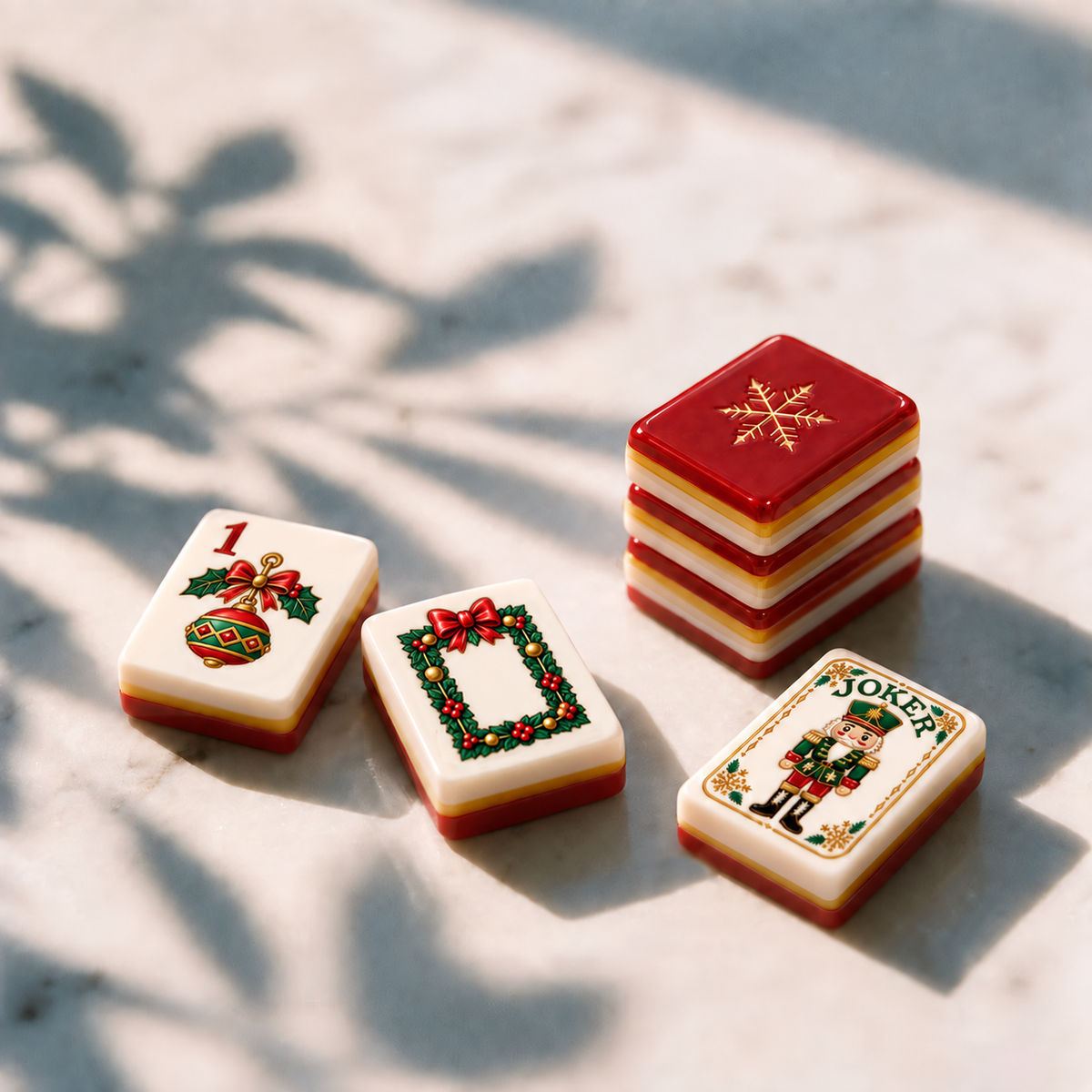
A mahjong party in Hilton Head works best with four players, a 160-tile set, a mat for hand protection, racks to hold tiles, snacks, and 2–3 hours of uninterrupted time. The game itself takes 15–20 minutes per hand once everyone knows the basics; most parties run 6–8 hands in an evening. Hilton Head's warm climate and social clubs make hosting easier than in colder regions—many of us hold games on screened porches or patios. You'll need to teach players the Charleston (tile exchange), hand recognition from the current year's National Mah Jongg League card, and basic scoring. Start with mahjong for beginners resources if your guests are new; even experienced card players need a refresher on American rules. Mahstead's 160-tile sets come ready to play, with all four wind tiles, dragons, flowers, and jokers pre-sorted by color and symbol so setup takes under five minutes. 🀄 Shop best-selling mahjong sets →
Why host a mahjong party on Hilton Head right now?
Mahjong has exploded from a niche hobby into a mainstream social event. Hilton Head's retired and semi-retired population, combined with strong professional communities, means your guests likely know someone who plays or are curious to learn. Unlike bridge or poker, mahjong doesn't require math skills or bluffing—it's pure tile recognition and strategy. A four-hour party builds friendships faster than book clubs, and the game's 15-minute rounds mean nobody feels trapped. The coastal lifestyle here favors relaxed, regular Tuesday or Thursday evening games where players rotate hosting duties.

What do you actually need to set up before guests arrive?
Before people walk in:
One 160-tile American mahjong set (bag included)
A mahjong mat (protects your table from scratches and dice rolls)
Racks with pushers for each of the four players (not optional—beginners fumble without them)
A 2026 National Mah Jongg League card (or printed images of the current card sections)
Pen and paper for scoring
Four dice (two pairs, or a set with one clearly marked pair)
Snacks: something light (no messy oils on tiles) and drinks in covered cups
Set up your table 30 minutes early. Place the mahjong mat in the center, lay out the racks with pushers in a square, and separate the tiles by suit into neat piles off to one side. If one guest is new, do a 10-minute tile walk-through: show them the three suits (Bams, Craks, Dots), the winds, dragons, and flowers. Answer questions before play starts. This prevents the "wait, which symbol is which?" interruptions that kill momentum.
🎁 See our most-loved mahjong sets & accessories →
How do you teach the Charleston without boring your friends?
The Charleston is the tile-passing ritual that happens before the first hand. Don't explain it abstractly—do it. Seat your four players, deal 13 tiles to each (this happens once, at the very start), then say: "We're passing tiles to the right, then to the left, then opposite." Have one player pass three tiles right. Then the person who receives them passes three left. Then everyone passes three across the table. It takes 90 seconds and feels like a game in itself. After the Charleston, the player who rolled highest goes first, and you begin drawing and discarding.
For a full walkthrough of the Charleston's mechanics and variations, see the Charleston explained. Most first-time players grasp it in one hand—no need to over-rehearse.
What's the fastest way to get beginners reading the card?
The National Mah Jongg League card changes every spring and shows all legal hands for that year. Don't give everyone a full card on hand one. Instead:
Show one section at a time. Point to, say, the Pung section (all identical sets of three). Say, "You need three of the same tile—three 5 Dots, for example. That's a pung." Show a printed example.
Have them spot one hand. Give each player a few tiles on their rack and ask, "Can you find a pung here?" This trains their eye faster than reading.
Keep the card visible during play. Players will cross-reference as they draw. This is normal.
Link to how to read the mahjong card after the party. Once they love the game, they'll learn the card structure on their own time.
Hilton Head's social clubs often hold "intro nights" where experienced players teach the card in a group setting. Attend one yourself before hosting, so you can mirror that teaching rhythm.
Should your first game be a friendly play or a points tournament?
Format | Best for | Setup Time | Scoring | Why it works |
Friendly play (no scoring) | Total beginners, mixed skill levels | 5 min | Track wins only | No math anxiety; focus on learning |
Basic scoring | Repeat players, everyone knows tiles | 10 min | Points per hand (winner gets payment or tally mark) | Adds light stakes; builds strategy thinking |
Mini-tournament (3 rounds, rotate partners) | Experienced friends, 6–8 players | 20 min | Aggregate scores across rounds | Keeps energy high; everyone plays everyone |
Championship format (play-in, finals) | Annual party or club event | 45 min | Full NMJL-style scoring with bonuses | Maximum bragging rights |
For your first Hilton Head party, go friendly play. Let people enjoy the tiles, the rhythm, and the social time without score pressure. By party three, introduce basic scoring. See American mahjong scoring for the full rulebook once your guests ask for stakes.

What common mistakes do hosts make—and how do you avoid them?
Mistake 1: Mixing tile sets. Every tile in a legal 160-tile set is counted and matched. Never add tiles from a second set. This causes duplicate or missing tiles mid-game and ruins hands.
Fix: Count and sort your set the night before. Mahstead sets arrive pre-sorted, so unpack, lay them out, and verify all four of each number are present.
Mistake 2: Starting before everyone knows which suit is which. A player who confuses Bams and Craks will call a false hand and stall the game.
Fix: Do a 5-minute tile walk-through before the Charleston. Point. Say the name. Have each player repeat it.
Mistake 3: Not having printed card images. One dog-eared card per table is not enough.
Fix: Print two copies of the current year's card and laminate them (or slip them in plastic sleeves). Place one near each pair of opposite players.
Mistake 4: Skipping the racks with pushers. Beginners hold tiles in their hands, tiles fall, chaos erupts.
Fix: Invest in one rack per player. They're lightweight, durable, and make the game feel official.
Mistake 5: Hosting during meal prep. If you're cooking, you can't referee rules disputes or teach card reading.
Fix: Set snacks out beforehand. Use a slow cooker or order food. Your job on game night is to be present, not stressed.
What to check before you buy your first mahjong set
Tile size and weight: Standard American tiles are roughly 1 inch square. Feel them in your hand—they should feel solid, not cheap plastic.
Joker count: Your set must have at least eight jokers. Mahstead's 160-tile sets include spares, so you're covered.
Mat condition: If buying used, inspect the mat backing for tears. A damaged mat won't protect your table.
Racks and pushers included: Many budget sets skip these. Don't. They're not optional.
Storage bag quality: You'll carry this set weekly if your party becomes a tradition. A flimsy bag falls apart.
Clarity of suit symbols: On Bams, Craks, and Dots, the symbols should be distinct and easy to read under lamplight.
Browse best-selling mahjong sets to compare options side by side. Free US shipping means there's no cost penalty for taking time to choose.
One checklist: The day of the party
[ ] Tiles counted, sorted, bagged and set on the table
[ ] Mat laid out and checked for dirt or damage
[ ] Racks with pushers in place, one per player seat
[ ] Two printed copies of the 2026 card, visible to all
[ ] Dice placed in the center of the mat (two pairs, one pair clearly different)
[ ] Scoring paper and pen next to the dealer seat
[ ] Snacks on a side table (not the mahjong table)
[ ] Drinks in covered cups only
[ ] Phone on silent; all devices away from the table
[ ] Bathroom trip reminder given; next hand starts in 5 minutes
[ ] New players told: "We play one hand, then break and debrief"
Can you host recurring games once you've done one party?
Absolutely. Hilton Head's warm seasons and stable retirement communities make weekly or bi-weekly games realistic. Once your first party works, ask guests: "Want to do this every other Thursday?" Most will say yes. You'll rotate hosts, or stick with your house if it becomes the spot. By party five, your friends will know the card, the rhythm, and the call-and-response of a live hand. New players rotate in, experienced players mentor, and the game becomes part of Hilton Head's social fabric.
✨ Find your Mahstead set — free US shipping →

FAQ
Can I host mahjong with just three players?
Yes. American mahjong rules support 2, 3, and 4 players; 4 is standard, but 3-player games exist and are fun. See 2 and 3 player mahjong rules for tile adjustments and seating.
Do I need to know the rules perfectly before inviting people?
No. Invite people and promise to learn together. One or two YouTube videos plus this beginner guide is enough to start. Mahjong for beginners covers all the basics.
What if someone calls a hand and we think they're wrong?
Check their tiles against the card. If it matches a listed hand, it's legal. If not, they discard and play continues. Disagreements happen; stay friendly and move on.
How do jokers work in American mahjong?
Jokers are wild tiles that fill in any spot in a pung, kong, quint, or sextet—but never as the single tile or the pair. See how jokers work for full rules.
Should I buy a padded carrying case for my set?
If you'll transport it weekly, yes. Tiles and mats are fragile. Mahjong bags and cases guide you to the right option for your lifestyle.


View More
View More
View More
