
Left-Handed Mahjong: Rules, Setup & Best Tile Placement
Last updated: Nov 23, 2026
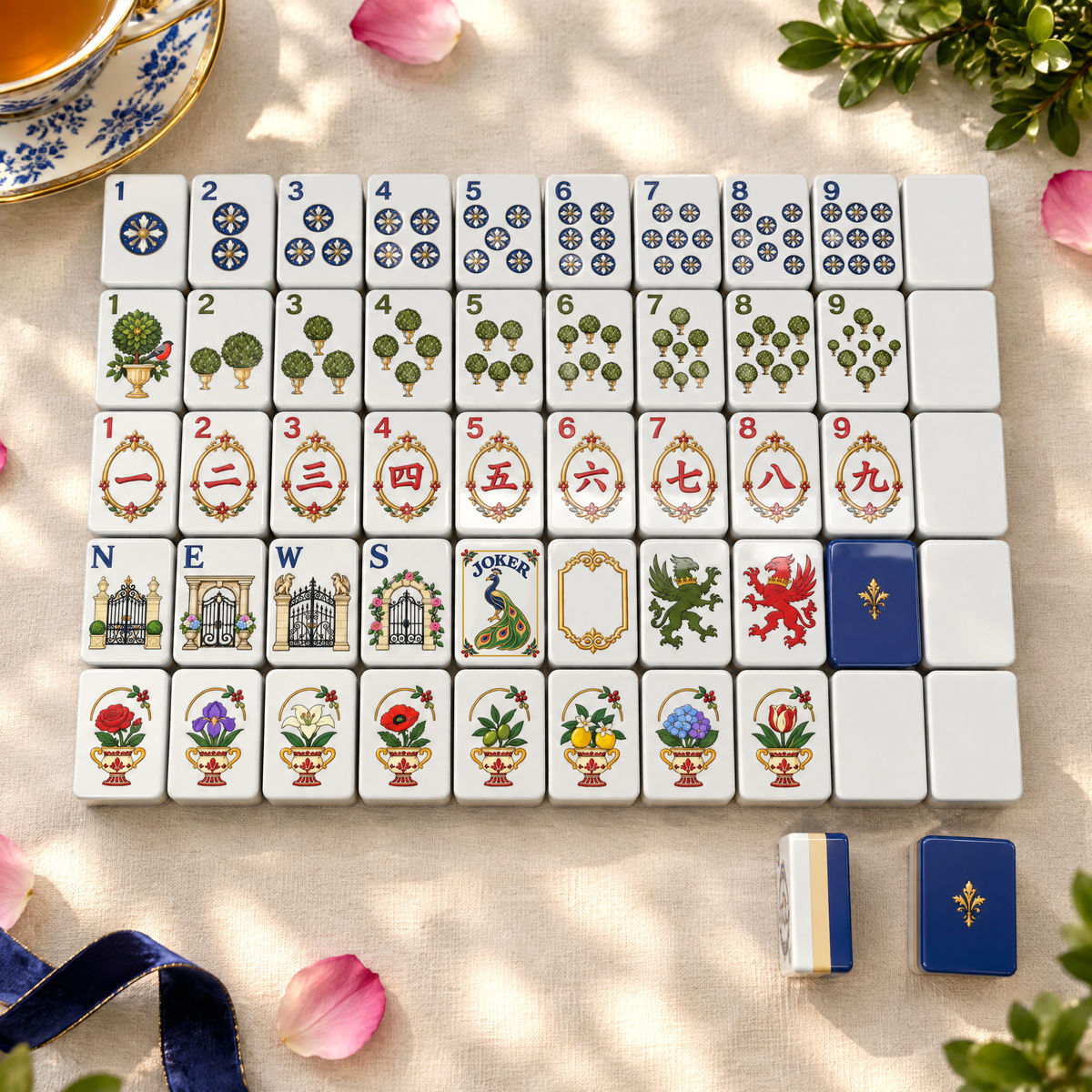
American mahjong has no left-handed or right-handed rules—the game itself is neutral. The tiles you draw, hands you build, and scoring are identical for every player. What differs is where you sit and how you arrange your rack and the tile wall so you're not contorting your dominant hand. Left-handed players typically sit in the position where the wall discards toward your left, draw from the wall on your left side, and position your rack perpendicular to your body (rather than parallel) so pushers work smoothly. You'll also rotate how you face the center wall. None of these are "rule breaks"—they're comfort adjustments. The game itself, whether you're building a pung or calling a kong from our best-selling mahjong sets, plays exactly the same.
Do the actual game rules change for left-handed players?
No. The tiles, hand patterns, scoring, joker rules, and everything on the National Mah Jongg League card apply equally to left- and right-handed players. American mahjong is a four-player game where the only asymmetry is your position at the table—East, South, West, or North—which determines who deals first and turn order, not hand validity. Left-handed players often assume they need special rules because they feel awkward at a typical right-handed setup. They don't. What changes is your physical station, not the game logic.

How should a left-handed player sit at the mahjong table?
A left-handed player typically sits in the West or North seat (depending on your table's wall orientation) so your non-dominant side faces outward and your left arm—your working arm—sweeps across the center of the table and toward your own wall. If the standard four-player arrangement places right-handed players in East and South with their walls on their right, a left-handed player rotates 90 degrees. Your discard pile goes to your left of center, your draw hand comes from the wall nearest your left side, and you reach toward the center with your dominant hand.
Typical right-handed setup | Left-handed adjustment |
East seat, wall on right side | West seat, wall on left side |
Discards travel left to right | Discards travel right to left |
Draw from wall on right | Draw from wall on left |
Rack parallel to body | Rack angled or perpendicular to body |
This symmetry means your table host doesn't need separate rules—just a clear wall assignment before the game starts. Many groups simply ask left-handed players to state their preference during the Charleston setup.
What's the best rack and pusher setup for left-handed mahjong?
Your rack should sit perpendicular or at a 45-degree angle to your body so your left hand (or right hand, if you're left-handed but use your right to push) glides smoothly along the pusher without your fingers crossing the tile plane. When you buy a mahjong rack with pushers, the pusher mechanism works the same way—it just points a different direction. Position the pusher so it runs parallel to your forearm, not perpendicular. This lets you nudge tiles toward the center or your discard area without inverting your wrist.
Many of us host weekly games with mixed left- and right-handed players by keeping racks on both sides of the set. A left-handed player's rack sits on their left; a right-handed player's sits on their right. If everyone's using the same physical table, a mahjong mat with tile guides helps you stay oriented—the printed zones keep racks, walls, and discard areas in the same relative spots even as players rotate positions.
Does left-handed affect drawing from the wall or calling tiles?
No rule change applies. Drawing from the wall and calling a pung or kong happen the same way. Where your wall sits changes; the mechanics don't. The East player (dealer) always draws first from the wall and discards last; this order is fixed by position, not handedness. When you call a tile from an opponent's discard, you take it, add it to your pung or kong in your rack, and play continues. Your non-playing hand may feel more natural reaching left instead of right—that's all.
One comfort tip: ask your opponents to place their discard piles clearly on the mat or table so you see what's available without leaning across the table. A mat with printed discard zones helps everyone (left-handed or not) avoid confusion.

How do you teach left-handed players the starter hand?
The same way you teach anyone. Hand out your tiles from the starting wall, deal the dealer's extras, and everyone fills their rack with 13 or 14 tiles. A left-handed player reads the National Mah Jongg League card the same way—by suit, number, and pattern type (pungs, kongs, pairs, flowers). Their hand won't match because of their handedness; it matches because of the tiles they drew.
The only teaching moment is showing them how to hold the card and scan patterns comfortably with their dominant hand. Some left-handed players hold the card in their right hand and point with their left; others flip it horizontally so the suits read left-to-right across their body. Neither is wrong. Use our beginner guide to cover hand patterns and scoring with everyone at the table together—handedness doesn't affect that learning.
How do you host a mixed left- and right-handed game?
Assign seats before the game, not during the Charleston. As the host, ask each player their handedness and place left-handed players in seats where the wall and discard flow suit their natural reach. If your table is round, this is easy; just rotate who sits where. If your table is rectangular or has a fixed wall (common with mahjong tables sold as dining furniture), let each player position their rack and set-up on their side of the table in whatever orientation works for them.
Use one mahjong mat with printed zones, or place a travel-friendly mat in the center and let players arrange personal racks around it. This keeps the four walls and discard piles easy to read for everyone. When you travel with a set to other homes or clubs, a portable case and mat ensure left-handed players have the space to set up comfortably wherever you play.
✨ Find your Mahstead set — free US shipping →
Checklist: Setting up a left-handed-friendly game
[ ] Ask each player their handedness during seating
[ ] Assign the left-handed player to a seat where the wall is on their left or right based on preference
[ ] Place their rack perpendicular to their body (or angled 45 degrees)
[ ] Ensure the pusher runs parallel to their forearm
[ ] Mark discard zones clearly on a mat so everyone sees what's played
[ ] Have them read the mahjong card in their natural grip
[ ] Run through one practice hand (no scoring) so they feel the rhythm
[ ] Use American mahjong rules and the current year's card—no variations for handedness
What to check before you buy
Rack design: Does it work with a pusher from both directions? Acrylic racks accept pushers from either end, so any standard mahjong rack works left or right.
Tile size: Larger tiles (e.g., a full 160-tile American set) are easier to grip and maneuver with one hand; smaller decorative sets may frustrate left-handed players during quick tile work.
Mat space: Ensure your mat or playing surface has room for a rack on both the left and right side so left-handed and right-handed players don't elbow each other.
Wall orientation: Check that your table or mat can accommodate a wall on any side—not just one fixed direction.
🀄 Shop best-selling mahjong sets →
Left-handed players bring the same skill and enjoyment to mahjong as anyone else. The game doesn't bend for handedness—your table setup does. With the right seat, rack angle, and mat space, a left-handed player plays the full American game (kongs, jokers, the complete scoring system) without compromise. When you're ready to host, explore Mahstead's acrylic sets, racks, and mats designed for four-player comfort at any configuration.
🎁 See our most-loved mahjong sets & accessories →

FAQ
Can left-handed players use jokers differently?
No. Jokers work the same way for all players—they substitute for one tile in a pung, kong, quint, or sextet, never as a single tile or pair. Handedness doesn't affect how jokers work.
Does a left-handed player draw in a different turn order?
No. Turn order is fixed by seat position (East, South, West, North), not handedness. The East player always draws first; the other players draw in clockwise order. Handedness doesn't change your turn.
Should I buy a left-handed mahjong set?
No—American mahjong sets are not handedness-specific. Tiles and rules apply equally. What you might want is an adjustable rack or a mat with flexible zones so left-handed players sit comfortably.
Can left-handed and right-handed players play in the same game?
Absolutely. Assign seats based on wall orientation preference, and everyone plays by the same rules and card. Many experienced groups host mixed tables every week.
What if my left-handed player says they can't see the discard pile?
Place the discard pile in the center or on a printed zone of your mat, not tucked to one player's side. A mahjong mat with clear zones ensures all four discards are equally visible to everyone.


View More
View More
View More
