
Mahjong in the 1920s America: The Game That Changed Everything
Last updated: Nov 23, 2026
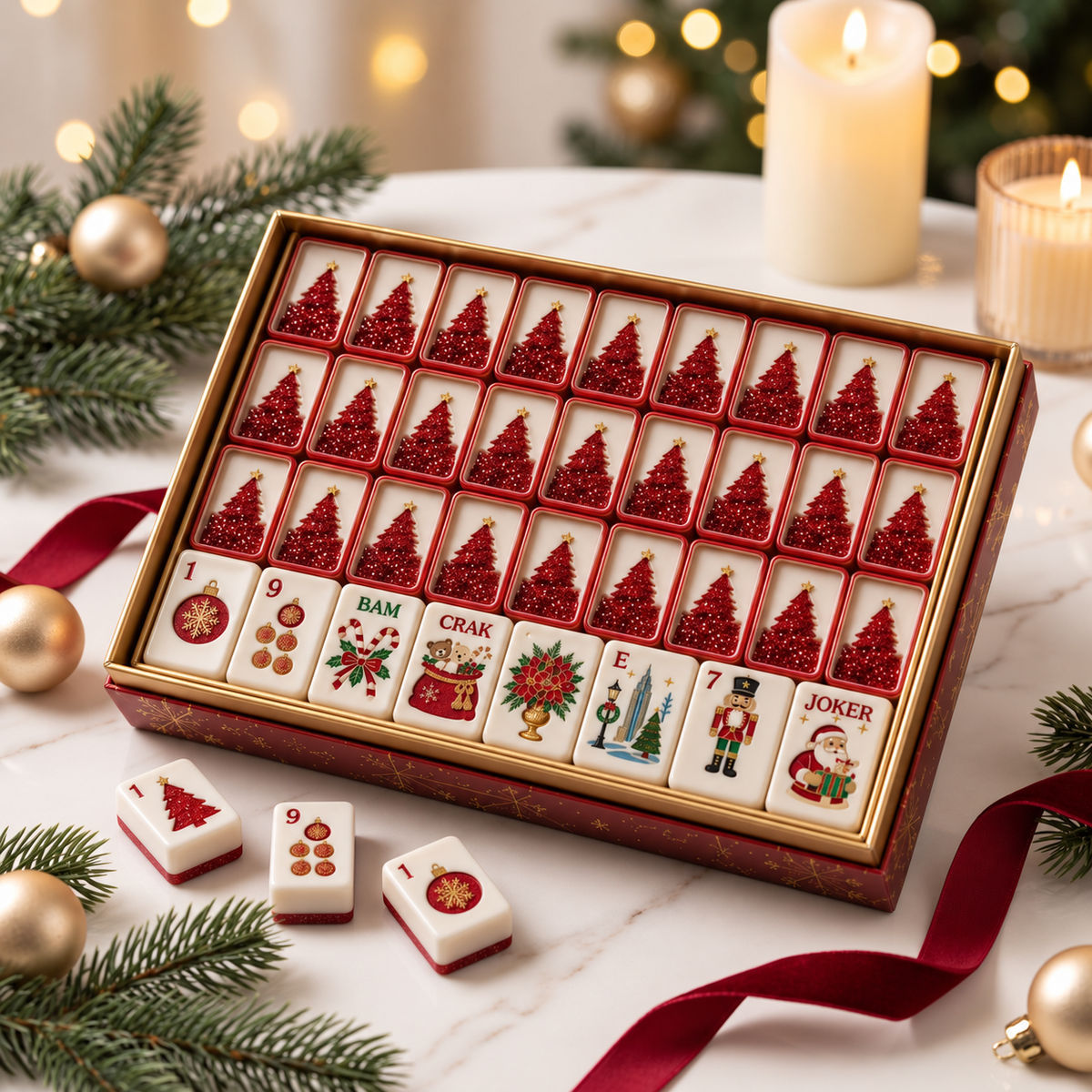
Mahjong entered the United States circa 1920 through wealthy traders and merchants returning from Shanghai and Canton, arriving just as the Jazz Age began. By 1921–1923, the game had become a nationwide fever: department stores stocked sets, newspapers ran strategy tips, and society women hosted elaborate mahjong parties in New York, San Francisco, and Dallas. The American game was already evolving—tiles were being simplified, instruction cards printed in English, and rules adapted for Western players unfamiliar with Chinese gambling tradition. Within five years, mahjong clubs formed, rule standardization efforts began, and manufacturers competed to produce "American" variants. The craze peaked in the mid-1920s, then stabilized into the dedicated community we still host weekly games with today. We play the modern American standard, which uses 152 tiles and a yearly card from the National Mah Jongg League—a direct descendant of that 1920s adaptation.
Mahjong didn't arrive in America as a fully formed, unchanging game. It came as a Chinese import at precisely the right cultural moment: post-World War I, women newly enfranchised and social, middle and upper classes hungry for novel evening entertainment, and American marketing machinery ready to package an "exotic" luxury. The 1920s transformation of mahjong from a niche import into a mass phenomenon shaped not only how Americans play today but also how the game itself evolved into the standardized version we recognize now.
How did mahjong actually reach America in the 1920s?
Mahjong traveled to the United States through four main routes: wealthy tourists returning from China and Japan, Chinese merchants and immigrants in port cities establishing communities, deliberate export efforts by Chinese manufacturers sensing Western demand, and American businesspeople stationed in Shanghai or Canton. The earliest references appear in San Francisco and New York newspapers around 1920–1921, often framed as a curiosity from the Far East. What made the timing explosive was that the game arrived into an America where women had just won the vote (1920), divorce was becoming less scandalous, evening social gatherings were moving from formal drawing rooms into more casual "modern" spaces, and disposable income among the middle class was rising. Mahjong—requiring no prior skill, playable by four people at once, fast-moving, social, and entirely new—fit that moment like a key in a lock.

Why did 1920s America become so obsessed with mahjong?
The 1920s craze was driven by novelty, glamour, and the democratization of luxury. Unlike bridge (which required serious study and had established hierarchies) or card games seen as working-class, mahjong carried the whiff of Shanghai sophistication. Department stores marketed it as a status symbol: Marshall Field in Chicago, Macy's in New York, and local retailers across America advertised "authentic imported" sets. Newspapers ran "How to Play" columns. Society magazines featured photographs of women in fashionable dresses bent over mahjong tables. The game was "exotic" without being foreign—American rule books and instruction sets made it accessible. Crucially, mahjong was not seen as gambling in the American context (though it had been in China), but rather as parlor entertainment, similar to bridge or canasta. By 1922–1923, mahjong was mentioned in the same breath as jazz, bobbed hair, and the Charleston as a marker of modernity. The craze crossed class lines: working women learned it at community centers, society ladies at expensive clubs, and by mid-decade, nearly every American household that played games owned or had access to a set.
What rules did 1920s American mahjong use—and how do they differ from the original Chinese game?
This is where history becomes practical. Chinese mahjong (the original, still played in the PRC, Taiwan, and Hong Kong) and American mahjong are not the same game—the American version emerged because of 1920s adaptation. Traditional Chinese mahjong involves sequences called chows (1-2-3, for example) that can be called and exposed by any player, melding happens more flexibly, and the hand structure is different. American mahjong, standardized by the 1930s and codified fully by the National Mah Jongg League (founded 1937), uses a fixed yearly "card" listing all legal hands; no sequences allowed unless drawn as triplets; strict rules on what can be called and exposed; and a much higher degree of luck relative to long-term strategy. The 1920s versions were chaotic by comparison: players were often learning from rule booklets that contradicted each other, and house rules varied wildly by city or club. What the American game did borrow authentically from the Chinese original was the tile system (suits, winds, dragons), the concept of a "pung" (three identical tiles), the tile-passing ritual (which evolved into the Charleston), and the idea of luck combined with pattern recognition. Early 1920s American rule books show players trying to play the Chinese game but running into confusion—especially around chows and melds—so American rule-setters simplified. By the 1930s, the National Mah Jongg League (made up of American players and manufacturers) essentially said: "Here's what American mahjong is," and that's what we still play today.
Who actually played mahjong in the 1920s, and what did they play on?
Mahjong in 1920s America was played by almost everyone who had access to leisure time and discretionary income: society women, businessmen's wives, teachers, shopkeepers, immigrants (especially Chinese and Japanese communities), and college students. It was marketed to women in particular—newspaper ads often showed four women at a table, emphasizing the social, non-gambling nature of the game. By 1924–1925, mahjong was being taught in community centers and libraries across major cities, making it available beyond the wealthy. The physical experience was also new to Americans. Early imported sets came in elaborate wooden boxes, often with drawers for tiles and compartments for wind markers and scoring sticks. The tiles themselves were often bone and bamboo—luxury materials that signaled expense. American manufacturers quickly capitalized on this: cast sets in wood, celluloid, or painted bone began competing with imports. Tables ranged from simple folding card tables to dedicated mahjong furniture with raised edges and tile racks. The Charleston tile-passing ritual (which emerged as an Americanized version of the Chinese tile-drawing ceremony) became ritualized during this period, adding theatrical flair to the game night. Players kept score using the traditional Chinese method, though American-specific scoring systems began to develop in the late 1920s, eventually leading to the point system in use today.

What happened to mahjong popularity after the 1920s craze peaked?
The great 1920s mahjong boom began to settle by the late 1920s and early 1930s—not because the game disappeared, but because it normalized. The initial "exotic craze" energy faded once mahjong became a standard game rather than a novelty. However, the depression and World War II reduced leisure culture overall. What's critical is that during this contraction, the game didn't vanish; instead, it became embedded in specific communities, especially in Jewish, Asian-American, and cosmopolitan urban centers. Dedicated players formed clubs. The National Mah Jongg League standardized rules and released the first official card in 1937 (and continues to issue an updated card every spring, which governs all legal hands for that year). This standardization saved the game: rather than fragmenting into a hundred regional variants, American mahjong had a single rulebook, a single card, and a clear community identity. By mid-century, mahjong had transitioned from a fad into a stable tradition, especially in the Northeast, Midwest, and California. That stability is exactly why we can gather every week with the same rules, the same current-year card, and the certainty that anyone who learned the American game can sit down and play with us today.
Why do we still play 1920s-era American mahjong in 2026?
The short answer: the 1920s created a standard that worked. When a game has rules, a governing body, a annual card, and regional clubs all using the same framework, it becomes self-perpetuating. American mahjong didn't become a timeless classic like chess or checkers—it's much younger than that. But it did become institutionalized. Every spring, the National Mah Jongg League publishes a new card. Every card lists the legal hands for that year. Players buy sets, join clubs, learn from the card, and teach the next person. The game has been continuous since the 1930s, which means your grandmother might have played it, your mother certainly could recognize a set if she saw one, and you can learn it in an afternoon. The 1920s America that made mahjong a craze didn't last, but the game itself, codified by the people who loved it during that craze, remains. We host weekly games because the infrastructure—the rules, the card system, the community—was built strong enough to outlast the fashion.
Comparison Table: Then vs. Now (Since the 1920s)
Aspect | 1920s America | Today's American Mahjong |
Set size | Varied; no standard | Always 152 playing tiles + 8 jokers |
Legal hands | House rules varied widely | Fixed yearly National Mah Jongg League card |
Materials | Bone, bamboo, celluloid, wood | Acrylic, bamboo, bone, resin tiles available |
Table setup | Card tables, occasional furniture | Mats, racks, dedicated tables, or folding bases |
Rule source | Imported books, word of mouth | Single official card; National Mah Jongg League |
Play frequency | Social craze, weekly parties | Sustained weekly or bi-weekly games, clubs |
Scorer tool | Chinese sticks, pencil & paper | Scoring sheets, counters, apps |
Access | Wealthy first, then urban centers | Community centers, libraries, online, home |
🀄 Shop best-selling mahjong sets →
What to check before you buy a set today
If you're drawn to mahjong because of its 1920s glamour or simply want to start playing the modern American version, here's what matters: First, confirm the set has exactly 152 playing tiles and 8 jokers—this is the standard for American mahjong, descended directly from that 1920s standardization. Second, check what the tiles are made of: acrylic is durable and easy to clean, bamboo and bone feel traditional, resin is mid-weight. Third, verify the set includes a current-year National Mah Jongg League card—this is not optional; without it, you have tiles but no legal hands to play. Fourth, think about where you'll play: if it's always at home, an engraved or decorative set adds personality; if you travel to different game venues, a set with a protective bag or case matters. Fifth, if you're hosting regularly, consider whether you want a mat (which protects the table surface and defines the play area) or a rack system with pushers (which supports the tiles as you arrange your hand). None of these are expensive, and all of them extend the life of your set and improve the play experience.
History meets practice: the legacy of 1920s standardization
What's remarkable about 1920s mahjong is that it could have splintered into dozens of regional games, each with its own rules, like early poker variants did. Instead, because a community formed quickly, because the National Mah Jongg League was created, and because rule standardization happened before fragmentation set in, American mahjong remained coherent. That coherence is why you can open a set today and play the same game your great-grandmother might have played in 1925. The 1920s didn't just create a fad; they created an institution.
If you're curious about playing, start with understanding the basics of American mahjong and what each tile does. If you're new, our beginner guide covers the Charleston, how jokers work, and what's in a standard set. And if you're ready to host your own weekly game the way Americans have been doing since the 1920s, a best-selling Mahstead set with a mat and racks will give you everything you need to get started.
🎁 See our most-loved mahjong sets & accessories →

FAQ
Did 1920s Americans actually play the same American mahjong we play today?
No, not exactly. The 1920s version had inconsistent rules and house variants. By the 1930s, the National Mah Jongg League standardized American mahjong. Today's game—with a fixed yearly card and 152 tiles—is the formalized descendant of that adaptation, not the chaotic 1920s original.
Was mahjong popular only among wealthy people in the 1920s?
It started among the wealthy and upper classes, but within 2–3 years spread to community centers, libraries, and working-class neighborhoods. By 1923–1924, mahjong transcended class lines and was taught in public institutions.
Why isn't American mahjong the same as Chinese mahjong?
American mahjong evolved deliberately in the 1920s–1930s because players found the Chinese original difficult to learn without deep cultural context. Americanization simplified the rule set, removed sequences (chows) from most hands, and created the yearly card system, making it more accessible and standardized.
What materials were 1920s mahjong sets made from?
Early imported sets used bone and bamboo (luxury materials signaling expense). American manufacturers quickly produced sets from celluloid, cast wood, and painted bone to compete with imports. Today's sets use acrylic, bamboo, bone, and resin.
Can I still buy a mahjong set with authentic 1920s styling?
Yes. Modern sets are available in traditional bamboo-and-bone designs that evoke the 1920s aesthetic, as well as contemporary engraved acrylic options. See our best-selling collection for style choices; all ship free across the US.
How do I know if a set is suitable for American mahjong?
Check that it includes 152 playing tiles and 8 jokers, comes with a current-year National Mah Jongg League card, and has legible tile faces. Our guide to choosing the right set walks through what to verify before buying.
Is mahjong still a craze, or is it just a niche hobby now?
It's a stable, sustained community rather than a craze. Weekly games happen in clubs, community centers, and homes across the US. The infrastructure built in the 1920s–1930s (the card system, the League, the rules) keeps it alive, even if it's no longer front-page news. --- ✨ Find your Mahstead set — free US shipping →


View More
View More
View More
