
Mahjong Party Ideas in Cleveland: Host a Game Night
Last updated: Nov 23, 2026
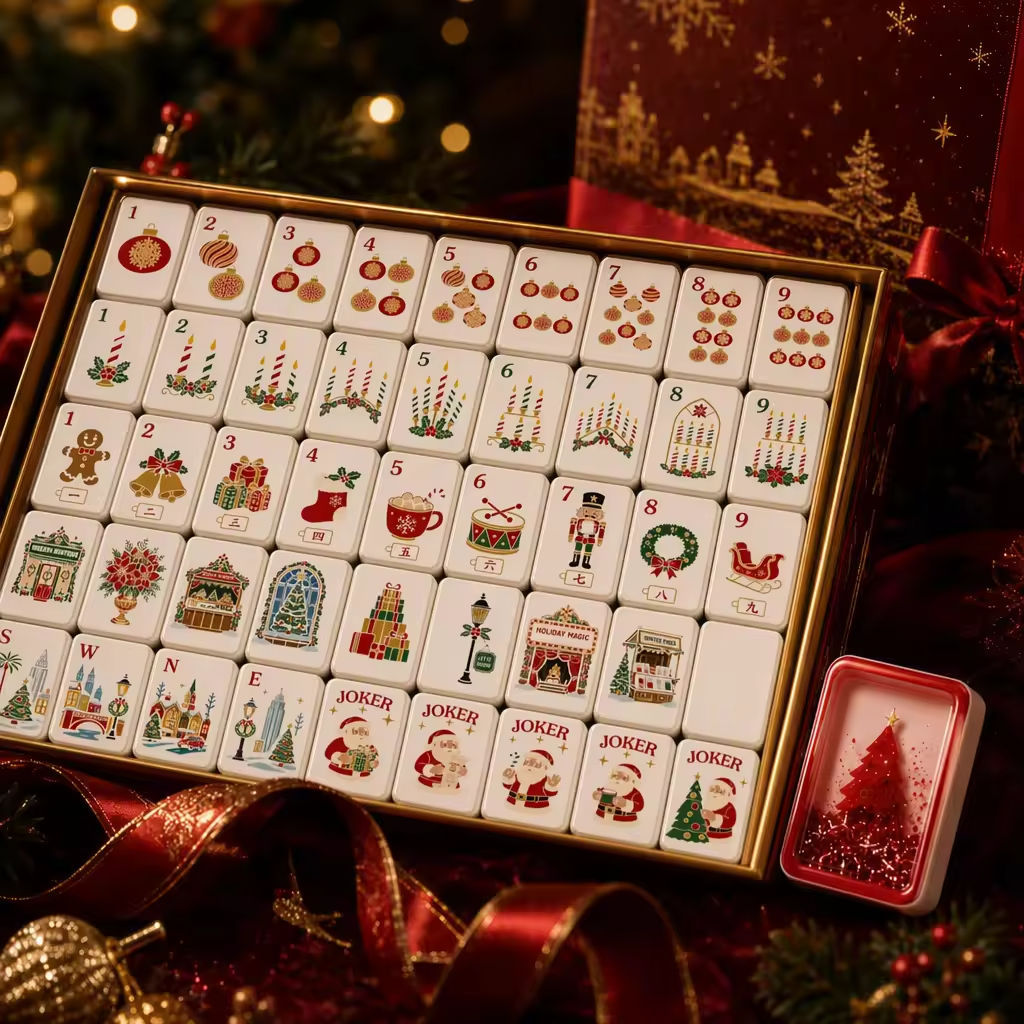
A mahjong party in Cleveland works best when you start simple: gather three or four players, use the current year's National Mah Jongg League card, and set aside 60 to 90 minutes per game. You'll need a 160-tile American mahjong set, a cloth mat to protect surfaces and muffle tile noise, and racks with pushers so players don't strain their hands. Before play, run the Charleston—a three-step tile-passing ritual that randomizes your hand and balances luck. Games happen in people's living rooms, libraries (which often host community game groups), country clubs, and synagogues across the Cleveland area; check community center bulletin boards and neighborhood Meetup pages for existing groups to join or use as models. A beginner party works best with snacks, breaks between rounds, and printed copies of the current year's mahjong card so new players can reference hand patterns without asking constantly.
🀄 Shop best-selling mahjong sets →
How do I set up the table and tiles?
Place your mat in the center of a sturdy table—it protects the surface and keeps tiles from sliding. Sit one player on each side (North, East, South, West). Each player gets a rack to hold their tiles hidden. Deal 13 tiles to each player and one to the dealer; the dealer rolls dice to determine who draws first after the Charleston. Keep the spare tiles and jokers nearby in case of disputes.
The mat keeps the game organized and quiet. A mahjong mat designed for regular play helps everyone see the layout clearly and prevents tiles from shifting mid-game.

What if my group has never played before?
Print the current year's National Mah Jongg League card for each player—not the old ones lying around. Teach the Charleston first (no strategy, just passing rules). Then play a practice round with all hands visible so everyone sees how matching works. After one real round, most groups catch on quickly.
New players often confuse chows (sequences) with pungs (three identical tiles). American mahjong allows only pungs, kongs, quints, and sextets—never sequences. Have someone anchor the group by reading hands aloud from the card until players recognize the patterns.
Learn the full Charleston ritual step-by-step →
Should I serve food and drinks during play?
Yes, but keep snacks light and hands clean. Cheese, nuts, and fruit work. Avoid greasy chips; they stain tiles fast. One host per party should stay neutral during rounds—this person can refill drinks and snack bowls without adding to game tension. Many Cleveland groups break between games for five minutes, reset the table, and serve the main spread then.
Protect your tiles by keeping drinks in cups with lids and setting a "no drinking near the mat" rule. Your 160-tile set investment stays readable and playable longer when tiles stay dry.
What's the best way to teach scoring?
Don't teach American mahjong scoring at your first party—it stalls the fun. Agree in advance on a flat payout (e.g., one point per win, play to 100 points) or play for fun with no money. Once your group wins three or four rounds, introduce the actual scoring system using the card and a simple hand calculator.
Most beginning groups get lost in point values before they understand hand patterns. Simplify first; score math comes later.
How often should we play and for how long?
Host weekly games if your core group is steady (four regular players). If people drop in and out, plan monthly Sundays or Friday nights. Each round takes 15 to 30 minutes; play three to six rounds per gathering, with breaks between. Most parties wrap in two hours.
Consistency builds skill fast. A weekly Cleveland game group will move from beginner card-reading to hand recognition within two to three months.
🎁 See our most-loved mahjong sets & accessories →

Party Setup Checklist
Item | Why it matters | Notes |
160-tile set + current card | 152 tiles play; 8 spare jokers account for lost pieces | Check the card date (issued spring each year) |
Cloth mat | Protects table, muffles noise, defines play zone | Machine-washable options reduce staining stress |
Four racks with pushers | Hides hands, reduces hand fatigue during long games | Pushers keep tiles tidy, prevent accidental reveals |
Dice (included in sets) | Determines dealer and draw order per Charleston | Keeps the game random and fair |
Printed current-year card (one per player) | Players learn patterns without slowing play | Laminated copies survive snacks and spills |
Pen and scorepad | Tracks wins even if final points go unscored | Beginner groups often skip scoring first month |
Timer (phone works) | Prevents one player from stalling; keeps pace brisk | Set 3-minute limit per turn max |
What to Check Before You Buy
Tile quality. American mahjong tiles should be acrylic and clearly marked with numbers and suit symbols. Tiles that are worn, cracked, or blurry confuse new players. Engraved sets from Mahstead use durable acrylic that stays readable after hundreds of games.
Mat size. Mats range from compact (for small tables) to oversized (easier for beginners to see). A standard-sized mat works for 36-inch tables; measure your table first.
Joker count. A 160-tile set includes spare tiles beyond the 152 used in play. Spares replace lost or damaged tiles—essential for long-term hosting.
Rack comfort. If any player has arthritis or hand weakness, racks with pushers reduce fatigue dramatically compared to hand-held tiles.
Hosting First-Timer Mistakes to Avoid
Not running the Charleston. Skipping it feels like saving time but breaks the game's fairness. The Charleston is part of the ritual; run it every round.
Using old mahjong cards. The National Mah Jongg League issues a new card every spring. Old cards have different hands and confuse new players. Print the current year only.
Mixing variants. American mahjong, Chinese mahjong, and Riichi mahjong play differently. Pick one, teach it fully, don't switch mid-party.
Teaching scoring too early. American mahjong scoring involves bonuses, doubles, and special hand values. Let players master the basics first.
Leaving tiles loose on the table. Without a mat and racks, tiles shift, get bumped, and games stall. Invest in equipment upfront.
✨ Find your Mahstead set — free US shipping →
Finding Mahjong Groups in the Cleveland Area
If you'd rather join an existing group first, start at your local community center or library. Many branches host or can point you to active groups. Check synagogues and country clubs—they often have steady mahjong programs. Online neighborhood boards (like Meetup or local Facebook groups) list regular games and weekly meetup times.
If no group exists near you, starting one takes just four people, one table, and one mat. Post on community boards, invite coworkers, and watch it grow. That's how most lasting Cleveland mahjong groups begin.
For deeper learning after your first party, read how American mahjong rules and the Charleston work together—it transforms play from confusing to natural fast.

FAQ
How many people should I invite to a mahjong party?
Invite exactly four players—one for each direction (North, East, South, West). Three or two players use alternate rules and change hand patterns. Four is standard and most fun for learners.
Can I use an old mahjong set from my mother?
Only if it's American mahjong (152 tiles + jokers) and includes the current year's National Mah Jongg League card. Chinese or Japanese sets won't work. If tiles are cracked or numbers worn, new players can't read them.
Do I need to buy special mahjong-branded snacks for a party?
No. Serve any light snack—nuts, cheese, crackers, fruit. Keep drinks covered, enforce a "no eating over the mat" rule, and you're fine.
How much should I charge players per game?
Most beginner Cleveland groups play for fun (no money) the first month. After that, charge small amounts (pennies or quarters per point) or flat fees ($2–5 per person per night). Check local gambling laws if real money is involved.
What if someone loses their temper or plays too slowly?
Set a turn timer (3 minutes max) before you start. Agree in advance that scores stay friendly. If one player consistently slows the game, talk privately after—many don't realize their pace. Humor and clear expectations prevent tension.
Should I teach the Charleston before or after explaining the goal of the hand?
Teach the goal first (match 14 tiles to a pattern on the card to win). Then run the Charleston as part of setup. New players understand why the ritual matters once they know what a winning hand looks like.


View More
View More
View More
