
Mahjong Generational Tradition: Teaching Family & Friends Today
Last updated: Nov 23, 2026
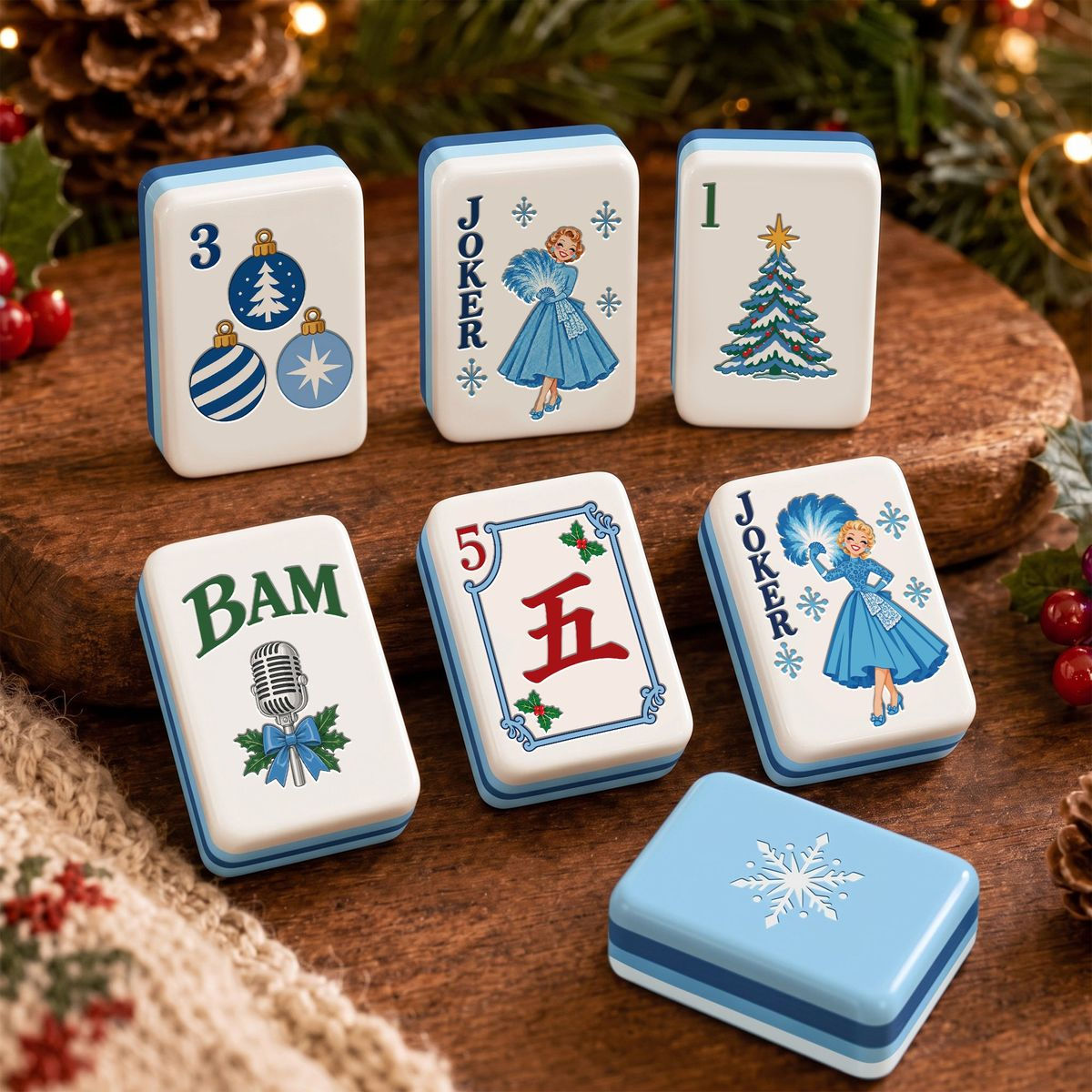
Mahjong generational tradition is the practice of teaching and playing American mahjong across age groups—grandparents to grandchildren—creating a sustained family or friend ritual. The game originated in China over a century ago; American mahjong, standardized in the 1920s, uses 152 tiles, is played four players at a time, and follows the current year's National Mah Jongg League card (issued each spring). A typical game lasts 1–2 hours per round. To start a tradition, you need one 160-tile set, a mat, racks with pushers, the League card, and a commitment to weekly or monthly gatherings. Many families begin with the oldest player teaching two or three younger players the basic tiles, then rules, then strategy—a process that takes 3–6 weeks of casual play. Mahstead offers engraved sets with family names and durable mats designed for decades of use, which reinforces the long-term ritual. 🀄 Shop best-selling mahjong sets →
Why Does Mahjong Create Lasting Family Bonds?
Mahjong differs from card games and board games because it requires real skill development, social silence (sorting tiles, calculating), and shared responsibility—all four players need to pay attention or the game stalls. Players aged 8 to 88 can learn simultaneously; the youngest may struggle with tile recognition at first, but within weeks they're reading the League card and making valid hands. Crucially, the game enforces equity: no one person dominates play, luck shuffles tiles fairly, and strategy grows over time. Multi-generational tables also embed patience—younger players watch elders make decisions, elders watch younger players innovate. This shared vulnerability and growth, repeated weekly, builds something deeper than a win/loss scoreboard.

How Do You Teach a Complete Beginner (at Any Age)?
Start with the tiles themselves. Lay out all 152 tiles in front of the learner and sort by suit: Bams (1–9, marked with bamboo), Craks (1–9, marked with circles), Dots (1–9, marked with dots). Explain Winds (North, East, South, West), Dragons (Red, Green, White), and Flowers. Let them shuffle and draw randomly—this builds comfort without rules. On week two, introduce the League card: show them how to read a hand pattern (e.g., three Pungs and a Pair). Week three, teach the Charleston (the tile-passing ritual), then play a half-game with all tiles visible. By week four, move to hidden play with racks and pushers. Never rush tile-naming; muscle memory matters more than speed. The learner's confidence grows fastest when they draw a winning hand first—even if it's luck.
What Equipment Makes Multi-Generational Play Sustainable?
A durable mahjong mat is non-negotiable for long-term play; it protects tiles and defines the play space. Racks with pushers prevent tiles from sliding and reduce hand fatigue—critical for older players with arthritis or younger players with smaller hands. A 160-tile set with extra jokers ensures you never run short mid-tradition. Many families choose engraved sets bearing a family name or slogan—this turns the set into a heirloom. Store tiles in a rigid case or bag to survive decades of moves. One family we know plays with a set from 1985; the tiles are worn smooth, and the grandchildren call dibs on inheriting it.
Equipment | Who Benefits | Why It Matters |
Mat | All ages, all hand sizes | Prevents tile scatter; defines formal play |
Racks with pushers | Players 65+, kids under 10 | Reduces hand strain; steadies tiles |
Engraved set | Multi-generational household | Signals permanence; becomes shared identity |
Rigid case | Anyone traveling or storing | Preserves tiles for 20+ years |
Extra jokers (in 160-tile set) | Active weekly players | Replacement for lost/damaged tiles |
🎁 See our most-loved mahjong sets & accessories →
How Do You Keep the Tradition Alive When Life Gets Busy?
Consistency beats perfection. Pick one weeknight or Sunday afternoon and protect it—the same table, same four players, same time, for at least one year. When a player inevitably misses, agree on a sub or play without. In families that have played for 30+ years, the game often stops for births, moves, or illness, then resumes; the tradition survives gaps. Use a shared calendar to show commitment. If learners are young (under 16), connect the game to an older relative who wants to teach—enthusiasm is contagious. Some families tie mahjong to a holiday (annual reunion, Thanksgiving) and play intensively for one week per year; others commit to weekly, year-round. Neither fails if the intention is stated up front. The strongest traditions we've seen started small (two older sisters, one cousin) and grew organically as children watched and asked to join.
What Mistakes Derail Generational Traditions?
The biggest mistake is expecting everyone to learn at the same pace or enjoy it equally. One grandchild might love the math; another craves the social hour; another tolerates it to be near family. Let each person find their own entry point. Second: playing with an outdated League card. The card changes every spring; stale hands confuse new players and frustrate experienced ones. Update every year. Third: poor equipment. Cheap tiles stick, felt mats tear, plastic racks crack—and suddenly the weekly date feels like a chore. Invest once in durability; it pays dividends in 10+ years of frictionless play. Fourth: not teaching the tiles first. Beginners who skip tile-naming run into shame when they can't identify a hand. Spend two weeks on tiles before any scoring. Fifth: treating it like competitive sport. Mahjong traditions thrive on light stakes, laughter, and comeback stories—not winning percentages. If money creates tension, play for fun points only.
Check the National Mah Jongg League website for this year's card before you buy a set; confirm all players can access a current card. Verify how jokers work before your first game—jokers are powerful and easy to misuse. Read how to read the mahjong card as a group during your first session; do not assume anyone knows the format. Test the Charleston with spare tiles before live play. Ensure your mat has enough space for four players and racks; measure your table beforehand.
✨ Find your Mahstead set — free US shipping →

Can You Play Mahjong with Only 2 or 3 People?
Yes, but the rules differ significantly from four-player American mahjong. 2 and 3-player variants adjust tile draw rates, hand patterns, and seating. If your family has fewer than four, start with this variant from the beginning—do not try four-player rules with fewer seats. Some traditions rotate extra players (five or six) and play in shifts; others form two tables.
What's the Difference Between American, Chinese, and Hong Kong Mahjong?
American mahjong uses 152 tiles, hands come from the annual League card, jokers are wild, and you cannot call sequences (chows). Chinese and Hong Kong mahjong use 144 tiles, allow sequences, have no published card, and play without jokers. Riichi (Japanese) mahjong uses 136 tiles and melds. Learn one variant deeply; mixing rules derails tradition and causes conflict. American is the easiest entry for English-speaking families in the US because of the standardized League card—it removes the need to memorize hand patterns.
How Young Is Too Young to Learn Mahjong?
Most players grasp tile names and basic scoring by age 8–10. Younger children can sit in and learn patterns through observation. The real limit is patience and attention span, not age. If a child asks to learn, try it; if they lose interest, revisit in two years. Do not force it. Some children come to the game at 16 and become its most passionate players; others never join and the tradition skips a generation—both are normal.
How Do You Handle Money/Scoring in a Family Game?
Many family traditions play for zero money and track points only. Others play "friendly stakes"—a nickel per point, paid out at the end of an afternoon. Decide before the first hand and state it clearly to learners. If stakes create resentment or financial stress, stop. The longest traditions we know play for bragging rights alone. Scoring can be as simple as four-player tally marks on paper, or use dice to roll out settlement. Read American mahjong scoring thoroughly so everyone understands the math before money enters the picture.
What Should I Do If Someone Stops Enjoying the Game?
Ask why directly. If they're bored, change tables or play format (e.g., shorter rounds, different mat, new player rotation). If they feel excluded, pair them with a skilled player who explains calls and strategy. If they have life stress (health, work, grief), pause the game and resume when they're ready. If they simply do not like mahjong, do not push. A tradition thrives when all four players choose to show up, not when anyone feels obligated. Some of the strongest traditions we've seen pause for months or years and restart without friction because the original commitment was genuine.

FAQ
How long before a new player can win their first hand?
Most learners win within 4–8 casual games (2–3 weeks of weekly play) once they understand tiles and the League card. Winning comes from luck as much as skill at first; celebrate it. Speed of learning depends entirely on their tile-recognition comfort and whether they study the card between sessions.
Can a mahjong tradition survive if one player moves away?
Yes. Add a new player, rotate substitutes, or play with three people using adjusted rules. The strongest traditions we know have survived relocations, retirements, and medical crises by adapting the roster, not abandoning the weekly date.
Do we need a dedicated mahjong table, or can we use our dining table?
A dining table works fine if you add a durable mat to protect tiles and define the play space. A mat also saves your table from scratches and tile marks. If space is tight, a small mat works for hands-on play; use racks to hold unplayed tiles.
What's the best way to store a mahjong set between weekly games?
Use a rigid case or padded bag to keep tiles clean and organized by suit. Store in a cool, dry place away from direct sun (keeps tiles from warping or fading). Check jokers are in place before each game; they disappear easily and are the first spares you'll need.
Can I teach mahjong rules from a book, or do we need an experienced player?
An experienced player accelerates learning by 4–6 weeks because they model tile etiquette, hand recognition, and decision speed. But detailed guides and videos work if everyone commits to reading them before gathering. Mix both: book learning + one live teacher = fastest, most confident start.
Is it normal for multiple players to win hands on the same deal?
No. In American mahjong, only one player can win per deal (discard). Once one player goes Mahjong, the round ends and tiles are shuffled for the next deal. If two players claim to have won, someone misread their hand or the League card—stop, recount tiles, and learn from the error.
How do we know if our set is still playable after years of use?
Tiles should still be legible (paint not rubbed off), jokers still present, and no cracks or splits. If bamboo/acrylic racks are cracked or pushers are lost, replace them individually; you do not need a new set. Many families play for 20+ years with original sets—they wear smoothly but remain playable.


View More
View More
View More
