
American Mah Jongg House Rules: When & How to Break the Official Card
Last updated: Nov 23, 2026
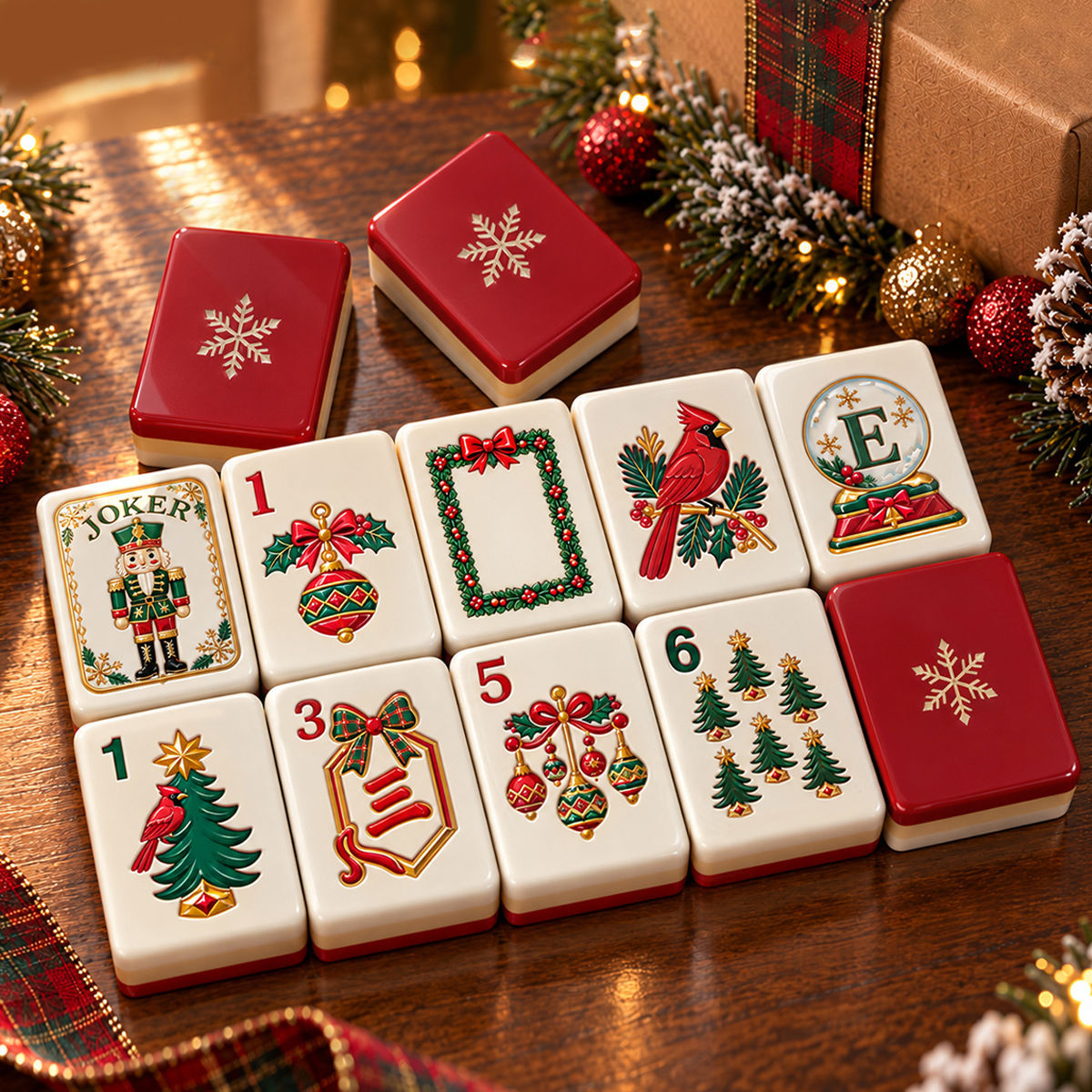
American mahjong is strict by design: hands come only from the current year's National Mah Jongg League card, you may expose only pungs, kongs, quints and sextets (never sequences), and jokers cannot fill a single tile or a pair. Within that frame, house rules thrive. Common tweaks include: paying a bonus for picking your own winning tile (seldom drawn), doubling payment for skunks (zero points), forgiving one accidental discard per hand, or waiving the Charleston after round one if players tire. What cannot change: the 152-tile count, the card's hand requirements, or the core exposure rules—those preserve game integrity across clubs nationwide. Before your first game, ask your host what variations are in play, write them down, and agree before the first Charleston begins. Mahstead players often document house rules on a small notecard tucked into their best-selling mahjong sets for quick reference.
What tiles go on the table is non-negotiable: 152 tiles (108 from three numbered suits—Bams, Craks, Dots—plus 16 winds, 12 dragons, 8 flowers, 8 jokers). Each player draws 13 tiles; the dead wall holds 14. Every hand must match a pattern on the current year's card. Jokers can substitute for any tile except in pairs or singleton tiles. Those rules bind all American mahjong games, everywhere, always.
House rules exist in the gaps between that frame and real life. A beginner draws the wrong tile by accident—house rule says replay, no penalty. A player forgets the Charleston or wants to skip it after two rounds—the group decides. One player always picks their own winning tile (rare but legal)—your house rule might say that player pays double. The key principle: document before play, never mid-hand, and never contradict the card or the core tile count.
Which house rules are safe to adopt?
Safe house rules don't alter hand legality or tile logic; they adjust payment, speed, or social grace. Forgiving one accidental discard per player per game is common. Allowing players to request a tile recount if someone suspects a short wall is wise. Charging double payment for a skunk (winning with zero points on anyone's play) adds bite. Waiving the Charleston after round three if players want speed works. Paying a bonus when you pick your own winning tile (legal but rare) spices up endgame tension. Starting a rule: "If you discard a tile another player instantly calls, you may not reclaim it mid-hand" prevents chaos. None of these touch hand validity or the tile count.

What house rules should you never break?
The 152-tile playing count is sacred—no blanks, no extra jokers added to the game itself. Hand legality is locked: you cannot invent hands off-card, and you cannot allow sequences (chows) to be exposed or called, since American mahjong has no sequences in play. Joker rules are fixed: no joker can fill a single tile, a pair, or any position alone. The Charleston is optional only by collective pre-game agreement; you cannot skip it unilaterally mid-game. Payment to the winner(s) is per the card; you cannot arbitrarily double or halve it except via a stated house rule everyone accepted before the first hand. Violating these rules converts the game into a different (often Chinese or Hong Kong) variant, which is fine—if that's what everyone chose to play.
Should your group write rules down, and where?
Absolutely—and most groups wish they had earlier. One person (rotating, perhaps, each quarter) keeps a small note or a shared document listing all active house rules: the exception to the Charleston rule, any forgiveness policy, skunk penalties, payment bonuses, dealer-goes-again rules, if any. We've seen groups argue for ten minutes because half remembered a rule one way and half another; a one-sentence list prevents that. Many of our customers tuck a laminated card inside their mahjong bags and cases, listing house rules next to their set for easy reference when hosting. If your group plays weekly or more, a shared note (email thread, group chat, or printed sheet) is worth the minute it takes.
How do you introduce a new house rule mid-season?
Propose it before anyone sits down and draws tiles. Explain why (speed, fairness, fun). Let everyone vote; it needs consensus or a clear majority (typically 3 of 4 players). If anyone says "no," the rule does not go in for that session. If it goes in, announce it as temporary—"Let's try this for two weeks, then vote again." Record it on your rules card. After two weeks, ask: "Keep it, drop it, or tweak it?" This process prevents resentment and keeps the table warm. New players deserve a copy of your house rules card before their first draw, so they know what they're walking into.
How do house rules differ across regions?
American mahjong itself has no regional variants—the card and core rules are nationwide. What varies locally is which house rules are traditional or popular. Suburban Dallas groups might favor a skunk double-payment rule; a club in Miami might require Charleston every hand with no exceptions. Some tables allow a player to request a "reset" (reshuffle and re-draw) if no one has called after the first discard round; others never allow it. Synagogue groups often have a strict no-table-talk-about-tiles rule; competitive clubs may allow it. These are all legitimate. When you join a new group or visit a new venue, always ask: "What house rules are in play tonight?" Listen, ask follow-up questions, and ask to see their rules card or list. That respect goes a long way.
House Rule Example | Why Use It? | Who Usually Adopts It? | Risk or Trade-off |
Skunk = double payment | Adds strategy weight to endgame; punishes careless play | Competitive or semi-friendly groups | New players may feel harsh initial sting |
One forgiven discard per player per hand | Keeps casual games relaxed; prevents rage-quits over typos | Social/family groups; mixed skill levels | Can be abused if not monitored loosely |
No Charleston after round two | Speeds play; popular for groups with time limits | Fast-play clubs; tournament prep | Removes tile-improvement opportunity; some feel it's unfair |
Self-pick winning tile = bonus payment | Rewards observation and luck; encourages active play | Any group wanting endgame drama | Rare, so bonus must be small or psychological |
Tile recount allowed once per game | Prevents disputes; builds trust in wall integrity | Groups with frequent short-wall accidents | Slows play by 1–2 minutes |
Dealer repeats if no one calls first discard | Increases dealer advantage; speeds early rounds | Time-limited groups; some clubs | Can extend dealer's run unfairly if abused |
🀄 Shop best-selling mahjong sets →

How do you handle disputes about a house rule mid-hand?
Stop play immediately. Do not continue the hand. Bring out your rules card or list. Read the rule aloud, word-for-word. If the wording is ambiguous, vote on the intent before resolving the hand. Record the clarified wording. Finish the hand using the agreed interpretation. After the round, update the rules card with the clearer language. This approach treats the rule as truth, not as opinion, and it trains everyone to reference the card first—just like checking the official National Mah Jongg League card for a hand. Most disputes dissolve once the written rule is public.
What if someone refuses to follow a house rule they agreed to?
Address it gently before the next hand. Say: "Hey, we agreed on X before we started—I want to make sure everyone's on the same page." If they push back, ask: "Should we change the rule? Does anyone else want to vote?" Never shame or eject. If they refuse to follow any agreed rule, they may sit out the next hand or bow out that session. Most groups can absorb one or two hiccups; if a player consistently breaks house rules, a quiet conversation outside the game is your best move: "You're great to play with—just want to sync on our rules so we stay on the same page."
🎁 See our most-loved mahjong sets & accessories →
What to check before you buy a set for hosting with house rules
Tile count & quality: A 160-tile American mahjong set gives you 152 playing tiles plus spares—enough for a full game with a few extra tiles for replacement if one cracks. Check that the tiles are thick acrylic (durable for weekly play) and that suits and honor tiles are clearly engraved, not painted, so they withstand shuffling.
Mat or table cover: If you host regularly, a mat keeps your table safe and speeds play. Look for one with a felt underside (grips the table) and a clearly marked dead wall. A mat also signals "serious game"—reinforcing that house rules matter here.
Racks with pushers: Racks let players hide their hand and arrange tiles neatly; pushers help newer players or those with hand mobility issues set and pull tiles smoothly. If your group includes players with arthritis or anyone building confidence, racks are worth the investment.
Bag or case: A quality bag keeps your set intact, safe during travel, and organized for the next game. Label it, store the rules card inside, and your hosting setup is complete.
Our best-selling mahjong sets come in acrylic with clear engraving; pair one with a mahjong mat and your hosting setup is tournament-ready.
The one-page house rules checklist
Before your first hand:
✓ Confirm all house rules aloud; no one assumes.
✓ Write them on a card or document; keep it visible.
✓ Agree on payment adjustments (skunk double, self-pick bonus, etc.).
✓ Decide: Charleston every hand, or only first round?
✓ Set one forgiveness rule (accidental discard, one recount allowed, etc.).
✓ Assign one person to be the "rule keeper" for tie-breaking mid-game.
✓ Agree: How do we vote on a new rule mid-season?
✓ Place the card inside your mahjong bag or case for every gathering.
House rules succeed only when everyone trusts the rules, not because they're arbitrary, but because they were made together. That trust keeps the game warm, fair, and fun.
✨ Find your Mahstead set — free US shipping →
For the deeper mechanics of American mahjong play itself, see how to play American mahjong. To understand tile strategy and the official card rules, explore how to read the mahjong card and American mahjong scoring.

FAQ
Can we skip the Charleston every hand and just draw fresh?
Yes, if everyone agrees beforehand. The Charleston is optional by group consensus. Write it down: "Charleston round one only" or "No Charleston after round two." Announce it before anyone sits, not mid-game.
Is a "no table talk about tiles" rule official?
No, it's a house rule only. Some clubs enforce it; others allow free discussion. Decide as a group. If adopted, make it clear: talking about a specific tile you're holding, discarding patterns, or wall count is off-limits once the hand begins.
What if half the group votes yes on a new rule and half vote no?
The rule does not go in for this session. Majority (3 of 4) is a reasonable threshold. If someone feels strongly, try a two-week trial and revisit. Consensus feels fairest, but a 3-of-4 vote prevents gridlock.
Can we allow players to change a discard after someone calls it?
No—that would alter core hand validity and create chaos. Once a tile leaves your rack, it's played. Your house rule can be: "If you accidentally toss a tile, you may replace it with another before anyone calls," but once called, the tile is locked.
Should new players get a copy of house rules before they arrive?
Absolutely. Email or text the rules card before their first night. It shows respect and prevents surprises. New players who know the house rules beforehand relax faster and enjoy the game more.
Can a house rule override the scoring card?
Never override hand validity or payment to multiple winners. You can adjust bonuses (skunk double, self-pick bonus) or timing (Charleston frequency), but the card's hand list and the basic winner-gets-paid rule are national law. Break those and it's a different game.


View More
View More
View More
