
Mahjong for Tile Rummy Players: What Transfers, What Doesn't
Last updated: Nov 23, 2026
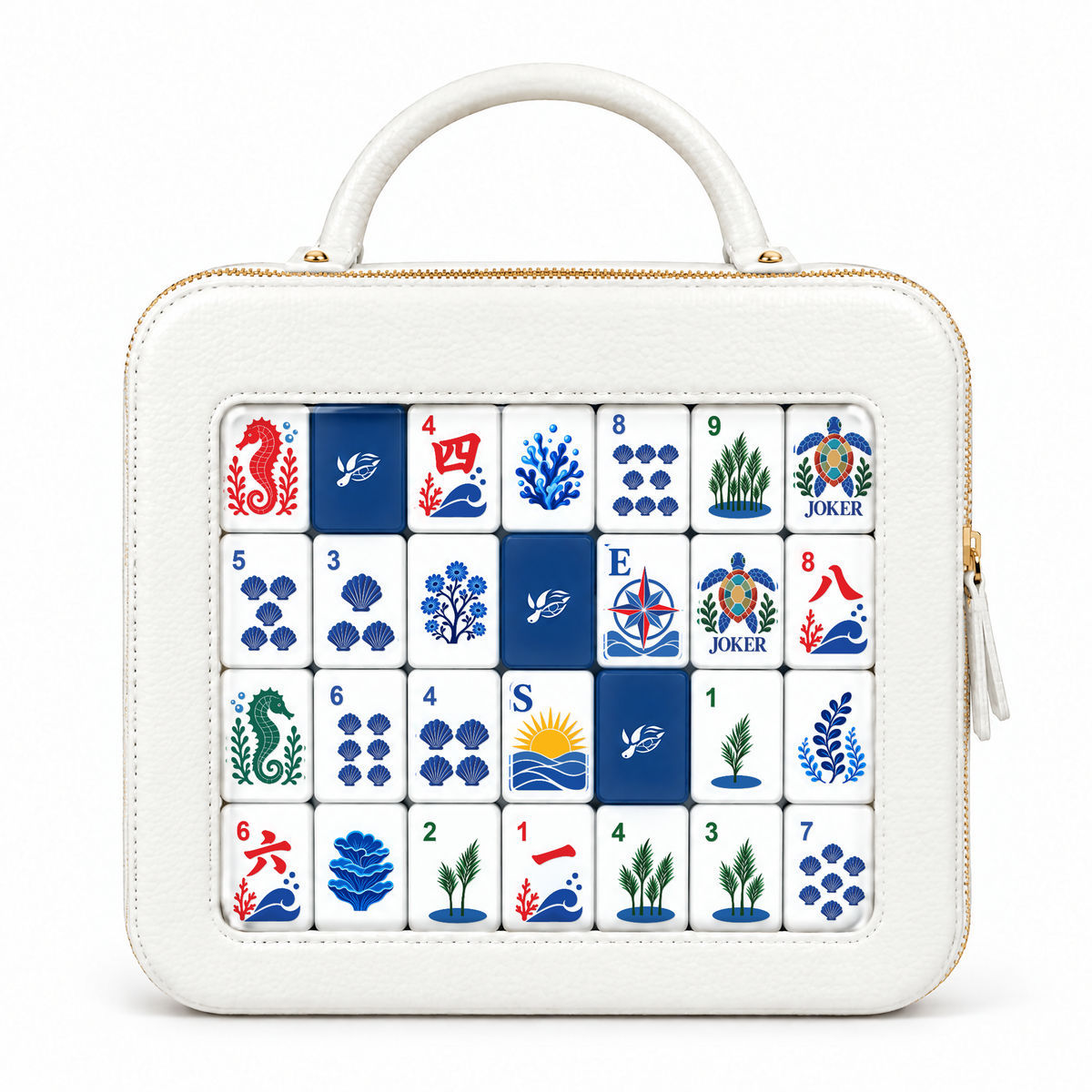
Tile Rummy and American Mahjong share a common spine: melds made from numbered suits, discard pressure, and reading table probability. But American Mahjong hands come only from the current year's National Mah Jongg League card (issued every spring), which means no free-form sequences—only exact matches to printed patterns. You cannot make a pung (three identical tiles) from 1, 2, 3 Dots like you could in Rummy; in American play, a pung must be three of the same number and suit. The best-selling mahjong sets include a published card so you learn legal hands immediately. Jokers in American Mahjong also work differently: they substitute for any single tile within a meld, never stand alone or form pairs, and you cannot hide them in your hand—they must be exposed. The Charleston (the tile-passing ritual before play starts) is unique to American Mahjong and has no Rummy equivalent. Setup time matters: expect 10–15 minutes for a full Charleston at first, then 5 minutes once your group learns the rhythm.
If you've spent years mastering Tile Rummy, the leap to American Mahjong feels like learning a new language with familiar vocabulary. Melds, suits, numbers, discard tactics—they're all here. But the hand construction, the passing ritual, and the role of jokers diverge sharply enough that old habits will trip you up. We'll map exactly what transfers and where you need to unlearn.
How are melds different in American Mahjong vs. Tile Rummy?
In Rummy, you build sequences (1–2–3 Dots) and sets (three or four identical cards) freely as long as they total 30 points or match the contract. American Mahjong constrains you: hands are printed on the League card, and you only expose pungs (three identical tiles), kongs (four identical), quints (five), or sextets (six). No sequences—called "chows"—are ever exposed. In Tile Rummy, a 1–2–3 run is a legal meld you can lay down; in American play, 1–2–3 Dots is only legal if the card shows that exact 1–2–3 pattern as part of a larger hand. That distinction means you cannot call a meld mid-hand just because it looks good; you must wait until your entire hand matches a single printed pattern. Reading how to read the mahjong card rewires this instinct entirely.
🀄 Shop best-selling mahjong sets →

Why can't I use Tile Rummy hands in American Mahjong?
Tile Rummy lets you invent combinations within a scoring frame; American Mahjong hands are fixed by the League card, which reissues every spring with new legal patterns. The card shows roughly 70–80 hand patterns, each requiring exact tile counts and suits. For example, the card might show "3 Like Numbers" (three different patterns of three identical tiles each) or "2 Pungs + 1 Pair" (six tiles), but never a wild free-form meld like Rummy allows. This lock-in exists so all players across the country play by one ruleset; without it, every table would argue about legality. The card is non-negotiable—if your hand doesn't match a printed pattern, you lose the round. Rummy trains you to spot any combination; American play trains you to spot only the 70–80 legal ones. That's a perceptual shift, not just a rule shift. Print a fresh card at your table, study it during your first few games, and your brain will rewire within 4–5 sessions.
How do jokers work in American Mahjong vs. Tile Rummy?
In Tile Rummy, a joker or wild tile is a free substitute: it can fill any slot in any meld, and you usually keep it hidden until you play it. American Mahjong jokers must be exposed the moment you place them. They substitute for one tile within a meld—if your hand calls for a 3 Bam in a pung, a joker can fill that slot—but they cannot stand alone, cannot form a pair, and cannot be used invisibly. An American set includes 8 jokers (out of 152 playing tiles); Rummy sets vary, but American's tight joker count makes them precious and visible. If you're used to hiding jokers and playing them as surprise weapons, American play will feel restrictive at first. But it also means everyone sees your strategy and can adjust their discard accordingly—less bluffing, more tactical reading of what's exposed. Understanding how jokers work shifts your endgame: you're not hoarding a hidden wild; you're exposing it to complete a meld and moving toward a win.
What is the Charleston and why is it unique to American Mahjong?
The Charleston is the tile-passing ritual that happens before a single hand is drawn. All four players receive 13 tiles face-down and simultaneously pass three tiles to their right, then three tiles across, then three tiles to their left—all blind, without looking. It randomizes the distribution but also lets experienced players make educated passes based on table position and hand reading after the round ends. Tile Rummy has no equivalent; you simply draw from a deck. The Charleston serves two purposes: it scrambles luck (so the best hand doesn't always go to the East player) and it creates a social moment of coordination and ritual. The first time you play, the Charleston feels clunky; by round three, it becomes muscle memory and part of the game's rhythm. There's no way to rush or simplify it—the Charleston is American Mahjong's signature, and learning it is learning the game. The Charleston explained covers the exact pass sequence, so practice it cold before your first table.
🎁 See our most-loved mahjong sets & accessories →

What skills from Tile Rummy actually carry over?
Your strongest transferable skill: discarding strategy. In both games, you track which tiles your opponents need, observe what they pick and discard, and adjust your own discard to deny them outs. A player who wins at Rummy by reading the table—noticing that your left neighbor picks every Dot but no Bam—will win at American Mahjong for the same reason. The math of probability carries over too: if three 5 Craks are already discarded, the fourth is either in someone's hand or dead, and you adjust your risk. Hand evaluation also overlaps: you know how to count your "outs" (tiles that complete your hand) and weigh whether to hold a half-formed meld or pivot. What doesn't carry over is hand invention. In Rummy, you're creative; in American Mahjong, you're diagnostic. You spend your mental energy matching your tiles to the card, not imagining new combinations. That switch—from improvisation to pattern recognition—is the hardest adjustment for a Rummy player. The payoff: American Mahjong is faster (a hand takes 10–15 minutes vs. Rummy's 20–30), and there's no argument about legality because the card is the referee.
What equipment do you need to switch from Tile Rummy to American Mahjong?
American Mahjong requires specific tiles: three suits (Bams, Craks, Dots) numbered 1–9 in four copies each, 16 winds (four each: North, East, West, South), 12 dragons (Red, Green, White), plus 8 flowers and 8 jokers. A standard set is 152 playing tiles; many retail sets include spare jokers and blanks to reach 160 tiles. Tile Rummy sets are often 2–3 suits with face cards or custom scoring; they're not interchangeable. You'll also want a mat (to define each player's zone and protect the table), racks with pushers (to hold and organize your hand), a current-year League card (printed free online or purchased), and dice (to determine the starting player and wall break). Many Rummy players already own mats and dice; the leap is the tiles and the card. If you're hosting regularly, a travel-friendly bag or case keeps everything organized. Mahjong is less forgiving about missing tiles than Rummy—one missing tile ruins a game—so storage matters.
Comparison: What Transfers and What Doesn't
Skill or Rule | Tile Rummy | American Mahjong | Carry-over? |
Hand building | Invent any valid meld combo | Match exact printed card pattern | ✗ No |
Jokers | Hidden wildcard, any slot, any use | Exposed substitute, single tile only, melds only | ⚠ Different rules |
Sequences | 1–2–3 runs are legal melds | No sequences; only identical-tile groups | ✗ No |
Discard reading | Track opponent needs, adjust play | Same strategy | ✓ Yes |
Probability math | Count outs, weigh risk | Same logic | ✓ Yes |
Setup ritual | Draw from deck | Charleston (blind 3-tile passes) | ✗ New ritual |
Hand duration | 20–30 min | 10–15 min | — |
Tile set | Variable suits, often custom | Fixed: Bams/Craks/Dots + dragons/winds | ✗ Must match |
What mistakes do Tile Rummy players make when they start American Mahjong?
Mistake 1: Holding a half-formed "promising" hand. In Rummy, a hand that's three tiles away from a meld is worth developing. In American Mahjong, your hand is only valuable if it matches the card right now. Rummy players often hold tiles hoping the card changes; it doesn't. By the time you realize your tiles don't fit, you've thrown away five turns of discards and missed the actual winning pattern. Solution: check the card on every draw. If your tiles don't fit any line, change your approach immediately.
Mistake 2: Treating jokers as hidden weapons. Rummy players want to sneak a joker into a meld and surprise the table. American Mahjong forces you to expose it the moment you place it, so there's no bluff. Worse, using a joker on a weak meld early in the hand means you have no backup for a stronger meld later. Solution: reserve jokers for critical melds that can't be completed otherwise. Expose them openly and adjust your strategy when other players see them.
Mistake 3: Passing randomly in the Charleston. A Rummy player new to the Charleston often passes the three worst tiles without thinking. Experienced players pass strategically based on hand strength and table position (if you're East, you'll be first to draw after the Charleston, so you can afford to pass a good tile to the left, knowing you'll draw strong). Solution: observe one full round before playing. Watch how the seasoned players pass, and ask questions after. The Charleston is 90% habit and 10% skill.
Mistake 4: Ignoring the current year's card. Tile Rummy has one rule set; American Mahjong's card changes every spring. A hand that was legal last year might not be this year. Solution: always download or print the current card before you play. Many new players assume the card is the same as 10 years ago and argue about legality. The card is law.
✨ Find your Mahstead set — free US shipping →
What to check before you buy your first American Mahjong set
Tile count: American sets are 160 tiles (152 playing + spares). Confirm the box says 160 and includes Bams, Craks, Dots, dragons (Red, Green, White), winds, flowers, and jokers.
Tile quality: Acrylic or bone/bamboo sets last longest. Check that tiles are engraved (not printed) so the symbols won't fade after heavy play.
Mat: A mat is optional but highly recommended for your first games. It protects the table, defines each player's zone, and is easier to transport than a full table. See our mahjong mat buying guide for sizing and material choices.
Card included: The set should come with a current-year League card or clear instructions on how to download one. If not, print one free from the National Mah Jongg League website before your first game.
Racks and pushers: Not essential but helpful if you have weak hands or want to hide your tile count from others. Many sets include one rack; four racks (one per player) cost less than you'd expect.
Storage: If you're hosting, a case or bag keeps tiles organized and dust-free. Loose tiles get lost; one missing tile breaks a game.

FAQ
Can I play American Mahjong with a Tile Rummy set?
No. Tile Rummy sets usually lack dragons, winds, and flowers, or have different tile counts. American Mahjong requires exactly 152 playing tiles in the right distribution. You need a dedicated American set.
Do American Mahjong and Tile Rummy use the same hand values or scoring?
No. Tile Rummy often scores by hand value (sets are worth different points). American Mahjong scores by hand type and speed (who wins, in what order, and how many jokers were used). Scoring is unrelated.
How long does a Charleston take if I'm new?
10–15 minutes for your first few games while the group coordinates. Once everyone knows the pass order (right, across, left), it drops to 3–5 minutes and becomes automatic.
Can I use jokers the same way in both games?
Not at all. In Tile Rummy, jokers are often hidden and flexible. In American Mahjong, jokers must be exposed immediately and can only substitute for a single tile within a meld. Hiding a joker is an illegal play.
Is American Mahjong harder to learn than Tile Rummy if I already play Rummy?
Not harder—different. Rummy is about inventing and adapting. American Mahjong is about matching patterns. If you're comfortable reading a card and following rules strictly, you'll transition in 4–5 games. The discard strategy you know already applies.
Do I need to memorize the League card to play American Mahjong?
No. Every player keeps the card at the table and refers to it during every hand. Memorization comes naturally after 20–30 games, but it's never required. New players are always welcome to check the card before drawing or discarding.
Can I play American Mahjong with fewer than four players?
Yes, but the rules change for 2 and 3 players. Hand sizes and passing rituals shift. If your regular group is smaller than four, learn the adapted 2 and 3-player rules before your first game.


View More
View More
View More
