
How to Date a Vintage Mahjong Set: Tiles, Style & Era Clues
Last updated: Nov 23, 2026
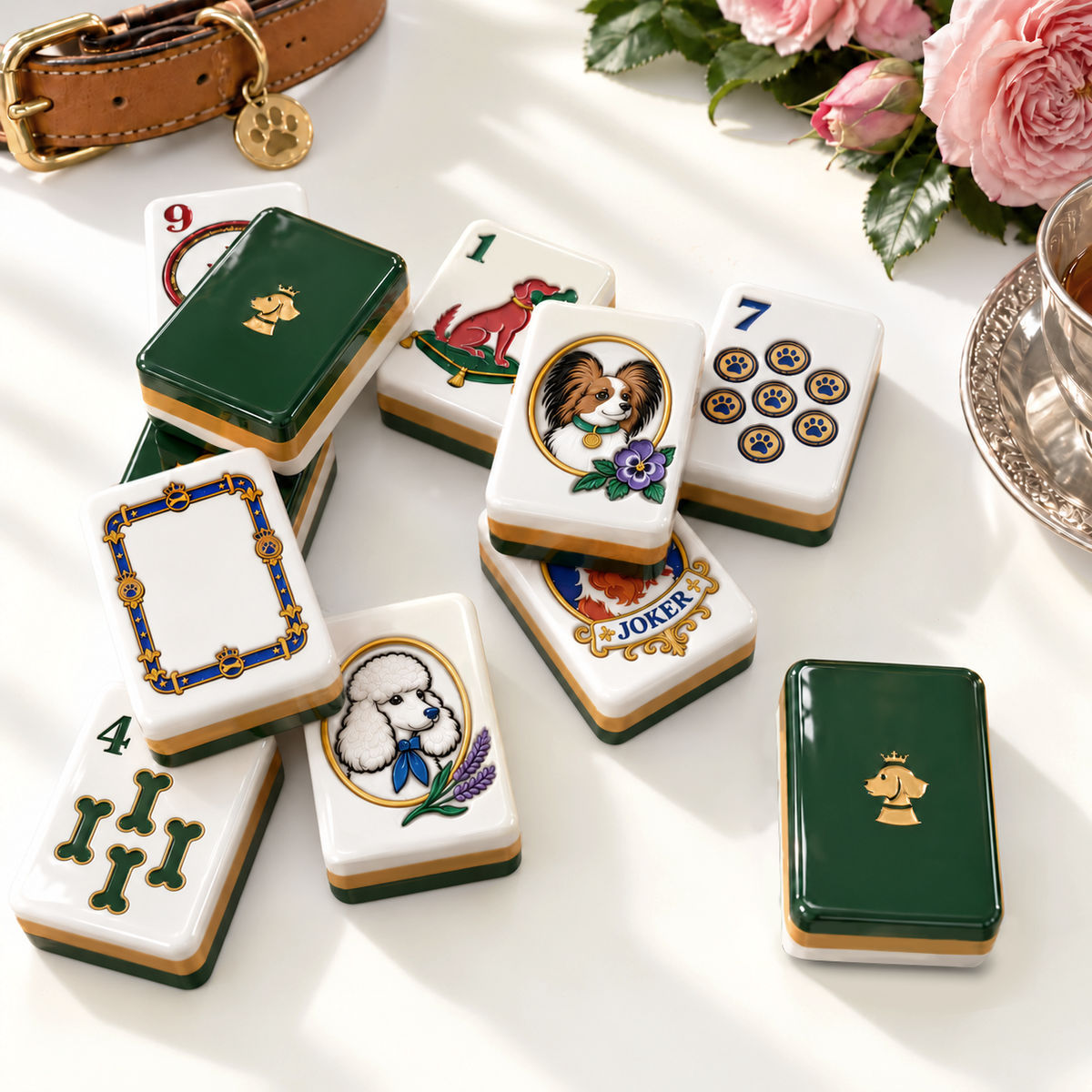
Dating a vintage mahjong set means examining three things: tile material, artwork style, and construction method. Bone or bamboo tiles (often heavier, warmer color, hand-carved characters) point to pre-1960s sets; celluloid tiles were common 1950s–1970s; plastic tiles became standard 1980s onward. Look at the box: Chinese export sets from the 1930s–1950s often have color lithographed labels with gold lettering; Hong Kong–made sets from the 1960s–1980s typically show simpler printing. Hand-painted faces with visible brush strokes indicate earlier manufacture; stamped or offset-printed tiles suggest post-1960s. Check tile backs for bamboo weave texture (older) versus flat plastic (newer). Jokers and flower tiles design also shift: simpler, hand-drawn designs predate mass-produced graphics. Most valuable sets combine excellent condition, bone/bamboo composition, beautiful hand-painting, and original wooden racks. Mahstead specializes in modern acrylic sets with engraved detail, not vintage restoration—but understanding vintage construction helps you appreciate what makes a set worth preserving.
What tile material tells you about age?
The material of your tiles is the fastest age indicator. Bone and bamboo tiles—warm cream or honey-colored, slightly translucent when held to light, with visible grain or hand-carved strokes—almost always predate 1960. These tiles were individually carved and painted, so weight feels substantial (10–12 pounds for a full set) and no two tiles are perfectly identical. Celluloid tiles (early plastic, glossy, sometimes with slight yellowing or brittleness) emerged in the 1950s and peaked through the 1970s. Most celluloid tiles feel lighter than bone but heavier than modern plastic. Bakelite, a hard phenolic resin used from the 1920s–1950s, appears dark brown or black and is extremely durable but brittle if cracked. Modern plastic tiles—smooth, lightweight, uniform—became dominant after 1980 and remain standard today. If your tiles are bone or bamboo in pristine condition with hand-painted characters, you likely have a set from the 1920s–1950s, a genuine collector's piece.

How do you read the box label for origin and era?
The box and its printing style reveal where and when your set was made. Pre-1950s Chinese export sets almost always feature elaborate color lithography: gold lettering, decorative borders, and detailed landscape or calligraphy scenes. The label often reads "Product of China" or shows a Chinese factory name in romanized characters. Hong Kong–made sets from the 1960s–1980s typically have simpler two- or three-color offset printing, sometimes with English brand names and "Made in Hong Kong" prominently placed. Taiwan-made sets from the 1970s–1990s tend toward brighter plastics and more English text. Japanese sets (less common in the West) often feature precise, minimalist graphics and higher-quality wooden boxes. The box condition itself matters: original boxes with unfaded labels and intact corners add 20–30% to value. If the box is missing but tiles are bone or bamboo, the set is still valuable; if the box is the only original element and tiles are plastic, value drops significantly. Wooden boxes with brass hinges and felt linings almost always indicate pre-1960s manufacture; cardboard boxes arrived in the 1960s and became universal by the 1980s.
🀄 Shop best-selling mahjong sets →
What artwork details pinpoint the era?
Hand-painted tile faces are the hallmark of pre-1960s sets. Look closely: do you see tiny brush marks, slight color bleeding at edges, or variation in line weight? Those are signs of human hand-work. Pre-1950s sets often feature delicate, classical imagery—bamboo motifs with flowing strokes, dragons with scaled detail, flowers rendered in traditional Chinese painting style. Starting in the 1950s, designs became more standardized as photo-lithography and offset printing replaced hand-painting. By the 1970s, tile faces were often stenciled or stamped with uniform weight and flat color. Joker and flower tile designs are especially revealing: early jokers show illustrated faces or symbols; later jokers become simple text or abstract marks. The character for "White" (Soap, also serving as zero) evolved too—older sets may show an ornate symbol; modern sets use simple blank or minimalist design. If your set's dragons, winds, and flowers all feature hand-painted shading, depth, and artistic variation, you're looking at a pre-1960s set. Uniform, perfect reproduction across all tiles suggests post-1975 manufacture.
How does tile construction reveal manufacturing date?
The back and sides of your tiles reveal how they were made. Bone tiles often show natural striations, weight variation, and slight warping—signs of individual carving and natural material behavior. Bamboo-core tiles (bamboo veneer glued to a wood or bone backing) display visible lamination at the edges, especially if worn. Look at tile edges: hand-carved, slightly irregular edges indicate 1920s–1950s; machine-cut, perfectly uniform edges point to post-1960s. Thickness variation across a set suggests hand-manufacture; uniform thickness indicates mechanical pressing (1960s onward). Some older sets feature recessed character faces (characters pressed into the tile rather than painted on it), a labor-intensive technique mostly replaced by the 1950s. Modern acrylic tiles—used by contemporary manufacturers including Mahstead—feature uniform engraving or printing, consistent thickness (typically 1/4 inch), and perfect symmetry because they're injection-molded or CNC-cut. If you're comparing a vintage set to a modern one, the vintage tile will feel warm and slightly organic; the modern tile will feel cool, smooth, and engineered.
Feature | Pre-1950 | 1950–1975 | 1976–2000 | Post-2000 |
Tile material | Bone, bamboo, jade | Celluloid, bakelite | Plastic, resin | Acrylic, phenolic |
Surface finish | Hand-painted, matte | Mixed, semi-gloss | Printed, glossy | Engraved, satin/gloss |
Thickness uniformity | ±1 mm variation | ±0.5 mm variation | Uniform ±0.2 mm | Uniform ±0.1 mm |
Edge finish | Irregular, rounded | Slightly irregular | Uniform, clean | Precision-cut |
Weight (full set) | 10–14 lbs | 7–10 lbs | 5–8 lbs | 4–6 lbs |
Box material | Wood, felt lining | Wood or cardboard | Cardboard | Cardboard or acrylic |
Label printing | Lithography, gold | Offset, 2–3 colors | Offset, 2–4 colors | Digital, full color |

What condition issues hurt value, and what can be saved?
Vintage mahjong sets lose value rapidly with damage. Deep scratches on tile faces, cracks in bone or bamboo tiles, and faded or peeling hand-painted artwork are difficult (and expensive) to restore and signal to collectors that the set has been heavily played. Slight color yellowing, minor scuffs, and worn box corners don't hurt much if the tiles are otherwise sound; many collectors accept these as part of the set's story. Broken or missing tiles are a major red flag—replacing even one tile with a modern match will break the cohesion of a pre-1960s set and cut value by 40–60%. Loose or missing racks and pushers are less critical because they can be replaced, but original racks add significant collector appeal. Moldy or water-damaged tiles (soft spots, white spots on surface) indicate irreversible damage. If you inherit or find a vintage set, store it in a cool, dry place (50–60% humidity) away from direct sunlight to prevent further deterioration. Professional conservators who specialize in wooden games and bone artifacts can sometimes stabilize hand-painted tiles or repair light cracks, but the cost often exceeds the set's market value unless it's a rare or museum-quality example. For everyday play, modern mahjong sets from our best-selling collection offer durability and clarity without the fragility of vintage treasures.
🎁 See our most-loved mahjong sets & accessories →
Where can you find comparable vintage sets to verify your dating?
Online marketplaces like eBay, Etsy, and specialized antique game sites list hundreds of dated vintage sets with seller descriptions and photos—use these as reference points. Search for sets matching your tile material, box style, and artwork to see what era and price range similar examples command. Museum collections, especially in cities with large Chinese or Jewish communities, sometimes document and photograph their mahjong holdings online; these are authoritative references. Antique game dealers and Asian antique shops (searchable via local directories or community centers) often have expertise and can date your set in person. Vintage game collector forums and Facebook groups dedicated to mahjong attract enthusiasts who love sharing identification tips and restoration stories. Books on Asian games and mahjong history—available through libraries and used book retailers—include dating guides and manufacturer timelines. The National Mah Jongg League archive, while focused on American rules rather than vintage sets, publishes historical materials that can help you understand when American play standards were codified (late 1930s onward). Cross-referencing multiple sources prevents misidentification; a set that looks old may actually be a 1980s reproduction designed to mimic vintage style.
✨ Find your Mahstead set — free US shipping →
Should you restore a vintage set, or leave it as-is?
The collector's golden rule: original condition trumps restoration. A pristine, unrestored pre-1950s bone tile set is worth significantly more than the same set with professionally repainted characters or replaced racks. However, if your set is damaged and you plan to play with it rather than display it, light restoration—repairing loose tiles with archival adhesive, replacing missing racks, or refinishing a wooden box—is reasonable. Avoid repainting hand-painted tiles, replacing bone with modern plastic, or refinishing original patina on wood racks, as these changes are permanent and destroy historical integrity. If your set is valuable and fragile, store it in a climate-controlled display case and play with a modern set instead. If you'd like a beautiful, durable set for regular game nights without worrying about preservation, explore our engraved American mahjong sets—they're designed for daily play, engraved with permanent detail, and backed by a straightforward use-case: joy, not museum-quality restraint.
What to check before you buy or accept a vintage set
Tile material: Hold tiles to light; bone/bamboo will glow faintly. Plastic tiles will not.
Completeness: Count all 152 tiles (108 suited, 16 winds, 12 dragons, 8 flowers, 8 jokers). One missing tile can drop value 40%+.
Hand-painted detail: Examine character faces under bright light for brush marks and color variation.
Box label and date: Look for lithography, manufacturer name, or "Made in [country]" text.
Tile backs: Check for bamboo weave texture, lamination lines, or uniform flat plastic.
Original racks and pushers: Wooden racks with felt-lined grooves indicate authenticity; plastic racks are replacements.
Weight and feel: Full set should weigh 7–14 pounds depending on era; lighter sets are usually post-1970s.
Damage: Look for cracks, deep scratches, water spots, mold, or soft spots that signal irreversible harm.
Smell: Musty, moldy odor indicates moisture damage; acrid chemical smell may indicate old lacquer or adhesive issues.

FAQ
How old is a mahjong set with celluloid tiles?
Celluloid tiles were popular from the 1950s through the 1970s. Celluloid is glossy, can yellow or become brittle with age, and was a mid-cost alternative to bone before modern plastics arrived. A celluloid set in good condition typically dates 1960–1975.
Can you play with a vintage mahjong set, or should it stay in storage?
Vintage bone or bamboo sets are fragile—tiles can crack, paint can chip. If the set is valuable or rare, store it. If tiles are plastic or the set has played condition already, gentle gameplay won't harm it further. Many collectors keep one set stored and one modern set for play.
What makes a vintage mahjong set worth money?
Age (pre-1950s), material (bone/bamboo, hand-painted), rarity (unusual maker or design), completeness (all 152 tiles plus original racks), and condition. A perfect pre-1940s bone set with hand-painted artwork and original wooden box can fetch $500–$2000+; a 1970s plastic set in average condition may sell for $20–$50.
How do you tell the difference between bone and bamboo tiles?
Bone is heavier, warmer cream/ivory color, and slightly translucent. Bamboo is lighter, can be pale yellow or tan, and often has visible grain or lamination layers at edges. Both feel warm to the touch; plastic feels cool. Bone tiles are usually older (pre-1950s); bamboo tiles were common 1930s–1960s.
What does "Soap" mean on a mahjong tile, and how does that help with dating?
"Soap" is the slang term for the White dragon (also serving as zero in American mahjong). On older tiles, White may be depicted as an ornate symbol; on modern tiles, it's often blank or labeled plainly. Ornate White symbols suggest pre-1960s manufacture, while plain or labeled Whites point to post-1970s.
Where can you sell a vintage mahjong set?
Online markets (eBay, Etsy, Facebook Marketplace), antique game dealers, Asian antique shops, specialist vintage game forums, and local estate sales or consignment shops. Pricing depends on age, material, condition, and completeness. Have clear photos of tiles, box, and racks ready. Niche community groups often connect serious collectors.
Why are some vintage boxes more colorful or ornate than others?
Pre-1950s Chinese export boxes feature elaborate lithography and gold lettering because hand-colored printing was standard. Post-1960s boxes shifted to simpler offset printing as costs rose and manufacturing scaled. Hong Kong sets (1960s–1980s) often show mid-range printing quality. Ornate boxes usually indicate older, more valuable sets.
How do you store a vintage mahjong set safely?
Keep tiles in original wooden box or acid-free storage box, in a cool (50–60°F), dry (40–50% humidity) location away from direct sunlight. Avoid attics, basements, and damp areas. Store tiles flat; standing tiles on edge can cause warping. Check annually for mold, insects, or odors. Never store near heat sources or in plastic bags (traps moisture).


View More
View More
View More
