
Zung Jung Mahjong Winning Hands: Rules, Examples & Strategy
Last updated: Nov 23, 2026
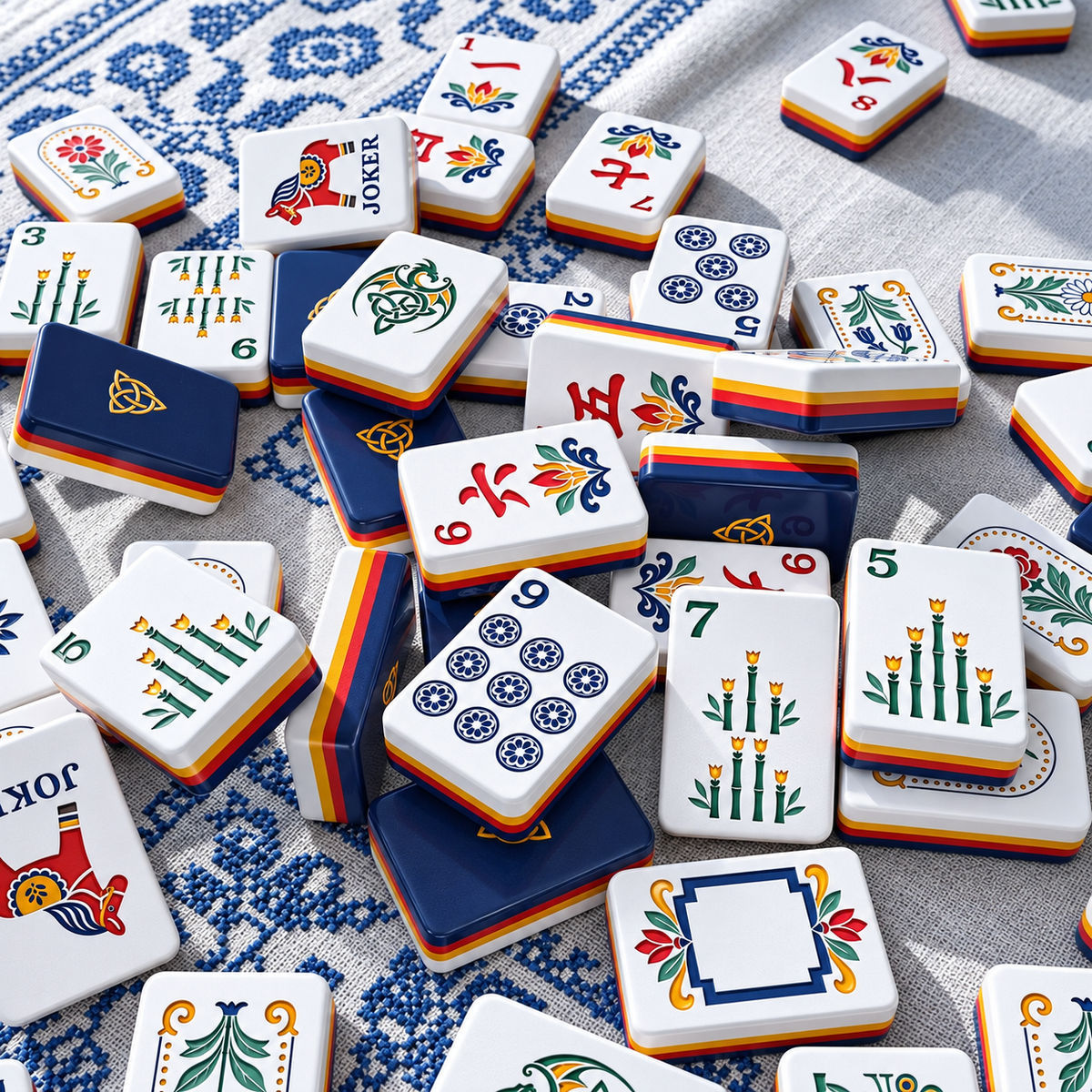
Zung jung winning hands in American mahjong are hands where every tile group carries the same number—such as all 5s, all 7s, or all 2s—across Bams, Craks, and Dots, combined with winds, dragons, flowers, or jokers as required by the current year's National Mah Jongg League card. These hands appear on the card annually and are worth learning because they reward players who think in numbers rather than suit sequences (which don't exist in American mahjong). A zung jung hand typically requires a pung (3 identical tiles), kong (4 identical), or mixed groups of the same number, plus flowers and jokers to complete the hand structure. They're neither the easiest nor the hardest winning hands, but they're common enough that recognizing them fast at the table saves you tiles and keeps your discard choices sharp. You'll find them listed on the official card each season; success depends on knowing the exact combination your year's card demands and reading it before your turn ends.
What exactly counts as a "same number" in zung jung hands?
In zung jung winning hands, "same number" means the numeric value 1 through 9 that appears on Bams, Craks, and Dots—never the winds (which have no number) or dragons (which have no numeric rank in American mahjong). For example, a valid zung jung group can include 3 Bam, 3 Crak, and 3 Dot together, or three 3 Bams as a pung. Jokers can substitute for any of these tiles, and you can combine multiple numbers if the card specifically allows it—but the core rule is that every tile in that group must show the same numeral. This is different from sequences in other mahjong variants; American mahjong has no chows (1-2-3 runs), so zung jung is purely about matching numerals across suits or within a suit.

How do flowers and jokers fit into zung jung winning hands?
Flowers and jokers are tie-breakers in zung jung hands. The card dictates whether a hand needs one or both flowers, and how many jokers you can use to fill gaps. Typically, a joker can replace any single tile (Bam, Crak, Dot, wind, or dragon) that the hand requires; a single flower counts as one tile of its own and never substitutes. For instance, the card might specify "2F 3-3-3 / 5-5-5 / 7-7-7 + pair" where 2F means two flowers, and the numeric groups must all be the same number in each line, with one pair at the end. Jokers fill missing tiles when you can't find the exact tile at the table—so if you need a 7 Dot but lack it, a joker fills that slot. Never use a joker in a pair; pairs must be two identical tiles, no substitution.
Step-by-step: how to spot a zung jung hand on the mahjong card
Open the current year's National Mah Jongg League card and scan the sections labeled "Like Number" or "Zung Jung."
Read the pattern line by line: each row shows tile groups separated by "/" and typically reads from left to right, e.g., "2-2-2 / 5-5-5 / 8-8-8 + pair + flowers."
Identify the numbers you need: in the example above, you must collect three tiles showing 2, three showing 5, three showing 8, a matching pair, and the required flowers.
Note which suits are required: the card indicates whether you need 2 Bam + 2 Crak + 2 Dot, or all 2s from one suit, or a mix.
Count jokers allowed: look for a small joker symbol or number on the card line; this tells you how many jokers can substitute in that hand.
Mark your progress: during play, track which number-groups you have and which remain open to draw.
🀄 Shop best-selling mahjong sets →
Common mistakes beginners make with zung jung hands
Mistake 1: confusing zung jung with other hand types. New players often mix "like number" with "like suit" or "mixed" hands. The card is your law; if the card calls it zung jung, every tile must share a number. If you're unsure which section you're reading, ask the player who called the card.
Mistake 2: forgetting that pairs have no joker substitution. A pair must be two identical tiles—never a joker plus a tile. We've seen players scramble at the table when they realize their joker can't seal the pair.
Mistake 3: misreading the flower requirement. Some zung jung hands need no flowers, others need one or two. Glance at the card before you start building; a missing flower costs the hand.
Mistake 4: not recognizing zung jung fast enough. If you draw the third matching number tile, call immediately or hold it safely in your rack. Hesitation risks another player going out first with a hand you could have won.
Mistake 5: mixing number groups. For example, trying to combine 3s and 7s in the same pung. Zung jung demands all tiles in a group share one number—no exceptions. Read the card, then build exactly what it asks.
Mistake | What goes wrong | How to fix it |
Confusing hand type | You build the wrong combination and never go out | Read the card aloud with the group before the game starts |
Joker in a pair | You realize too late the pair is invalid | Check the card: pairs are always two identical tiles, no jokers |
Wrong flower count | You're one tile short and miss the winning moment | Count flowers on the card before drawing; put extras in the spare pile |
Slow hand recognition | Another player wins while you're still analyzing | Scan the "Like Number" section during the Charleston and note patterns |
Mixing numbers in one group | Your pung is 3-5-7 instead of 3-3-3 | Repeat the number aloud as you collect: "I need three 4s—all 4s" |
Why strong players watch zung jung hands closely
Experienced players know that zung jung hands are high-frequency winners because they're easier to spot during the Charleston (the tile-passing ritual before play). If you grab a handful of 6s, you immediately know you're chasing a zung jung hand—faster intuition than searching for a complex pattern. This means the table fills with competing zung jung plays, and speed plus accurate card-reading separate winners from chasers. Strong players also use zung jung hands as decoys: they'll openly chase a zung jung 5 while secretly building a different hand, hoping opponents discard the tiles they need. The lesson: memorize the zung jung section of the card, drill it before game night, and stay alert to what your opponents are collecting.
🎁 See our most-loved mahjong sets & accessories →

Zung jung vs. other American mahjong hand types
Hand type | Core rule | Speed to spot | Typical joker use |
Zung Jung (Like Number) | All tiles share one number (1–9) across suits | Fast—patterns obvious early | High—often 2–3 jokers |
Like Suit | All tiles are Bams, Craks, or Dots only | Medium—requires suit discipline | Medium—1–2 jokers |
Mixed | Combination of suits, numbers, or winds | Slow—harder to identify mid-game | Variable—depends on pattern |
Consecutive | Numbers in order (e.g., 1-2-3-4-5) if the card allows | Slow—rigid order slows draws | Low—sequences are tight |
Zung jung hands win fast because they're forgiving: if you need a 5, any 5 Bam, 5 Crak, or 5 Dot works, plus a joker if you're stuck. This flexibility speeds up building and discarding. By contrast, "like suit" demands you ignore other suits entirely, and "mixed" hands can trap you if you miscalculate which number-suit combo the card requires.
What to check before you buy a mahjong set for zung jung play
Tile clarity matters. If the number on each tile isn't crisp and readable, you'll misread numbers at speed and build the wrong hand. When comparing sets, tilt them under table light to confirm numerals pop.
Rack design affects card reading. A good rack tilts tiles toward you and keeps them visible while you reference the card. We recommend racks with pushers because they let you quickly arrange tiles by number without fumbling.
Joker count and appearance. American mahjong sets include 8 jokers; make sure they're visibly distinct from other tiles (often a blank or special symbol) so you don't accidentally play them as regular tiles mid-hand.
Card visibility. Always keep this year's National Mah Jongg League card in clear view on the table. A laminated or mounted card is worth the investment; wet marks or dog-eared corners cost seconds you don't have.
Our best-selling mahjong sets use large, clear numerals and come with durable racks designed for quick tile arrangement—essential for zung jung hands where speed and accurate number-reading win games.
✨ Find your Mahstead set — free US shipping →
Why engraved sets improve zung jung play
Engraved mahjong sets—custom-personalized with names, dates, or clan titles—offer a psychological edge: players take the game more seriously when tiles carry weight. Beyond that, engraved tiles often use deeper, higher-contrast imagery and numerals because the engraving process demands precision. We've noticed our players who use engraved sets miss fewer numerals at a glance and build zung jung hands with fewer hesitations. If you're hosting regular games or want to level up your personal set, an engraved American mahjong set adds both durability and faster gameplay. Each set is built to spec with 152 playable tiles and includes racks, so you're ready to play immediately.
Final takeaway: practice zung jung hands before game night
Zung jung winning hands are your gateway to faster, more confident American mahjong play. Before your next game, spend 10 minutes with the card and a practice hand. Draw 13 tiles at random, then try to spot a zung jung pattern on the card that matches what you hold. Time yourself: can you call it in under 30 seconds? That's table speed. Play three or four of these practice rounds, and when you sit down for real, zung jung hands will jump off the card and into your rack. The bonus: you'll also read other hand types faster because your number-recognition muscle is stronger.

FAQ
Can I use a joker and a regular tile together to form a pair in a zung jung hand?
No. A pair must always be two identical tiles. Jokers never substitute for pairs in any American mahjong hand, including zung jung.
What's the difference between zung jung and "like suit" hands?
Zung jung requires all tiles to share the same number (like all 5s) across any suit; "like suit" requires all tiles to be the same suit (all Bams, for example), regardless of number.
If the card shows "3-3-3 / 6-6-6 / 9-9-9," can I mix suits in each group?
Yes. A group of three 3s can be any combination of 3 Bam, 3 Crak, and 3 Dot. The card tells you which suits and how many jokers are allowed; read it carefully.
How many jokers can I use in a single zung jung hand?
It depends on the card. Some zung jung hands allow 0 jokers, others 2 or 3. The card specifies: look for a joker symbol or count next to the hand pattern.
Is zung jung easier or harder than other American mahjong hand types?
It's medium difficulty. Zung jung hands are faster to spot and more forgiving (any number 5 works, not just 5 Bam) but require accurate card-reading and speed to win before someone else calls the same pattern.
Why does the card change every year if zung jung hands stay the same?
The National Mah Jongg League updates the card to balance play and reflect the mahjong community's evolving strategy. Some zung jung patterns appear every year; others rotate in and out to keep games fresh and competitive.


View More
View More
View More
